Marc Levy: Stories as Acts of Rescue
Marc Levy entered literature with a woman whose body lies in a coma while her presence remains active in her apartment. The premise of If Only It Were True established the qualities that made him internationally successful: emotional directness, a supernatural opening, quick dialogue, and faith that attachment can cross an apparently final boundary.
That debut also created a limiting image. The author is often treated as a specialist in romantic fantasy, though his twenty-six novels include comedy, history, adventure, political suspense, family mystery, and dystopia. Across those forms, someone has been separated from a person, history, freedom, or future that still matters.
Marc Levy repeatedly turns narration into rescue. A daughter hears what her dead father could not say. Resistance fighters regain names, hackers defend strangers, a Ukrainian mother searches for her child, and a bookseller protects reading. His stories fight against irreversible separation.

A Childhood Shaped by Unspoken History – Marc Levy
Marc Levy was born in Boulogne-Billancourt on 16 October 1961 into a French Jewish family. His father, Raymond Lévy, worked as an art-book publisher and carried a history that his children did not initially know in full. During the Second World War, Raymond and his brother Claude joined the Resistance, were arrested, tortured, and placed on a deportation train from which they escaped.
Marc Levy learned only gradually what his father had endured. The gap between a parent’s visible life and concealed past became a persistent structure in his fiction. Children inherit consequences before explanations. Raymond also transmitted a love of books and introduced his son to major writers.
That double inheritance helps explain why fathers in his novels often communicate belatedly. They leave recordings, objects, stories, or moral obligations that children must interpret. Silence became material rather than absence.
At eighteen, Marc Levy joined the French Red Cross and remained involved for six years. The experience gave him responsibility before fame. He has said that the organization gave him a place in society and taught him to reach toward others rather than wait for society to act first.
This period did not produce documentary fiction, yet its ethic survives throughout the novels. Characters often respond to crises for which they bear no formal responsibility. Friendship becomes action.
That humanitarian ethic was present from the beginning. Arthur in If Only It Were True takes seriously a presence nobody else perceives. Care begins when one person refuses to accept that another has become inaccessible. Marc Levy later became an ambassador for the French Red Cross and supported other humanitarian causes.
Technology, Architecture, and the Craft of Structure
Before becoming a novelist, Marc Levy built businesses. In 1983, he founded a computer-graphics company operating in France and the United States. After that venture ended, he co-founded an architecture and design firm that became highly successful in France. He was thirty-seven when he wrote his first novel.
These careers complicate the myth of effortless storytelling. Computer graphics and architecture turn imagined spaces into workable structures. He similarly begins with a strong concept, organizes encounters around it, and guides readers through clearly marked narrative spaces.
His professional failures also taught him to begin again. Reinvention became experience before it became theme. Construction precedes apparent ease. Marc Levy’s accessible prose can make the finished story look spontaneous, but its momentum usually rests on careful research, ordering, and revision.
Marc Levy did not begin If Only It Were True by planning a literary career. He developed the story for his son Louis and wrote it down in the late 1990s. His sister, a screenwriter, encouraged him to submit the manuscript. Robert Laffont accepted it, and DreamWorks acquired film rights before the novel’s French publication in 2000.
Success prompted him to leave architecture and write full time. It also placed the debut under every later book, as promise and burden. The private gift became a public vocation. Marc Levy’s career began not with a declaration of authorship but with the wish to hold one listener through a story.
Love Beyond the Visible World
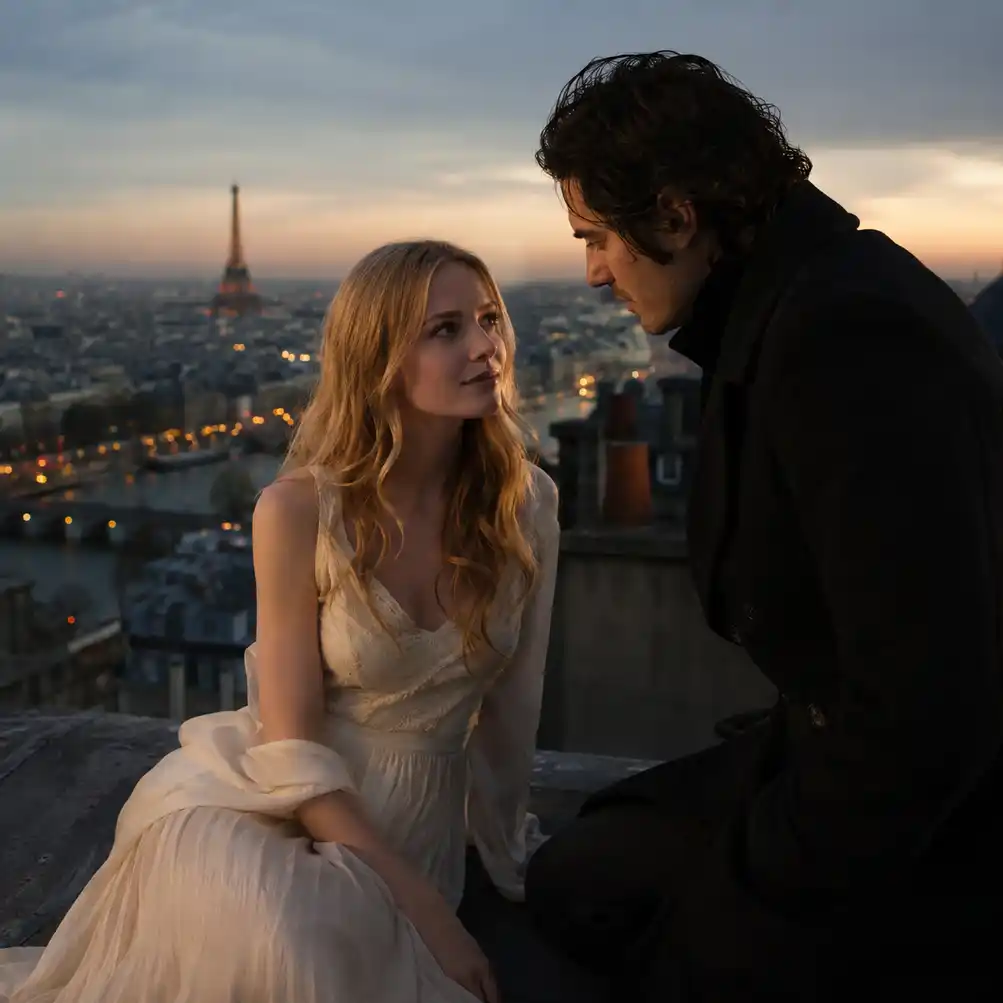
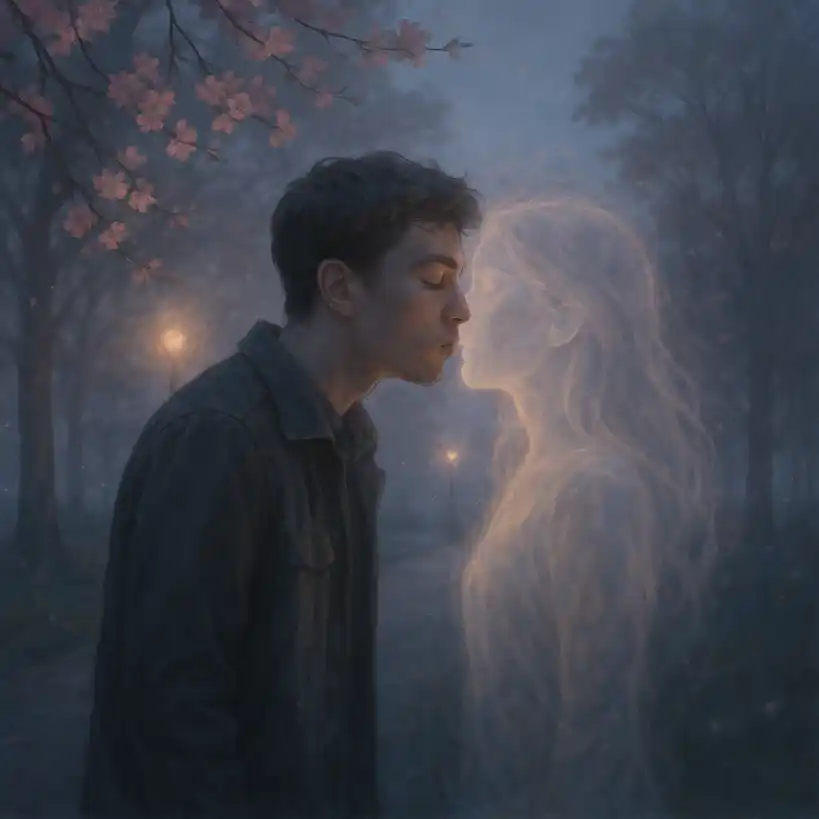
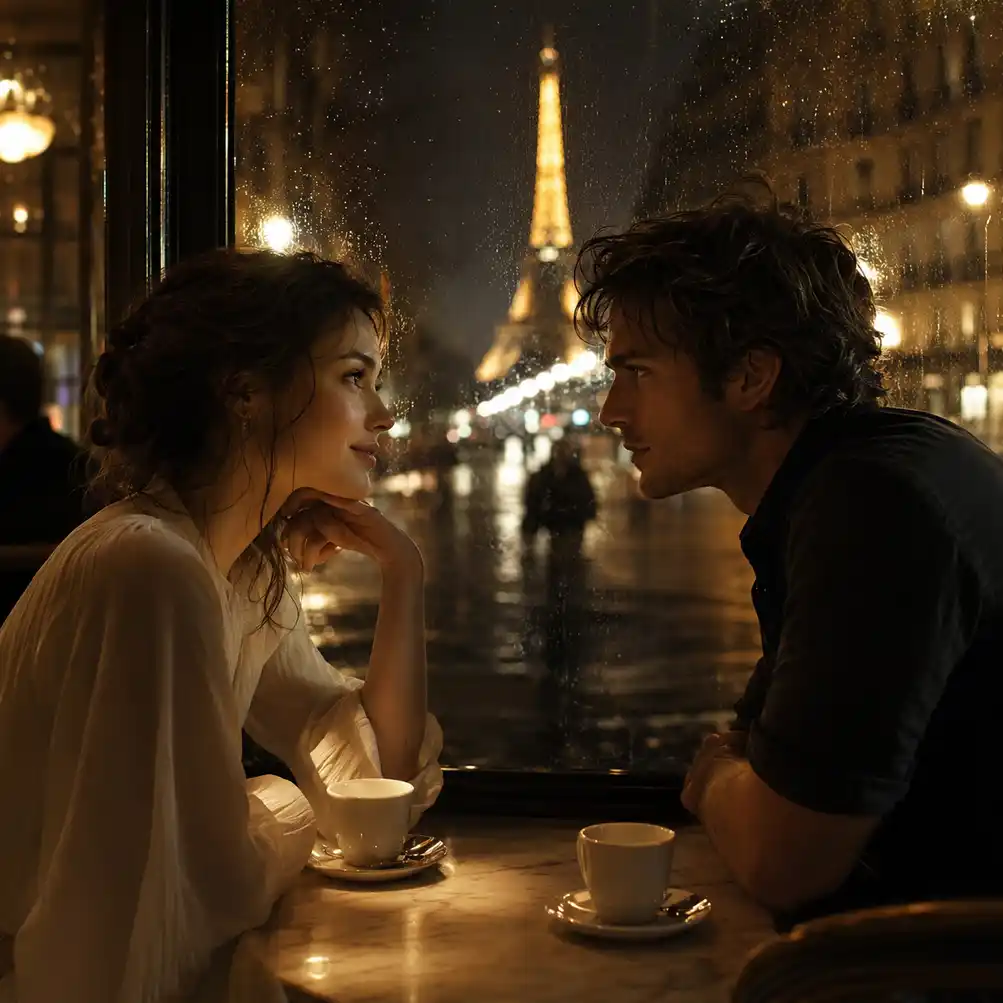
The early novels made Marc Levy famous for relationships that cross impossible boundaries. If Only It Were True separates consciousness from the body. Seven Days for an Eternity sends agents of God and the Devil into a contest disrupted by love. In Another Life connects desire to art, memory, and recurrence. Ghost in Love brings a dead father back with a final request.
Fantasy enters an otherwise recognizable modern world through one premise. Characters must accept or reject the impossible while continuing to navigate work, friendship, hospitals, and travel.
The method can slide into sentimentality when extraordinary rules guarantee emotional meaning too easily. At its best, however, it gives grief and longing an external shape without pretending they are rational. The impossible makes devotion measurable.
All Those Things We Never Said transforms the recurring absent father into a narrative device. Julia is preparing for her wedding when she learns that her estranged father has died. A life-size android modeled on him then arrives, programmed to provide six days of conversation.
The premise mixes comedy, speculation, family grievance, and romance. It asks whether a simulated voice can repair emotional neglect. Anthony Walsh cannot return as an innocent parent; his daughter must confront his affection and the damage caused by his choices. The artificial father gives Julia information and a journey, but she must revise her own story.
Ghost in Love later revisits paternal return with a lighter adventure. Across both novels, death removes the possibility of ordinary correction, so fantasy creates a limited interval in which the unfinished relationship can speak. Second chances remain morally incomplete.
Marc Levy – Writing the Resistance into Family Memory
With Children of Freedom, Marc Levy moved away from romantic fantasy toward his father’s wartime history. The novel follows young members of the 35th Brigade of the FTP-MOI Resistance in Toulouse, including the fictionalized versions of Raymond and Claude Lévy. Its title emphasizes youth as much as heroism.
The book converts inherited silence into collective narrative. He portrays young people from immigrant, Jewish, communist, and antifascist backgrounds who choose resistance under occupation. Friendship, torture, betrayal, and courage remain attached to individuals.
Family proximity creates responsibility: the father’s experience cannot become convenient material. The author researched the group and wrote against the disappearance of people long marginalized in national memory.
The accessible style serves a different purpose here than in the romantic novels. It opens a difficult history to readers who might not approach academic or memorial writing. The risk is simplification; the gain is renewed attention.
Memory becomes an obligation to name others. Marc Levy honors his father most effectively by restoring the brigade around him, showing resistance as a shared decision rather than a solitary legend.
Cities That Change the Direction of a Life
Marc Levy’s fiction moves restlessly through Paris, London, New York, San Francisco, Istanbul, Berlin, Rome, Kyiv, and less familiar landscapes. Travel is not ornamental. A new city interrupts habit and makes another identity imaginable.
His earlier careers connected France and the United States. He later lived in London and settled in New York. Distance from France sharpened rather than dissolved his relation to it, creating comparison and renewed observation.
London Mon Amour follows French fathers raising children abroad. The Strange Journey of Alice Pendelbury turns travel from London to Istanbul into a search for origin. P.S. from Paris stages romance between public and private identities. A Woman Like Her makes a New York apartment building a vertical social world.
Levy sketches rather than exhaustively describes people and places. He wants readers to complete the image. Travel loosens the inherited script. In Marc Levy’s novels, crossing a border rarely provides escape by itself. It creates the distance from which a character can finally recognize what must change.
History as a Personal Inheritance
Several novels connect intimate mysteries to political history. The Last of the Stanfields begins with anonymous letters and moves across generations, countries, and wartime secrets. Stronger Than Fear uses stolen documents, journalism, and institutional danger. Another Idea of Happiness sends two women across the United States while the legacy of 1960s radicalism surfaces between them.
Political complexity can serve personal revelation too neatly, turning history into an engine for family secrets. His stronger work instead shows how institutions constrain individual choice. The connection between eras matters especially.
History arrives through unfinished relationships. Marc Levy makes the past emotionally legible by asking who concealed it, who paid for it, and who now has the responsibility to remember.
It Happened at Night, The Twilight of the Beasts, and Noa form the Group 9 trilogy. Nine hackers from different countries use their skills against dictators, surveillance systems, propaganda, trafficking, and financial power. They cooperate remotely before circumstances force greater physical proximity.
The trilogy changes the scale. Group 9 defends public truth against systems designed to manufacture ignorance. Technology, once his profession, becomes both weapon and contested territory. The novels retain his established values: friendship crosses borders, specialized knowledge creates responsibility, and authority does not guarantee trust. Short scenes and multiple locations create international momentum.
Solidarity becomes a network. Marc Levy updates the Resistance motif for a digital age, imagining dispersed individuals who turn technical mastery into collective opposition.
Ukraine and the Theft of Childhood
The Symphony of Monsters confronts the forced transfer of Ukrainian children after Russia’s full-scale invasion. Veronika returns home to discover that her nine-year-old son Valentyn has disappeared. She and her daughter Lilya begin separate but connected searches, while the abducted child confronts an organized attempt to erase language and identity.
The novel draws on real events but remains fiction. Levy uses a family quest to direct readers toward an ongoing crime without claiming that one case contains every experience. His rescue plot acquires political force. Separation is not fate but state strategy. Names, speech, memory, and family bonds become targets because domination requires a fabricated past.
The pace creates immediacy but also an ethical challenge: suspense must not turn documented suffering into exotic danger. The novel succeeds when it centers the child’s threatened identity and the family’s refusal of erasure.
Recovery means defending a person’s history. In this work, Marc Levy connects his oldest theme to the present: rescuing someone requires preserving the story that power wants removed.
Published in France in November 2024, The Bookshop of Forbidden Books is Levy’s twenty-sixth novel. In a near-future America, bookseller Mitch is punished for distributing prohibited works. Revenge, love, and reading converge where censorship presents itself as moral protection. Authoritarian power controls bodies, information, and the stories through which people recognize alternatives. A bookseller becomes a political actor because access has become dangerous.
Its symbolism is direct, sometimes deliberately so. Books stand for freedom, while the bookshop becomes a refuge. The simplicity suits his democratic view of reading, though readers seeking political ambiguity may find the oppositions sharply drawn. A library stores possible forms of freedom. Marc Levy’s latest original novel turns the ordinary exchange of a book into resistance against an imposed reality.
Love, Memory, and Resistance: Defining Marc Levy Novels
- If Only It Were True (Et si c’était vrai…, 2000): An architect discovers the spirit of a comatose doctor in his apartment. Levy’s romantic fantasy launched his international career and inspired Just Like Heaven.
- Finding You (Où es-tu ?, 2001): Two childhood friends promise devotion before distance pulls them apart. The novel examines love, absence, memory, and presence.
- Seven Days for an Eternity (Sept jours pour une éternité…, 2003): God and Lucifer send agents to settle their struggle.
- Children of Freedom (Les Enfants de la liberté, 2007): Drawing on his father’s Resistance experience, he follows immigrant fighters in occupied Toulouse. Family history gives the novel unusual gravity.
- All Those Things We Never Said (Toutes ces choses qu’on ne s’est pas dites, 2008): A woman receives a final surprise from her difficult father.
- The Shadow Thief (Le Voleur d’ombres, 2010): A boy steals shadows and hears confessions. His gift becomes a meditation on childhood, empathy, friendship, and deferred dreams.
- Replay (Si c’était à refaire, 2012): A murdered journalist awakens two months before his death.
- P.S. from Paris (Elle et lui, 2015): A British actress and an American novelist meet online under false pretenses.
- The Last of the Stanfields (La Dernière des Stanfield, 2017): Two strangers investigate a photograph linking their mothers.
- The Symphony of Monsters (La Symphonie des monstres, 2023): A Ukrainian mother and daughter search for an abducted child.
A Style Designed for Emotional Momentum
Levy writes compact sentences, dialogue-rich scenes, and propulsive chapters. He avoids dense description, letting readers construct faces and rooms from a few details. This openness helps the novels travel.
Plots begin with a high-concept disturbance. Explanation follows through movement and conversation. Humor keeps wonder or grief from becoming uniformly solemn, while travel stages visible change.
Characters articulate feeling clearly. The directness creates intimacy but can become overstatement. Ambiguity sometimes yields to reassurance, and dialogue can overexplain emotion.
The prose is best judged by its purpose. The author wants readers to enter rapidly, care about the characters, and continue. He does not seek stylistic difficulty as proof of seriousness. Accessibility is an aesthetic choice, not the absence of one.
Clarity is part of the invitation. Marc Levy’s writing style succeeds when emotional directness opens a complex subject, and weakens when it resolves complexity before readers can fully inhabit it.
Popular Success and the Question of Value
His books have sold more than fifty million copies and appeared in fifty languages. His official biography calls him the most-read French author worldwide, a status French literary culture often regards with suspicion.
Criticism of sentimentality, thin characterization, or engineered plots matters when applied to particular novels, not when sales themselves become evidence of failure. Readers encounter war memory, authoritarianism, bereavement, and moral choice through broadly accessible stories.
Popularity nevertheless creates its own pressure. Annual or near-annual publication can encourage repetition. Familiar elements such as delayed confession, benevolent coincidence, absent parents, transnational travel, and redemptive love may feel like reusable components rather than discoveries.
The body of work is therefore uneven. Children of Freedom carries a different historical burden from a light romantic comedy, and The Symphony of Monsters demands a different ethical judgment from Seven Days for an Eternity.
Accessibility is neither innocence nor guilt. Marc Levy should be read book by book, asking whether a particular narrative earns its emotion and makes its chosen history more visible.
Writers Who Opened Paths for Marc Levy
Marc Levy reads across genres and rejects the idea that literary pleasure must obey critical hierarchies. Three acknowledged influences clarify his range. Each links adventure to a moral or emotional journey.
- Jules Verne shaped Levy’s childhood imagination. He has named Verne’s novels as early favorites, and their legacy appears in journeys organized around wonder, discovery, scientific possibility, and strong narrative premises. He transfers that forward motion into contemporary emotional quests rather than imitating Verne’s encyclopedic detail.
- John Steinbeck gave him an imagined America before he knew the country directly. Levy has described The Grapes of Wrath as his first journey to the United States and linked the novel to his later decision to live there. Steinbeck’s accessible seriousness also offers a model for joining social injustice, travel, family bonds, and a broad readership.
- Romain Gary provided the most intimate literary shock. The novelist has said that Clair de femme, read after a painful breakup, restored his desire to fall in love. Gary’s mixture of romance, grief, humor, moral commitment, and resistance history resonates strongly with his own movement between private feeling and public catastrophe.
Raymond Lévy belongs beside these famous names as a writer as well as a father. His stories and art-book publishing introduced literature at home, while his Resistance history later entered Children of Freedom. This was a documented personal transmission, not a stylistic resemblance. The influence was aesthetic, ethical, and biographical: books mattered, courage could remain quiet, and a life withheld in conversation might still demand narrative form.
Writers and Storytellers in Marc Levy’s Wake
Few established novelists publicly identify Marc Levy as a primary influence, so claims of a formal “Levy school” would be misleading. His demonstrable impact appears through direct acknowledgement, adaptation, and collaboration. Influence here crosses literary forms.
- Olivia Lara has explicitly credited Levy’s style, magical premises, and emotionally expansive love stories with giving her permission to write differently. She describes his work as proof that romance can exceed realistic convention, a lesson visible in her own high-concept romantic fiction.
- Guillaume Musso should be treated as a publishing-historical parallel, not a documented disciple. Levy’s early success helped demonstrate the vast audience for French novels combining romance, suspense, travel, and supernatural disruption. Musso developed a distinct and often darker method, but he wrote within a commercial space that he had helped enlarge.
- Fred Bernard collaborated with Levy on the Little Shadow Thief books for younger readers. Bernard’s illustrations translate his established idea into a visual language, while the series requires the novelist to compress character and wonder for children. The influence moves in both directions.
- Corbeyran and Espé adapted Seven Days for an Eternity into comics. Their work converts dialogue, supernatural conflict, and romantic timing into page composition and image. The adaptation shows how his high-concept structures invite reinterpretation rather than simple abridgement.
- Screenwriters working on Finding You, London Mon Amour, and All Those Things We Never Said have likewise rebuilt his stories for new media and audiences. Their scripts belong to their own authors, yet the recurring architecture of separation, travel, and belated conversation supplies the frame within which those writers make new choices.

Stories Without Borders: Quotes That Explain Marc Levy
- “Writing allows you to express in words the ideas that you feel unable to say aloud.” Levy traces his vocation back to childhood shyness. The page becomes a protected space where difficult emotions can acquire clarity and eventually reach strangers.
- “I get butterflies.” Success has not removed Levy’s anxiety when a new book approaches publication. The admission reveals how uncertainty survives experience and keeps every completed manuscript emotionally consequential.
- “My ideas come from everyday life.” Levy presents observation as the beginning of imagination. A conversation, gesture, absence, or remembered place may contain the emotional seed from which an extraordinary premise can grow.
- “I don’t believe in boundaries, even less in literature.” Nationality and genre should not fence in a story’s possibilities. Levy’s own movement between romance, fantasy, history, comedy, and suspense puts that declaration into practice.
- “Writers draw horizons.” The image contrasts imaginative expansion with the walls built by fear and politics. Literature can make difference visible without turning it into a reason for separation or hostility.
- “Never think of publication, write for the freedom it provides you with.” Levy redirects aspiring authors from market approval toward creative purpose.
From the Red Cross to 50 Million Readers: Eight Chapters in Marc Levy’s Life
- Service came before literature: Marc Levy joined the French Red Cross at eighteen and remained for six years. He later returned as an ambassador, continuing a humanitarian commitment that informs his fiction.
- He built two careers before writing novels: Levy established a computer-graphics company operating in France and the United States. Later, he co-founded an architecture firm that became one of France’s leading companies. 🌐 French Library
- His son became the first intended reader: At thirty-seven, Levy wrote a story for the adult his son would one day become. His sister persuaded him to submit the manuscript, transforming a private gift into 👉 If Only It Were True by Marc Levy.
- Hollywood arrived before literary fame settled: DreamWorks acquired adaptation rights before Levy’s debut had established him internationally. The resulting 2005 film, Just Like Heaven, starred Reese Witherspoon and Mark Ruffalo and topped the American box office.
- Success never trapped him inside one genre: Levy has written romance, comedy, adventure, historical fiction, suspense, and speculative narratives. His official site records 26 novels, more than 50 million copies sold, and translations into 50 languages. His metaphysical love stories invite comparison with 👉 The Zahir by Paulo Coelho.
- His father’s hidden past became a novel: Levy learned that his father Raymond had joined the French Resistance under the code name Jeannot. Children of Freedom reconstructs the 35th Brigade and its young immigrant fighters. Its transformation of personal history offers an intriguing contrast with 👉 The Lover by Marguerite Duras.🌐 Book background
Choosing a Route Through the Novels
Readers curious about Marc Levy’s original promise should begin with If Only It Were True. Its combination of wonder, romance, humor, and rescue remains the clearest introduction. All Those Things We Never Said develops the absent-parent theme through a more elaborate speculative device.
For historical depth, Children of Freedom is essential. It places family memory inside the collective Resistance and corrects the assumption that Levy writes only romantic fantasy. The Last of the Stanfields offers a more puzzle-driven route into inherited wartime secrets.
Readers who prefer travel and identity can choose The Strange Journey of Alice Pendelbury. Those seeking comedy may start with London Mon Amour or P.S. from Paris. The Group 9 trilogy begins with It Happened at Night and should be read in order. The range appears through contrast. Reading one supernatural romance, one historical novel, and one political thriller reveals more than moving through several adjacent love stories.
Levy’s career began with a story for his son and expanded across fifty languages. That movement from one listener to millions did not erase the intimate structure of his fiction. One person notices another disappearing and refuses passivity.
Disappearance may mean coma, death, estrangement, deportation, digital repression, assimilation, or censorship. Rescue may restore a body, a name, a dead parent’s voice, a book, or love that continues without undoing loss. His optimism gives readers movement through pain but can make reconciliation too clean.