Seven Days for an Eternity by Marc Levy
Good and Evil have argued for longer than humanity can remember. In Seven Days for an Eternity, they finally decide to settle the dispute through a contest. God and Lucifer each send a trusted agent to San Francisco. Zofia must advance the cause of goodness, while Lucas must prove the superior force of evil. Their results will determine who governs humanity for the rest of time.
Marc Levy turns this enormous premise into a light romantic fantasy. The novel does not attempt a dense theological argument about sin, grace, or divine justice. Instead, it asks what moral absolutes look like when embodied by two attractive, intelligent, highly competitive strangers. The cosmic conflict enters ordinary spaces. Eternity depends on everyday encounters.
That reduction of scale gives Seven Days for an Eternity its charm. Zofia and Lucas arrive with clear identities and opposing missions, but human life resists their assigned categories. Good actions can create unintended harm. Destructive plans may depend on recognizable needs. Attraction develops before either agent understands the other.
The book works best when its supernatural machinery illuminates human uncertainty. Both camps behave like large organizations, complete with hierarchies, rules, strategies, and expectations. Heaven and Hell become rival bureaucracies, while their representatives discover emotions that cannot be entered neatly into a final report.
Published in French in 2003 as Sept jours pour une éternité…, the story moves with the ease of a modern fable. Seven Days for an Eternity offers romance first, yet its playful wager carries a serious question: can goodness or evil remain pure once choice becomes personal?
Seven Days, Two Missions
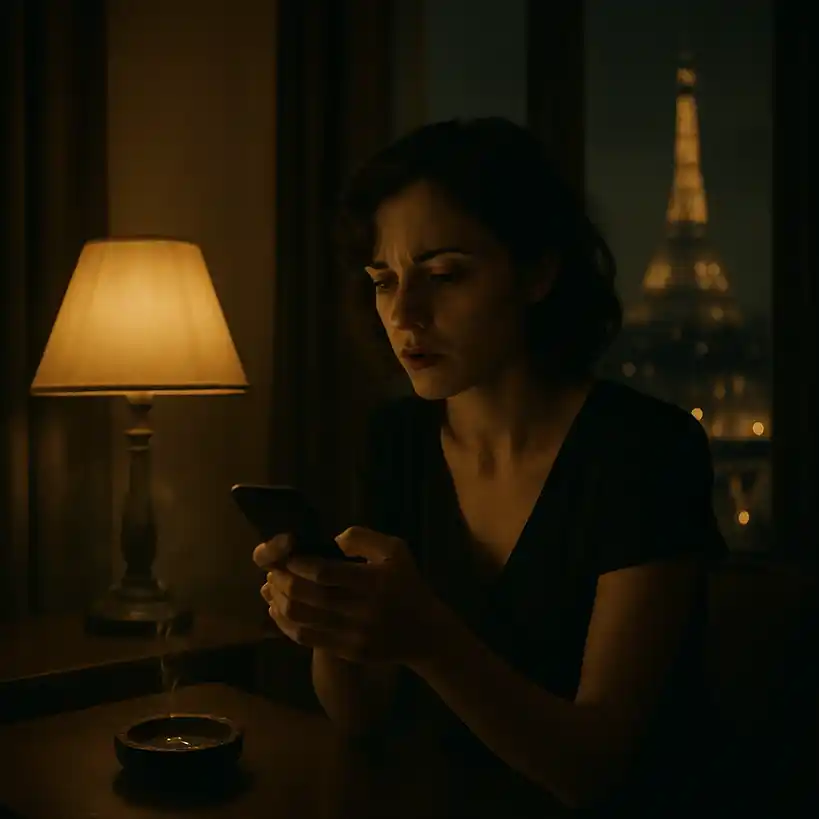
The seven-day deadline provides the novel with speed and symbolic weight. A week recalls the biblical rhythm of creation, but here the period may decide humanity’s permanent direction. Each day brings Zofia and Lucas closer to completing their assignments. It also reduces the time available to understand the bond forming between them. The clock measures duty and desire at once.
Their mission depends on visible results. Zofia must create good, while Lucas seeks damage on a scale impressive enough to satisfy his side. Yet morality cannot be measured as easily as their superiors assume. A small act of care may influence several lives without producing dramatic evidence. A spectacular act of harm can arise from systems that distribute responsibility until no single person appears guilty.
This imbalance allows Seven Days for an Eternity to contrast two powers. Evil attracts attention through disruption and fear. Goodness operates quietly through patience, service, and trust. The contest favors what can be counted, although durable effects often remain invisible.
Time also exposes the agents’ lack of freedom. They appear powerful on Earth, but each serves an authority that has already defined success. In 👉 Time Must Have a Stop by Aldous Huxley, mortality and spiritual perception receive a more philosophical treatment. This fable remains lighter, yet both books question whether limited human time can open onto a larger reality.
The deadline makes every meeting more valuable. Seven Days for an Eternity asks whether a fixed role can survive genuine encounter. Seven days are long enough for certainty to become doubt. The week concentrates attention until choices that looked theoretical acquire an emotional cost.
Zofia and Everyday Goodness
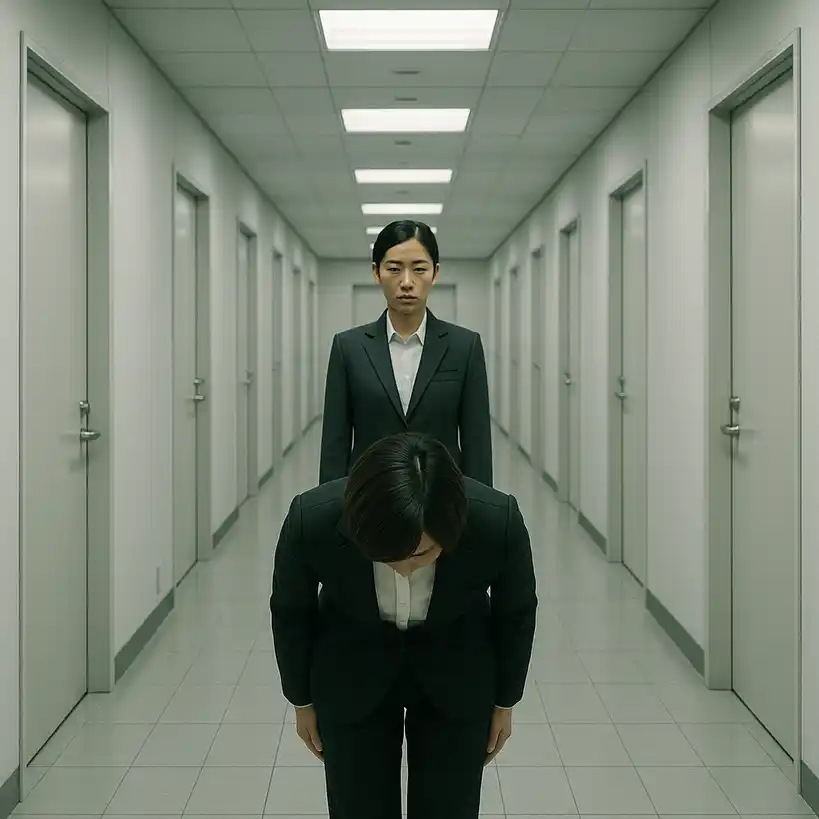
Zofia enters the contest as Heaven’s strongest representative. She is disciplined, capable, and committed to the idea that goodness must appear through action. Her strength does not lie in abstract purity. She pays attention to immediate needs, values small gestures, and understands that trust develops slowly. Her virtue is practical before it is spectacular.
This approach creates a problem. Lucas can design visible disruption, while Zofia cannot manufacture authentic goodness on command. Charity performed for points would contradict its purpose. She must act sincerely inside a structure that treats morality as a score.
Zofia is not flawless. Her confidence can harden into certainty, and her mission makes people look like opportunities for intervention. Lucas unsettles that habit because he does not match the evil she expects.
The moral pressure around her recalls 👉 The Good Person of Szechwan by Bertolt Brecht, in which goodness also struggles to survive practical conditions. Brecht offers a harsher social critique, while this novel chooses romance and fantasy. Still, both works recognize that being good is more complicated than approving goodness.
Within the novel’s accessible framework, Zofia represents care that refuses to become passive. She intervenes, decides, and risks disobedience. Her movement toward Lucas does not mean that all conduct becomes morally equivalent. Instead, she learns that judgment without knowledge can reproduce the rigidity it opposes.
Her most persuasive moments come when she helps without turning the recipient into proof of her virtue. Such scenes protect goodness from performance and keep compassion tied to another person’s dignity. Through Zofia, Seven Days for an Eternity presents goodness as a pressured choice made without guaranteed reward.
Lucas and the Appeal of Harm
Lucas arrives with charisma, ambition, and a talent for finding weaknesses inside people and institutions. He understands that evil rarely needs to invent every destructive impulse. It can magnify greed, vanity, resentment, or fear already present. Temptation works by making damage feel reasonable. This insight gives his schemes a recognizable human basis even when the surrounding plot remains fantastic.
His confidence also performs a defensive role. Failure would threaten both status and identity. Lucas knows how to provoke others but has less experience with emotions that expose him. Zofia becomes dangerous because attraction gradually demands an honesty his mission cannot accommodate.
Seven Days for an Eternity places Lucas in romantic comedy as much as fantasy. His charm softens the moral stakes, and some readers may find him redeemable too quickly. Yet the simplification supports the central experiment: can an agent of evil refuse his role?
The comic supernatural tradition receives a sharper satirical treatment in 👉 The Canterville Ghost by Oscar Wilde. Wilde’s ghost and Levy’s demon differ greatly, but both stories make otherworldly figures vulnerable to human emotions and domestic inconvenience.
That vulnerability changes the tone of Lucas’s power. His schemes may reach across institutions, yet a look, a misunderstanding, or an unexpected moment of concern can disarm him. The imbalance gives the romance its comedy and its moral direction.
Lucas becomes most interesting when his polished identity fractures. He manipulates systems more easily than he interprets tenderness. Control fails in the presence of reciprocity. Zofia makes him confront the obedience hidden inside his apparent freedom. Redemption becomes a question of authorship: can Lucas write a different conclusion?
Love Crosses the Battle Line
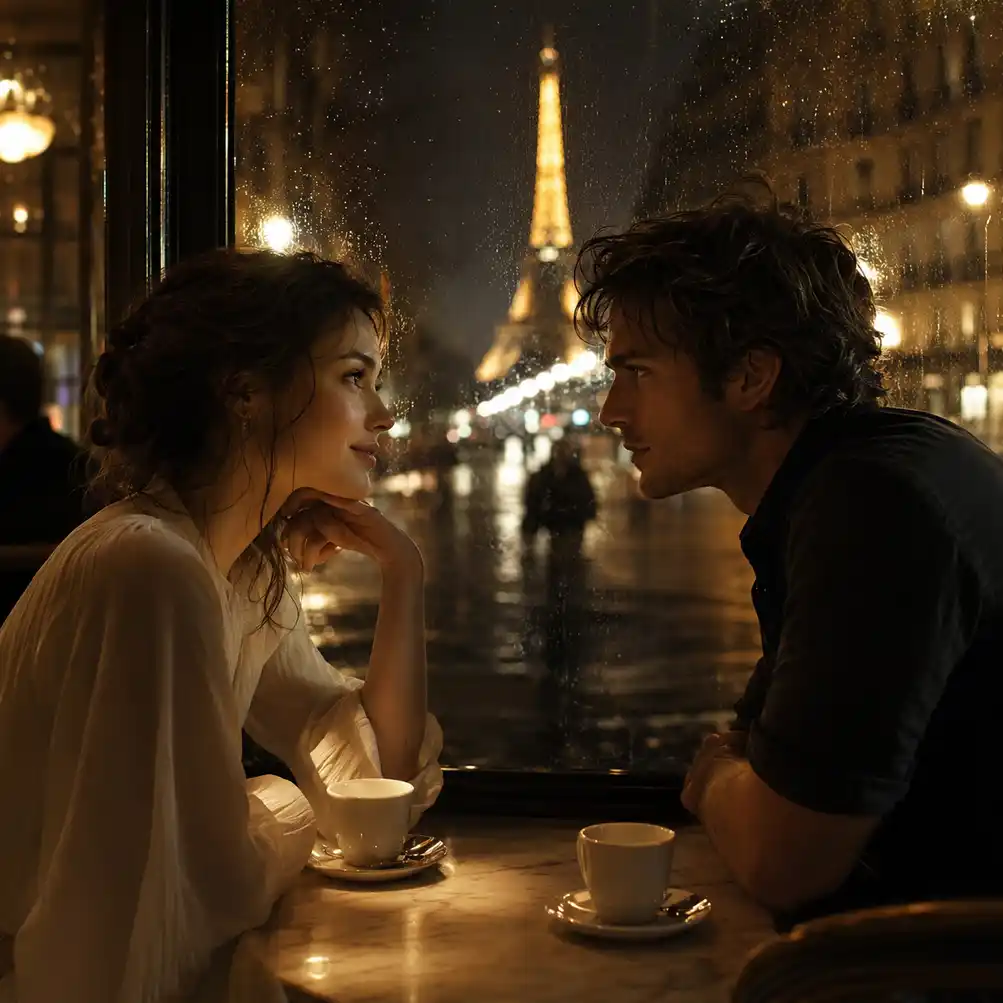
Zofia and Lucas meet without initially recognizing the full meaning of their opposition. This dramatic irony allows attraction to develop before doctrine can prohibit it. Their conversations carry flirtation, suspicion, rivalry, and an increasing sense of familiarity. Each sees qualities in the other that the cosmic contest insists should not exist.
The romance gives Seven Days for an Eternity its emotional engine. Love disrupts a universe built on permanent division. If an angel can care for a demon who answers that care, sealed identities begin to fail. Affection creates evidence against the system.
Supernatural interference in romance has a long comic tradition. In 👉 A Midsummer Night’s Dream by William Shakespeare, magical forces misdirect desire and reveal its instability. Levy reverses part of that pattern. The celestial authorities want their agents to remain predictable, while unplanned love releases them from the script.
The relationship can feel idealized because symbolic recognition matters more than gradual psychological realism. Readers who accept that fable logic will find a warm exploration of loyalty and choice.
Crucially, love does not erase moral difference. Lucas’s actions still matter, and Zofia’s compassion cannot make harm harmless. Seven Days for an Eternity is strongest when it treats romance as a demand for responsibility rather than an automatic pardon. To love the other is to answer for one’s choices.
This distinction prevents the lovers’ union from becoming a decorative claim that opposites simply attract. Their intimacy has value only if it changes how they act toward people beyond the relationship. Their bond changes victory itself. The deeper possibility is to refuse a contest that treats humanity and the lovers as property.
San Francisco as a Moral Laboratory
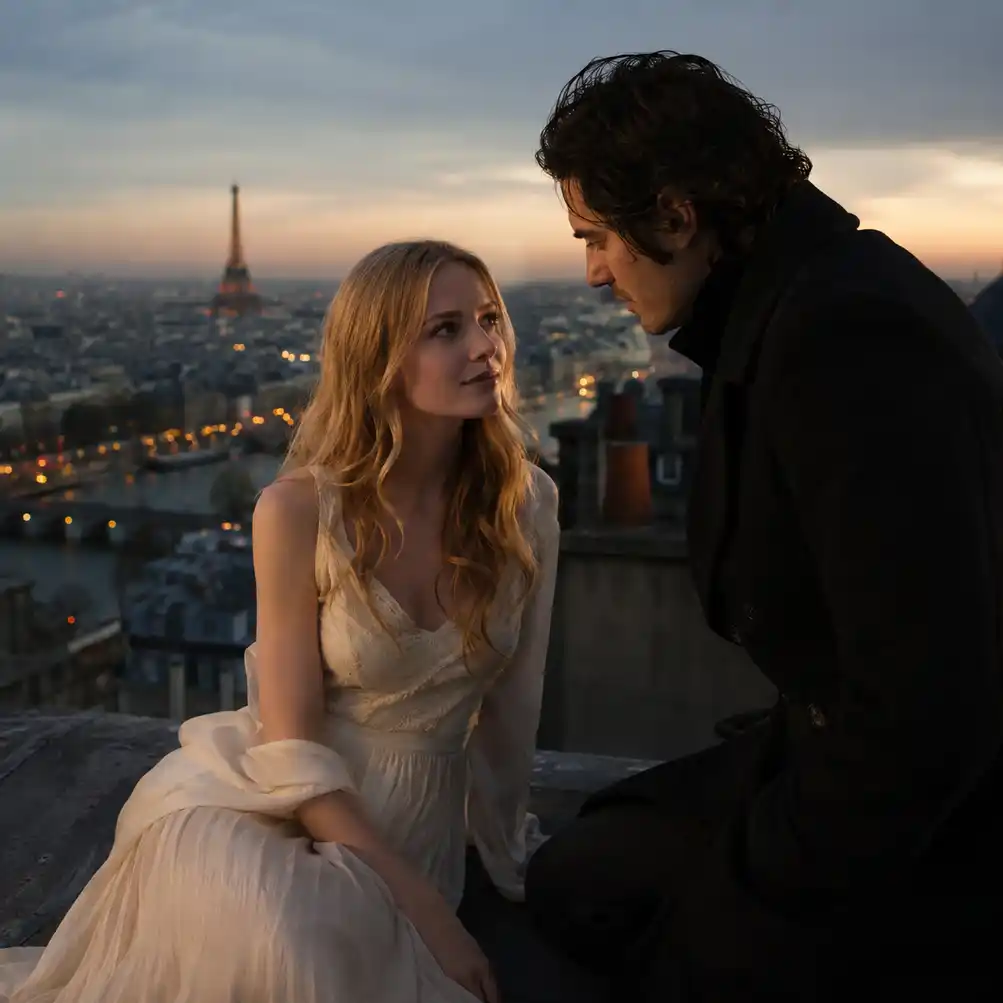
San Francisco gives the celestial wager a setting associated with steep movement, shifting weather, commercial ambition, social variety, and views that continually change with position. Seven Days for an Eternity uses the city less as a deeply documented community than as a bright, cinematic stage. Docks, streets, restaurants, offices, and public spaces let strangers cross paths quickly.
That mobility suits a story built on coincidence. The agents move quickly between private intimacy and urban systems. Lucas sees structures to destabilize, while Zofia notices people needing help. They read the same city through opposing moral lenses.
The urban setting also prevents Good and Evil from becoming remote theological ideas. Harm appears through institutions, money, isolation, and choices made by people who may never see those affected. Goodness emerges in attention, solidarity, and restraint. The city contains both forces before the supernatural visitors arrive.
At times, San Francisco functions mainly as atmosphere. Readers seeking detailed neighborhoods or history may find it underused. The novel favors momentum, turning the city into a laboratory where decisions spread rapidly.
The most revealing moments in Seven Days for an Eternity occur when Lucas and Zofia stop treating the city as a board on which to move pieces. Their growing awareness of particular lives challenges the contest’s abstraction. Humanity cannot be reduced to the prize of a wager.
The city’s scale reinforces that lesson. No single intervention can represent every resident, and neither agent can know the complete consequences of a decision. Urban complexity defeats moral bookkeeping. San Francisco becomes middle ground that neither side controls. Its mixed motives anticipate the freedom both emissaries must discover.
A Fable That Chooses Lightness
The prose of Seven Days for an Eternity favors speed, clarity, visual scenes, and dialogue. Chapters move quickly, complications arrive with cinematic timing, and humor prevents the cosmic framework from becoming solemn. The novel reads like a romantic comedy enlarged by supernatural stakes. Its accessibility is a deliberate formal choice.
That choice brings clear pleasures. The premise is easy to grasp, the central contrast produces immediate energy, and the seven-day structure keeps the story moving. The celestial organizations add playful satire, especially when eternal powers resemble executives managing rival teams. Grand metaphysical language repeatedly meets ordinary inconvenience.
The same simplicity creates limits. Good and Evil sometimes resemble personality styles rather than difficult realities. Secondary characters serve the fable, and conflicts yield to emotional recognition. Some readers may want more resistance to romantic logic.
Yet Seven Days for an Eternity should be judged within the mode it chooses. It does not aim for theological realism. It uses familiar opposites to create a parable about escaping inherited identities. Its warm humor makes the question of free will approachable rather than abstract.
A darker philosophical treatment of lovers and the afterlife appears in 👉 The Chips are Down by Jean-Paul Sartre. Levy’s novel replaces existential severity with hope, but both stories ask whether love can alter a fate shaped before the lovers fully understood it.
The comparison also clarifies Levy’s preference: emotional openness matters more here than philosophical consistency, and warmth carries the argument. The lightness is not emptiness. Beneath the polished scenes lies unease about institutions claiming authority over moral meaning. Freedom begins when individuals reject roles that make them useful to power.
Quotes from Seven Days for an Eternity
- “This marks the end of our time together, and the beginning of a memory that will last for me for eternity.” Lucas frames separation as a change in time rather than an end to love. The balanced clauses move from a finite shared “moment” toward an enduring private memory. Consequently, eternity becomes emotional, not merely theological. The sentence also suits Seven Days for an Eternity, where seven compressed days outweigh the endless conflict that preceded them.
- “There is no such thing as immense good that we can conceive of, quite simply because, unlike evil, good is invisible.” This sentence overturns the agents’ contest. Evil creates visible disruption, whereas goodness often hides inside care or sacrifice. Moreover, the contrast explains why Zofia’s task resists measurement. The novel values what spectacle cannot display, and the wording gives that idea a compact form.
- “The pursuit of love is the most self-centred of all crusades.” The crusade metaphor makes courtship sound both heroic and suspect. Although Lucas initially treats seduction as another conquest, love eventually unsettles his assigned identity and purpose. Thus, the sentence warns that desire can disguise possession as devotion. It also sharpens the novel’s comic collision between cosmic missions and private longing.
Context-Rich Trivia for Seven Days for an Eternity
- A cosmic wager: God and Lucifer send champions to San Francisco for seven days. Zofia promotes good, while Lucas promotes evil. However, their contest changes when the angel and demon fall in love.
- Seven days with a purpose: The timeframe echoes the biblical creation week. In fact, a review on the 🌐 official book page notes that seven days test love against inherited division.
- The third novel: Marc Levy released Sept jours pour une éternité… on February 24, 2003. Consequently, Seven Days for an Eternity extended his blend of romance and the supernatural.
- A spiritual fable: For another accessible quest shaped by destiny, signs, and personal transformation, continue with: 👉 The Alchemist by Paulo Coelho.
- A two-part graphic adaptation: Corbeyran adapted the story and Espé illustrated it. The 🌐 official biography dates the volumes to August 18, 2010, and March 23, 2011.
- The burden of eternity: For a darker philosophical treatment of immortality and love, read: 👉 All Men are Mortal by Simone de Beauvoir.
What Eternity Learns from a Week
The final value of Seven Days for an Eternity lies in the reversal hidden inside its title. Seven days appear almost insignificant beside eternity, yet the brief period transforms the agents more profoundly than their timeless service has done. Duration matters less than exposure to genuine choice. A single week can break an eternal habit.
Zofia and Lucas begin as perfected representatives. Through each other, they discover that certainty can become confinement. Love introduces a relation neither side designed or can evaluate fairly.
The moral vision remains optimistic. Empathy and courage cross apparently absolute boundaries. That faith can feel idealistic, but fables gain force by concentrating hope into a visible choice.
Seven Days for an Eternity also leaves a useful distinction between goodness and obedience. Zofia’s moral growth requires more than serving Heaven efficiently. Lucas’s possible redemption requires more than feeling affection. Both must act without guaranteed approval. Freedom begins where the scorekeeping ends.
For readers, the book offers a quick-moving mixture of fantasy, comedy, and romance with enough philosophical pressure to outlast its playful scenes. It is less interested in defining Evil than in showing why no person should surrender completely to a definition. Its lasting pleasure comes from making rebellion tender rather than grandiose. The decisive refusal begins between two people who learn to see each other clearly.
The cosmic wager promises a final answer about humanity, but the story arrives at a more generous conclusion. Human beings cannot be permanently assigned to one side because choice continues. Seven Days for an Eternity turns that uncertainty into hope: eternity remains open precisely because no single victory can end the moral work of living.
More reviews of french books