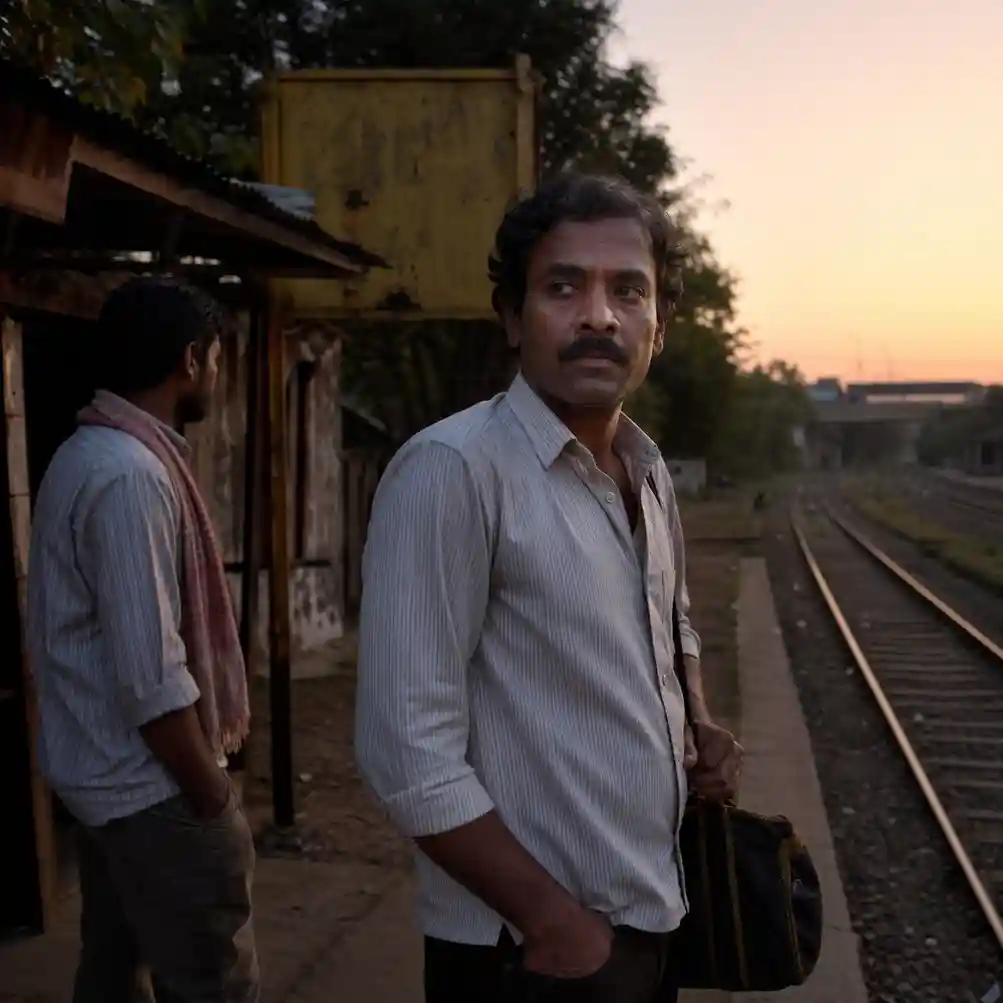
A House for Mr Biswas by V. S. Naipaul
A House for Mr Biswas is a long comic wound. V. S. Naipaul follows Mohun Biswas from unlucky birth to tired adulthood, and he makes one ordinary wish feel almost epic: Mr Biswas wants a house of his own. Not a palace and not wealth. Not public triumph. Just a place where his name, his body, his wife, his children and his failures can exist without permission from someone else.
That simple desire gives the novel its pressure. Mr Biswas spends much of his life in rooms that belong to others. He moves through relatives’ houses, dependent arrangements, crowded spaces and temporary solutions. Every shelter gives protection and humiliation at the same time. A roof can save him from exposure, but it can also remind him that he has no real authority over his own life.
The author treats this struggle with irony, but not with cruelty alone. Mr Biswas is vain, impulsive, touchy and often ridiculous. Still, his longing is never ridiculous. A house becomes proof of personhood. It is the physical shape of a claim: I was here, I mattered, I was not swallowed by family, fate or history.
That is why A House for Mr Biswas feels so large despite its domestic scale. The book turns rooms, thresholds, courtyards and rented corners into moral territory. Every move asks the same question in a new form. How much space does a person need before he can stop feeling like a guest in his own existence?
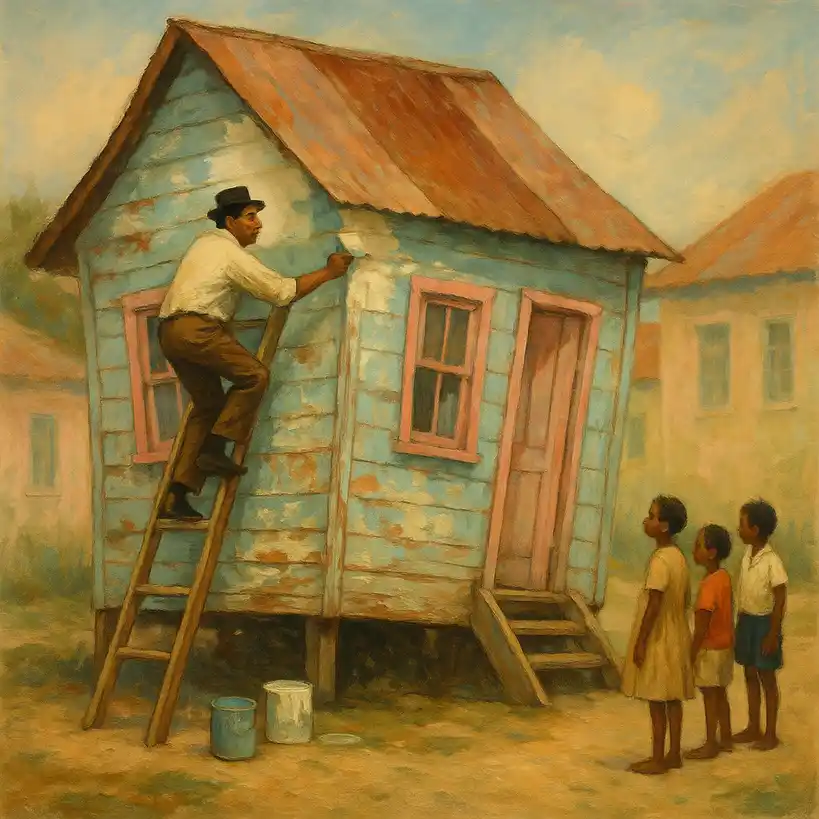
Born under a bad sign
Mr Biswas enters the world under signs of trouble. The details around his birth carry superstition, anxiety and social interpretation before he has any chance to act. From the beginning, his life is read by others. He is not simply a baby. He becomes omen, problem, burden and explanation. The writer uses this early atmosphere to show a world where fate is never just private. It is narrated by family, ritual, gossip and fear.
The death of his father deepens that pattern. Mr Biswas grows up with the sense that life has marked him in advance. Yet the novel does not accept destiny as simple truth. It shows how people become trapped by the stories told about them. Once a child is associated with misfortune, every later struggle can seem to confirm the old judgment.
This is one reason the book’s comedy hurts. Mr Biswas often behaves foolishly, but he also fights against a role assigned too early. His rebellion begins as refusal of a label. He wants to be more than the unlucky boy, the dependent husband, the failed worker or the inconvenient relative.
That struggle gives the childhood sections their depth. They are not merely background. They prepare the lifelong conflict between self-making and social enclosure. Mr Biswas wants to invent himself, but each household, job and family relation tries to name him first.
The result is a novel about dignity before success. He knows that freedom does not begin with grand ideas. Sometimes it begins with a child sensing that other people’s explanations are too small for the life he still hopes to claim.
The Tulsi house as empire
The Tulsi family gives A House for Mr Biswas one of its strongest social machines. When Mr Biswas marries Shama, he does not only gain a wife. He enters a large household ruled by custom, hierarchy, dependence and quiet pressure. The Tulsi world offers food, shelter and belonging, but it also absorbs individuality. It can make a man feel protected and erased at the same time.
The novelist presents this family system with sharp comic detail. The house is crowded with relatives, obligations, quarrels and rituals of authority. Its power does not need constant violence. It works through habit. Everyone knows where he or she stands. Everyone knows who has the right to speak, command, shame or withdraw support. Mr Biswas, with his pride and instability, fits badly into such a system.
His conflict with the Tulsis is partly comic, yet it is also serious. He wants the benefits of the household without surrendering his sense of self. That contradiction makes him both sympathetic and exasperating. He resents dependence, but often lacks the discipline to escape it cleanly. The family protects him by reducing him.
This domestic empire can be compared with 👉 Buddenbrooks by Thomas Mann, another novel in which family structure, property and social expectation shape individual lives. Mann’s world is European and bourgeois, while his is Indo-Trinidadian and colonial, but both books understand the family as an institution, not just a set of affections.
In A House for Mr Biswas, the Tulsi household becomes the force Mr Biswas must resist if he wants a name of his own. His house dream grows because their house is too powerful.
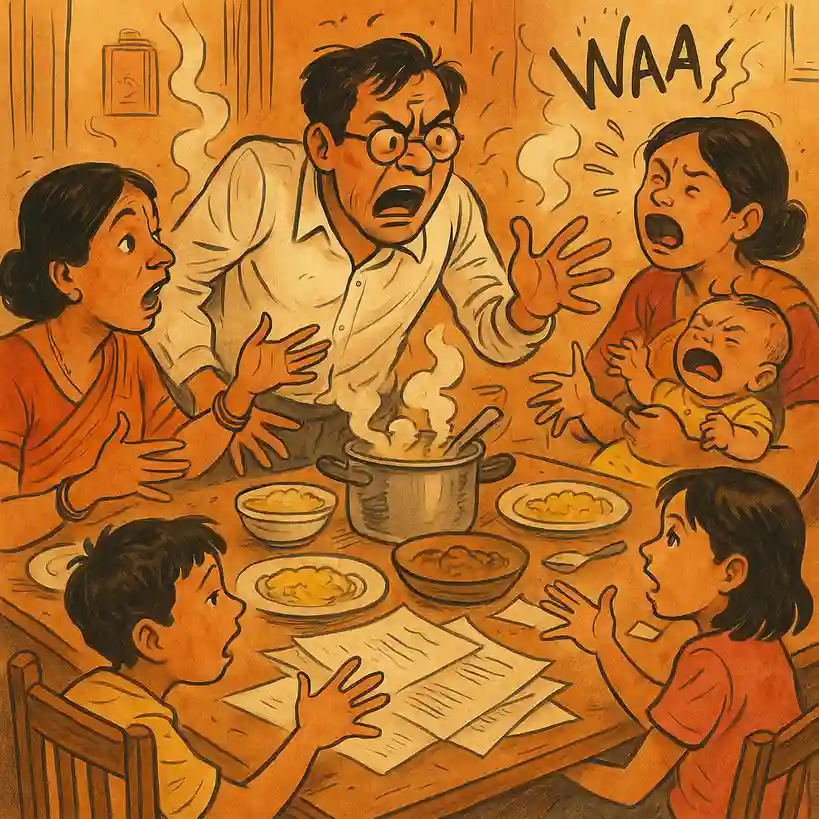
Shama and the difficult marriage
Shama is easy to underestimate if the novel is read only through Mr Biswas’s wounded pride. Yet she is central to the emotional complexity of A House for Mr Biswas. She belongs to the Tulsi world, but she also lives with the consequences of Mr Biswas’s anger, instability and dreams. Their marriage is not a romantic refuge. It is a long negotiation between loyalty, resentment, habit and survival.
The author refuses to make the marriage simple. Mr Biswas often feels trapped by Shama’s family, and Shama often seems tied to the household values that suffocate him. Still, she is not merely an agent of Tulsi power. She changes across the novel. She adapts, endures, argues and remains present through humiliations that would break a cleaner literary romance.
The marriage works through friction more than tenderness. Yet that friction gives it reality. Husband and wife hurt each other, but they also build a shared life out of disappointment. Their intimacy is rarely soft, but it becomes durable. Love appears as endurance without glamour.
This is one of his most honest achievements. He shows domestic life without sentimental decoration. Poverty, dependence and wounded ego distort affection. Still, people stay, cook, bargain, raise children and continue after quarrels.
Shama also complicates Mr Biswas’s hunger for independence. A house cannot be only his symbol. It must also contain a family that has paid for his restlessness. When the house finally matters, it matters because it holds more than one person’s pride. It holds the difficult history of a marriage that survived without becoming pure.
Work, failure and comic pride
Mr Biswas tries many ways to become independent, and most of them go badly. He paints signs, works in shops, enters journalism, starts projects, dreams beyond his means and often mistakes impulse for strategy. He turns these failures into comedy, but the comedy has a tight edge. Work is not just employment in the novel. It is a test of whether Mr Biswas can stand outside other people’s control.
His pride makes everything harder. He wants dignity, but he also wants recognition. And he mocks others, then feels wounded when he is mocked. He resists authority, but he is not always capable of building a stable alternative. This mixture makes him deeply human. Naipaul does not ask us to admire Mr Biswas without reservation. He asks us to see why his small defeats matter.
The world around him offers few clean paths. Colonial Trinidad is full of half-open doors: education, journalism, commerce, petty status and imitation of distant models. Mr Biswas tries to step through them, but each opportunity is narrow. Failure becomes the grammar of aspiration.
This aspect of the novel finds a useful echo in 👉 David Copperfield by Charles Dickens. Dickens also follows a life shaped by work, humiliation, self-invention and the search for a secure identity. His tone is cooler and more ironic, but he shares the long biographical sweep that turns ordinary struggle into narrative substance.
In A House for Mr Biswas, failure does not cancel ambition. It defines it. Mr Biswas keeps trying because surrender would mean accepting someone else’s version of his life.
Colonial Trinidad without romance
A House for Mr Biswas is also a novel of colonial Trinidad, but it does not present place as exotic decoration. Naipaul builds Trinidad through shops, roads, houses, newspapers, schools, religious customs, class signals and family economies. The island is not a colorful background. It is the social world that shapes every limit and every hope in Mr Biswas’s life.
The novel pays close attention to Indo-Trinidadian experience. Migration history, caste residue, Hindu practices, colonial education and economic insecurity all shape the characters’ lives. Yet the writer rarely explains this world from a comfortable distance. He lets it appear through habit, speech, architecture and conflict. The result is dense and unsentimental.
That lack of romance is one of the book’s strengths. Trinidad is neither paradise nor simple prison. It is a place of improvisation, imitation, ambition and hierarchy. People borrow cultural forms, adapt old customs and chase signs of advancement. Some dreams are comic because they are copied. Others are moving because they are necessary. Colonial life appears as daily negotiation.
This social texture connects the novel to 👉 The House of the Spirits by Isabel Allende in one broad sense: both books use household life to reveal larger histories of class, power and inheritance. Their styles differ greatly, but each understands the home as a social archive.
In his novel, Trinidad is remembered through pressure rather than nostalgia. Every house, job and road carries the marks of a society still measuring itself against powers elsewhere. Mr Biswas’s private hunger for a house is also a colonial hunger for form, place and legitimacy.

Quote List for A House for Mr Biswas
- “He had lived in many houses” This line captures the unsettled rhythm of A House for Mr Biswas. The sentence sounds simple, yet it carries a whole life of temporary shelter, dependence, and failed belonging. Because the houses can exist without him, the novel turns property into a question of identity.
- “But life is like that” The bluntness matters because it cuts through fantasy. In A House for Mr Biswas, disappointment rarely arrives with grandeur. Instead, it enters through family pressure, bad timing, weak money, and ordinary embarrassment. The quote also fits the book’s tragicomic tone, because pain and dry humor often stand side by side.
- “unnecessary and unaccommodated” This phrase gives the novel one of its sharpest emotional summaries. Mr Biswas fears not only poverty, but also erasure. Therefore, the house becomes more than a building. It becomes proof that he occupied space, resisted absorption, and claimed some small portion of the world.
- “AMAZING SCENES WERE WITNESSED YESTERDAY WHEN” This unfinished newspaper-style phrase shows the comic importance of language in the novel. Mr Biswas wants words to lift him above smallness, and journalism gives him a temporary stage. However, the broken headline also hints at his instability, because ambition often outruns control in A House for Mr Biswas.
Context-Rich Trivia List for A House for Mr Biswas
- A 1961 breakthrough: A House for Mr Biswas appeared in 1961 and became V. S. Naipaul’s first major international success. 🌐 Britannica describes the plot through Mohun Biswas’s desire for independence, with a house as his hard-won symbol of dignity.
- A father behind the fiction: The novel draws strongly on the life of the writer’s father, Seepersad, who worked as a journalist in Trinidad. The Nobel Prize bio-bibliography also notes that the father became the model for the protagonist.
- Trinidad as social map: A House for Mr Biswas does not treat Trinidad as background decoration. Instead, estates, family houses, shops, newspapers, roads, and towns create a social map of dependency and ambition.
- A house, not luxury: The central house matters because it offers identity, not comfort. That makes 👉 Home by Toni Morrison a strong internal echo, because both works connect shelter with memory, belonging, and fragile selfhood.
- Hanuman House matters: The Tulsi household gives the novel one of its great symbolic spaces. It shelters people, but it also absorbs them, which makes family life feel both protective and suffocating.
- Ranked among modern classics: Modern Library placed A House for Mr Biswas at number 72 in its list of the 100 best English-language novels of the twentieth century. 🌐 The list summary highlights its humor, texture, and house-centered premise.
- Family power and inheritance: The Tulsi world also recalls dynastic fiction, although in a smaller comic key. 👉 The House of the Spirits by Isabel Allende offers another family structure where private rooms, property, and inherited power shape personal fate.
- Comic pain: The novel often turns humiliation into comedy without softening the damage. That balance links well to 👉 Great Expectations by Charles Dickens, where social hope, embarrassment, and self-invention also drive the story.
The comedy of a wounded man
His comedy in A House for Mr Biswas is never gentle in a simple way. It exposes vanity, awkwardness, exaggeration and self-pity. Mr Biswas can be absurd. He sulks, boasts, misjudges, insults and dreams in ways that invite laughter. Yet the laughter often catches in the throat, because his ridiculousness comes from injury. He is funny because he is exposed.
This balance is hard to achieve. If the novelist were softer, the novel might become sentimental. If he were only harsh, Mr Biswas would become a target rather than a person. Instead, the book keeps him alive through contradiction. We see his pettiness and his courage, his selfishness and his need, his foolishness and his right to want more.
The humor also protects the novel from becoming a solemn tale of oppression. Life in the book is full of noise, quarrel, misunderstanding and theatrical pride. People perform themselves badly and then suffer the consequences. The comedy keeps pain from becoming abstract.
This wounded comedy links the novel to 👉 The Corrections by Jonathan Franzen. Franzen also works with family pressure, embarrassment, self-delusion and the sadness hidden inside comic domestic failure. He is leaner and more historically compressed, but both writers understand how families can make private weakness visible.
In A House for Mr Biswas, comedy is not decoration. It is a moral instrument. It lets the reader stay close to a man who might otherwise exhaust sympathy. We laugh at Mr Biswas, but the best moments make that laughter turn into recognition.
Why this house still matters
The ending of A House for Mr Biswas is powerful because it does not pretend that ownership solves everything. The house Mr Biswas finally gains is imperfect, financially burdensome and far from triumphant in ordinary terms. Yet it matters enormously. After a life of dependence, movement and humiliation, even a flawed house can become a victory.
Naipaul’s genius lies in keeping the scale small and absolute at once. Mr Biswas does not conquer society. He does not become rich. He does not erase his mistakes. Still, he creates a space where his life has some shape of its own. The house is not a reward for virtue. It is a fragile proof that he was more than a dependent figure inside other people’s rooms.
This is why the novel remains moving. Its dream is modest, but never minor. To own a house here means to resist disappearance. It means to leave children a place not entirely governed by someone else’s authority. It means to die with evidence of struggle. The small victory carries a whole life.
That idea gives the book lasting force. Many readers understand, across different cultures, the desire for a door that closes from the inside. Home can mean safety, dignity, privacy, memory and the right to arrange one’s own disorder.
A House for Mr Biswas endures because it makes that desire comic, painful and sacred without saying so directly. He gives one ordinary man the full weight of a life. The result is a novel about property, but also about the human need to occupy the world without apology.