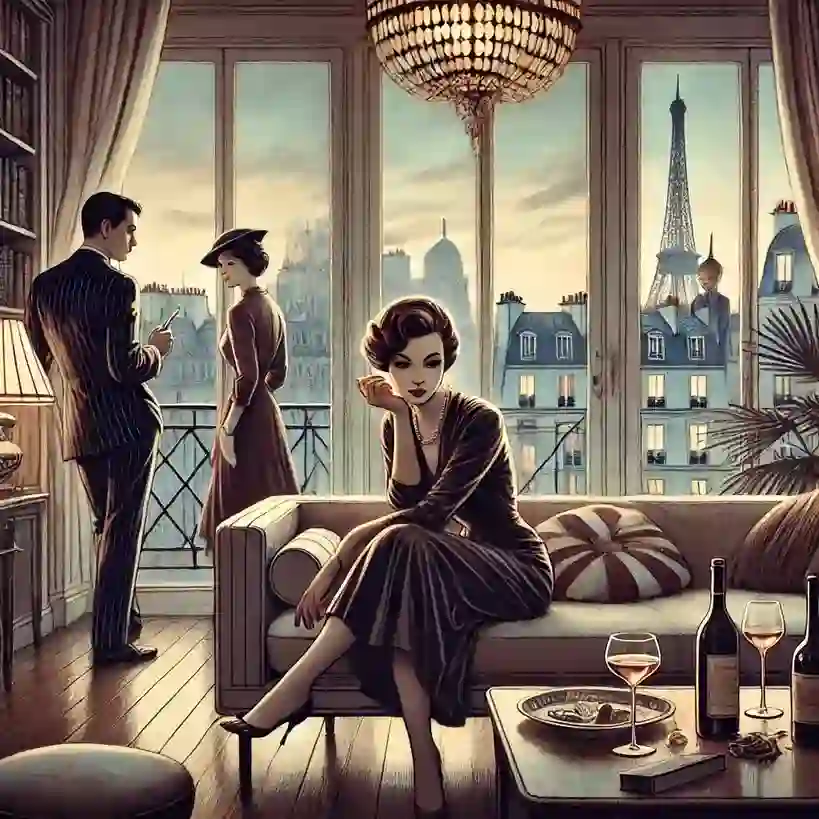
Do You Like Brahms? by Françoise Sagan follows a Paris affair
Paris sets the tempo: foyers, taxis, and late cafés. Consequently, Do You Like Brahms? lets small places carry big decisions. Françoise Sagan tracks a midlife affair with elegant restraint, so glances matter more than speeches. Because the question repeats, music as motive keeps returning. A program leaf, a reserved seat, a pause between movements, each detail nudges feeling into action. Moreover, the novel follows hesitation as closely as desire, which means every “yes” costs something.
Paule wants independence and tenderness. Therefore a younger man’s certainty unsettles her choice. She tests freedom without abandoning style; meanwhile, an older lover circles back with charm and conditions. Although the plot stays intimate, the stakes feel civic, since money, time, and respect shape what love can ask. In fact, the work plays longing against routine until the routine bends.
Do you like how sound turns into pressure. I do, because the score moves the room before any line lands. By contrast, a grand confession would break her clarity. Instead, Parisian rooms frame risk, and age-gap tension sharpens every invitation. Finally, the book lets one quiet night echo for weeks. As a result, this writing reads like a recital where the encore decides the future, and each listener hears a different answer.
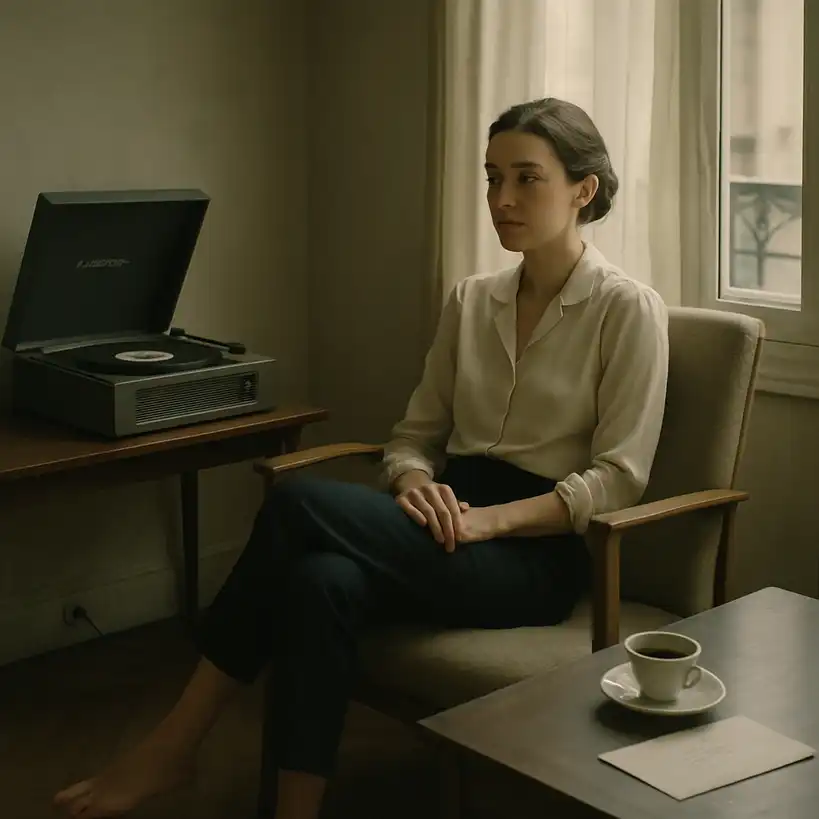
Form, mirror, and silence in Do You Like Brahms?
Sagan writes in clean strokes. Consequently, Do You Like Brahms? uses short scenes, deft ellipses, and queries that double as knives. Because repetition does the lifting, the title’s question keeps time while memory edits the present. Moreover, freedom with conditions emerges in dialogue that never raises its voice. For instance, a late call rearranges a week; as a result, calendars become plot.
I pair this existential drift with 👉 Nausea by Jean-Paul Sartre, since both books pace Paris by mood and choice. By contrast, the author refuses metaphysical sprawl; therefore listening before love governs the line. A look across a hall, a hand near a railing, a coat shrugged on too quickly—each gesture writes its own verdict. Meanwhile, ethics of attention replaces melodrama, and silence speaks first.
The music matters because it remembers. Although words falter, the composer scored their history long before they admit it. Consequently, a phrase in the third movement pulls them forward, then asks them to stop. Do you like that kind of test. You might, if you trust fiction to measure regret with care. Finally, it keeps longing and choice in balance, and the novel follows a Paris affair to its honest, necessary quiet.
Age, agency, and the price of elegance
Paule wants love without losing herself. Consequently, Do You Like Brahms? treats birthdays, wardrobes, and schedules as choices with weight. Because a younger man offers devotion, timing turns political. He arrives with certainty; she arrives with history. Moreover, private arithmetic governs what she accepts and what she returns.
Objects keep the argument honest. A coat becomes a promise; therefore wardrobe as armor replaces speeches. A seat at a concert becomes a test; consequently, choice at the door matters more than rhetoric. Although the rooms look soft, the terms feel hard. Françoise Sagan writes the pause before yes, and she lets that pause count as action.
Music remembers what talk edits. The musician carries scenes forward; meanwhile, the book asks if feeling can stay true while freedom stays intact. I noticed how a phone call changes an evening; therefore phone as metronome sets a tempo for consent. In fact, the novel prefers signals to slogans, and the signals never shout. Finally, Paule chooses in steps, not leaps, and the novel keeps score kindly while it refuses to lie.
Rules, judgment, and the quiet courtroom of Paris
Paris judges without robes. Therefore Do You Like Brahms? stages trials in foyers, elevators, and cafés. Because friends ask careful questions, reputation enters the room before Paule speaks. Moreover, rooms that negotiate turn desire into policy. A stairwell becomes pressure; a lobby becomes verdict.
I set this social court beside 👉 The Trial by Franz Kafka, since both show judgment arriving from nowhere and everywhere. By contrast, the writer removes nightmare and leaves etiquette. Consequently, quiet ultimatum replaces terror. The older lover uses charm like precedent; the younger lover pleads like a case. Meanwhile, the work let Brahms score each hearing, so phrases return when courage wavers.
Evidence remains concrete. A program with a crease, a late bouquet, an empty chair, each item argues. Because conversation circles back, the novel reads like minutes from a meeting that never adjourns. In fact, Paris acts as city as accompanist, keeping tempo while hearts decide. Finally, the book allows mercy without pretending the costs vanish. It closes each scene with a small ruling, then asks whether anyone won.
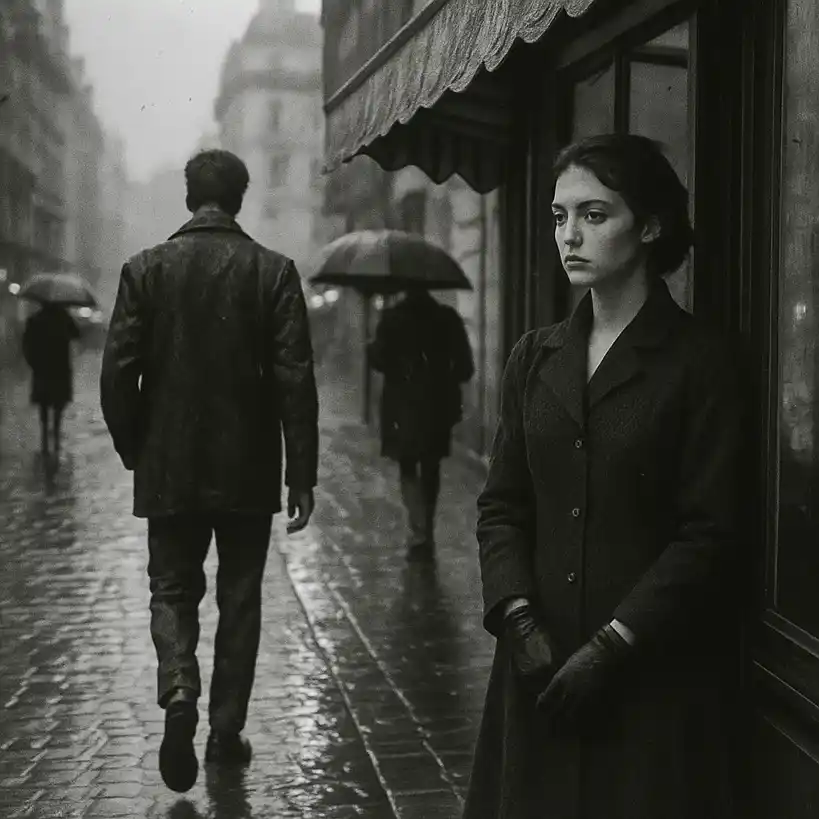
Work, independence, and how taste chooses
Paule earns her life one room at a time. Consequently, Do You Like Brahms? keeps her day job in frame, and that choice matters. She picks textures, listens to clients, and edits light; therefore work defines desire instead of the other way around. Because she arranges other people’s homes, taste as autonomy becomes a kind of armor. The younger man admires that calm; the older lover relies on it. Meanwhile, every consultation doubles as a rehearsal for consent.
Design turns truth visible. Although compliments flow easily, measurements do not lie; as a result, rooms tell the truth when people won’t. A sofa that never fits echoes an affair that never will. Moreover, invoices and calendars keep the moral ledger public. The book lets money, time, and tact argue louder than speeches while Brahms keeps the background steady.
Craft trains boundaries. Paule sets limits with samples and schedules; consequently, boundaries in practice replace grand declarations. She can accept dinner, then decline a weekend; she can change a lamp, then keep a wall. By contrast, melodrama would cancel nuance. Instead, the book follows small corrections until longing sits beside dignity without swallowing it. Finally, the result feels lived: a Paris afternoon, a finished room, and a decision that still holds tomorrow.
Leaving, returning, and the courage to edit a life
Breaks arrive in fragments. Therefore Do You Like Brahms? treats departures as sequences, missed calls, late taxis, silent mornings. Because time expands around doubt, time’s counterpoint lets music speak when language can’t. A letter lowers the volume; a bouquet raises it. Moreover, letters as leverage shift power without a scene. The city waits, and the next movement begins.
Starting over requires humility. Although vows tempt, ending as rehearsal proves truer to Sagan’s Paris. People practice goodbye before they say it. Consequently, the novel grants mercies in small, repeatable acts: a candid sentence, a returned key, a seat left empty on purpose. The work names the cost and keeps the bill visible, so choice never pretends to be free.
History still shadows the heart. I read Paule’s careful resets beside 👉 The Road Back by Erich Maria Remarque, since both works understand aftermath as labor. By contrast, she stays domestic and modern, which suits her score. Finally, the pages ask us to begin again carefully, not dramatically. Because the music remembers, the novel returns to a phrase and finds it changed, and the Paris affair it scored lives on as longing tempered by choice.
Two scenes in counterpoint: concert hall and phone light
Watch the hall first. Because the program guides attention, the movement swells, then thins. Consequently, Do You Like Brahms? lets melody as memory push Paule toward an answer she half-knows. A glove rests on a lap; a look crosses the aisle; a cough resets the room. Moreover, the younger man waits without talking, and waiting becomes argument. By contrast, the older lover treats silence like permission. Therefore gesture as contract governs what happens after the applause.
Now take the phone. The ring cuts through dishes and dusk. Although no one shouts, the tone hardens. As a result, a simple “are you there” decides tomorrow. Because Sagan writes pauses as action, the breath between words carries law. Meanwhile, habits nudge choices into grooves; consequently, threshold ethics turns doorways and stairwells into courts.
Read the pair together. The hall offers beauty that insists; the hallway offers routine that persists. Furthermore, the prose shows how art moves people, then life prices the motion. In fact, the scene pair teaches her to answer with care: yes to feeling, and yes to boundaries. Finally, the novelist refuses spectacle; therefore polite cruelty slips into the frame only when someone calls tenderness by the wrong name.
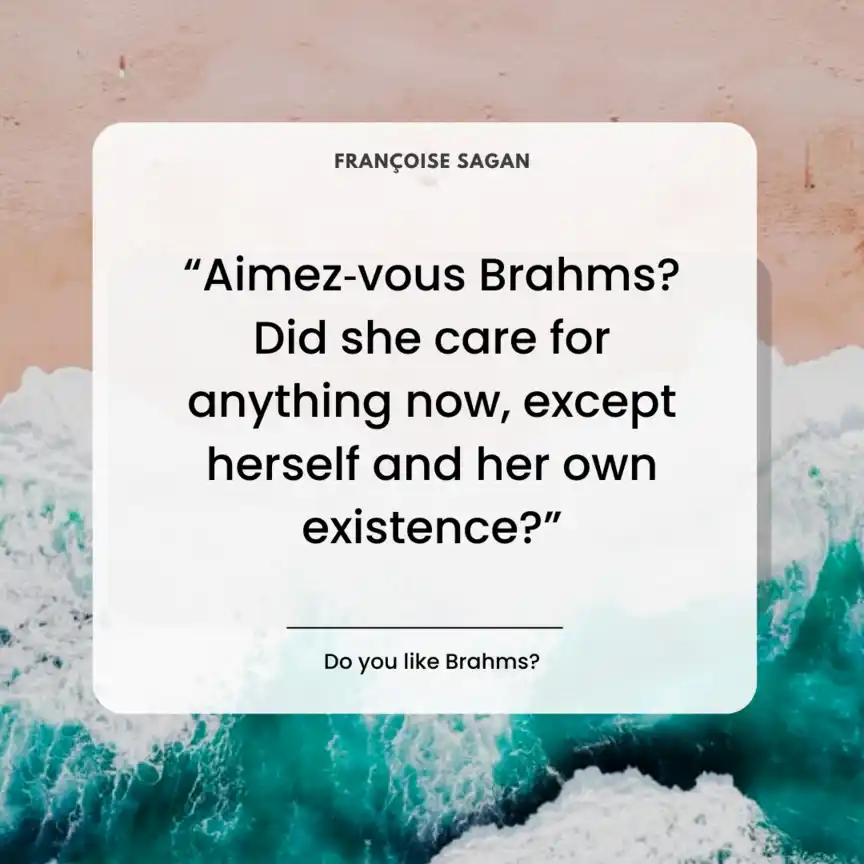
Quiet, precise quotes from Do You Like Brahms? by Françoise Sagan
- “Do you like Brahms?” The question opens the door; consequently, ties music to choice from the first note.
- “For a moment she stood by the open window.” Stillness becomes decision; therefore it lets light push Paule toward an answer.
- “The sunlight hit her full in the eyes and dazzled her.” Perception precedes confession; moreover, the writer shows feeling arriving as sight.
- “She was losing herself; she would never be herself again.” Doubt names its price; consequently, the novel measures agency without melodrama.
- “I accuse you of letting love go by.” Judgment sounds calm; therefore Françoise Sagan frames longing as a case argued in soft rooms.
- “You will be sentenced to loneliness.” Mercy thins; furthermore, punishment reads like time rather than law.
- “Paule thought without bitterness: men really are amazing.” Irony stays gentle; as a result, the book balances elegance with clarity.
- “I trust you so much.” Trust narrows freedom; consequently, a phrase that soothes also traps.
- “He left a note that said only, ‘Do you like Brahms?’” Invitation replaces speech; therefore the title becomes plot.
- “She turned back to the music.” Silence wins the argument; moreover, the book lets sound conclude what talk cannot.
Trivia Facts from Do You Like Brahms?
- Paris, 1959: The late-50s setting gives us foyers, cafés, and concert halls; consequently, Do You Like Brahms? stages decisions in elegant public rooms.
- Title as invitation: A handwritten concert note begins the affair; therefore it treats music as the key that unlocks feeling.
- Age-gap lens: Paule’s midlife independence meets a younger man’s certainty; moreover, the novel studies agency under social etiquette.
- Rooms as x-rays: Interiors expose truth; consequently, coats, tickets, and program creases carry verdicts more than speeches.
- Film afterlife: The 1961 adaptation “Goodbye Again” extends the story to cinema.
- Composer in the wings: Brahms’s romantic gravity shapes mood; for a crisp overview, read 🌐 Encyclopaedia Britannica on Johannes Brahms.
- Peer echoes of moral ambiguity: For modern love under pressure and self-deception, compare 👉 The Lover by Marguerite Duras.
- Narrative play with intimacy: For angle-shifting views on love and perspective, see 👉 The Heart of a Broken Story by J.D. Salinger.
- Etiquette as law: Because manner decides outcome, the novel turns whispers and timings into a courtroom without robes.
- Sagan’s restraint: Short scenes, patient ellipses, and musical returns guide emotion; consequently, the novelist proves how quiet can carry the heaviest choice.
Echoes and afterlife: what remains when the music stops
When the last note fades, the city still whispers. Consequently, the writer weighs who keeps the apartment key, the favorite seat, the quiet café. Because Sagan favors small closings, economy of feeling replaces grand exits. A returned bouquet settles one page; moreover, a kept ticket unsettles the next. Therefore the novel ends by editing, not erasing.
Reception maps the method. Readers remember restraint because restraint makes mercy possible. Although many romances trade volume for heat, the author builds adult vulnerability from poise, time, and choice. By contrast, melodrama would cancel dignity. As a result, the book’s tenderness travels well across decades, since calendars and pride still rule love.
Lineage clarifies the stakes. I pair this clockwork with 👉 The Train was on Time by Heinrich Böll, because both stories measure courage against timetables and quiet duty. Meanwhile, Do You Like Brahms? keeps the musician near every verdict; consequently, art of restraint becomes the tuning fork for truth. Finally, the last pages invite return without regret. You can walk back into a room you once loved, because you now know where to sit, when to stand, and how to listen when the music starts again.