Near to the Wild Heart by Clarice Lispector
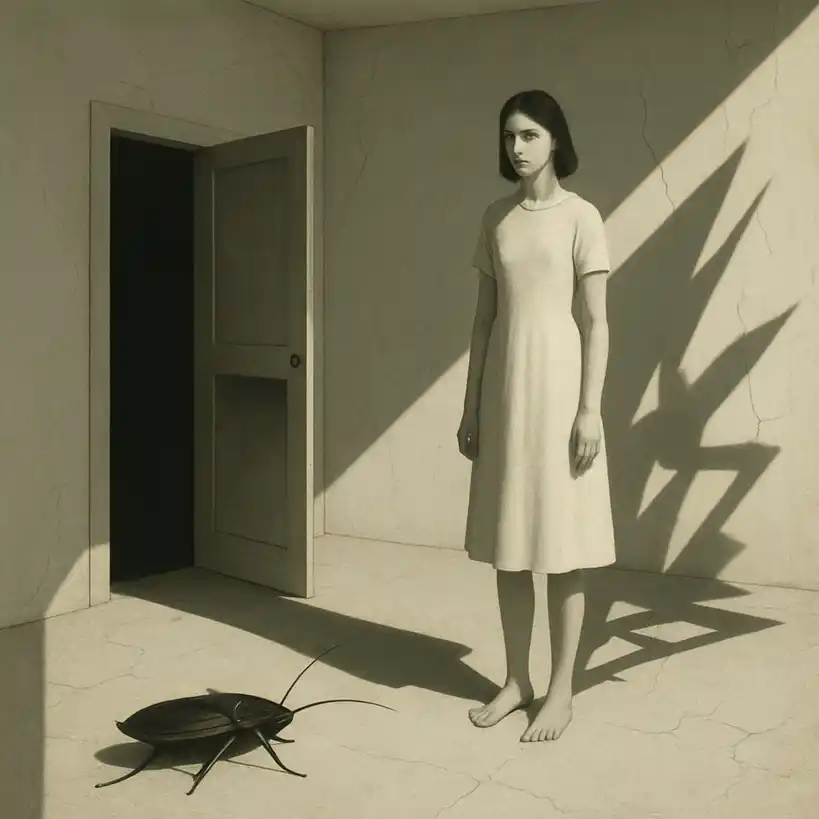
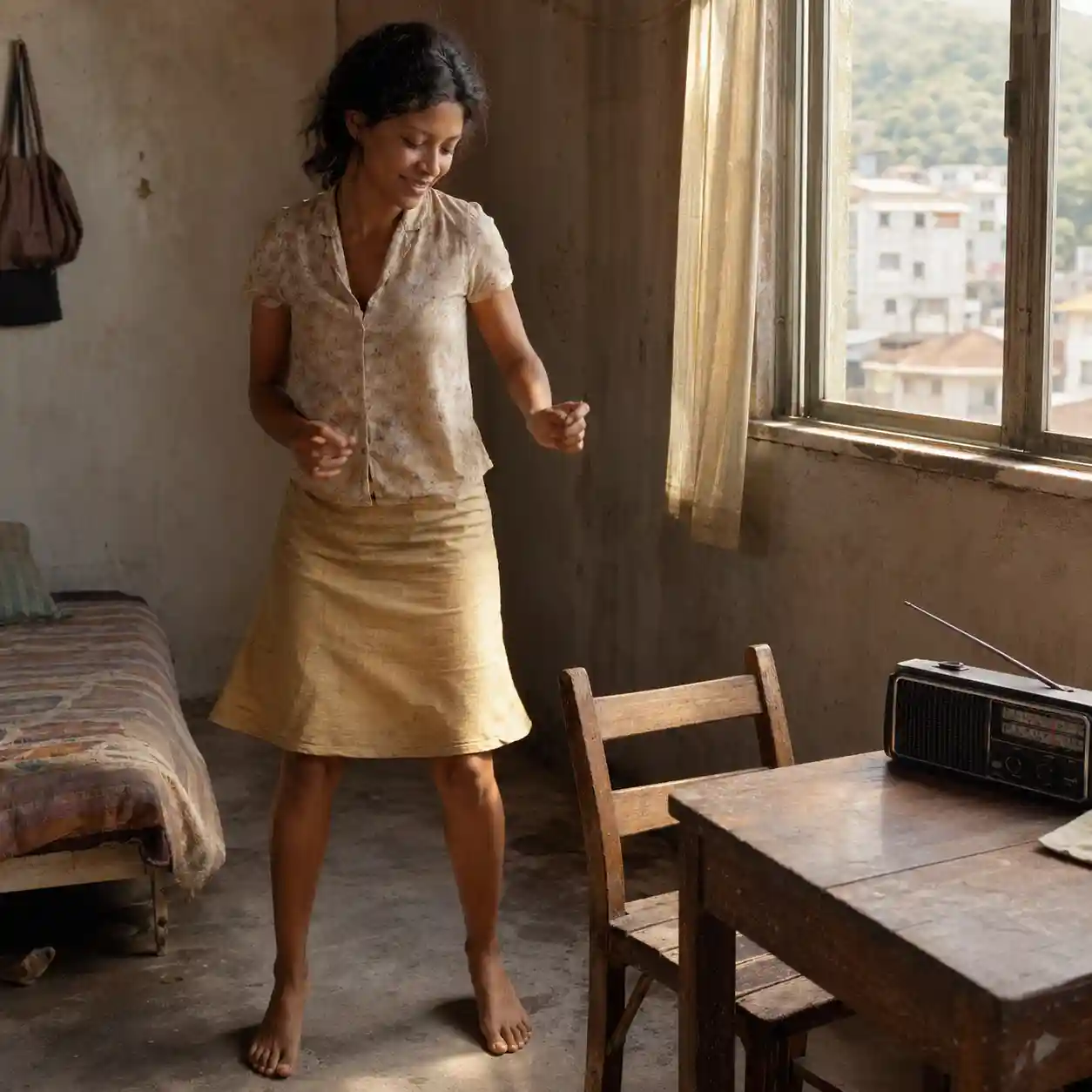
Near to the Wild Heart does not introduce Joana as a conventional heroine moving through a neatly ordered story. Clarice Lispector’s debut novel, first published in Brazil in 1943, presents her instead as a consciousness in motion: sharp, restless, solitary, and often more alive inside thought than in outward action. The book’s originality begins there. It refuses to make plot the main source of pressure.
Joana is seen as a child and as a young woman, but the novel does not treat her life as a smooth progression from innocence to maturity. Her past and present interrupt each other. A memory, a sensation, a phrase, or a sudden inner resistance can become more important than an event. The reader is asked to follow the rhythm of perception rather than the comfort of sequence.
The real drama is inward movement. Joana’s life contains family, marriage, desire, judgment, and loneliness, but these elements matter most because of how they alter her relation to herself. She does not simply experience the world. She questions the terms on which she is expected to exist inside it.
That makes the novel difficult in a productive way. It is not obscure for decoration. It is trying to catch the instability of being alive before social explanations tame it. Joana often seems close to something raw, unnamed, and fiercely private. The title captures that nearness. She is not safely inside ordinary life. She is near to something wilder, more dangerous, and more truthful than the roles prepared for her.
Childhood appears as a source of estrangement
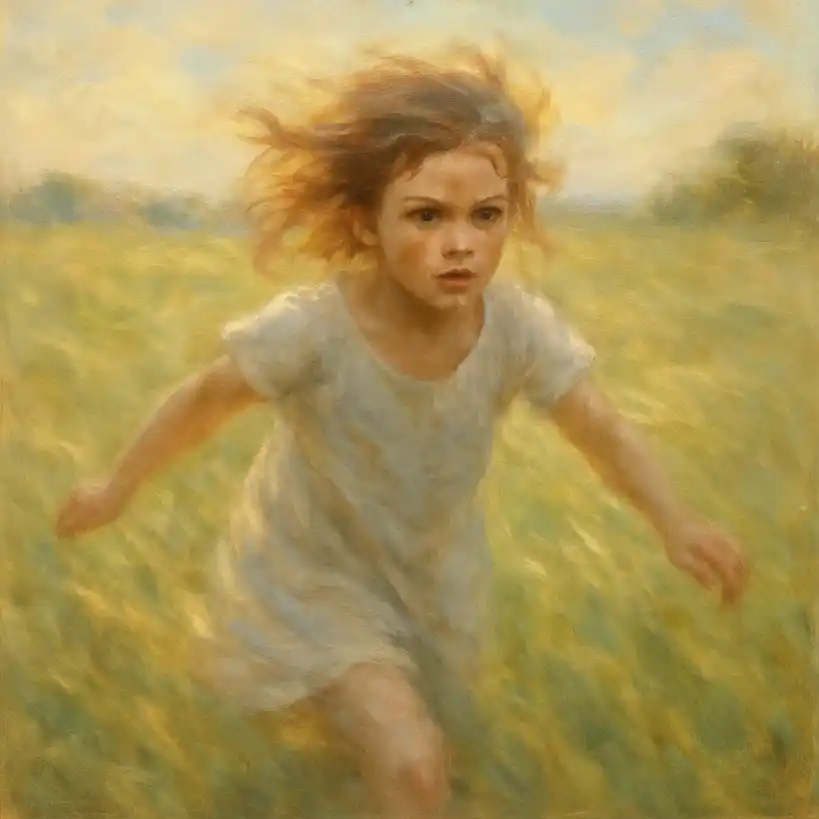
The childhood sections are not sentimental memories. They show Joana as already separate, already difficult, already unwilling to accept the easy moral language adults use around her. Her father’s presence, the domestic space, the early judgments of other people, and the small shocks of growing up all become part of a deeper estrangement. Childhood is not a lost paradise. It is the first place where Joana discovers that she does not fit.
This is one of the novel’s boldest moves. It does not present alienation as something that arrives only in adulthood, through marriage or social disappointment. Joana’s difference is older than that. She seems to possess an inner life that resists simplification from the beginning. She watches, feels, judges, and withdraws with an intensity that unsettles others.
Her solitude begins before she can explain it. That makes the child Joana more than a backstory. She is the early form of the adult consciousness that will later resist marriage, moral expectation, and ordinary definitions of happiness.
The novel’s treatment of childhood can be placed near 👉 To the Lighthouse by Virginia Woolf, where family life and early perception also carry emotional and philosophical force. Yet this book is harsher, more jagged, less domestic in its sympathies. Joana is not simply shaped by family. She seems to stand against the interpretive habits of family life.
Her childhood matters because it shows that the “wild heart” is not a later rebellion. It is a condition. Joana’s strangeness is not a phase. It is the ground from which the whole novel grows.
Marriage becomes a test of inner freedom
Joana’s marriage to Otávio does not give the novel a stable social center. It does the opposite. Marriage becomes a test of whether Joana can exist inside a form that expects definition, compromise, and emotional legibility. She is not made for simple domestic readability. That tension gives the book much of its quiet violence.
Otávio is not merely an enemy. He represents a kind of normal life, intellectual and emotional enough to matter, but not spacious enough to contain Joana. Their marriage reveals the distance between social arrangement and inner truth. A relationship can have a name, a structure, and daily habits while still failing to reach the deepest part of a person.
Marriage gives Joana a role she cannot fully inhabit. She can be wife in outward terms, but the word does not settle her. It does not explain her hunger, her separateness, or her resistance to being known too easily.
This is where the novel becomes especially modern. It does not frame female dissatisfaction only as a complaint against one bad man. The problem is broader. Joana does not merely need a better marriage. She needs a form of life that can acknowledge the unstable, excessive, and often contradictory movement of her consciousness.
The result is not a conventional marriage plot, because the question is not whether the marriage will succeed. The real question is whether any fixed arrangement can hold a self that experiences life as fluid, dangerous, and unfinished. Joana’s marriage exposes the gap between what society can name and what a person may actually be. That gap is where the novel lives.
Desire does not make Joana easier to read
Desire in Near to the Wild Heart does not soften Joana or make her more available to interpretation. It deepens her difficulty. She feels attraction, impatience, curiosity, disgust, hunger, and distance, often without translating them into the emotional patterns readers may expect. Desire does not solve her solitude. It reveals how difficult intimacy becomes when the self refuses to become simple.
The novel is powerful because it does not make Joana’s desire decorative. It is not there to make her charming, tragic, or morally legible. It is part of her thinking life. Her body and mind do not remain separate categories. Sensation becomes reflection; reflection becomes almost physical. The boundary between feeling and thought is constantly disturbed.
Desire becomes another form of consciousness. It is not only something Joana experiences. It is one of the ways she discovers the instability of being herself among others.
This quality connects the book, indirectly, with 👉 The Book of Disquiet by Fernando Pessoa. Pessoa’s work turns inwardness into a vast, unsettled landscape; this novel does something similarly radical through a female consciousness shaped by desire, judgment, and refusal. The tones are different, but both works make inner life feel larger than outward biography.
Joana’s desire is unsettling because it resists moral packaging. She is not written to reassure. She is capable of coldness, intensity, cruelty, insight, and vulnerability. The novel lets these contradictions remain. That is why she feels alive. She is not a lesson about womanhood or freedom. She is a self becoming aware of its own untamable movement.
The language thinks before it explains
The style of the novel is not merely lyrical. It is exploratory. Sentences often seem to search while they move, as if thought were forming in real time. The prose does not always explain Joana’s condition after the fact. It enacts it. This gives the book its unusual intensity and also its difficulty.
The author’s language does not treat reality as stable material waiting to be described. It breaks reality into sensations, flashes, abstract recognitions, and sudden inward turns. A scene may begin in a recognizable setting and then slip into mental pressure. The visible world matters, but it is always being transformed by perception.
The prose behaves like consciousness under pressure. It circles, interrupts, sharpens, and dissolves. It can feel abrupt because Joana’s inner life does not move in tidy transitions.
This is why the novel should not be read only for story. Its real achievement lies in rhythm, attention, and the refusal to separate thought from life. The language is not ornamental. It is the method by which the book discovers what it is about.
At times, the prose can feel almost impatient with ordinary narration. It wants to reach the pulse before explanation, the sensation before the social meaning, the thought before the finished sentence. That impatience is central to the book’s force. It makes Joana’s world feel unstable, but also immediate.
The result is a novel that still feels fresh because it trusts interior experience more than external architecture. Its style asks readers to read slowly, not because the book is long, but because nearly every movement of language carries pressure. Meaning is not handed over; it is approached, lost, and approached again.
The novel changed Brazilian fiction by turning inward
Near to the Wild Heart mattered because it arrived with a voice that did not fit the dominant expectations of Brazilian fiction at the time. Instead of foregrounding regional setting, social panorama, or realist explanation, it entered the private shocks of consciousness. That inward turn was not an escape from seriousness. It was a different kind of seriousness.
The book’s originality lies in how completely it trusts interior life. Joana’s thoughts are not secondary to the “real” story. They are the story. Her sensations, refusals, and perceptions create a literary world as demanding as any social landscape. The novel insists that the inner life of a young woman can carry philosophical and artistic weight.
The inward turn becomes a literary revolution. The book does not need a large public event to feel radical. Its radicalism lies in the authority it gives to a consciousness that will not behave.
That authority connects it with modernism, but it should not be reduced to imitation. The title may echo Joyce, and comparisons with European modernists are understandable, but the novel’s voice is unmistakably its own. It is less interested in displaying technique than in reaching a state of being that ordinary technique cannot hold.
This is why the book still matters in Brazilian literature and beyond. It opened a path for fiction in which perception, language, and identity could become the central field of action. Joana’s restlessness is not merely personal. It announces a new literary attention: the belief that the secret drama of consciousness can be as vast, strange, and consequential as any external plot.
Joana’s freedom is not a simple liberation
It is tempting to read Joana as a figure of liberation, but the novel is more difficult than that. Her resistance to ordinary roles is real, yet it does not make her peaceful. She wants freedom, but freedom in this book is not a clean, triumphant state. It is frightening, lonely, and often without clear direction.
Joana does not simply reject society and become whole. She questions marriage, morality, habit, and the expectations placed upon her, but she also faces the cost of not belonging easily anywhere. Her refusal gives her force, but it also isolates her. The novel understands that selfhood can be both necessary and painful.
Freedom appears as exposure, not comfort. Joana’s inner independence does not protect her from uncertainty. It intensifies her awareness of it. To be less false is not automatically to be happy.
This makes the book far more interesting than a simple feminist awakening narrative, though it has obvious importance for reading female subjectivity. Joana’s struggle is not only with patriarchy or marriage, but with the very problem of becoming a self. She wants to live from some inner truth, yet that truth keeps moving.
This aspect can be read beside 👉 Siddhartha by Hermann Hesse, another novel about a person who cannot accept inherited answers. Hesse’s path is more spiritual and structured; Joana’s is more volatile, less serene, and less resolved. Both works ask what it means to seek a life that cannot be received ready-made. Joana’s freedom remains unfinished because the novel respects her complexity. She is not an emblem to be solved. She is a force that refuses final possession.
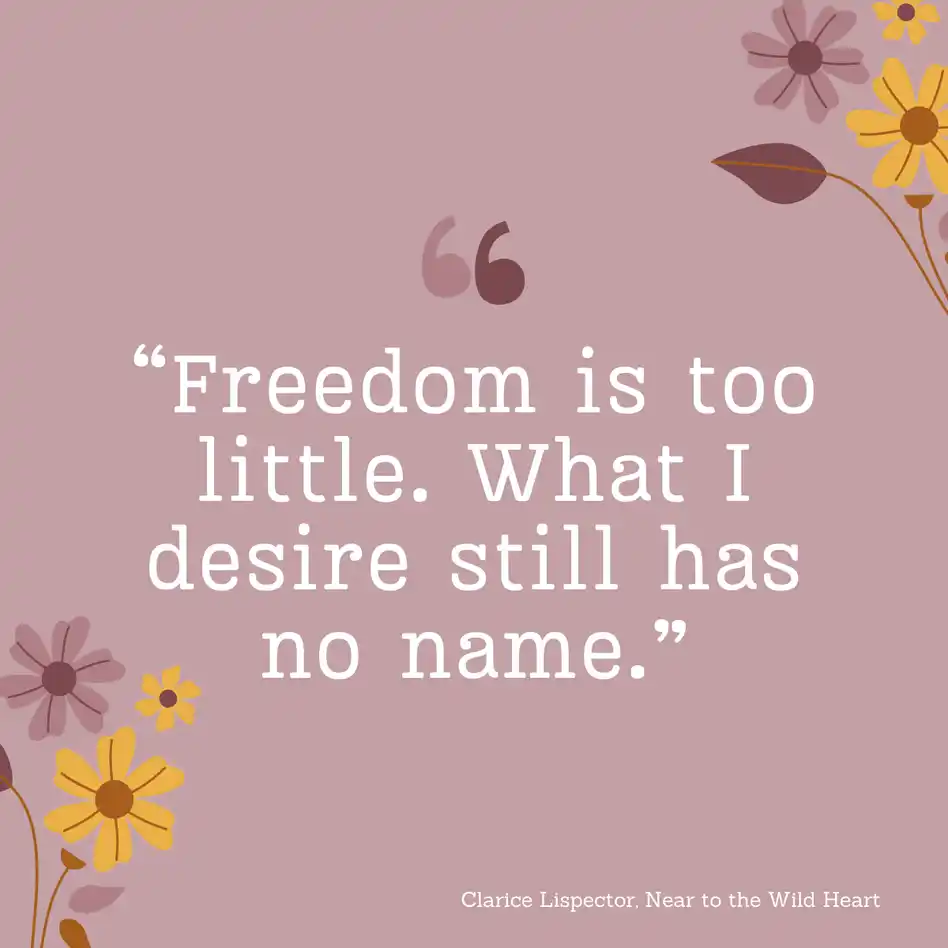
Context-Rich Trivia from Near to the Wild Heart
- Debut with shockwaves: Near to the Wild Heart appeared when the novelist was twenty-three; consequently, its bold inward style made the debut feel startlingly complete rather than apprentice-like. 🌐 Penguin notes its early publication and prize-winning status.
- Joyce title spark: The title comes from a line in James Joyce, yet the writer later said she borrowed the phrase without having read him deeply; therefore the link works more like instinct than homage. 🌐 A restored interview records that explanation.
- Joana’s inner weather: The book follows Joana from childhood into an unhappy marriage; moreover, Near to the Wild Heart makes consciousness itself the plot. Penguin’s summary highlights that arc from “wild, creative childhood” to a decision to make her own way.
- Modernist technique: Because the narrative moves through impressions, associations, and thought-fragments, it fits the broader stream-of-consciousness tradition. For a contextual definition, see 🌐 Britannica on stream of consciousness.
- Selfhood under pressure: For another novel about a divided inner life and social nonconformity, compare 👉 Steppenwolf by Hermann Hesse.
- Debate as form: The book’s psychological motion pairs well with 👉 Point Counter Point by Aldous Huxley, where competing minds turn structure into argument.
- Female intellect in public: To compare women thinking against social frameworks, see 👉 The Mandarins by Simone de Beauvoir.
Introspective Quotes from Near to the Wild Heart
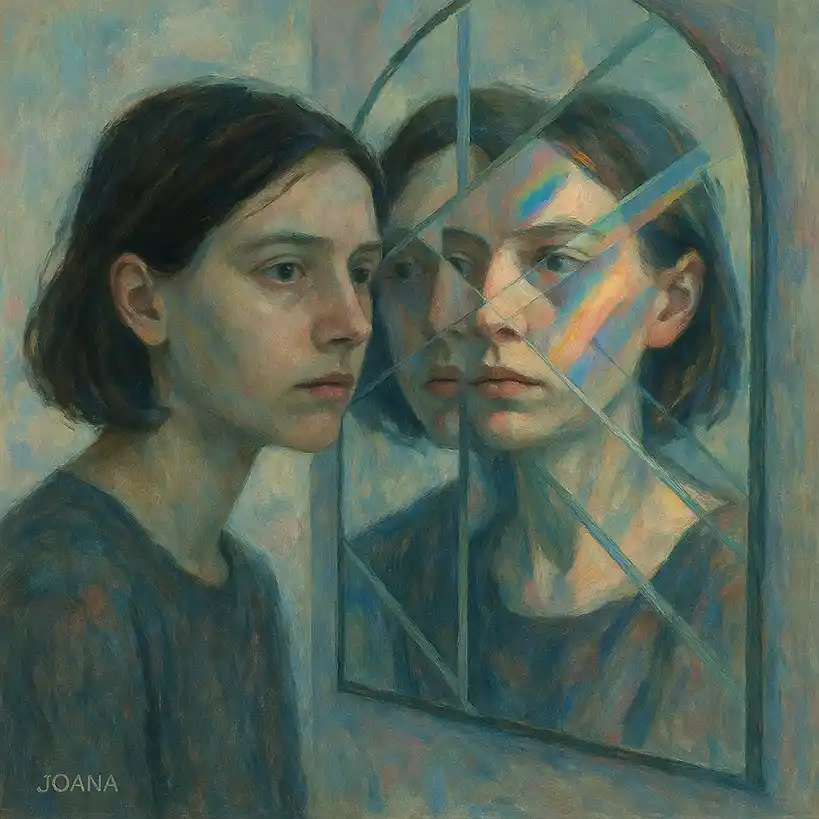
- “I have limits.” The mirror scene turns selfhood into shock; consequently, Near to the Wild Heart makes identity feel discovered rather than possessed.
- “Words are pebbles.” Language becomes matter, not decoration; therefore the novel treats thought as something that rolls, strikes, and resists control.
- “Being happy is for what?” This tiny question punctures ordinary consolation; moreover, Near to the Wild Heart refuses happiness when it sounds too neat.
- “Goodness makes me want to be sick.” The provocation exposes Joana’s rebellion against lukewarm virtue; consequently, morality arrives as texture and disgust.
- “from any struggle or rest” The fragment leads toward rising again; therefore the book links exhaustion to animal force rather than defeat.
- “a young horse” The image gives Joana speed, muscle, and beauty; as a result, Near to the Wild Heart makes freedom bodily.
- “I can’t say who I am.” The sentence is simple but devastating; meanwhile, the author’s heroine knows herself too intensely to summarize herself.
- “small and readily accessible” Even the waters of desire shrink and sharpen here; finally, Near to the Wild Heart finds vastness inside limits rather than outside them.
Why Near to the Wild Heart still feels dangerous
Near to the Wild Heart still feels dangerous because it does not flatter the reader’s desire for clarity. It offers no easy moral frame for Joana, no stable plot to absorb her contradictions, and no comforting explanation for the intensity of her inner life. The book asks to be met on different terms.
Its danger lies in how close it comes to experiences that language usually smooths over: the shock of being conscious, the fear of being known falsely, the violence of roles, the instability of desire, and the loneliness of freedom. These are not dramatic in the usual sense, but they are profound. The novel makes them dramatic by staying near them.
The book is alive because it remains unsettled. It does not become a finished argument about identity. It keeps identity in motion, even when that motion is painful.
This quality gives the novel a natural relation to 👉 The Passion According to G.H. by Clarice Lispector, but that would be too close as an internal comparison for a review of the same author. A better external echo is 👉 Steppenwolf by Hermann Hesse, where the self also appears divided, restless, and resistant to ordinary social form. Yet Joana’s consciousness is less allegorical and more immediate. She does not explain her division as a system. She lives it as pressure.
The novel remains essential because it captures the wildness beneath civilized surfaces. Its title is exact: Joana is not simply wild, and she is not safely distant from wildness. She is near to it. Near enough to feel its truth, near enough to be endangered by it, and near enough to make the reader feel that ordinary life may be far stranger than it pretends.
A debut that already contains a whole literary world
As a debut, Near to the Wild Heart is astonishing not because it is perfectly smooth, but because it already knows its deepest territory. It contains many of the concerns that would define the author’s later work: consciousness, language, solitude, female subjectivity, spiritual unease, bodily perception, and the strange border between ordinary life and metaphysical shock.
The book can feel uneven because it is so alive to discovery. Some passages burn brighter than the surrounding structure. Some transitions feel abrupt. But these qualities belong to its force. The novel is not trying to become a polished social narrative. It is trying to find a language for inner intensity before that intensity is domesticated.
The debut feels young in energy, not in depth. Its urgency comes from a writer already willing to trust the difficult material of consciousness. That willingness gives the book its lasting power.
Joana is not a character one simply likes or dislikes. She is a way of encountering the self as a problem. Her life exposes the weakness of conventional categories: wife, child, lover, woman, outsider, heroine. None of them fully holds her. The novel keeps pressing beyond them.
That is why Near to the Wild Heart remains more than a historical curiosity or a first step toward later masterpieces. It is already a major statement. It declares that fiction can begin not with what happens, but with how existence feels before it becomes explainable. Few debut novels announce such a complete artistic temperament. This one does, and its wildness has not faded.