The Death of Ivan Ilyich by Leo Tolstoy
The Death of Ivan Ilyich begins with a shock that is almost administrative. Leo Tolstoy does not open with grand tragedy, but with colleagues hearing that Ivan Ilyich has died and immediately thinking about promotions, transfers, and convenience. This cold beginning defines the whole novella. Death arrives, but society treats it as paperwork.
Ivan’s life looks successful from the outside. He has a respectable legal career, a proper marriage, a furnished home, social ambition, and the habits expected of his class. Nothing in his life appears monstrous. That is what makes the story so frightening. His failure is ordinary. He has not committed one dramatic crime. He has simply accepted a false idea of living.
Respectability becomes a spiritual trap. Ivan has learned how to behave, how to advance, how to decorate his home, and how to avoid unpleasant truths. Yet none of these skills prepares him for pain, loneliness, or death.
The novella’s force lies in this reversal. The life that once seemed “correct” begins to look empty when viewed from the sickbed. Ivan’s illness does not merely weaken his body. It exposes the structure of his existence. His career, marriage, friendships, and possessions suddenly appear as arrangements built around avoidance.
This is why the story still feels severe. It does not attack a villain. It examines a normal man who has mistaken social approval for meaning. Ivan dies slowly, but the deeper horror is that he may never have truly lived. The closer he comes to death, the clearer his life becomes, and that clarity is almost unbearable.
The first scene turns grief into social performance
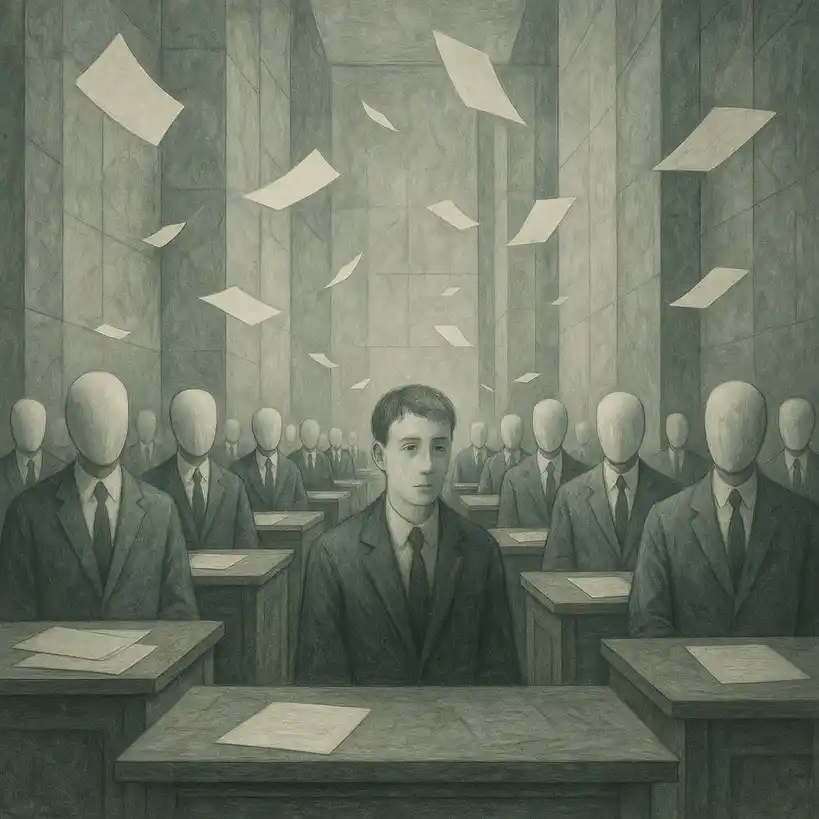
One of the most brilliant choices in the novella is the opening after Ivan’s death. Instead of placing readers immediately inside his suffering, the story begins among the living. His colleagues react with politeness, discomfort, calculation, and relief. They think of career benefits. And they wonder how the death will affect them. They perform sympathy because the social code requires it.
This scene is quietly brutal. Nobody behaves like a cartoon villain. That would be easier to dismiss. They behave like people trained to protect themselves from reality. Death is acknowledged, but only at a safe distance. The dead man becomes a professional vacancy, a social obligation, and an inconvenience.
The living defend themselves against death by trivializing it. Their reaction shows the world Ivan helped build: formal, practical, emotionally shallow, and terrified of direct feeling.
That opening changes how the rest of the novella is read. When the story moves backward into Ivan’s life, readers already know how his world will respond to his end. The social circle that once seemed important is revealed as hollow before we even see his career unfold.
The scene also prevents sentimental reading. Ivan’s death is not surrounded by noble mourning. It is surrounded by etiquette. The horror is not only that one man dies, but that the world around him has so little language for death beyond duty and self-interest.
This makes the novella painfully modern. Many cultures still turn mortality into procedure: notices, visits, phrases, arrangements, professional adjustments. The story exposes that protective machinery. It asks what remains when the forms of respect are present, but genuine encounter is missing.
His career teaches him how not to feel
Ivan’s professional life appears to be a triumph of order. He becomes a judge, advances carefully, and learns the pleasures of official distance. His work gives him status, structure, and a sense of control. Yet it also trains him in emotional separation. He learns how to handle people as cases, roles, and procedures rather than as suffering beings.
This matters because his career is not merely background. It shapes his soul. The courtroom teaches Ivan a style of existence: keep things formal, avoid disorder, preserve authority, and never let another person’s pain disturb the smooth surface of one’s own life. That habit later returns against him.
The judge becomes a man unable to judge himself. He has spent his life applying rules from a distance, but death forces him into a situation where no professional competence helps.
His illness strips away the protection of office. He can no longer stand outside suffering and classify it. So he becomes the case. He becomes the body. He becomes the person whose pain others politely manage without truly entering. That reversal is one of the novella’s deepest ironies.
This moral pressure gives the story a strong connection to 👉 Crime and Punishment by Fyodor Dostoevsky. Dostoevsky follows a man tormented by an extraordinary crime; this novella follows a man exposed by an ordinary life. Yet both works ask how a human being can evade truth until suffering forces a reckoning.
Ivan’s career is therefore not condemned because ambition itself is evil. It is condemned because it becomes a substitute for conscience. He has lived by correctness, and correctness has left him defenseless before the one event that cannot be managed as a career matter.
Marriage becomes another room of loneliness
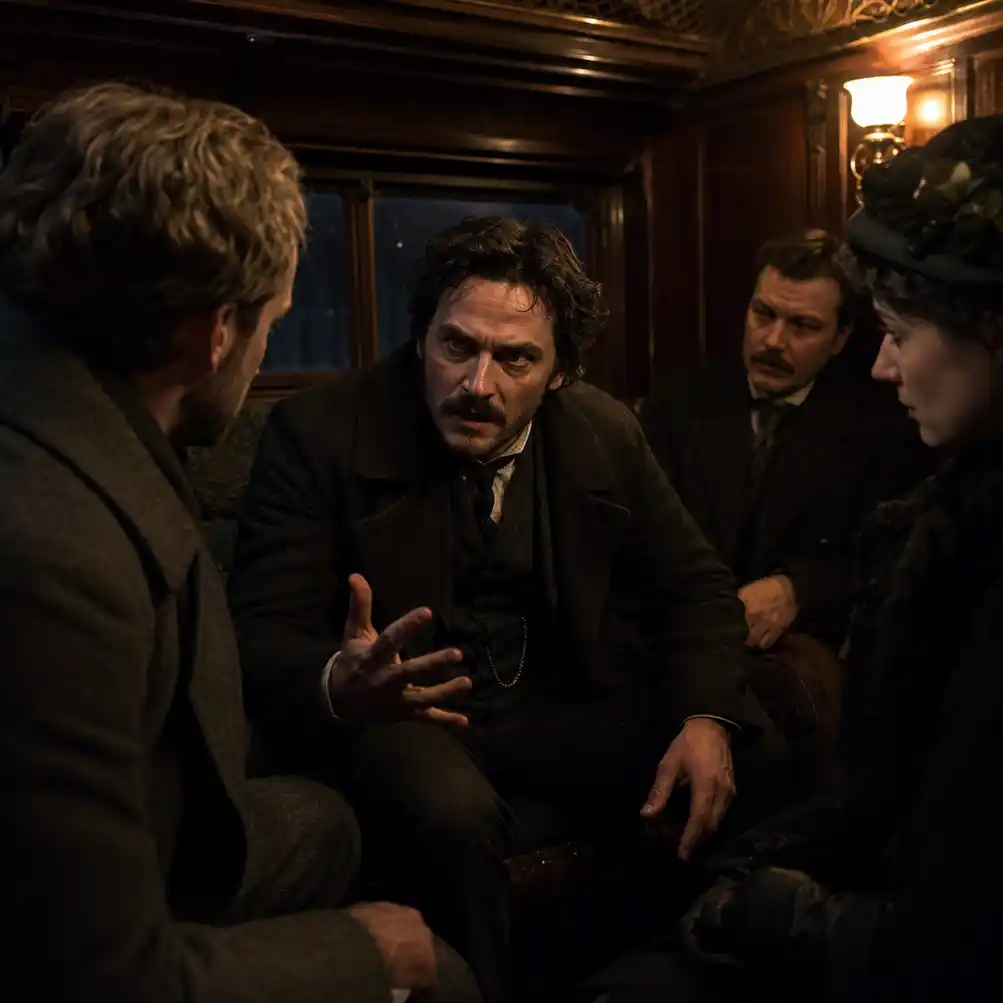
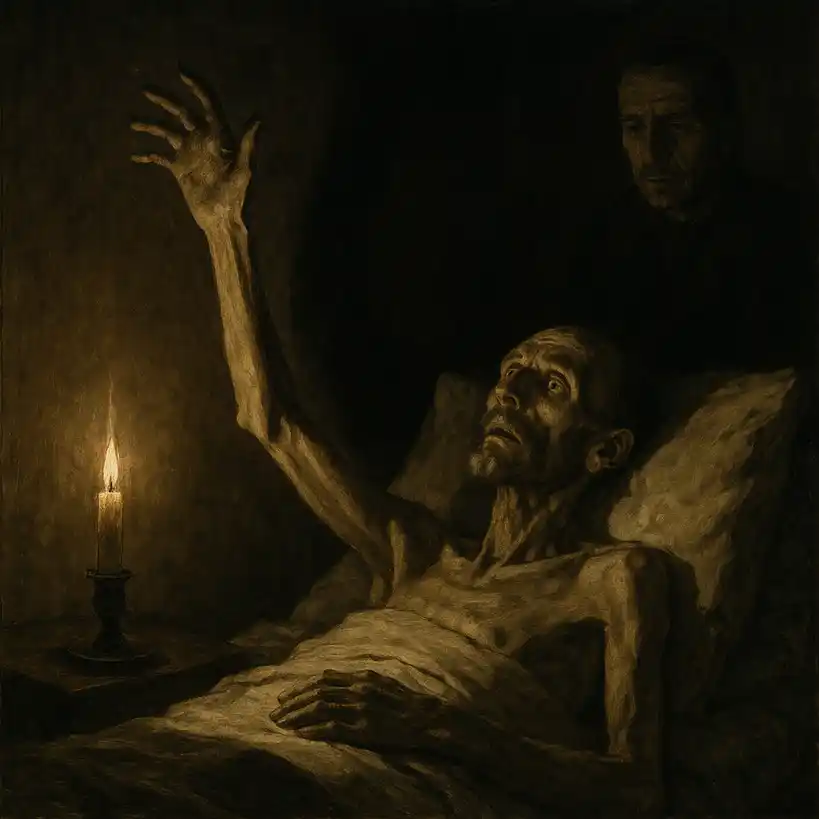
Ivan’s marriage is one of the most painful parts of the novella because it is not presented as a single dramatic disaster. It begins conventionally, deteriorates gradually, and settles into a cold arrangement of mutual irritation. Husband and wife learn how to avoid each other emotionally while maintaining the outward shape of domestic life.
Praskovya Fedorovna is not written as a simple monster. She is selfish, impatient, practical, and often cruel in her lack of imagination. But she is also part of the same social world as Ivan. Both have learned to value appearance, convenience, and position. Their marriage becomes a structure for preserving normality rather than sharing truth.
The home becomes another public space. Ivan’s household has furniture, manners, visitors, and routines, but it offers little intimacy when suffering begins. His sickroom becomes the place where the emptiness of the marriage can no longer be hidden.
The famous accident with the curtain is important for this reason. Ivan injures himself while arranging the home he wants others to admire. Domestic beauty, social pride, and bodily vulnerability come together in one small, terrible moment. The house that should protect him becomes part of the path toward death.
His family’s reaction to illness deepens the isolation. They want his suffering to be manageable, quiet, and not too disruptive. Ivan feels that everyone is lying, not always in words, but in attitude. They act as if he is merely ill, while he knows he is dying.
That lie destroys him almost as much as pain does. He needs one person to admit the truth. Instead, his family protects itself from him. The tragedy of the marriage is that death reveals not a broken passion, but a life where intimacy was never strong enough to face reality.
Pain forces truth where comfort failed
The physical suffering in The Death of Ivan Ilyich is relentless, but it is never only medical. Pain becomes a form of revelation. Ivan first wants a diagnosis, a treatment, a professional explanation. He wants his body to become a solvable problem. But the pain refuses to stay inside that language.
The doctors speak with authority, yet their authority resembles Ivan’s own professional manner. They discuss organs, probabilities, and procedures while missing the human terror at the center of the room. Ivan recognizes the pattern because he has used similar distance in his own work. The system of polite expertise offers him no comfort.
Pain breaks the fiction of control. It makes Ivan unable to live inside the pleasant lies that once protected him. Every hour of suffering asks the question he has avoided: What if my life has been wrong?
This is where the novella becomes more than a story about dying. It is a story about truth arriving through the body. Ivan’s mind resists. He argues with himself. He insists that he lived properly. Yet the pain keeps pressing. It exposes the gap between social success and inner reality.
The darkness he experiences is not merely fear of extinction. It is the fear that his whole life has been organized around false values. That is why the suffering feels metaphysical. The body hurts, but the deeper agony is moral.
This makes the novella almost unbearable in its precision. Comfort, reputation, and routine all fail. Pain becomes the one thing that cannot be politely dismissed. It pushes Ivan toward a truth he hates before it becomes the truth that may release him.
Gerasim shows what compassion looks like
Gerasim is the moral opposite of almost everyone around Ivan. He does not speak in abstractions, does not pretend that death is not happening, and does not treat Ivan’s suffering as an inconvenience. He serves him physically and honestly. That simple honesty makes him the most humane figure in the novella.
His compassion is practical. He lifts Ivan’s legs, stays with him, helps him through humiliating bodily needs, and does not recoil from the reality of dying. Also he is not sentimental. He does not offer speeches about meaning. He offers presence. In a world of social lies, that presence becomes radical.
Gerasim tells the truth by not turning away. He understands that death is part of life, and because of that, he can be gentle without pretending. Ivan senses this difference immediately.
The contrast is devastating. Educated, respectable people cannot bear the truth of death. A servant can. The novella does not idealize poverty in a simplistic way, but it does show that social rank has not made the upper classes wiser, kinder, or more honest. Gerasim’s lack of performance gives him moral authority.
His role can be read beside 👉 The Stranger by Albert Camus, where social expectations around death also become a test of truth and falseness. Camus exposes the violence of emotional convention; this novella exposes the cruelty of polite denial. Both works ask what society demands from people when death enters the room.
Gerasim matters because he gives Ivan what no theory can give: another human being willing to share the truth of the situation. That does not remove the pain, but it makes Ivan less alone. In the end, compassion is not an idea. It is a body staying near another body.
Context-Rich Trivia from The Death of Ivan Ilyich
- Novella precision: The Death of Ivan Ilyich compresses a whole social world into one dying room; consequently, its short form makes every visit, cough, and polite lie feel heavier. For form context, see 🌐 novella overview.
- Realism with a blade: The work exposes furniture, rank, and drawing-room manners with almost clinical clarity; therefore The Death of Ivan Ilyich belongs naturally beside 🌐 realism in the novel
- Illness as revelation: The diagnosis matters less than the moral stripping that follows. For a modern care context, 🌐 palliative care helps frame why pain, dignity, and family presence matter so deeply.
- Bourgeois awakening: Ivan’s “proper” life collapses because correctness cannot answer death; for another moral conversion staged through mortality, compare 👉 A Christmas Carol by Charles Dickens.
- Life in one corridor: The novella turns rooms into verdicts; consequently, doors, sofas, and bedside routines become evidence against a life built for appearances.
- Beginning and ending: To study death as passage rather than spectacle, compare 👉 Morning and Evening by Jon Fosse.
- Selfhood under pressure: Ivan’s crisis asks what remains when public identity fails; therefore 👉 The Quest for Christa T. by Christa Wolf offers a useful parallel on memory and personhood.
- Final clarity: The Death of Ivan Ilyich hurts because it lets truth arrive late, yet not too late for one act of pity.
Piercing Quotes from The Death of Ivan Ilyich
- “the wrong life” The phrase cuts through status, routine, and self-defense; consequently, The Death of Ivan Ilyich turns biography into moral evidence.
- “It is impossible” Denial becomes a reflex; therefore the dying man fights truth before he can understand what truth asks from him.
- “it hurts” Pain destroys social language; moreover, The Death of Ivan Ilyich lets the body speak where polite rooms have failed.
- “Can it be death?” The question sounds almost simple, yet it cracks the entire structure of Ivan’s respectable life.
- “Death. Yes, death.” Repetition removes disguise; consequently, The Death of Ivan Ilyich makes recognition feel physical, not philosophical.
- “I am sorry for them” Compassion reverses the room; therefore the sufferer finally sees others, not only his own terror.
- “there was no fear” The ending changes the tone without cheap comfort; as a result, The Death of Ivan Ilyich finds release through pity, not argument.
The final awakening is small, not decorative
The ending of the novella can sound simple if summarized too quickly: Ivan sees the falseness of his life, feels pity for his family, and finds release. But the power of the ending lies in how hard-won and unsentimental it is. The awakening does not erase the horror that came before. It comes through terror, bitterness, resistance, and almost total isolation.
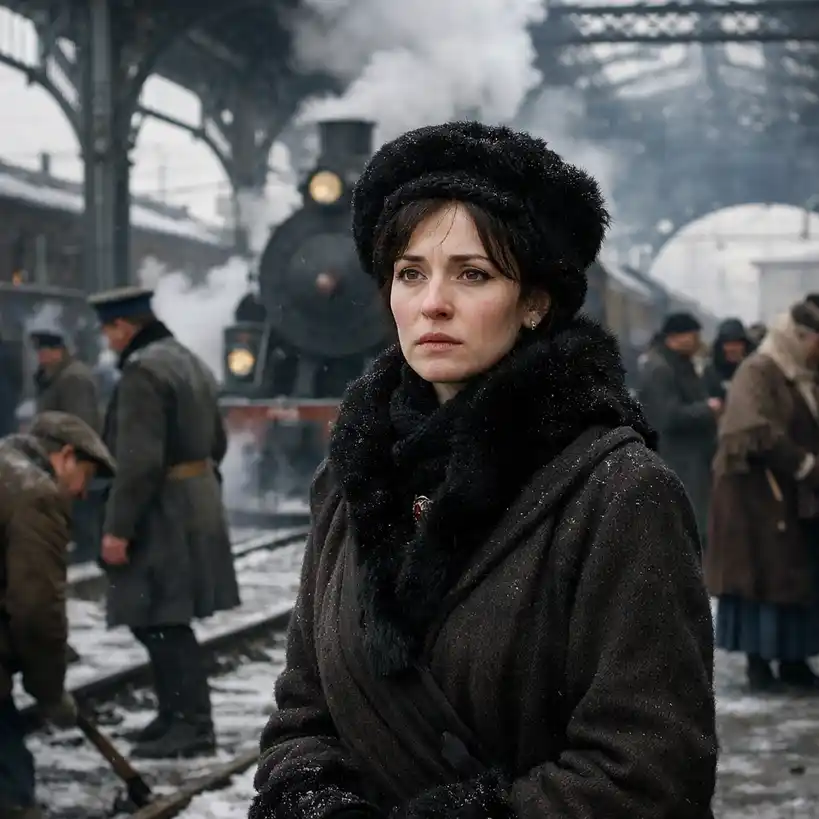
Ivan’s final change begins when he stops thinking only of his own suffering. He sees that his pain also torments others. For the first time, compassion moves outward from him. This does not make his earlier life noble, but it breaks the closed circle of self-pity. He can finally recognize another person’s suffering as real.
The release comes through pity, not explanation. The novella does not solve death intellectually. It transforms Ivan’s relation to it. The fear loses its absolute power when he stops clinging to the self that was built on falsehood.
This ending connects with 👉 Siddhartha by Hermann Hesse in one limited but useful way. Both works move toward a form of spiritual recognition that cannot be reached through social success or borrowed formulas. The difference is sharp: Hesse’s path is expansive and meditative, while Tolstoy’s is compressed, painful, and almost suffocating.
Ivan’s final light should not be read as an easy consolation. It is too late to recover the wasted life. The novella does not undo that waste. Instead, it offers a severe possibility: even at the edge of death, truth may matter. The final awakening is small, but it is real. It does not beautify dying. It shows that one honest movement of the soul can be more meaningful than decades of correct behavior.
Why The Death of Ivan Ilyich still wounds
The Death of Ivan Ilyich still wounds because it attacks a temptation that has not disappeared. Many people still build lives around approval, status, work, comfort, and avoidance. The details have changed, but the pattern remains recognizable. A life can look successful while being quietly empty.
The novella does not ask whether one will die. It asks whether one has lived in a way that can face death without total collapse. That question is brutal because it cannot be outsourced. No career, marriage, house, diagnosis, or social circle can answer it for Ivan. Each structure he trusted fails when he needs truth most.
The story is short because the judgment is direct. It wastes no space. Every scene turns the screw: the colleagues, the marriage, the doctors, the pain, the servant, the final cry. The compression makes the reading experience feel almost physical.
Its lasting force can be compared with 👉 Blindness by José Saramago. Saramago imagines a collective crisis that strips civilization down to its moral core. This novella does the same to one man. Both works ask what remains when the usual structures of dignity collapse.
What remains, in Ivan’s case, is first terror and then a fragile possibility of truth. That is why the book is not merely depressing. It is severe, but not empty. It suggests that the worst death is not bodily death, but dying inside a life built on lies.
The novella remains one of literature’s sharpest confrontations with mortality because it refuses spectacle. A man lies in a room and suffers. Around that room, an entire civilization of manners is judged. That is enough.