Amélie Nothomb: A Life Rewritten as Literature
Amélie Nothomb is one of the most recognizable figures in contemporary French-language literature. The tall hats, black clothes, annual novel, and exuberant interviews suggest a personality fixed by ritual. Her books reveal the opposite. Across autobiographical narratives, dialogue novels, and modern fairy tales, identity never settles. A child becomes a god, an office employee becomes a cleaner, and a grieving daughter speaks in her dead father’s voice.
That pattern gives her prolific career a coherence deeper than its public image. She tests how much a life can change when language retells it. Japan becomes birthplace, paradise, workplace, lost country, and impossible destination. Hunger becomes illness, appetite, artistic drive, and metaphysical condition. Even the self named “Amélie Nothomb” moves between documented person, narrator, pseudonym, and performance.
Her central subject is identity under revision. The shortness and speed of her novels can hide that ambition. Yet their apparent simplicity repeatedly opens difficult questions: Who owns a memory? Can invention tell a truth that fact alone cannot? What survives when a person becomes a story?
Two Birthplaces and a Productive Contradiction
Official Belgian sources record that Fabienne Claire Nothomb was born in Etterbeek on 9 July 1966. The autobiographical figure called Amélie Nothomb gives herself a different beginning: Kobe, 13 August 1967. Publisher biographies long repeated the Japanese version, while her fiction made it culturally persuasive.
This discrepancy should neither be ignored nor treated as scandal. It exposes the method running through the work. Japan is not merely a country in her biography. It is where consciousness, pleasure, language, and loss first acquire imaginative form. Saying that the literary Amélie was born there expresses an emotional truth while altering a civil one.
The choice complicates autobiographical writing. Readers may expect the author’s name on the narrator to guarantee factual identity. Nothomb offers recognition without that guarantee. She uses real relatives, journeys, jobs, and wounds, then reorganizes them into myths with their own causality.
The contradiction is part of the authorship. It asks readers to distinguish a legal person from a deliberately constructed literary self. Her life supplies the material, but narrative decides where that life begins.
Childhood in Motion, Memory in Pursuit
Amélie Nothomb’s father, Patrick Nothomb, was a Belgian diplomat. His appointments carried the family through Japan, China, the United States, Bangladesh, Laos, and Burma. This childhood offered unusual cultural range, but recurring movement made departure a governing emotion. Homes appeared and vanished. Languages changed. Friendships began with the knowledge that they might soon end.
Japan occupied a privileged place in this mobile world. Her attachment to the Japanese nanny Nishio-san and the landscape around Kobe later became central to The Character of Rain. Early consciousness emerges through water, gardens, white chocolate, language, and a child’s conviction of divinity. Loving Sabotage relocates that intensity to Beijing, where war games and first desire convert diplomatic isolation into epic experience.
Elsewhere, movement becomes appetite. The Life of Hunger links countries through craving, as if the child could answer unstable geography by consuming beauty, words, water, or knowledge. Memory enlarges sensations until they become a private cosmology.
Exile begins before any fixed homeland exists. That is why Amélie Nothomb writes return so often. She does not seek a place exactly as it was. Instead, she seeks the self that a lost place once allowed her to imagine.
Belgium and the Discovery of Estrangement
Returning to Belgium as a teenager did not produce an uncomplicated homecoming. Amélie Nothomb had inherited Belgian nationality and family history, yet ordinary European life felt unfamiliar. From distant diplomatic postings and through French classics, Europe had first existed as an imagined continent. Daily Belgium could not match that construction.
After severe anorexia during adolescence, writing became increasingly important. She studied Romance philology at the Université libre de Bruxelles, following an initial year connected with law. Formal study sharpened her fascination with etymology, rhetoric, and unusual vocabulary.
Philology encouraged a view of words as objects with histories and transformative power. Her characters often seize control by defining a term, assigning a name, or forcing an opponent into a verbal category. Language is never merely descriptive.
Belonging became a linguistic act rather than a location. Amélie Nothomb could be Belgian, emotionally Japanese, culturally itinerant, and committed to French prose without resolving those positions into one identity. Literature offered a form large enough to hold the incompatibility.
The Tokyo Failure That Became a Victory
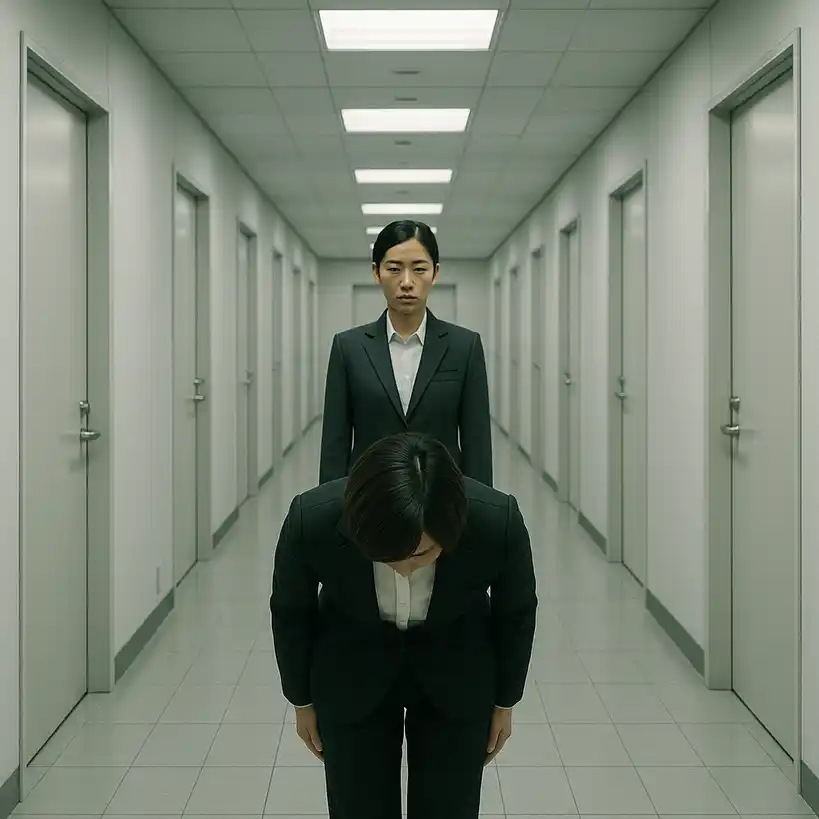
In 1988, Amélie Nothomb returned to Japan and later took a one-year position in a large Tokyo company. She expected language and childhood attachment to ease her entry. Instead, the job exposed the distance between remembered Japan and adult corporate life through rigid hierarchy, humiliation, and diminishing assignments.
Fear and Trembling transformed that experience into her international breakthrough. Its narrator begins as a translator and ends cleaning toilets, yet the book refuses a simple fall from dignity to defeat. Comic timing recovers authority over humiliation. The company controls the employee’s tasks, but not the story’s later shape.
Fubuki Mori, the supervisor, gives the novel its most charged contradiction. She is both an agent of punishment and a woman constrained by gendered expectations. Admiration, rivalry, desire, resentment, and misunderstanding occupy the same relationship, preventing a simple complaint about cruel management.
Narrative reverses the hierarchy of the office. The supposedly incompetent employee becomes the person who names the system. That experience also taught Nothomb that returning to a beloved place does not restore childhood. It produces another version of exile, this time inside the country she had chosen.
A First Novel Staged as Combat
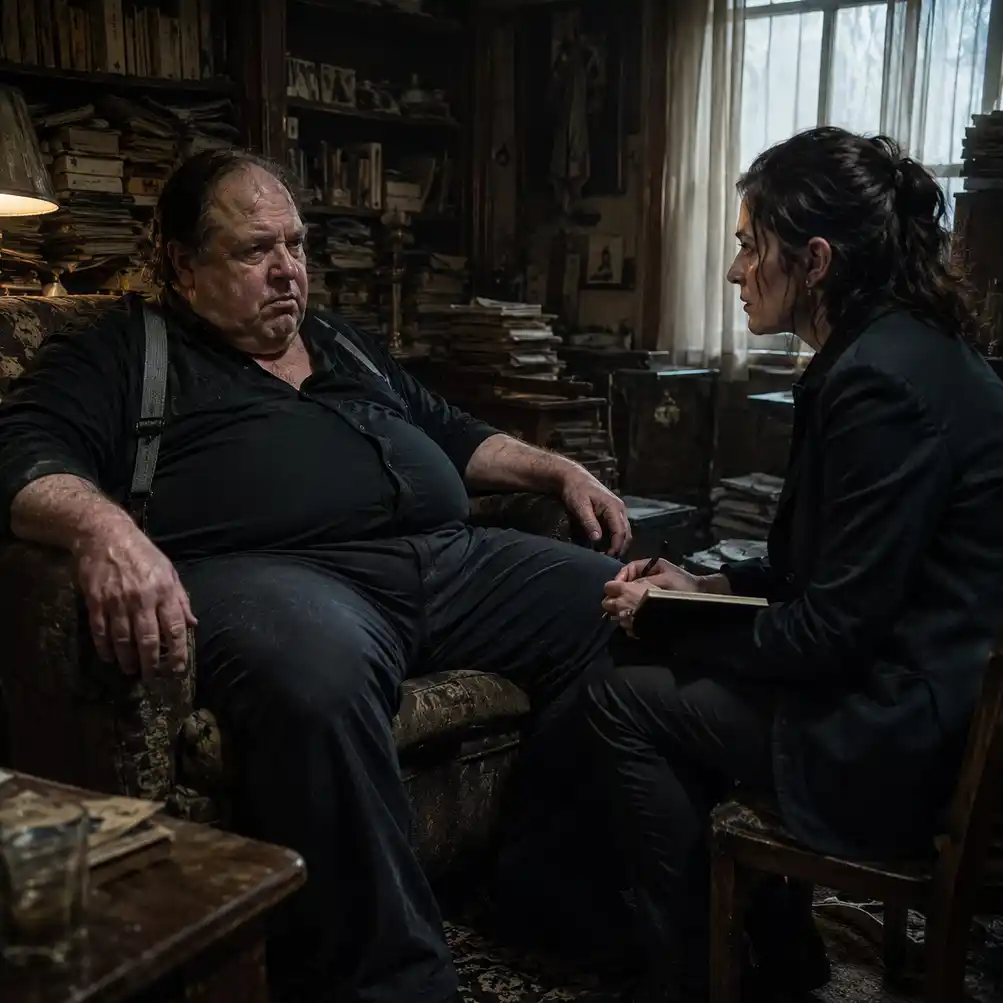
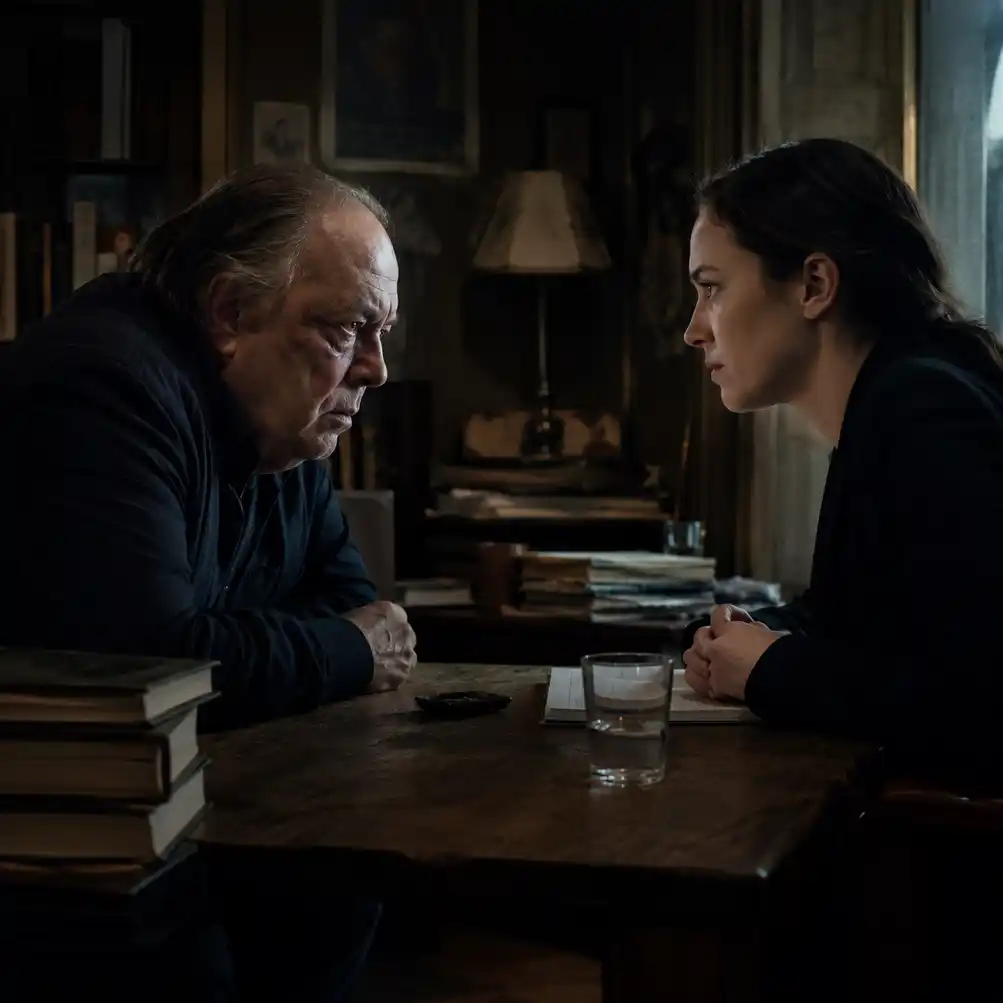
Hygiene and the Assassin appeared in 1992 after rejection elsewhere and began Amélie Nothomb’s enduring relationship with Albin Michel. The debut concentrates much of her later work. A dying Nobel laureate, Prétextat Tach, receives journalists who expect an interview and enter a verbal trap. Only Nina, the final interviewer, fights him with equal precision.
Written largely as dialogue, the novel treats conversation as physical action. Questions probe, insults strike, and definitions tighten like restraints. Tach’s monstrous body and misogyny connect authorship with domination. Public authority keeps his past hidden until another reader reconstructs what his books conceal.
The encounter establishes her fascination with reversals. Interviewer and subject exchange power; ugliness acquires charisma; literary prestige protects corruption; apparent weakness becomes tactical strength. The novel closes its doors and increases pressure between two minds.
Speech is already a dangerous form of intimacy. It can reveal another person, but revelation may also become conquest. Amélie Nothomb would return to this chamber structure in Cosmétique de l’ennemi, where dialogue again makes identity unstable and violence psychologically immediate.
One Published Book, Many Hidden Manuscripts
Since her debut, Amélie Nothomb has maintained an almost unbroken annual publication, timed to the French literary season. The schedule can look like a marketing mechanism. Yet it represents only a fraction of her writing. She produces far more manuscripts than she publishes and selects one for release.
Her ritual is equally famous. She rises at about four, drinks strong tea, and writes by hand for several hours. Discipline creates the conditions in which inspiration can be tested and gives imagination a protected space.
A yearly book is not necessarily written hastily for that year. It may emerge from a much larger private archive. Regularity still creates an artistic risk. Readers may judge each volume as the latest installment in “Nothomb” before asking whether that particular work justifies publication.
Prolific writing is both method and public mythology. It sustains continuity, builds reader loyalty, and turns every autumn into a renewed encounter. Yet it can blur distinctions between major achievements and lighter variations.
Amélie Nothomb as Character and Mask
Several books contain a writer named Amélie Nothomb. That apparent directness creates distance. The character shares habits and experiences with the author, but belongs to a designed narrative. Within Pétronille, she seeks a companion for champagne and friendship. In Life Form, correspondence destabilizes the line between invention and responsibility. The Book of Proper Names lets “Amélie” enter another character’s fate.
This recurring self resembles a series character whose continuity readers partly construct. Each appearance adds information while making the figure less verifiable. The narrator can be arrogant, childlike, vulnerable, comic, cruel, or spiritually certain. No voice reveals a definitive private person.
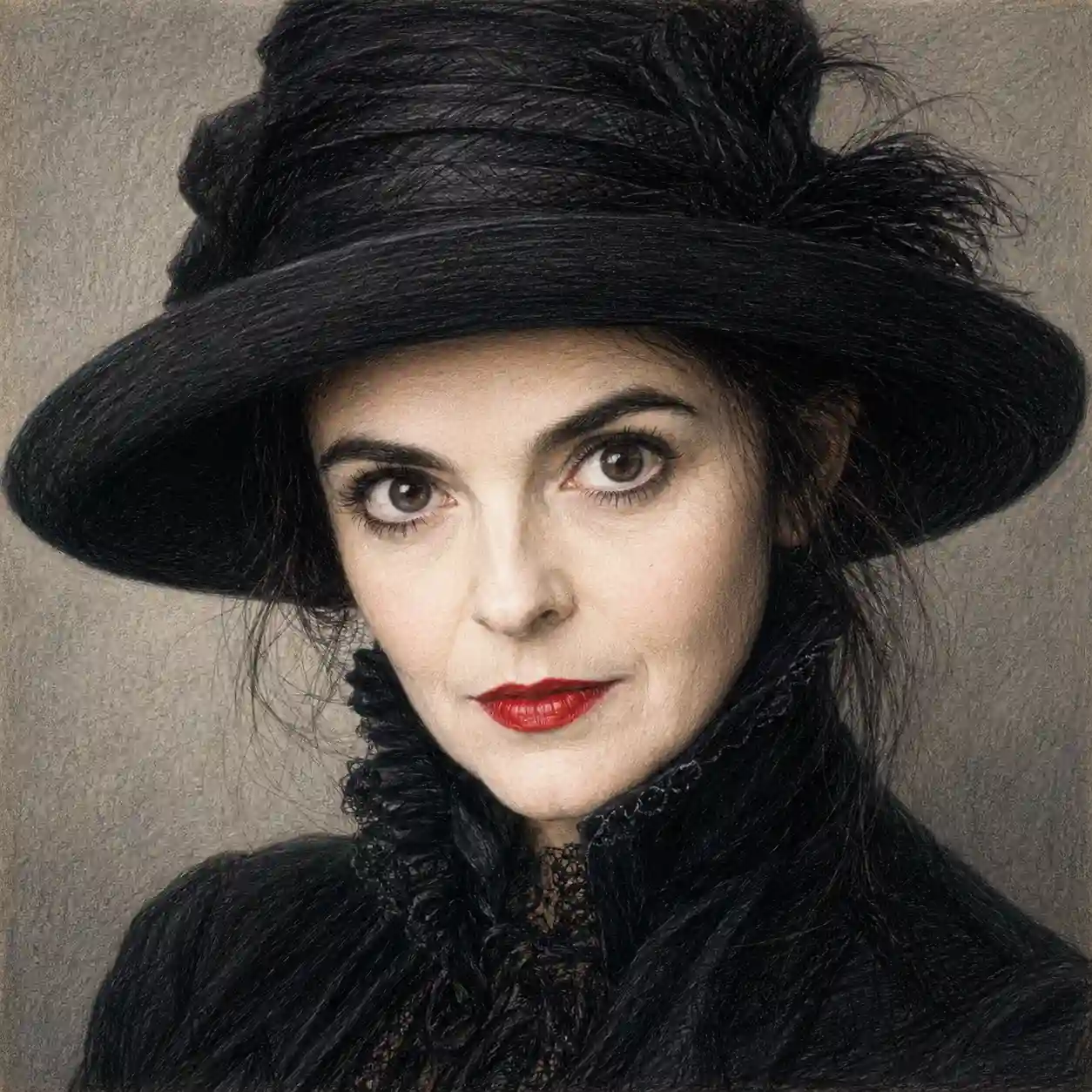
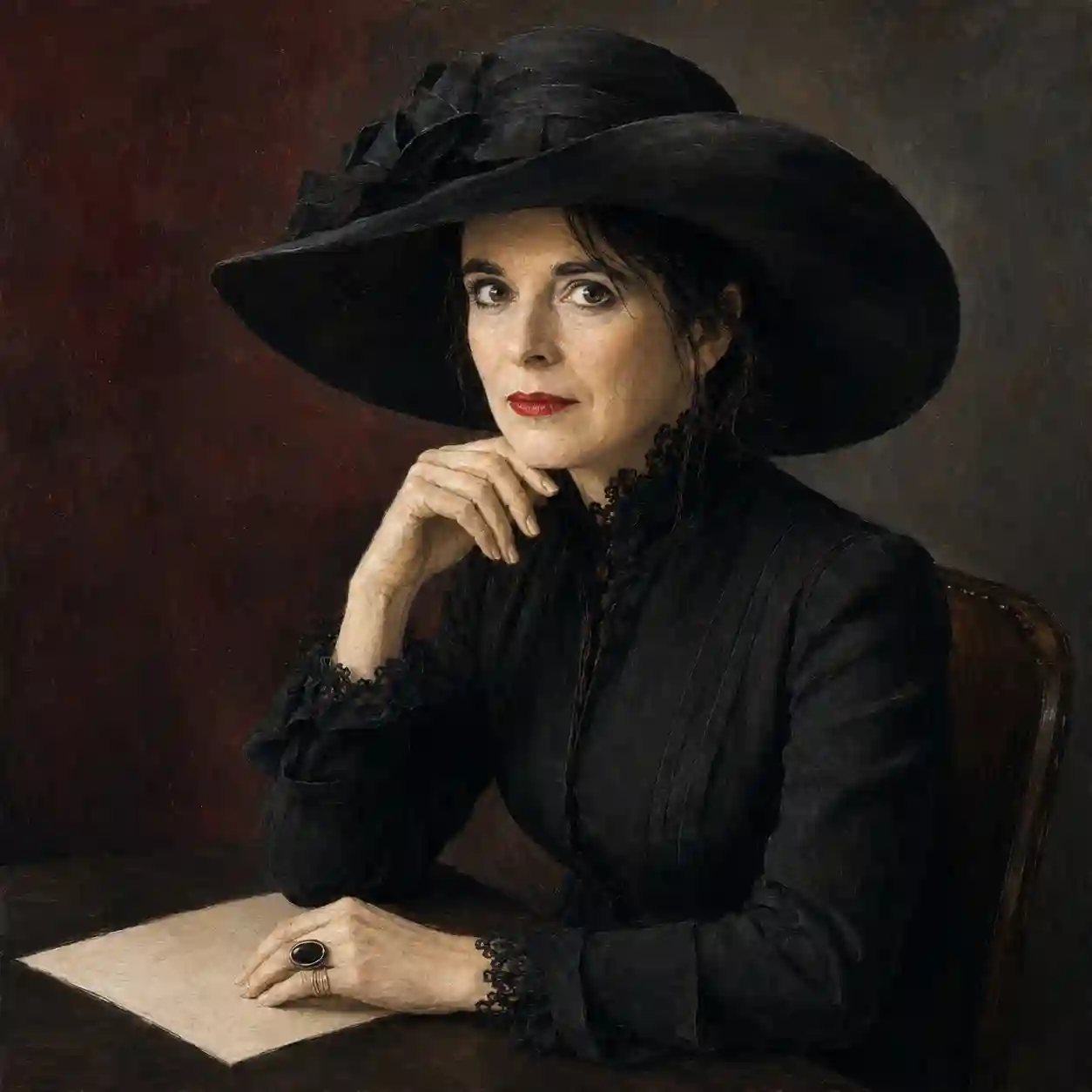
The visual persona works similarly. Black clothing, elaborate hats, and emphatic gestures form an instantly legible silhouette. This theatrical consistency protects opacity by offering an abundant but visibly artificial image.
Performance becomes a form of privacy. By giving audiences a memorable Amélie Nothomb, the person behind the name controls the terms of recognition. Her fiction extends that bargain: it offers intimate material while reminding attentive readers that intimacy has been composed.
Japan Seen Through Competing Narratives
Amélie Nothomb’s Japanese books do not present one stable country. The Character of Rain constructs a paradise of sensation. Fear and Trembling finds humiliation in a Tokyo corporation. Tokyo Fiancée revisits the same period through language lessons, romance, and the narrator’s refusal of marriage. La Nostalgie heureuse and L’Impossible retour confront the limits of going back.
Together, these works produce a richer picture than any single testimony. The office disaster and love affair overlap chronologically, yet their tones differ radically. Selection changes autobiographical truth; one year contains degradation and exhilaration.
The material also raises a critical problem. Fear and Trembling can turn particular colleagues and one office into broad statements about Japanese society, especially women. Self-mockery complicates this perspective but cannot erase the risk of stereotype. Intense love of Japan sometimes claims authority that cultural attachment alone cannot guarantee.
The contradictions should remain visible. Her strongest Japanese writing does not prove that she fully belongs or fully understands. It dramatizes the pain of loving a country that remains partly external to her, and of discovering that nostalgia can illuminate a place while also distorting it.
Hunger, Beauty, and the Body at War
Bodies in Amélie Nothomb’s fiction become objects of worship, disgust, discipline, appetite, and judgment. The Life of Hunger makes hunger a total principle that includes food but exceeds it. Its narrator desires knowledge, movement, beauty, alcohol, water, and intensity. Anorexia appears not as elegant control, but as a dangerous attempt to stop bodily change and abolish need.
Other novels redistribute the conflict. Hygiene and the Assassin gives literary authority an abject body. Attentat opposes extreme ugliness to celebrated beauty. The Book of Proper Names joins ballet’s ideal to physical punishment. Strike Your Heart makes beauty a source of maternal envy.
These bodies approach fable. Exaggeration creates moral visibility, but can reproduce the cruelty it analyzes. Fatness, deformity, or beauty sometimes becomes a symbolic shortcut before character complexity catches up.
The body is where metaphysics becomes coercion. Hunger may promise transcendence, and beauty may look like destiny, yet both can imprison. Her most persuasive work exposes that double movement rather than celebrating extremes.
Grief and the Right to Speak for the Dead
Patrick Nothomb’s death in 2020 changed the emotional center of his daughter’s work. First Blood speaks in his voice, reconstructing his childhood, diplomatic career, and experience during the 1964 Stanleyville hostage crisis. Amélie Nothomb does not describe her father from outside. She imagines from within him.
The act could seem appropriative, yet its wager is clear. Grief has ended conversation, so fiction creates one. Humor prevents a solemn monument; fear, courage, and appetite coexist. The 2021 Prix Renaudot and 2022 Premio Strega Europeo showed that this private reconstruction travelled beyond family tribute.
Psychopompe links birds, writing, sexual trauma, and survival to the daughter’s life. Tant mieux turns toward her mother Adrienne, who died in 2024, shaping maternal history as a cruel yet increasingly ambiguous tale.
Mourning becomes an experiment in narrative permission. Can a daughter lend the dead a voice without claiming to possess them? The author answers through acknowledged invention. She offers not documentary completion, but a relationship continued in form.
The Speed Beneath the Ornament
Amélie Nothomb’s vocabulary can be rarefied, but her architecture is direct. Short chapters, limited casts, strong premises, and abundant dialogue create speed. A character accepts a rule, meets an opponent, and discovers that the rule means something else. Minimal transitions make encounters theatrical.
Names contribute to compression. Prétextat Tach, Epiphane Otos, Plectrude, Palamède Bernardin, and Textor Texel arrive marked as unusual. Declarative speech then lets an aphorism carry what another novelist might distribute across pages of reflection.
Her humor depends on disproportion. A narrator reports degradation with grand ceremony or treats absurdity with impeccable logic. Elevated language meets bodily embarrassment. Philosophy leads to murder, desire, vomiting, or champagne.
Compression turns ideas into events. It also explains why the novels divide readers. Admirers experience clarity, velocity, and memorability. Skeptics see thin settings, engineered characters, and conclusions that arrive before complications have matured. Both reactions identify a real feature of the method.
Success, Recognition, and Unevenness – Amélie Nothomb
Commercial visibility has made some critics suspicious of Amélie Nothomb, as if bestsellers and theatrical self-presentation reduced literary seriousness. Her record resists dismissal. Fear and Trembling shared the 1999 Grand Prix du Roman of the Académie française. She received the Grand Prix Jean Giono in 2008, joined Belgium’s Royal Academy of French Language and Literature in 2015, and won the Prix Renaudot for First Blood.
The 2025 animated film Little Amélie or the Character of Rain, directed by Maïlys Vallade and Liane-Cho Han, demonstrated the visual power of her childhood mythology. It won Annecy’s audience award and received a 2026 Academy Award nomination. Albin Michel has announced L’Adolescence du perroquet, her thirty-fifth novel, for 19 August 2026.
Recognition does not make the oeuvre uniformly successful. Some premises outweigh their development, and recurring devices can feel self-imitative. Public fascination also favors hats, champagne, and productivity over close reading.
The right unit of judgment is the individual book. Amélie Nothomb’s career deserves attention as a sustained project, but reputation should not flatten the differences between daring reinvention and elegant repetition.
Essential Amélie Nothomb Works – From Corporate Humiliation to Sacred Thirst
- Hygiene and the Assassin (Hygiène de l’assassin, 1992): A dying Nobel laureate submits to interviews before journalist Nina challenges his performance. Their duel exposes misogyny, memory, manipulation, and murder.
- Loving Sabotage (Le Sabotage amoureux, 1993): A child transforms diplomatic life in Beijing into heroic warfare and obsessive romance.
- The Stranger Next Door (Les Catilinaires, 1995): A retired couple’s rural peace collapses when a neighbor begins visiting nightly in near silence. Politeness gradually mutates into resentment and violence.
- Fear and Trembling (Stupeur et tremblements, 1999): A Belgian employee descends the hierarchy of a Japanese corporation through successive humiliations. Nothomb turns cultural misunderstanding and office discipline into merciless comedy.
- The Character of Rain (Métaphysique des tubes, 2000): An apparently inert infant awakens to language, desire, and white chocolate in Japan. Autobiography becomes a playful creation myth of consciousness.
- The Book of Proper Names (Robert des noms propres, 2002): Plectrude’s unusual childhood leads toward obsessive ballet training.
- Sulphuric Acid (Acide sulfurique, 2005): A reality program recreates a concentration camp for mass entertainment.
- Tokyo Fiancée (Ni d’Ève ni d’Adam, 2007): Teaching French brings the narrator into a romance with Rinri.
- Thirst (Soif, 2019): Jesus narrates his trial and crucifixion in an intimate first-person voice. Bodily thirst, sensual experience, love, and incarnation challenge familiar religious abstractions.
- First Blood (Premier Sang, 2021): Nothomb imagines her father Patrick’s childhood and his ordeal during the 1964 Congo hostage crisis.
Writers Who Formed Amélie Nothomb’s Imagination
Her reading joins the French canon, philosophy, spiritual texts, and works encountered during an itinerant childhood. These influences supply methods, not templates.
- Stendhal gave distant Europe an imaginative geography. The Charterhouse of Parma fascinated the young reader living in Asia and helped turn an unseen continent into a place of desire. His speed, emotional intelligence, and distrust of social performance also anticipate her own compressed conflicts.
- Denis Diderot offered a model of thought through dialogue. Works such as Rameau’s Nephew show argument becoming drama, with identity shifting as speakers provoke and imitate each other. That lineage is especially visible in Hygiene and the Assassin and Cosmétique de l’ennemi.
- Marcel Proust demonstrated that memory does not merely retrieve the past. Sensation reconstructs it. Nothomb’s tastes, gardens, water, bodily reactions, and sudden recognitions similarly turn remembrance into an active form of creation, though her prose is radically shorter.
- Friedrich Nietzsche became important during her difficult return to Belgium. His use of aphorism, masks, contradiction, and self-overcoming offered an alternative to social conformity. The writer adopts the energy of philosophical provocation without building a systematic doctrine.
- Rainer Maria Rilke helped authorize the vocation itself. The novelist has repeatedly treated Letters to a Young Poet as a decisive encounter with the necessity and solitude of writing.
- Yukio Mishima sharpened the connection among beauty, discipline, body, and death. His influence is less imitation than a shared attraction to dangerous aesthetic absolutes and to the body as an arena where ideas acquire consequences.
Writers Whose Work Amélie Nothomb Directly Shaped
- Stéphanie Hochet entered Nothomb’s fiction as the acknowledged inspiration for Pétronille Fanto in Pétronille. The transformation did not establish Hochet as a disciple, and she did not publicly confirm every identification. It nevertheless altered the public context in which her own novels were read, making literary friendship and fictional appropriation inseparable.
- RoBERT, the French singer and songwriter, developed a genuine two-way collaboration with Nothomb. The novelist wrote lyrics for her, while aspects of the singer’s life and art helped generate The Book of Proper Names. Each artist’s authorship entered the other’s form, which is stronger evidence of influence than a superficial stylistic resemblance.
- Laureline Amanieux made Nothomb’s writing central to her own work as biographer, critic, and filmmaker. Her books Amélie Nothomb, l’éternelle affamée and Le Récit siamois developed sustained readings of hunger, identity, and doubled narration. She also co-directed the documentary Amélie Nothomb: une vie entre deux eaux.
- Nausicaa Dewez extended that critical conversation in Amélie Nothomb. Shéhérazade père et fille and Les Fictions d’Amélie Nothomb. Her work shows how the annual novels have become a corpus that other authors organize, dispute, and reinterpret rather than merely review.
- A wider generation of emerging writers cites her as a model of recognizability and persistence. The defensible legacy here is not a “Nothomb school.” It is permission to combine accessible brevity, eccentricity, autobiography, and intellectual play without accepting the border between popular success and literary ambition.
The Outsider Speaks: Revealing Quotes by Amélie Nothomb
- “Each time I don’t understand what happened to me, I feel it will be a good literary material.” Confusion, rather than mastery, initiates her autobiographical fiction.
- “Unfortunately, no.” Asked whether friendships between writers can escape rivalry, Nothomb answers with characteristic comic bluntness.
- “I love meeting my readers.” Her demanding private discipline coexists with genuine pleasure in public signings and literary encounters.
- “Nothing is more difficult than finding le mot juste.” Precision requires more than contemplation; experience and time must test the supposedly correct word.
- “Nothing replaces the work of time.” Duration reveals the meaning of misunderstandings, promises, and friendships that language alone cannot settle.
- “In my books, Brussels becomes a living character.” Nothomb transforms belonging into a dialogue with a city that remains familiar, contradictory, and changeable.
Black Hats, Hidden Manuscripts, and Restless Journeys: Inside Amélie Nothomb
- Diplomatic life made displacement normal: Amélie Nothomb spent formative years in Japan, China, Laos, Bangladesh, Burma, and other countries because of her father’s diplomatic assignments. Cultural estrangement later became crucial literary material.
- Publication reveals only part of her output: During a 2015 interview, Nothomb said she was writing her eighty-fourth novel but had published twenty-four. The unpublished manuscripts form a private shadow library. 🌐 More
- She repeatedly fictionalizes herself: A character called Amélie Nothomb appears in several autobiographical narratives. Memory becomes material whenever experience remains mysterious, creating a playful alternative to the existential self-examination of 👉 Nausea by Jean-Paul Sartre.
- Writing begins before dawn: Nothomb has described waking at four, drinking strong tea, and writing by hand for several hours. The severe routine contrasts sharply with her flamboyant hats and theatrical public image.
- Foreignness became a creative position: She considers herself an outsider even in Belgium. That divided cultural identity also links her work with 👉 The Lover by Marguerite Duras, where memory and foreignness shape desire.
- Recognition spans prizes and institutions: Fear and Trembling won the Académie française’s Grand Prix du Roman in 1999, while First Blood received the 2021 Prix Renaudot. Nothomb joined Belgium’s Royal Academy and became a baroness in 2015; Brussels universities awarded her an honorary doctorate in 2025. 🌐 Source
Choosing a First Route Through the Work
No novel represents every Amélie Nothomb. Readers interested in workplace power should begin with Fear and Trembling, then read Tokyo Fiancée as its warmer counter-narrative. Together they show how the same period changes when romance replaces employment as its lens.
For the autobiographical mythology, The Character of Rain is the clearest entry. The Life of Hunger widens childhood across countries and bodily crisis. Readers drawn to family memory may prefer First Blood, where ventriloquism turns grief into portrait.
The purest verbal combat remains Hygiene and the Assassin. For modern fairy tales, try Barbe bleue or Strike Your Heart. Thirst is the strongest route into her religious imagination.
Read across contrasts rather than publication order. One autobiographical book, one dialogue novel, and one rewritten tale reveal more of her range than three similar premises.
A Self That Stays Unfinished
Amélie Nothomb has built a career from repetition without simply repeating a life. Each publication renews childhood divinity, exile, hunger, beauty, humiliation, naming, love, death, and the writer’s unstable authority. The mask through which those forces speak keeps changing.
Her finest novels show that sincerity can require artifice. A remembered child may need mythic language. Grief may require a borrowed first person. Costume may help a public writer preserve a private self.
This principle explains both achievement and danger. Compression can create clarity or simplify a culture, body, or moral conflict. Public mythology protects creative freedom, yet can harden into a brand.
She survives in literature by becoming plural. After more than three decades of publication, the name remains stable while the person it signifies continues to move. The unfinished self is not a problem her books intend to solve. It is the engine that keeps them being written.