Hygiene and the Assassin by Amélie Nothomb
Prétextat Tach has received the Nobel Prize in Literature and avoided public life for years. Then doctors announce that a rare cancer of the cartilage will kill him within two months. Journalists compete for a final interview with the famous recluse. This is the setting for Hygiene and the Assassin.
Published in French in 1992 as Hygiène de l’assassin, Amélie Nothomb’s first novel turns this situation into a trap. The reporters expect a dying master. Instead, they meet an aggressive misanthrope who despises readers, interviewers, women, sympathy, and almost every question.
Literary prestige becomes a weapon. Tach knows that his reputation makes humiliation newsworthy. He can insult a reporter and still remain the center of the encounter. Illness further protects him by encouraging others to treat cruelty as eccentricity.
The isolated intellectual in 👉 Auto-da-Fe by Elias Canetti occupies a much larger and more chaotic novel. Yet both books connect immense learning with grotesque separation from ordinary human exchange. Intelligence without reciprocity becomes another form of confinement.
Hygiene and the Assassin does not ask whether Tach is pleasant. His unpleasantness is the dramatic premise. The sharper question is why everyone initially accepts the rules he creates. Fame teaches the room to tolerate abuse.
The interviews promise access to a private life. Tach treats them as contests already won. In Hygiene and the Assassin, his aggression guards a story he does not want told.
Four Interviews End in Defeat
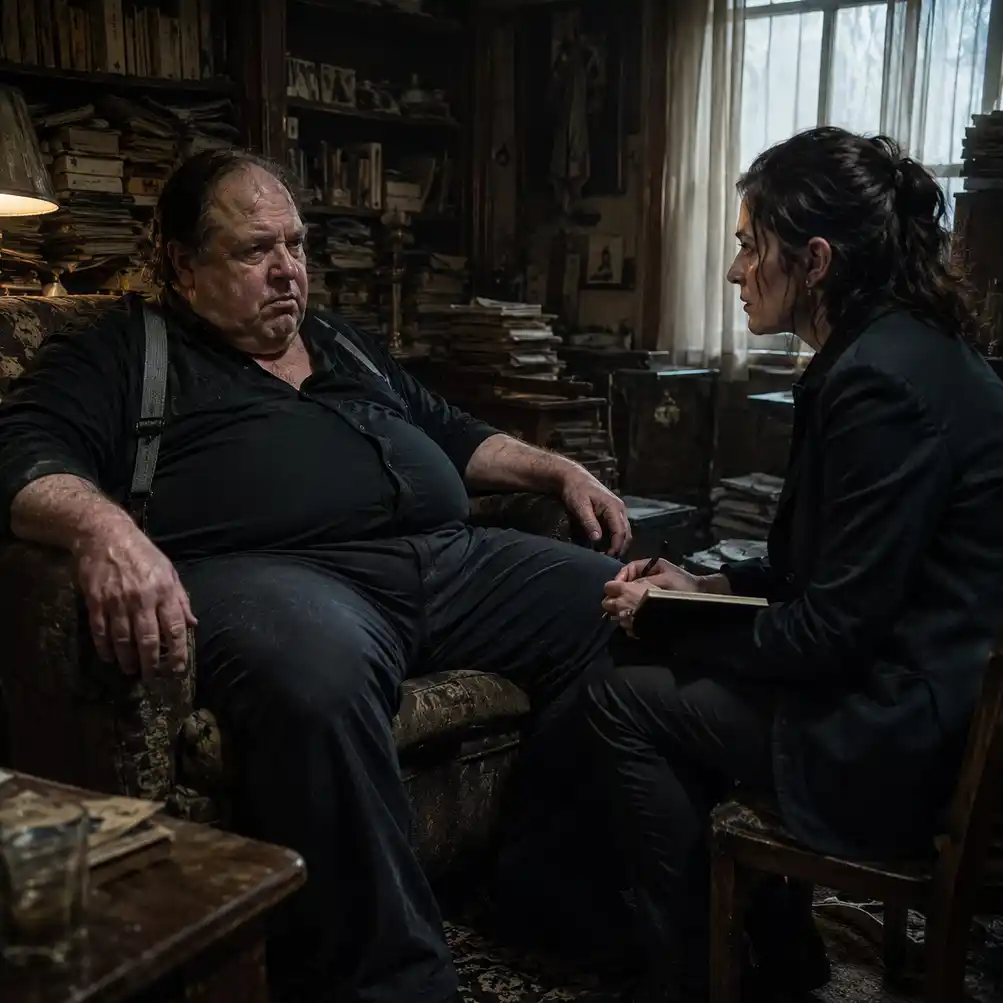
The first four journalists try different approaches, but Tach identifies their weaknesses. Admiration looks foolish beside his contempt, prepared questions collapse, and every topic lets him reverse the examination.
These encounters establish the novel’s method. Plot emerges through dialogue, while power appears in timing, interruption, vocabulary, and the ability to define what counts as a legitimate question. Conversation functions as hand-to-hand combat. Tach wins because the reporters seek his approval even while pretending to challenge him.
His victories are also comic. Exaggerated insults and helpless interviewers bring intellectual solemnity against bodily disgust. The comedy shows how easily confident aggression can masquerade as brilliance.
The enclosed hostility of 👉 No Exit by Jean-Paul Sartre provides a fitting comparison. Sartre’s characters cannot escape one another’s judgment, while Nothomb’s journalists could physically leave. What holds them inside is professional ambition and the cultural power attached to the celebrated author.
In Hygiene and the Assassin, the repetition can feel schematic, but it prepares the reversal by teaching readers Tach’s tactics. He redirects shame, claims interpretive authority, and uses provocation to avoid disclosure.
Each failed interview strengthens his illusion of invulnerability. When the fifth visitor refuses the role of admirer, the earlier performances begin to look less like proof of genius than rehearsals designed to conceal fear.
Nina Refuses the Script
Nina, the fifth journalist, changes Hygiene and the Assassin. She has read Tach closely, researched his life, and wants more than a final quotation. She does not need him to like her.
That independence removes his easiest advantage. Insults become evidence of evasion. Nina follows contradictions instead of accepting his topics. She turns the interview into an interrogation.
Nina is not simply calm reason confronting anger. She can be ruthless, intrusive, and fascinated by her growing power. Their equality emerges through danger rather than courtesy.
This makes the dialogue more compelling than a moral lecture. If Nina merely represented correct opinions, Tach could dismiss her as another flat opponent. Instead, she becomes a reader capable of entering the darkest logic of his fiction.
Her position also changes the gendered balance. Tach’s contempt for women is not a decorative flaw. It shapes how he responds to a woman who possesses knowledge he cannot control. Being read by Nina feels like exposure.
The scene gives Hygiene and the Assassin theatrical intensity. Two voices occupy one space, and every answer changes their authority. Nina has found the hidden text connecting Tach’s books to his past. She intends to make him complete it aloud.
A Body Made into an Argument
Tach’s immense body dominates the interviews. His appetite, immobility, illness, and deliberate offensiveness produce disgust before his secret becomes clear. He turns that disgust outward, treating physical excess as proof that he has escaped ordinary standards of beauty and restraint.
Yet the body is never merely comic decoration. Hygiene and the Assassin connects eating, writing, desire, and control. Tach consumes aggressively and speaks as if language were another substance he could monopolize. Appetite becomes a philosophy of power.
Hygiene and the Assassin repeatedly asks who may define a body and what meanings get imposed on it. Tach claims immunity from judgment while judging others mercilessly. He despises adult sexuality, especially female maturity, but his contempt reveals obsession rather than detachment.
Nothomb’s imagery can feel deliberately excessive. Illness, fatness, eating, and decay are pushed toward grotesque spectacle. Readers may question whether the body itself becomes too closely associated with moral corruption. The text partly counters that risk by showing how consciously Tach performs his monstrosity.
His ugliness is also a narrative costume. It repels curiosity while turning every observer into someone he can accuse of superficiality. Nina’s achievement lies in refusing both fascination and recoil. She treats the body not as the final truth about Tach, but as one more argument he has designed to protect the past.
Léopoldine and the War on Adulthood
Nina’s questions lead toward Léopoldine, Tach’s cousin and childhood companion. Together, the young pair attempted to preserve a private world untouched by adulthood. They subjected their bodies to severe disciplines and imagined puberty as contamination. Childhood became an ideal of purity that ordinary development threatened to destroy.
This recovered story changes the meaning of the title. The “hygiene” in Hygiene and the Assassin is not cleanliness in any humane sense. It is a violent fantasy of removing change, sexuality, difference, and time. Purity becomes the assassin’s justification.
When Léopoldine’s body begins to mature, Tach experiences the transformation as betrayal. His response exposes the hidden structure of his nostalgia. He does not love her freedom or future. He loves an image that must remain fixed to satisfy him.
The self-authorizing confession in 👉 The Immoralist by André Gide offers a parallel. Gide’s protagonist also turns desire and transgression into an argument about liberation. Both works make eloquence dangerous when another person becomes material for the speaker.
The childhood paradise is unstable. Its lake, rituals, and isolation appear beautiful because adulthood stays outside. Yet any paradise requiring a person never to change contains coercion.
Tach confuses preservation with love. In Hygiene and the Assassin, murder becomes his final attempt to stop Léopoldine from becoming someone beyond his design. Nina forces him to name the act and strips away its aesthetic theory.
Misogyny Meets a Woman Reader
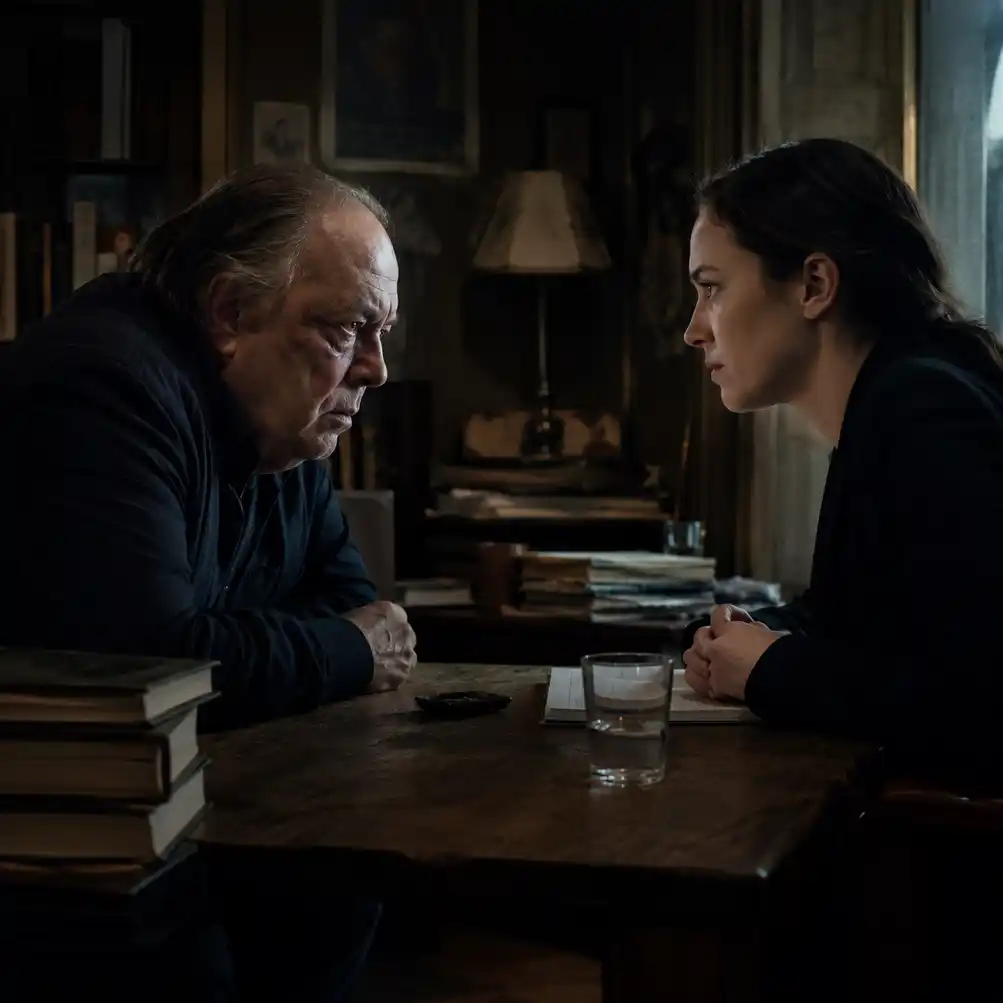
Tach’s misogyny saturates his speech. He reduces women to bodies, treats maturity as degradation, and assumes that intellectual authority belongs naturally to him. The first interviews allow these claims to function as provocation. Nina makes them personally and logically costly.
Her challenge matters because she is both woman and reader. Tach wants worship or recoil. Nina offers neither and finds evidence he has failed to control. Interpretation breaks the author’s monopoly on meaning.
👉 The Second Sex by Simone de Beauvoir reaches far beyond this duel, but it illuminates the mechanism Nina confronts: woman defined as an object of male consciousness rather than a free subject.
Nina resists that position without becoming a gentle corrective. She grows severe and finally accepts the physical logic of Tach’s story. Her response complicates any easy feminist triumph.
That danger is central to Hygiene and the Assassin. Verbal power can reveal injustice and reproduce domination. Nina gives truth a path into the room, not a guarantee of justice.
The battle changes her as well as him. By the time Tach’s account is complete, interviewer and subject share an intimacy built from hatred, recognition, and knowledge. Hygiene and the Assassin leaves readers to decide whether Nina destroys his final fiction or fulfills it.
The Unfinished Book Closes
Tach left an unfinished narrative whose gaps point toward the hidden crime. Nina recognizes its autobiographical structure and uses it as a map, turning interpretation into investigation.
This device makes Hygiene and the Assassin a novel about authorship as concealment. Tach appears brutally candid, yet his candor directs attention away from what matters. Confession can be another form of disguise. Only a reader who notices the silence inside the text can challenge him.
The fatal beauty of 👉 Salome by Oscar Wilde belongs to another tradition. Both works join desire, aesthetic language, and death until beauty becomes inseparable from possession.
Once Tach speaks the complete story, his approaching medical death loses importance. The deeper ending concerns repetition. Nina strangles him, mirroring his murder of Léopoldine and completing the pattern his unfinished work preserved. The assassin receives the death he has transformed into literature.
The act can be punishment, manipulation, or collaboration. Tach may have made Nina the final character of his design. Her violence may instead end his control over the crime.
The conclusion refuses a clean moral victory. Truth emerges, but the room produces another killer. Literature reveals buried violence while also providing its script. That ambiguity gives the short novel an afterlife beyond its final shock.
Quotes for Hygiene and the Assassin
- “I didn’t use to believe in the efficacy of verbal torture. And now as of these last few minutes I’ve started to believe in it.” The admission defines the novel’s governing method. Nina does not overpower Tach physically or rhetorically imitate him without purpose. Instead, sustained questioning makes language coercive. Moreover, the phrase “verbal torture” turns the interview format into an ethical problem: exposure may reveal truth, but it can also become punishment.
- “I thought that everyone read the way I do.” Tach frames his own habits as the standard by which all readers should live. However, the line also exposes his isolation. Reading, for him, means absorption so complete that a book alters the reader’s substance. Consequently, anyone who emerges unchanged seems fraudulent, shallow, or almost biologically defective in his eyes.
- “These are the books that are the least likely to change them.” The pronoun refers to books that openly carry a message. In fact, Tach distrusts declared instruction and argues that beauty, desire, pleasure, and genius transform readers more deeply. The sentence therefore complicates his monstrous persona: beneath the provocation lies a serious theory about literature’s indirect power.
Trivia List for Hygiene and the Assassin
- A debut arrived fully armed: Amélie Nothomb published Hygiène de l’assassin at twenty-five. The 🌐 original publisher dates it to August 28, 1992 and emphasizes its cruelty, cynicism, and ambiguity.
- Dialogue supplies almost the entire architecture: Four male journalists interview Prétextat Tach and leave humiliated. However, the fifth visitor, Nina, matches his aggression. Their exchange changes an interview into an interrogation, so speech becomes dramatic action.
- Its Nobel laureate functions as an anti-author: The laureate possesses fame, prizes, and a vast oeuvre, yet he despises readers and manipulates journalists. Readers who value morally compromised confessional voices may find a sharp companion in 👉 The Fall by Albert Camus.
- English readers waited eighteen years: Europa Editions released Alison Anderson’s translation in 2010, and its 🌐 edition page identifies it as the novel’s first English publication. Her clipped exchanges preserve the duel’s speed and venom.
- Disgust becomes intellectual theater: Food, obesity, illness, sex, and hygiene repeatedly enter supposedly literary conversation. Therefore, bodily revulsion never provides mere shock; it exposes how Tach converts taste into authority. That strategy also creates a useful dialogue with 👉 Nausea by Jean-Paul Sartre.
- The verbal chamber drama invited adaptation: A 1995 opera and François Ruggieri’s 1999 film followed the novel. Additionally, 🌐 Library Journal records both versions and praises the English translation’s spare precision.
A Debut Built Like a Duel – Hygiene and the Assassin
Almost the entire novel consists of dialogue in a restricted setting. Personality forms through attack, retreat, repetition, and interruption rather than conventional explanation.
Nothomb was twenty-five when she wrote this first published novel. Its audacity lies partly in inventing an elderly Nobel laureate and allowing a young journalist to dismantle him. The debut attacks literary authority from inside literature.
The style brings limits. Tach’s brilliance sometimes depends on showy aphorisms, while secondary journalists function mainly as targets. Characters can resemble intellectual positions armed with bodies. Realism is not the primary goal of Hygiene and the Assassin. This black comedy and chamber drama asks who controls an interview, a body, a text, and a crime.
The most distinctive achievement is the transformation of reading into action. Nina does not uncover the past through documents alone. She reads omissions, rhetorical habits, and the unfinished shape of a story. Close attention becomes a threat to power.
Readers seeking physical action may find the exchange claustrophobic. Those drawn to combative dialogue will find a concentrated performance. Hygiene and the Assassin announces lasting concerns: appetite, cruelty, beauty, childhood, language, and the border between victim and executioner. Its final lesson is deliberately impure. A buried truth can be spoken, yet no act of disclosure guarantees that the violence surrounding it will end.
More reviews of french literature