John Grisham: The Distance Between Law and Justice
John Grisham is commonly described as the master of the legal thriller. The label is accurate but incomplete. Courtrooms, law offices, contracts, juries, and criminal investigations provide his recurring settings. His deeper subject is the unstable relationship between a lawful result and a just one.
In A Time to Kill, procedure cannot contain racial history. The Firm reveals professional success as captivity. The Chamber tests opposition to the death penalty through intimacy with a guilty man. The Innocent Man and Framed examine real convictions.
His stories often begin when an ordinary professional discovers that the system’s official account is false. Knowledge creates danger because institutions protect themselves. A verdict does not end the moral inquiry. John Grisham’s finest work tests what law can establish, what power can conceal, and what an individual owes once the difference becomes visible.

A Mississippi Education
John Grisham was born in Jonesboro, Arkansas, on 8 February 1955. His family moved before settling in Southaven, Mississippi. His father worked in construction and cotton farming; his mother encouraged reading. The family’s distance from literary and legal institutions helped him observe professional power from outside.
As a young man, Grisham imagined several futures, including baseball. He attended Northwest Mississippi Community College and Delta State before earning an accounting degree from Mississippi State University in 1977. Tax law initially seemed attractive because it promised financial order. During law school at the University of Mississippi, however, his interest shifted toward courtroom work.
After graduating in 1981, he opened a Southaven practice. Criminal defense and personal-injury cases exposed him to frightened clients, local juries, and the economics of representation. He also served in the Mississippi House until 1990.
The local courthouse became his first narrative school. It taught Grisham that public rules are applied through private motives, unequal resources, regional memory, and human error.
The Testimony Behind the First Novel
The origin of A Time to Kill lies in a courthouse encounter. John Grisham heard a twelve-year-old girl testify in a rape case and began wondering what might happen if her father killed the attackers. The hypothetical moved the story away from the observed trial while preserving its emotional violence.
The novel is not a case transcript but a moral experiment. In fictional Clanton, Black father Carl Lee Hailey kills the white men accused of assaulting his daughter, and Jake Brigance defends him before a divided community.
The premise forces readers to occupy incompatible positions. Revenge may feel comprehensible while remaining illegal. A trial designed to judge one defendant also exposes racial terror, unequal sympathy, political ambition, and the limits of neutral language.
The first novel made empathy legally uncomfortable. Rather than asking whether violence is simply right or wrong, it asks whose fear, grief, and imagination a courtroom permits a jury to recognize.
Publishers repeatedly rejected A Time to Kill. Wynwood Press eventually issued it in 1989 with a first printing of roughly five thousand copies. John Grisham bought a substantial number himself and sold them from the trunk of his car, at libraries, and through local events.
Meanwhile, he was writing The Firm. A talented graduate joins a wealthy Memphis firm and discovers that privilege is inseparable from criminal control. The implications widen with every benefit Mitch McDeere accepts. Film interest in The Firm helped attract major publishing attention before the book appeared in 1991. Failure refined the route to the reader.
The Firm and the Reinvention of Legal Suspense
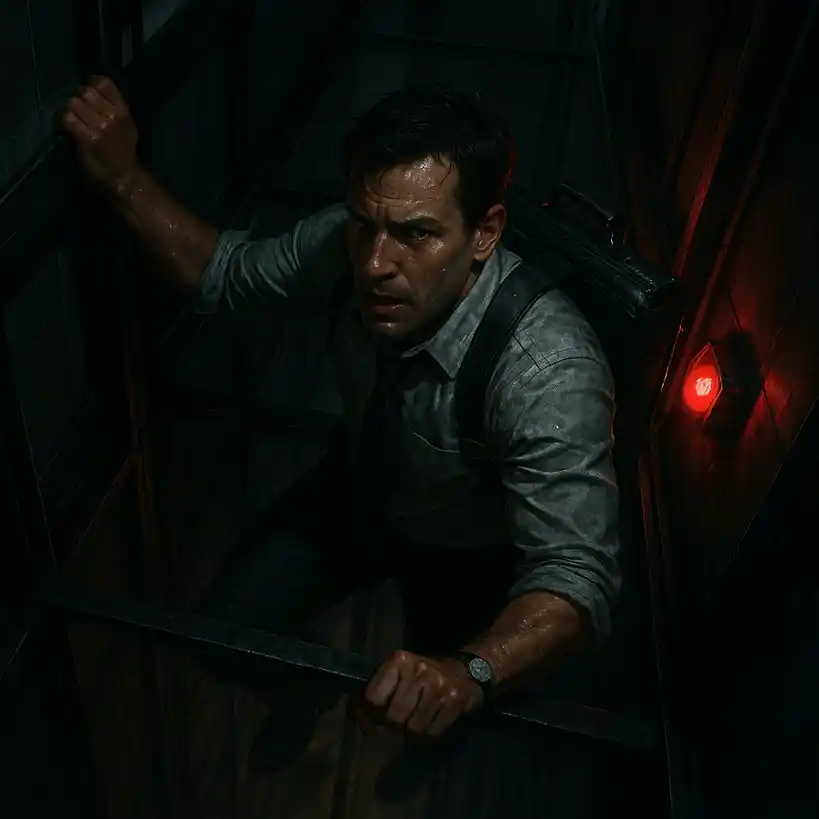
The Firm turned John Grisham into an international bestseller. Its legal setting is essential, but the novel behaves partly like an espionage thriller. Mitch is recruited, rewarded, watched, and trapped. The FBI offers escape only by demanding a different form of betrayal. The firm’s seduction matters as much as its threat. Salary, house, car, and status arrive before the cost. Institutions create dependence and call it success.
Mitch survives through legal and financial knowledge rather than physical dominance. Tax records, billing files, confidentiality rules, and documentary evidence become instruments of suspense. Information must be copied, hidden, priced, and delivered while surveillance narrows the available space. The 1993 film altered the ending and widened the story’s reach. The novel established a durable structure: an ambitious outsider enters an admired system and uses its own language against it. Professional aspiration becomes the trap.
Many John Grisham novels begin with an imbalance of knowledge. A corporation, government agency, judge, wealthy family, or criminal organization knows more than the person in danger. Suspense develops as that gap closes.
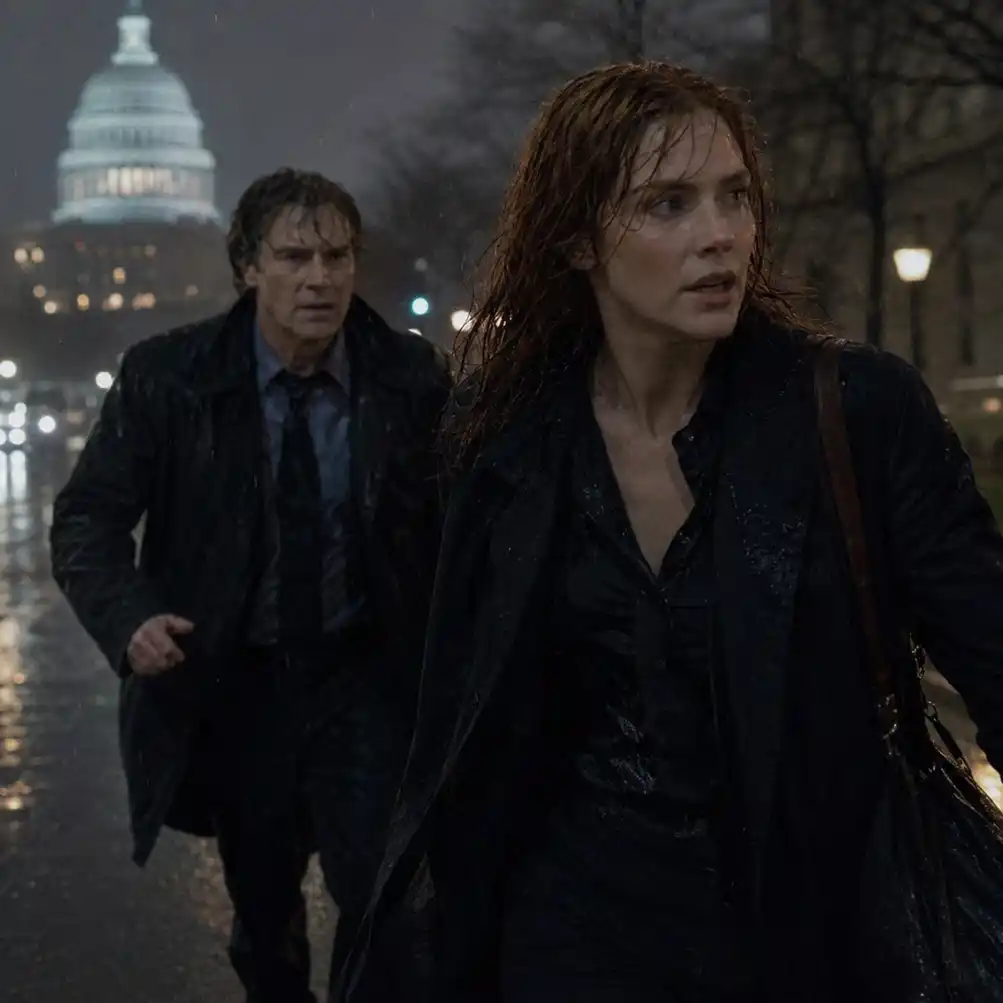
The Pelican Brief gives a law student a theory powerful people need to erase. The Client places a legal secret inside a child who cannot safely disclose it. The Runaway Jury turns jury selection into covert warfare. The Partner begins after a lawyer has already executed an elaborate disappearance. The pattern can become familiar, but the best novels vary exposure’s cost. Truth may save a client, destroy a career, implicate the investigator, or arrive too late. Knowledge is Grisham’s most volatile evidence.
The Courtroom as Public Theater
John Grisham makes legal procedure readable by converting it into contested performance. Opening statements define competing worlds. Witness examinations control sequence and emphasis. Objections interrupt momentum. Jury selection reveals prejudice before evidence begins.
The courtroom is therefore both institution and stage. Lawyers tell stories under rules, while judges decide which parts may be heard. In The Rainmaker, inexperienced Rudy Baylor confronts an insurance company whose resources dwarf his own. The Last Juror watches a community absorb a murder trial through journalism and rumor. The Litigators finds comedy in lawyers whose ambition exceeds their competence.
Grisham explains enough doctrine to make strategy intelligible. A delayed document or excluded witness changes the balance without requiring a lecture on civil procedure. This clarity can simplify legal ambiguity; real cross-examinations rarely reveal truth so neatly. Still, justice depends partly on who can make facts persuasive.
Mississippi is more than background in John Grisham’s work. Courthouses, churches, newspapers, family names, and racial divisions create a moral geography. Fictional Ford County lets histories recur without making every book a sequel.
A Time to Kill makes racist violence inseparable from jury judgment. The Last Juror follows a town across social change after a sensational trial. The Chamber connects a Klansman’s death sentence to inherited hatred and family shame. The Reckoning moves through war trauma, murder, land, and secrecy. Place remembers what procedure excludes. In Grisham’s Mississippi, the past enters the courtroom through jurors, families, institutions, and silences that legal language cannot make neutral.
Money as an Instrument of Control
Grisham’s villains are often organizations. Law firms, insurers, tobacco companies, political donors, and litigation businesses turn wealth into strategic endurance. The Rainmaker follows an insurer that profits by denying valid claims. The Runaway Jury examines an industry’s attempt to purchase influence over a verdict. The Appeal shows corporate money reshaping a judicial election after a damaging judgment. Gray Mountain connects Appalachian coal extraction to legal intimidation and environmental harm.
These stories translate systemic power into visible decisions: which expert can be hired, how long litigation can be prolonged, and whether an injured family can continue. Money alters the meaning of patience and risk.
Corporate antagonists can become schematic, particularly when executives display few motives beyond greed and self-preservation. The simplification creates momentum but may reduce the system to bad actors. Wealth changes the duration of justice. The writer is most convincing when he shows that an unequal contest is shaped not only by law but by who can survive delay.
Beyond the Legal Thriller
John Grisham has repeatedly left adult legal suspense. A Painted House follows an Arkansas farm family through one cotton season. Skipping Christmas uses comedy. Calico Joe, Sooley, and Bleachers turn to sports, memory, and authority.
Theodore Boone, a teenage legal enthusiast, introduced younger readers to courts through a continuing series. The Camino Island books use stolen manuscripts, bookselling, authorship, and crime to create a lighter literary setting.
The departures reveal what survives without lawyers: strong premises, secretive communities, shaping institutions, and ordinary people facing problems larger than their experience. Results vary. The sports novels can rely heavily on nostalgia, and the comic work may feel slight beside the legal thrillers.
The law is his strongest lens, not his only subject. Outside it, Grisham continues to examine loyalty, ambition, community judgment, and the stories people use to excuse old choices.
The Innocent Man, published in 2006, was John Grisham’s first nonfiction book. It recounts the wrongful conviction of Ron Williamson for the murder of Debra Sue Carter in Ada, Oklahoma. False testimony, unreliable forensic claims, misconduct, and institutional resistance turned an unproven theory into a death sentence.
The author uses compressed background, escalating evidence, and sharply drawn officials. Accessibility brought the case to a vast audience but required restraint with living people. The experience reinforced his involvement with wrongful-conviction organizations. It also altered later fiction.
Nonfiction removed the protection of invention. The legal system was no longer an imagined antagonist; its errors had names, records, victims, and consequences continuing beyond the final page.
From Advocacy to Framed
John Grisham serves on the boards of the Innocence Project and Centurion Ministries. These organizations investigate wrongful convictions, support exoneration, and challenge practices that make error difficult to correct.
In 2024, he and Centurion founder Jim McCloskey published Framed, examining ten wrongful convictions. Each chapter reconstructs the network sustaining error: coerced statements, incentivized witnesses, weak defense, flawed forensics, and official resistance.
McCloskey contributes decades of investigative experience; the novelist brings structure and reach. The partnership makes advocacy collaborative rather than presenting a novelist as injustice’s sole discoverer.
He has also drawn attention to the case of Robert Roberson, convicted under disputed shaken-baby evidence, and announced plans for a related book. That project should be understood as ongoing rather than treated as completed.
Wrongful conviction is a system of accumulated choices. Grisham’s advocacy moves beyond the lone corrupt official to show how ordinary incentives can combine into extraordinary harm.
From Clanton to Global Courtrooms: Essential John Grisham Works
- A Time to Kill (A Time to Kill, 1989): Grisham’s debut follows lawyer Jake Brigance through a racially explosive Mississippi murder trial.
- The Firm (The Firm, 1991): A young lawyer discovers that his prestigious Memphis employer serves organized crime.
- The Pelican Brief (The Pelican Brief, 1992): A law student’s theory about two assassinated Supreme Court justices places her in danger.
- The Client (The Client, 1993): An eleven-year-old learns a Mafia secret and turns to attorney Reggie Love.
- The Rainmaker (The Rainmaker, 1995): Newly qualified Rudy Baylor challenges an insurance company that denied a dying man’s claim.
- The Runaway Jury (The Runaway Jury, 1996): An apparently ordinary juror secretly manipulates a major tobacco trial.
- A Painted House (A Painted House, 2001): Seven-year-old Luke Chandler narrates one turbulent cotton harvest in 1950s Arkansas.
- The Innocent Man (The Innocent Man, 2006): Grisham’s first nonfiction book reconstructs Ron Williamson’s wrongful murder conviction.
- Theodore Boone: Kid Lawyer (Theodore Boone: Kid Lawyer, 2010): A thirteen-year-old fascinated by law becomes entangled in a murder trial. The series opener brought his legal world to younger readers.
- The Exchange (The Exchange, 2023): Mitch McDeere returns decades after escaping the corrupt firm that launched his breakthrough.
An Outline Before the First Sentence
John Grisham’s method begins with design. He knows the ending and outlines before drafting, testing whether a premise can sustain a novel without being overwhelmed by subplots.
His working routine has often started on 1 January. He writes early, aims for roughly one thousand words, and uses a computer disconnected from the internet. Repetition converts a large manuscript into a sequence of manageable mornings.
Planning does not eliminate revision. His wife, Renée, is a trusted first reader. For The Widow, her dissatisfaction with the original ending led him to reconsider the solution and add substantial material. Suspense is engineered before it is accelerated.
His prose seeks transparency. Sentences move quickly, professional terms receive context, and chapters close on decisions, discoveries, or threats. Dialogue carries explanation and conflict. He also uses humor, especially around vanity, office politics, local eccentricity, and professional incompetence. Myriad minor lawyers and judges give the legal world texture beyond heroes and villains.
The limitation appears when speed reduces interior life. Characters may function primarily as carriers of evidence, and moral positions can arrive fully formed. Description often establishes a location efficiently rather than transforming perception. Clarity is his principal narrative technology.
Formula, Plausibility, and Uneven Power
The extraordinary commercial consistency of John Grisham creates a special critical problem. Familiarity is part of the pleasure: an outsider, a secret, a powerful adversary, a race to obtain or reveal evidence. The same architecture can also make a new novel feel pre-solved.
The Exchange, a sequel to The Firm, illustrates another risk. Its international kidnapping plot moved away from the legal ingenuity many readers expected and drew questions about plausibility. Ambition widened the canvas but weakened the distinctive professional trap that made the original powerful. Formula is accumulated knowledge about expectation. The question is whether a particular book uses that knowledge to disclose something new.
Efficiency can harden into predictability. His strongest later novels complicate the familiar engine through moral uncertainty, documentary reality, or a protagonist whose compromise cannot be cleanly reversed.
The Widow, published in October 2025, gave John Grisham his first full whodunit. Simon Latch is a struggling rural Virginia lawyer whose elderly client leaves behind a surprising fortune. Suspicion shifts from opportunism to murder, and the lawyer’s own moral compromises make him an unstable guide.
The novel tests classic mystery without abandoning legal vulnerability. Simon’s desperation and questionable decisions make innocence, guilt, and self-interest difficult to separate.
His next announced thriller, The French Illusion, is scheduled for 29 September 2026 and therefore remained unpublished in July 2026. It sends a young American lawyer into France and draws explicitly on the international suspense tradition. Longevity depends on changing the contract. Grisham still promises propulsion, but recent books test how much of that promise can survive a morally compromised narrator or a different genre.
Writers Who Shaped John Grisham
John Grisham’s influences join literary clarity, legal precedent, and international suspense. The strongest connections are documented through his own accounts. He borrowed permission before he developed a method.
- Scott Turow provided the decisive professional example. Reading Presumed Innocent showed the practicing Mississippi lawyer that legal experience could become compelling fiction. He has described recognizing the book’s “magic” and seeing a route into the novel he wanted to write. Turow’s psychological ambiguity differs from Grisham’s later velocity, but the catalyst was direct.
- John Steinbeck offered a model of accessible seriousness. Grisham has admired the apparent simplicity through which Steinbeck makes work, poverty, family, and moral pressure legible. The Grapes of Wrath and Of Mice and Men demonstrate that clear prose can carry social criticism without sacrificing narrative movement.
- John le Carré shaped the understanding of institutions as secret systems with divided loyalties. The influence is clearest in his international plots and has been explicitly acknowledged for The French Illusion. Le Carré’s moral fog is denser, yet both writers distrust official accounts.
- Ken Follett supplied a model for large-scale suspense driven by research, historical pressure, and clean architecture. The author has named him among the writers behind the forthcoming novel’s direction.
- Robert Ludlum and Len Deighton complete that international thriller lineage. Ludlum’s hunted protagonists and conspiratorial reach help explain the pursuit machinery, while Deighton’s skeptical professionals show expertise functioning inside compromised institutions. He cites both directly rather than leaving the connection to stylistic guesswork. The evidence is therefore stronger than thematic resemblance alone.
Writers Who Followed Paths John Grisham Enlarged
- Steve Cavanagh has named Grisham as an important influence on the Eddie Flynn novels. The inheritance is visible in swift courtroom reversals, accessible legal strategy, and a lawyer whose past equips him for dangers beyond ordinary practice. Cavanagh combines that model with con-artist mechanics and a distinct New York setting.
- Robert Dugoni has described reading Grisham while moving from legal practice toward fiction. The Jury Master and the David Sloane novels use courtroom knowledge, endangered attorneys, and institutional conspiracy, yet Dugoni’s later Tracy Crosswhite series follows its own police-procedural route.
- Ravi Subramanian has credited his thrillers as a formative reading experience. His Indian banking novels transfer the accessible insider-thriller model from law to finance, turning professional systems, ambition, and white-collar secrecy into suspense.
- Rod Reynolds has identified The Firm as one of the early adult novels that shaped him and The Pelican Brief as a benchmark for tension. His own work is darker and more closely connected to noir, but the documented reading influence concerns propulsion and sustained threat.
- Countless lawyer-novelists also benefited from the space Grisham expanded, even when they did not imitate his writing style. Publishers and readers became more receptive to stories built from specialist practice, while adaptations proved that motions, files, and ethical conflicts could support mass entertainment. That broader effect is historical and commercial, not evidence that every later legal thriller is a Grisham derivative.
Law, Luck, and Discipline: John Grisham in Quotes
- “I seriously doubt I would ever have written the first story had I not been a lawyer.” Courtroom experience supplied more than convincing legal detail. It gave him the conflict, urgency, and human consequences that transformed observation into fiction.
- “You can’t plan everything.” He never expected storytelling to replace legal practice. His comment does not dismiss ambition; it argues that success may depend on recognizing an unexpected possibility and changing direction.
- “The discipline of it is important.” Before fame, Grisham wrote early each morning while maintaining a legal career. Regular work turned an uncertain private experiment into a finished manuscript when inspiration alone could not.
- “I just want to tell a story.” His novels address racism, corporate abuse, capital punishment, and institutional injustice, yet he resists lecturing. Narrative momentum carries these issues because readers first become invested in people and consequences.
- “I’ve won the lottery.” The metaphor expresses gratitude rather than a denial of effort. The author recognizes that discipline prepared him for success, while timing, readers, booksellers, and adaptation opportunities magnified it beyond prediction.
- “It is our responsibility to share their stories.” Here storytelling becomes an ethical obligation toward wrongfully convicted people. Grisham extends the concerns of his legal thrillers into public advocacy, nonfiction, and institutional reform.
Before and After The Firm: Turning Points in John Grisham’s Life
- Baseball was his original dream: John Grisham wanted to become a professional player until his early twenties. After abandoning that ambition, he studied accounting and law. His mother encouraged reading, while John Steinbeck later showed him how clear prose could portray powerless people confronting large institutions.🌐 Academy profile
- A courtroom scene created his first novel: While observing a trial, the writer heard testimony from a young victim of violent crime. He began imagining a father taking revenge and a lawyer defending him. That question became A Time to Kill, while its unsettling legal machinery invites comparison with 👉 The Trial by Franz Kafka.
- He wrote before the working day began: Grisham arrived at his office around five in the morning and wrote for two hours before practicing law.
- Rejection forced him to become a bookseller: Twenty-eight publishers rejected the manuscript before a small press accepted it. The initial edition sold about 5,000 copies, so the novelist personally visited Southern bookstores and persuaded owners to stock it.
- His second novel reversed everything: Film rights to 👉 The Firm by John Grisham sold before the manuscript had secured a publisher. The novel subsequently remained on The New York Times bestseller list for 47 weeks and sold more than seven million copies.
- His wife remains a decisive editor: Renee Grisham rejected the original ending of The Widow. When his publishers agreed with her, he added roughly 25,000 words and created a new conclusion. 🌐 Interview report
- Fiction led to real-world advocacy: Research for The Innocent Man deepened Grisham’s engagement with wrongful convictions. He serves the Innocence Project as a board member and ambassador, while Framed recounts ten miscarriages of justice. Its documentary purpose creates a revealing comparison with 👉 In Cold Blood by Truman Capote. 🌐 Innocence Project
Choosing a Route Through the Books
Readers seeking the classic John Grisham engine should begin with The Firm. It combines professional seduction, documents, and pursuit. The Pelican Brief widens the structure into political conspiracy, while The Client places a child inside adult legal peril.
For courtroom drama, choose A Time to Kill, then return to Jake Brigance through Sycamore Row and A Time for Mercy. The Rainmaker offers the clearest corporate contest. The Appeal provides a darker account of how money moves upstream to alter the judiciary itself. For wrongful conviction, pair The Guardians with The Innocent Man or Framed. Fiction concentrates emotion; nonfiction preserves the resistance of actual cases.
Read by problem rather than chronology. Moving among courtroom fiction, corporate suspense, memoir-inflected rural narrative, and documented injustice reveals both the range and the persistent moral question.
Across more than three decades, John Grisham has made legal institutions legible worldwide. He shows law as profession, language, business, ideal, and weapon. Courage begins when professional knowledge conflicts with personal safety.
His limitations arise from the same clarity that creates his reach. Corporations can become too uniformly corrupt, revelation can seem more curative than it is, and brisk endings may spare readers the slow aftermath of institutional damage.
The nonfiction and advocacy complicate that reassurance. Exoneration does not restore lost years. A corrected verdict cannot revive a victim or erase the machinery that produced error. By moving between invention and documented cases, he has made his central distinction increasingly explicit.
The case closes before the question does. John Grisham’s lasting achievement is to keep readers asking what remains morally unresolved after procedure has delivered its answer.