Rosa Montero: Writing Against Disappearance
At an airport, a woman’s husband vanishes. Across a table, a journalist questions the personality concealed by a famous face. Grief leads a writer into Marie Curie’s archive. Meanwhile, a techno-human detective counts the days until her engineered death. Across these situations, Rosa Montero returns to one danger: a life can disappear before the body does.
Erasure takes many forms in her work. Women vanish from official history, employees lose themselves inside corporate hierarchies, public figures retreat behind rehearsed answers, and memory alters the people it claims to preserve. Even identity can become a story repeated so often that its inventions feel like facts.
The writer answers that uncertainty by changing form. Journalism tests the public world. Fiction enters experiences that evidence alone cannot reach. Biography restores neglected lives, while science fiction makes present dangers visible. Storytelling becomes resistance to erasure, but never a guarantee of truth. Imagination can save a life from silence and still distort it.
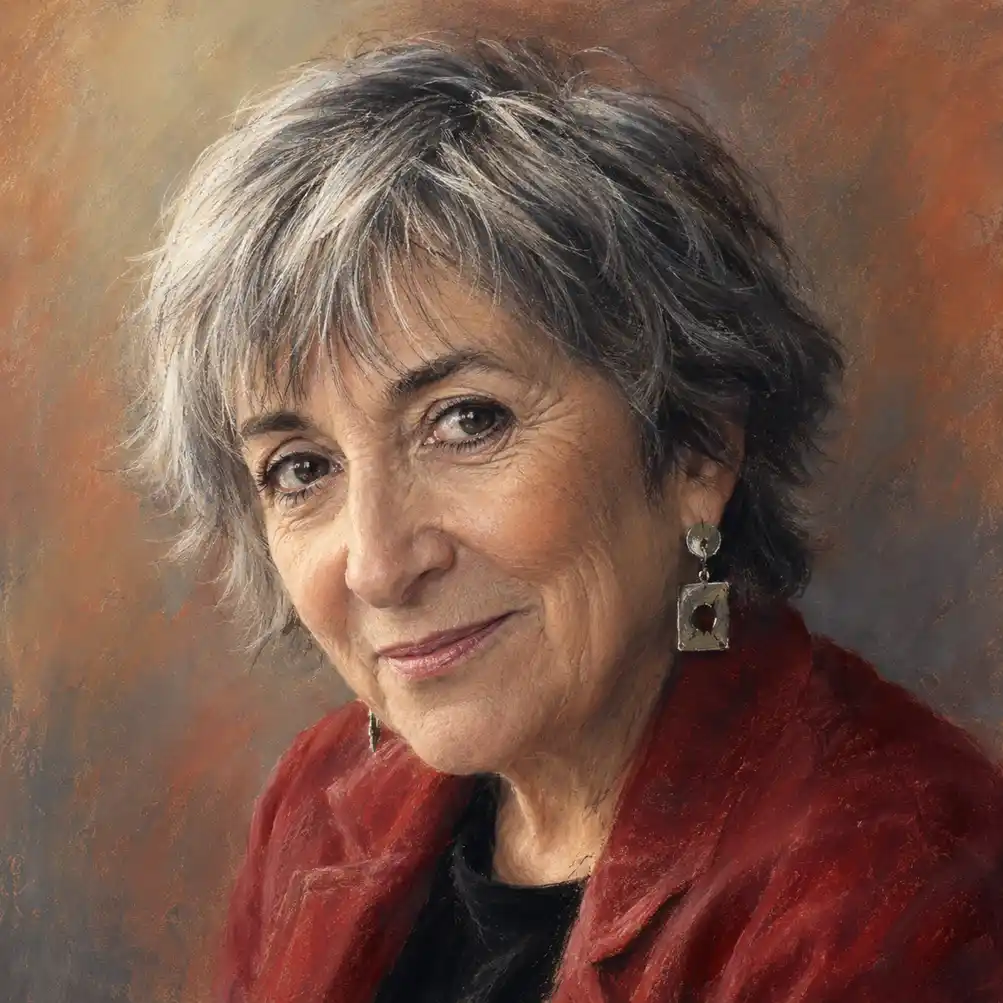
Illness Made Reading a Second Physical World
Rosa Montero was born in Madrid on 3 January 1951. Although her parents had limited formal education, they treated culture with reverence. Amalia Gayo, her mother, encouraged reading and possessed a comic, expressive gift for storytelling that she later identified as formative.
From the age of five to nine, tuberculosis and anaemia kept the future writer away from school. The restriction mattered because books did more than occupy a confined child. They allowed movement when her body could not. Reading created alternative rooms, social lives, dangers, and futures beyond the home.
That experience helps explain why imagination never appears as a luxury in Rosa Montero’s work. It is closer to an organ of survival. Her characters face worlds narrowed by illness, fear, gender, grief, work, or mortality. They cannot escape those limits, but they can imagine another relation to them.
The childhood should not become a neat origin myth. Many avid readers do not become writers. Still, the pattern endured: confinement activated imaginative freedom. Later books would ask what remains possible when material circumstances seem to close every exit.
Journalism Taught Her to Look Behind the Performance
She studied psychology at the Complutense University of Madrid from 1969 to 1972 and graduated from Madrid’s Official School of Journalism in 1975. During those years, she also worked with independent theater groups, including Tábano, and contributed to publications such as Fotogramas, Pueblo, and Posible.
Theater and psychology offered ways of thinking about motive and performance, but journalism became her profession. She joined El País during its first years and led the Sunday supplement in 1980 and 1981. Over her career, Rosa Montero conducted roughly two thousand interviews with politicians, writers, artists, and international public figures.
Her method resisted the idea that an interview merely records information. A powerful subject arrives with a public script, institutional protection, and practiced gestures. The interviewer must notice evasions, changes of tone, and the small contradiction that opens a rehearsed identity. A persona is evidence, not the whole person.
That lesson entered the fiction. Her narrators often misunderstand themselves, while secondary characters disrupt assigned roles. Her journalism seeks the person behind a public mask. By reversing the direction, her novels show how unstable any private self can be.
The Spanish Transition Entered Through Ordinary Rooms – Rosa Montero
Franco died in 1975, but political transition did not erase the social habits formed under dictatorship. New institutions appeared faster than private relationships changed. Rosa Montero’s first novel, Crónica del desamor (1979), entered that gap rather than offering a celebratory national panorama.
The book follows Ana, a journalist and single mother, alongside other working women in Madrid. Professional independence has become imaginable, yet domestic labor, sexual double standards, childcare, and male authority still organize daily life. Public freedom arrives unevenly. Democratic language can coexist with intimate subordination.
Montero drew on conversations among women around her, which gave the novel the density of collective testimony. Its importance lies less in representing a universal female experience than in making previously minimized experiences narratable. Private disappointment becomes political evidence without turning each character into an example of a thesis.
The novel established a tension that would shape Rosa Montero’s career. Critics often classified her through gender before considering form, as though female protagonists made a work sociological rather than literary. Montero resisted the label of “women’s literature” while exposing patriarchal power.
Each Change of Genre Opened a Different Exit
The early novels did not remain inside the documentary realism associated with Crónica del desamor. La función Delta (1981) used a double temporal structure to examine sexuality, abandonment, and death. Te trataré como a una reina (1983) moved toward melodrama, crime, and grotesque humor. Amado amo (1988) turned the office into a comic system of humiliation and dependence.
Temblor (1990) then built a speculative society threatened by political decay and literal nonexistence. Bella y oscura (1993) filtered urban violence through a child’s mixture of observation, myth, and fear. These shifts demonstrated that genre is a way of seeing.
Realism captures the persistence of recognizable social arrangements. Fantasy conveys the emotional logic of a world that exceeds a child’s understanding. Crime fiction gives hidden power a plot, while dystopia enlarges contemporary tendencies until their structure becomes unmistakable.
Rosa Montero also weakened the border between prestigious and popular forms. Suspense, sentiment, philosophical inquiry, and narrative speed could share a book. Accessibility was not the opposite of seriousness. Her best fiction uses plot to carry questions about time, identity, violence, and moral choice into the reading experience.
Rosa Montero – La hija del caníbal Makes Loss an Unchosen Beginning
In La hija del caníbal (1997), Lucía Romero’s husband disappears at an airport while the couple wait for a flight. The apparent kidnapping initiates a mystery, but the deeper investigation concerns the identity Lucía had built inside an unsatisfying marriage.
Rosa Montero gives her protagonist an odd pair of companions: the elderly anarchist Félix and the younger Adrián. Their competing histories prevent Lucía’s crisis from becoming a solitary exercise in self-discovery. Personal reinvention takes place among other lives, including political defeats and compromises that cannot be repaired by confidence alone.
Disappearance first appears as something done to Lucía, an absence that deprives her of certainty. Gradually, it reveals how far she had already disappeared from herself. The missing person exposes the life left behind. Mystery becomes a structure for examining dependency, age, courage, and authorship.
The 1997 Primavera Prize brought the novel a wide readership, and Antonio Serrano later adapted it for film. Narrative momentum can make Montero’s work seem lighter than it is, while explicit reflections sometimes explain meanings the plot has conveyed.
La loca de la casa Makes Autobiography Unreliable
La loca de la casa (2003), published in English as The Madwoman of the House, looks like a personal book about writers, imagination, fear, and the literary profession. Rosa Montero appears as its narrator, supplies biographical details, and speaks with the familiarity of an essayist addressing readers directly.
Yet the apparent autobiography changes its own evidence. An episode returns in another version, while invention occupies the place where confession seemed to stand. The narrator shows how narrative gives memory a shape more persuasive than fact.
Its hybrid form matters because the book refuses two comforting ideas. A life is not raw material that an author can transfer intact to the page. Nor is fiction simply a lie placed opposite truth. The self emerges through competing stories, some documented, some remembered, and some deliberately made.
This instability separates the work from conventional literary memoir. Anecdotes about writers become mirrors, warnings, and provocations. Imagination appears as the household’s “madwoman,” disruptive but necessary.
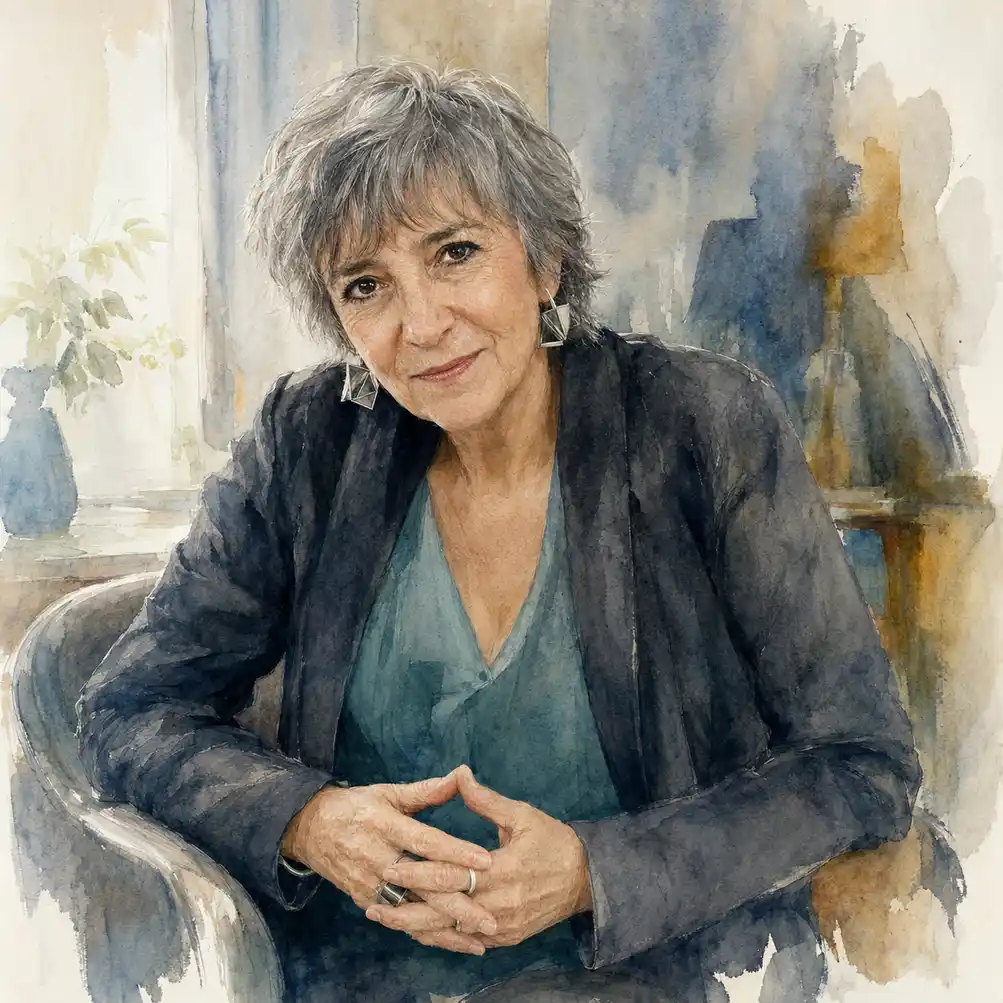
Marie Curie’s Archive Gave Grief Another Voice
The death of Rosa Montero’s husband, journalist Pablo Lizcano, from cancer in 2009 changed the emotional conditions under which she wrote. Several years later, a commission involving Marie Curie’s diary after Pierre Curie’s death created an unexpected point of contact between two otherwise very different lives.
La ridícula idea de no volver a verte (2013), published in English as The Ridiculous Idea of Never Seeing You Again, combines biography, memoir, essay, and photographs. Curie is neither Montero’s disguise nor a monument. Scientific achievement appears beside bereavement, ambition, labor, motherhood, scandal, and restrictions on women in public life.
By placing her own grief beside Curie’s, she avoids claiming that sorrow is uniquely private. At the same time, she does not turn loss into a universal formula. Another life creates a language for pain without making the two experiences equivalent.
Letters, diaries, and photographs resist fantasy, yet their silences invite interpretation. The author distinguishes what the archive supports from what emotional intelligence can only suggest.
Bruna Husky Lives Inside a Countdown
Rosa Montero had already written speculative fiction before Lágrimas en la lluvia appeared in 2011. Bruna Husky nevertheless gave that strand of her work its most durable character. This private detective is a techno-human manufactured for dangerous labor and designed to die after a short operational life.
The name of the first novel, translated as Tears in Rain, recalls Blade Runner, but Bruna is not a borrowed replicant placed inside another writer’s universe. The novelist uses the artificial body to concentrate long-standing concerns: constructed memory, racialized exclusion, labor exploitation, loneliness, and fear of death. Bruna knows precisely how little time remains, while ordinary humans sustain themselves through vagueness.
Crime fiction supplies an investigation. Science fiction opens the social order to inspection. Fabricated memories question identity, while hostility toward techno-humans exposes the political usefulness of invented difference. The future makes present prejudice visible.
El peso del corazón (2015) and Los tiempos del odio (2018) expand the conflict through ecological damage, corporate power, fundamentalism, and polarization. The series works because large systems remain attached to Bruna’s abrasive appetite for life. Rosa Montero gives mortality muscles, desire, rage, and an expiration date.
Animales difíciles Changes the Body, Not the Question
The fourth Bruna Husky novel, Animales difíciles (2025), closes the sequence under altered conditions. Bruna has gained more life, but the price is a transfer into a smaller and physically vulnerable techno-human body. Survival therefore disrupts the identity she believed she was saving.
The investigation leads toward artificial superintelligence, extremism, and concentrated technological power. Rosa Montero avoids treating the future as prediction. The question concerns agency: who designs these systems, who benefits, and whether intelligence without embodied vulnerability can share human values.
Bruna’s changed body also prevents technological extension from becoming a fantasy of simple mastery. More time does not restore the old self. Survival produces another form of loss. The closing volume thus returns to the series’ beginning, where memory and mortality already made identity unstable.
The novel received the 2025 Kelvin 505 Award and the 2026 Celsius Award. Its success confirmed that Rosa Montero’s science fiction was no secondary excursion from a “serious” career.
The Interviewer and Novelist Pursue Different Truths
Her prose is clear, fast, and emotionally direct. She favors concrete images, sharp characterization, tonal shifts, and plots that continue moving while ideas accumulate. Humor interrupts solemnity, especially when characters mistake vanity, fear, or habit for principle.
Journalism strengthened her compression and observation. A profile may turn on one gesture; a column must create pressure within limited space. Her 2024 collection Cuentos verdaderos shows how reports from 1978 to 1988 now read like stories while remaining anchored to events.
Fiction requires another discipline. Facts limit responsible journalism, whereas a novel must imagine consciousness it cannot verify. Montero has described fiction as a journey toward the other, an attempt to inhabit even minor characters from within. Empathy becomes a narrative technique, not a claim that difference has disappeared.
The distinction matters when Rosa Montero mixes forms. Her strongest hybrids signal movement between documentation, memory, interpretation, and invention. An accessible voice can sound trustworthy. Her metafiction reminds us that fluency is not proof, even when the speaker bears the author’s name.

Women, Replicants, and Radical Memory: Essential Rosa Montero Works
- Absent Love: A Chronicle (Crónica del desamor, 1979): Ana balances journalism, motherhood, and relationships in newly democratic Madrid. The debut captures women testing freedoms constrained by old expectations.
- I Will Treat You Like a Queen (Te trataré como a una reina, 1983): Lives intersect in a shabby Madrid nightclub.
- Beautiful and Dark (Bella y oscura, 1993): Baba enters a dangerous neighborhood ruled by secrets and legends. A child’s viewpoint merges brutality, wonder, and storytelling.
- The Cannibal’s Daughter (La hija del caníbal, 1997): After Lucía’s husband vanishes at an airport, her search becomes a witty exploration of identity, aging, and reinvention.
- The Madwoman of the House (La loca de la casa, 2003): Memoir, essay, and fiction exchange places as Rosa Montero examines imagination, ambition, memory, and writers’ useful lies.
- Story of the Transparent King (Historia del Rey Transparente, 2005): Disguised as a man, Leola crosses violent medieval Europe.
- Tears in Rain (Lágrimas en la lluvia, 2011): Replicant detective Bruna Husky investigates deaths in a future Madrid. Science fiction sharpens her questions about mortality, prejudice, memory, and personhood.
- The Ridiculous Idea of Never Seeing You Again (La ridícula idea de no volver a verte, 2013): Marie Curie’s grief helps Montero confront her husband’s death. Biography and memoir form an intimate study of mourning and survival.
- Weight of the Heart (El peso del corazón, 2015): Bruna Husky investigates ecological danger and political inequality. The sequel enlarges her world while deepening her fear of programmed death.
- The Danger to Be Sane (El peligro de estar cuerda, 2022): She connects creative brilliance with mental difference through writers, research, and autobiography. The book celebrates imagination without romanticizing psychological suffering.
Writers Who Helped Shape Rosa Montero
- Vladimir Nabokov: Rosa Montero names Nabokov as a late-discovered master of her hyperrealistic side. His verbal intensity and obsessive consciousness illuminate her interest in narrators who build persuasive worlds from unstable inner lives. The influence concerns imaginative force, not imitation of his ornate surface.
- Ursula K. Le Guin: Montero identifies Le Guin as the master of her fantastic writing and knew her for many years. Her speculative worlds showed that gender, power, mortality, and moral choice could be examined without losing complexity. The Bruna Husky novels extend that permission into crime fiction and Spanish politics. Speculation becomes ethical inquiry.
- Carmen Laforet and Mercè Rodoreda: She wrote prologues to their work and defended women diminished by literary history. Laforet’s postwar interiority and Rodoreda’s fusion of psychological pressure with symbolic transformation established a female tradition Montero could inherit without reproducing.
- Patricia Highsmith and the crime tradition: Her introduction to Highsmith’s The Glass Cell reflects an affinity for suspense built from compromised psychology. Montero uses crime to expose fear, desire, and power beneath ordinary roles rather than restore order.
- Her mother, Amalia Gayo: Not a published author, Gayo was the storyteller she credited with teaching her to narrate. Gayo’s comic timing, letters, and unrealized gifts linked storytelling to class and gender: talent can exist when society denies it a public career.
Writers Who Worked in Rosa Montero’s Wake
- Maruja Torres: Torres worked under her direction at El País Semanal before developing her career as a reporter, columnist, and author. Their styles differ, but the professional connection is concrete. Rosa Montero helped define a space where subjective presence, literary technique, and reporting could coexist.
- Marta Sanz, Nuria Labari, and Lara Moreno: They contributed to Hombres (y algunas mujeres), the 2019 collection conceived and edited by Montero. Its premise asked women to inhabit male perspectives rather than accept a private female enclosure. Editorial influence produced acts of ventriloquism, not a school of followers.
- Lola Robles and Teresa López-Pellisa: As writers, scholars, and editors of Distópicas and Poshumanas, they placed Montero within a recovered history of Spanish science fiction by women. Her presence helped challenge a canon that treated women’s speculative writing as marginal.
- Writers crossing essay, memoir, and biography: She did not invent hybrid nonfiction, and resemblance alone proves nothing. Yet the reach of The Ridiculous Idea of Never Seeing You Again and The Danger to Be Sane widened the audience for writing between archive, personal experience, inquiry, and invention. The effect is permission and precedent, not ownership.
Hope Means Acting Within a Narrow Range
Death, time, abusive power, fanaticism, and loneliness recur so persistently that Rosa Montero could be described as a dark existential writer. Yet her books rarely accept despair as the final intellectual position. They search for a small area in which action remains possible.
That area is visible in Instrucciones para salvar el mundo (2008), where damaged lives intersect in contemporary Madrid, and in La buena suerte (2020), where an architect abruptly abandons his former life in a neglected town. Neither novel argues that optimism cancels structural violence or traumatic history. Choice operates under pressure and may begin with nothing more heroic than accepting another person’s presence.
The jury awarding Montero Spain’s 2017 National Prize for Spanish Literature described an “ethics of hope.” The phrase works if hope means practice rather than mood. A limited choice still has moral weight.
Her characters seldom control events. They can decide how to answer, whom to recognize, or which inherited story to reject. This gives Rosa Montero’s work warmth without innocent endings. Salvation remains partial and vulnerable to reversal.
Accessibility Creates Power and Occasional Friction
Her ability to join philosophical questions to suspense has built a broad international readership. It also creates the main aesthetic tension in her work. At times, an explicit reflection restates what an image, action, or character has already made clear. Readers who prefer greater ambiguity may experience that generosity as over-explanation.
The ethics of hope creates similar friction. In the strongest books, hope grows from visible damage. Elsewhere, redemption risks resolving pressure more neatly than social conditions justify. Emotional clarity is not always complexity, although obscurity would not create depth.
Her public authority has also made factual discipline especially important. A 2017 column sympathetic to homeopathy contained scientific errors that El País’s readers’ editor publicly corrected. The episode does not define five decades of journalism, but it demonstrates the danger of allowing justified suspicion of corporate power to substitute for verified evidence.
This criticism belongs beside Rosa Montero’s achievement. Her work distrusts masks, dogma, and prefabricated certainty. Applying that scrutiny to the author preserves its critical intelligence.
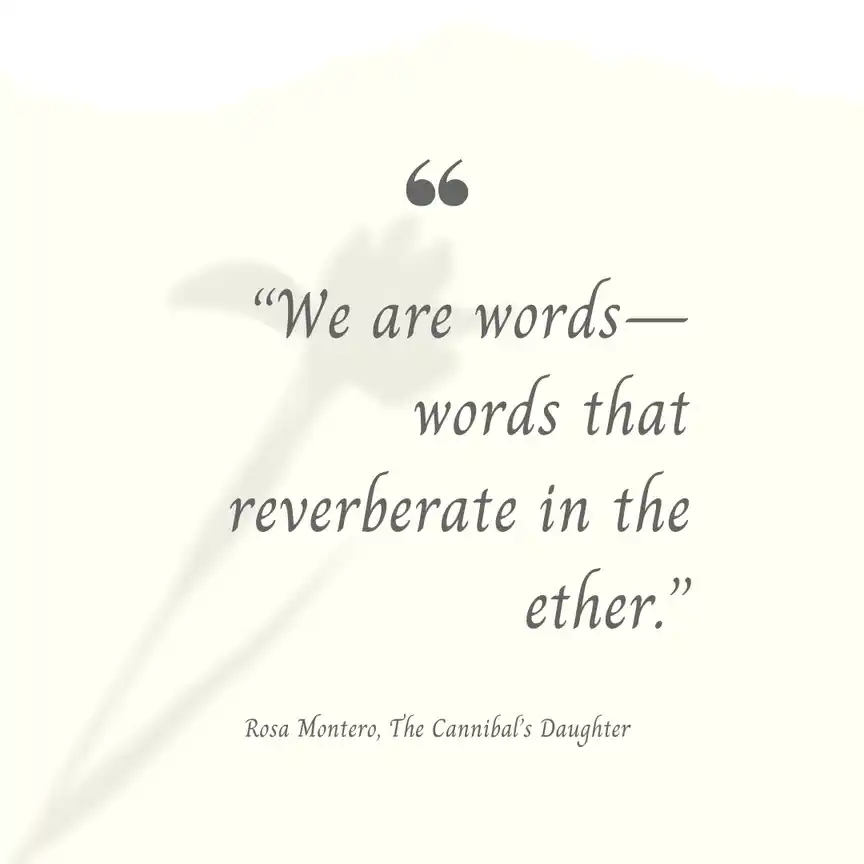
Stories, Freedom, and the Forest: Rosa Montero in Five Quotes
- “Novels should be an area of total freedom.” Fiction must resist financial, social, and personal pressures if it is to discover something unexpected.
- “In a novel, ambiguity is a value.” Montero welcomes contradictory interpretations because fiction investigates questions rather than reporting established facts.
- “My mind is still full of images, it’s wired differently to most people’s.” She connects creativity with a childlike abundance of mental pictures that adulthood never erased.
- “Alcohol is the great plague of writers, especially during the 20th century.” Montero rejects the romantic mythology that addiction strengthens literary talent.
- “I understand what led them to alcohol.” Her rejection still contains empathy: artists may seek emotional intensity or temporary freedom from excessive self-control.
Beyond the Byline: Eight Revealing Facts About Rosa Montero
- Illness created an early reader: Tuberculosis and anemia kept Rosa Montero away from school between five and nine. Books and childhood writing filled those isolated years and began a lifelong relationship with invented worlds. 🌐 Source
- Her education crossed disciplines: Montero studied psychology and journalism while participating in Madrid’s independent theater movement. These interests later supported her psychological characterization, dramatic scenes, and fascination with constructed identities.
- She became an interviewer of unusual range: Montero joined El País during Spain’s democratic transition and conducted around two thousand interviews. Her subjects included Indira Gandhi, Richard Nixon, Julio Cortázar, Yasser Arafat, and Malala Yousafzai. 🌐 more
- Fiction followed journalism quickly: Her first novel, Crónica del desamor, appeared in 1979.
- No single genre contains her: Her fiction includes thrillers, historical narratives, autofiction, fantasy, and speculative fiction.
- An android extended her human questions: Detective Bruna Husky allowed Montero to explore mortality, artificial memory, prejudice, and identity through science fiction. The series creates a productive dialogue with 👉 1984 by George Orwell.
- Gender remains part of a wider ethics: Montero’s journalism challenges patriarchal structures alongside racism, war, poverty, and ecological destruction. That broad humanist perspective can be read beside 👉 The Second Sex by Simone de Beauvoir.
- Two national honors frame her career: Spain awarded her the National Prize for Spanish Literature in 2017, praising an “ethics of hope.” In July 2026, she also received the Francisco Cerecedo Journalism Prize for five decades of independent reporting and commentary. 🌐 2017 award
Recognition Followed the Refusal to Choose One Form
Rosa Montero’s awards span journalism and literature. They include the National Journalism Prize for literary reports and articles in 1980, the Primavera Prize for La hija del caníbal, international honors for La loca de la casa, and Spain’s National Prize for Spanish Literature in 2017. Her work has been translated into roughly thirty languages.
Recent recognition shows a career that remains active. Animales difíciles received speculative-fiction awards in 2025 and 2026. Montero was also named a 2026 recipient of the Giovanni Boccaccio Literary Award and the Francisco Cerecedo Journalism Award, whose jury emphasized her independence and criticism of power.
No single starting point represents the whole body of work. Readers interested in democratic Spain and gender can begin with Crónica del desamor. For mystery and self-reinvention, The Cannibal’s Daughter offers an inviting entrance. Those drawn to imagination and unreliable self-narration should choose The Madwoman of the House.
A Life Persists by Changing Its Story
Rosa Montero has spent more than five decades moving between forms that make different promises. Journalism promises accountability to the public world. Biography promises attention to documented lives. Fiction promises access to possibilities that cannot be reported, while science fiction changes the scale on which the present can be judged.
None of these forms defeats disappearance. Interviews become historical photographs, memories alter, bodies fail, and archives preserve fragments. Writing can resist the speed with which a person becomes a category, silence, statistic, or forgotten name.
That resistance explains the coherence beneath Rosa Montero’s versatility. Her work keeps identity open to revision. A woman, grieving survivor, worker, public figure, or manufactured being may have been assigned a story by power, habit, or fear. The possibility of another story does not erase what happened. It creates room in which a life can answer back.