T. S. Eliot – The Architect of Modern Poetry
Thomas Stearns Eliot, more commonly known as T. S. Eliot, was a towering figure in the world of literature, whose works reshaped the landscape of modern poetry and drama. Born on September 26, 1888, in St. Louis, Missouri, Eliot’s journey from an American expatriate to a British citizen mirrors the transatlantic nature of his literary influence. This essay explores the life of the Architect of Modern poetry, delving into his profound impact on 20th-century literature, his explorations of existential despair, and his ultimate search for faith and meaning.
Eliot’s early years were marked by a confluence of cultures and influences that would shape his intellectual and poetic development. Born into a distinguished family with New England roots, T. S. Eliot was the youngest of seven children. His father was a successful businessman, and his mother was a poet and social worker. This environment, rich in moral seriousness and cultural engagement, fostered Eliot’s love for literature.
Eliot’s education played a crucial role in his formation as a writer. He attended Smith Academy in St. Louis and later Harvard University, where he studied philosophy, literature, and languages. At Harvard, Eliot was exposed to the works of the French Symbolists and the writings of Arthur Schopenhauer and Friedrich Nietzsche, which would significantly influence his outlook and poetry.
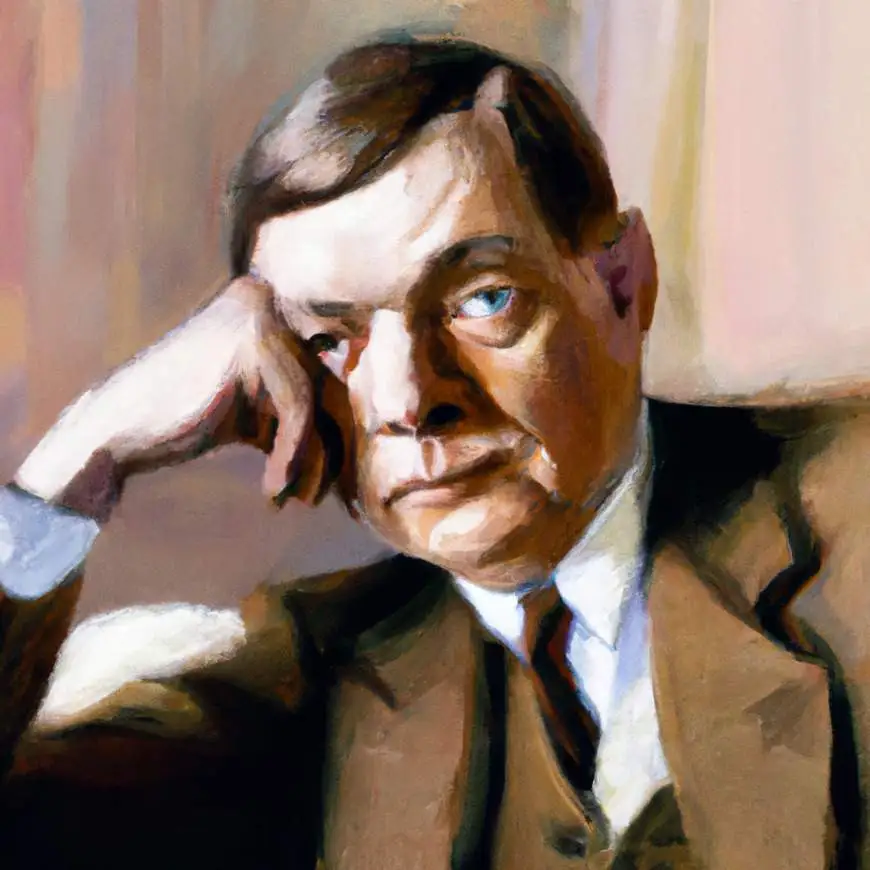
Vita and Books of a Modernist Master – Profile of T. S. Eliot
- Full Name and Pseudonyms: Thomas Stearns Eliot. No known pseudonyms.
- Birth and Death: Born on September 26, 1888, in St. Louis, Missouri, USA. Died on January 4, 1965, in London, England.
- Nationality: American-born; became a British citizen in 1927.
- Father and Mother: Henry Ware Eliot and Charlotte Champe Stearns.
- Wife or Husband: First married to Vivienne Haigh-Wood; later married Esmé Valerie Fletcher.
- Children: None.
- Literary Movement: Modernism and Symbolism.
- Writing Style: Complex, allusive, and fragmented. Used myth, philosophy, and literature to reflect spiritual and cultural crises.
- Influences: Dante, Shakespeare, the Metaphysical poets, French Symbolists, and Eastern philosophy.
- Awards and Recognitions: Nobel Prize in Literature (1948). Order of Merit (UK), and many honorary degrees.
- Adaptations of Their Work: Old Possum’s Book of Practical Cats inspired the musical Cats. The Waste Land widely adapted and referenced in academic and artistic works.
- Controversies or Challenges: Criticized for alleged anti-Semitic and elitist views. Early marriage was turbulent and public.
- Career Outside Writing: Worked at Lloyds Bank and later as a publisher at Faber & Faber.
- Recommended Reading Order:
1. The Love Song of J. Alfred Prufrock: A dramatic monologue of urban alienation.
2. The Waste Land: A landmark modernist poem of spiritual desolation.
3. Four Quartets: Philosophical meditations on time, faith, and redemption.
4. Old Possum’s Book of Practical Cats: Light-hearted poems for children and cat lovers.
London and the Birth of a New Voice
In 1914, Eliot’s life took a pivotal turn when he moved to London, a city that would become his home and the backdrop for much of his work. It was in London that Eliot met Ezra Pound, an American poet who would become a lifelong friend and mentor. Pound’s encouragement and critique were instrumental in the publication of Eliot’s early poems, including “The Love Song of J. Alfred Prufrock” in 1915. This poem, with its innovative use of the stream of consciousness and its exploration of the paralysis and alienation of modern life, marked T. S. Eliot as a leading voice of modernist poetry.
Eliot’s masterpiece, “The Waste Land,” published in 1922, is widely regarded as one of the most important poems of the 20th century and a central work of modernist literature. Composed in the aftermath of World War I, the poem reflects the disillusionment of a generation and the fragmentation of post-war society. Through its use of multiple voices, cultural references, and languages, “The Waste Land” captures the crisis of meaning and belief in a fractured world.
Beyond his poetry, T. S. Eliot made significant contributions to literary and cultural criticism. His essays on poetry, drama, and culture were highly influential, shaping the tastes and literary standards of his time. In works such as “Tradition and the Individual Talent” and “The Function of Criticism,” Eliot argued for the importance of historical awareness and the interconnectedness of past and present literature. His criticism, often as provocative and challenging as his poetry, reflected his belief in the moral and spiritual dimensions of literature.
Drama and the Later Years
In the 1930s, T. S. Eliot turned his attention to drama, seeking to revive the tradition of verse drama in English theatre. His plays, including “Murder in the Cathedral” and “The Cocktail Party,” explore themes of guilt, redemption, and the search for meaning. Through his dramas, Eliot continued to wrestle with the spiritual and existential questions that permeated his poetry.
Eliot’s later poetry, particularly “Four Quartets,” represents a culmination of his spiritual and philosophical explorations. Written during World War II, the quartets reflect on time, memory, and redemption, offering a message of hope and faith in a time of uncertainty.
T. S. Eliot, one of the most significant poets and critics of the 20th century, was both a product of his literary predecessors and a profound influence on future generations of writers. His work, characterized by its innovative use of form, deep cultural and literary allusions, and exploration of modern malaise, sits at a crossroads of influence, drawing from a diverse array of sources while also significantly impacting the course of English literature and poetry. This essay explores the intricate web of Eliot’s literary influences and his subsequent impact on other writers.
Legacy and Influence on T. S. Eliot
Eliot’s work reflects a vast tapestry of influences, ranging from ancient literature to his contemporary modernists. T. S. Eliot’s contributions to literature span poetry and drama, with his works considered landmarks of the modernist movement.
Influences on T. S. Eliot
- Dante Alighieri: T. S. Eliot frequently cited the medieval Italian poet as a primary influence. Dante’s “Divine Comedy,” with its intricate use of allegory and its journey through Hell, Purgatory, and Paradise, provided a model for Eliot’s own blending of personal emotion with universal themes. Eliot’s “The Love Song of J. Alfred Prufrock” and “The Waste Land” contain echoes of Dante’s structure and thematic depth.
- The Metaphysical Poets: Eliot’s essay “The Metaphysical Poets” highlighted his admiration for 17th-century poets like John Donne and Andrew Marvell. Their ability to fuse intellectual thought with emotion and their use of metaphysical conceits significantly influenced Eliot’s own poetry.
- French Symbolists: The work of French Symbolists, particularly Charles Baudelaire and Jules Laforgue, influenced Eliot’s themes and his use of symbolic imagery. The Symbolists’ exploration of the city’s underbelly, spiritual malaise, and the use of oblique imagery can be seen throughout Eliot’s work.
- Ezra Pound: Pound was not just a contemporary of Eliot but a close friend and mentor. His Imagist principles, advocating for clear, precise language and direct treatment of the “thing” itself, shaped Eliot’s poetic technique. Pound’s editing of “The Waste Land” was crucial in shaping the final form of the poem.
- James Joyce: While not a direct influence in the way others might have been, Joyce’s work, particularly “Ulysses,” shared with T. S. Eliot a fascination with the fragmentation of modern life and the use of myth to structure contemporary narratives. The publication of “Ulysses” and “The Waste Land” in the same period marks a watershed moment in modern literature.
Writers Influenced by T. S. Eliot
- The New Critics: Eliot’s critical essays, with their emphasis on tradition and the impersonality of poetry, shaped the New Criticism movement in the mid-20th century. Critics like Cleanth Brooks and John Crowe Ransom drew on Eliot’s work to advocate for close reading and the primacy of the text.
- Modern and Postmodern Poets: Eliot’s exploration of fragmentation, alienation, and the use of collage influenced a wide range of poets, including W.H. Auden, Sylvia Plath, and Ted Hughes. His style and themes can be seen in the confessional poetry movement and in the works of postmodern poets who continued to grapple with the dislocations of modernity.
- Postcolonial Writers: Eliot’s questioning of identity and place resonated with postcolonial writers such as Derek Walcott and Kamau Brathwaite, who found in Eliot’s work a language for their own explorations of cultural dislocation and hybridity.
- Contemporary Writers: Eliot’s influence persists in contemporary literature, with writers such as T. S. Eliot Prize-winning poet Ocean Vuong citing Eliot’s impact on their work. The intertextual nature of Eliot’s poetry, his themes of memory and time, and his innovations in form continue to inspire writers today.
In conclusion, T. S. Eliot’s literary legacy is characterized by a rich interplay of influences and impact. Drawing from a diverse array of sources, Eliot synthesized a unique poetic voice that, in turn, influenced generations of writers. His work remains a cornerstone of modern literature, a touchstone for writers seeking to navigate the complexities of the 20th and 21st centuries. Through his poetry and essays, T. S. Eliot not only reflected the anxieties and innovations of his time but also provided a language for the existential and artistic explorations of those who followed.
Famous works of T. S. Eliot in chronological order
- The Love Song of J. Alfred Prufrock (1915) This poem is one of the first major works of T. S. Eliot. It is a dramatic monologue that captures the inner turmoil and existential angst of its speaker.
- Gerontion (1920) A meditative poem that delves into themes of history, memory, and spirituality. Reflecting the disillusionment of the post-World War I era.
- The Waste Land (1922) Perhaps the most famous work of T. S. Eliot. This complex and allusive poem presents a bleak vision of post-war disillusionment. And the search for meaning in a fragmented world.
- The Hollow Men (1925) This poem is known for its haunting portrayal of spiritual emptiness and the modern crisis of identity.
- Ash Wednesday (1930) Eliot’s first major poem after his conversion to Anglicanism. Expressing the struggle and the hope for spiritual renewal.
- Murder in the Cathedral (1935) A play that dramatizes the assassination of Archbishop Thomas Becket in Canterbury Cathedral in 1170. Exploring themes of martyrdom and temptation.
- Old Possum’s Book of Practical Cats (1939) A collection of whimsical poems about feline psychology and sociology. Later adapted into the musical “Cats.”
- The Family Reunion (1939) A play that deals with themes of guilt, redemption, and the search for meaning in modern life.
- Four Quartets (1943) A set of four interconnected poems (“Burnt Norton,” “East Coker,” “The Dry Salvages,” and “Little Gidding”). That contemplate time, perception, and spiritual redemption, considered by many to be Eliot’s greatest achievement.
- The Cocktail Party (1949) A play that examines the complexities of human relationships and the quest for meaning in a post-war society.
Broken Voices and Silent Echoes: Eliot’s Strange Beauty
T. S. Eliot writes in a way that feels broken and beautiful. His lines are full of sharp images, sudden stops, and quiet pauses. When I read his poems, I don’t always understand every word. But I feel something powerful beneath the surface. His writing pulls me in, even when it confuses me.
He often uses fragments—short thoughts, quotes, or memories. They come from the Bible, plays, or ancient myths. He mixes high culture with daily life. A single line might mention a Greek god, and the next one talks about coffee spoons. That contrast makes his voice feel both old and modern.
In The Waste Land,T. S. Eliot jumps from voice to voice. I hear a woman speaking, then a ghost, then a prophet. At first, it feels chaotic. But slowly, I see how these voices reflect a broken world. He doesn’t tell a story in a straight line. Instead, he shows the pieces of a world that has lost meaning.
Silence plays a big role too. His pauses are full of feeling. Sometimes, a missing word says more than a full sentence. These gaps give space for thought. They make me stop and listen. I don’t rush through Eliot’s poems. I pause and I return, while I reflect.
He also uses repetition, but in a soft way. A phrase will echo across stanzas. It creates rhythm and sadness. It feels like a thought that won’t leave. His poems are full of ghosts—of memory, regret, and time. That gives his style a deep emotional power.
Shadows, Time, and Technique: How T. S. Eliot Writes
T. S. Eliot uses many clever techniques. One of his favorites is allusion. He fills his poems with quiet references to other texts. I see hints of Shakespeare, Dante, or the Bible. These hidden voices give his work depth. I don’t need to catch every one—but when I do, it adds a new layer. It feels like he’s building a web of meaning across time.
He also plays with time. Past, present, and future mix together. A single line might move from ancient times to modern London. This gives his poems a dreamlike feeling. The world feels both close and far away. I lose track of time—but in a good way.
T. S. Eliot uses free verse, but always with control. His lines don’t follow a strict rhyme, but they have rhythm. He often breaks the line to create surprise. One line ends softly, but the next hits hard. That shift in pace keeps me awake as a reader. I never know what’s coming.
He often writes about spiritual emptiness. But instead of saying it directly, he shows it. He uses dry landscapes, tired voices, or cold cities. These images make me feel what the character feels. They say more than any explanation could.
Eliot’s voice is serious, but also full of music. He uses sounds to shape mood. Soft vowels slow the line. Sharp consonants bring tension. That musical flow makes his poems stick in my mind.
When I read T. S. Eliot, I step into a world of mystery and shadows. His style may be strange—but once I enter it, I don’t want to leave. His words echo in me, long after the page ends.
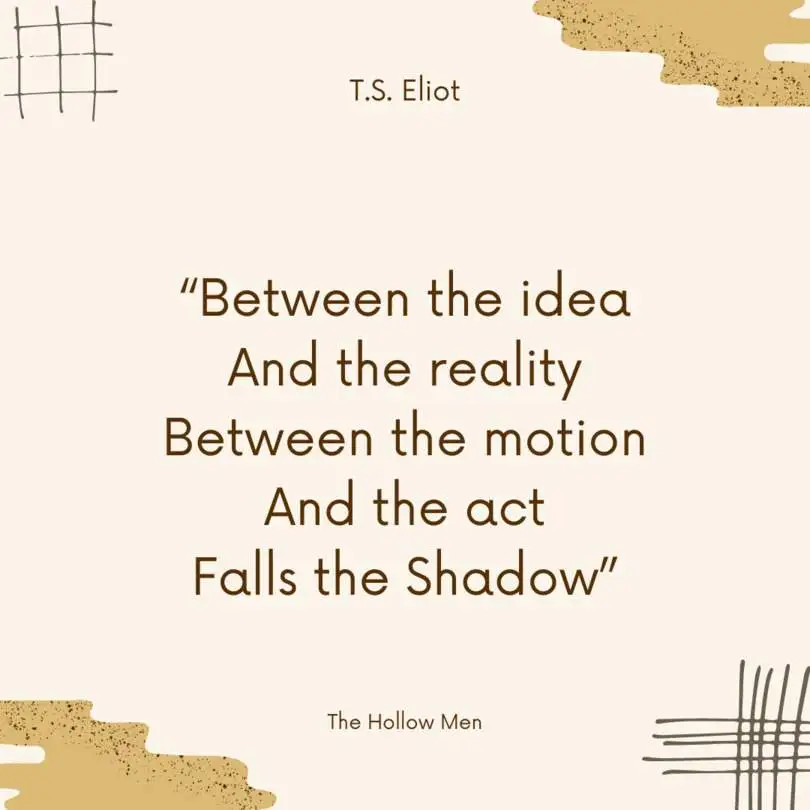
Famous quotes from T. S. Eliot
T. S. Eliot’s writings are rich with memorable lines and profound insights. Here are seven famous quotes from his works, which capture the essence of his philosophical and poetic vision:
- From The Love Song of J. Alfred Prufrock: “Do I dare / Disturb the universe? In a minute there is time / For decisions and revisions which a minute will reverse.”
- FromThe Waste Land: “April is the cruellest month, breeding / Lilacs out of the dead land, mixing / Memory and desire, stirring / Dull roots with spring rain.”
- From The Hollow Men: “This is the way the world ends / Not with a bang but a whimper.”
- From Four Quartets (Little Gidding): “We shall not cease from exploration, and the end of all our exploring will be to arrive where we started and know the place for the first time.”
- From Ash Wednesday: “Because I do not hope to turn again / Because I do not hope / Because I do not hope to turn…”
- From Four Quartets (East Coker): “In my beginning is my end… In my end is my beginning.”
- From Preludes: “I am moved by fancies that are curled / Around these images, and cling: / The notion of some infinitely gentle / Infinitely suffering thing.”
Trivia facts about T. S. Eliot
- Nobel Prize in Literature: T. S. Eliot was awarded the Nobel Prize in Literature in 1948 for his outstanding, pioneer contribution to present-day poetry.
- Banker Turned Poet: Before becoming one of the most important poets of the 20th century, Eliot worked in a bank. He took a position at Lloyd’s Bank in London in 1917. Where he worked in the foreign transactions department until 1925. This job, while taxing, surprisingly contributed to his discipline in writing.
- British Citizenship: Though born in St. Louis, Missouri, T. S. Eliot became a British citizen in 1927. The same year he converted to Anglicanism. This change reflected not just a shift in nationality but also a deep commitment to the cultural and spiritual heritage of England.
- Old Possum: Eliot was affectionately nicknamed “Old Possum” by his friend and fellow poet Ezra Pound. This moniker later became widely associated with Eliot. Especially when he used “Old Possum” as the purported author of his book of light verse, “Old Possum’s Book of Practical Cats.”
- Invented the Word “Bullshit” : Among his many contributions to the English language. Eliot is credited with the first recorded use of the word “bullshit” in his poem “The Triumph of Bullshit,” penned around 1910. This fact showcases Eliot’s willingness to engage with colloquial language, despite his often formal exterior.
- Cats Musical: Eliot’s “Old Possum’s Book of Practical Cats” served as the basis for Andrew Lloyd Webber’s musical “Cats” . One of the longest-running shows in both West End and Broadway history.
- Multilingual Talent: Eliot was proficient in several languages, including French, German, Latin, and Ancient Greek. His deep knowledge of these languages not only influenced his own writing but also made him an exceptional translator and critic of international literature.
Legacy and Influence
T. S. Eliot’s impact on literature and culture extends far beyond his lifetime. Awarded the Nobel Prize in Literature in 1948, Eliot’s work continues to be celebrated for its profound depth, technical mastery, and transformative vision. His poetry and essays have influenced countless writers and thinkers. And his efforts to bridge the gap between the intellectual and the spiritual have left an indelible mark on the literary world.
Eliot’s journey from a young American poet to a British literary giant mirrors the complexities and contradictions of the 20th century. His works, characterized by their intellectual rigor and emotional intensity. He remain essential reading for anyone seeking to understand the modern human condition. T. S. Eliot was not just an architect of modern poetry. He was a seeker of truth in a century of turmoil, whose writings continue to challenge, inspire, and enlighten.
In conclusion, the life and work of T. S. Eliot embody the tumult and transformation of the 20th century. From “The Love Song of J. Alfred Prufrock” to “Four Quartets,” his poetry traverses the landscapes of despair and hope. Capturing the eternal search for meaning in an ever-changing world. Eliot’s influence on literature and thought is immeasurable.
Cementing his place as one of the greatest poets of his time and a beacon for future generations. As we continue to navigate the complexities of the modern age, Eliot’s words offer a compass. Guiding us through the wastelands and towards the possibilities of renewal and redemption.
Reviews of Works by T. S. Eliot
Old Possum’s Book of Practical Cats
T. S. Eliot’s Old Possum’s Book of Practical Cats Old Possum’s Book of Practical Cats…
The Hollow Men by T. S. Eliot – Of Modern Despair A quick summary of…
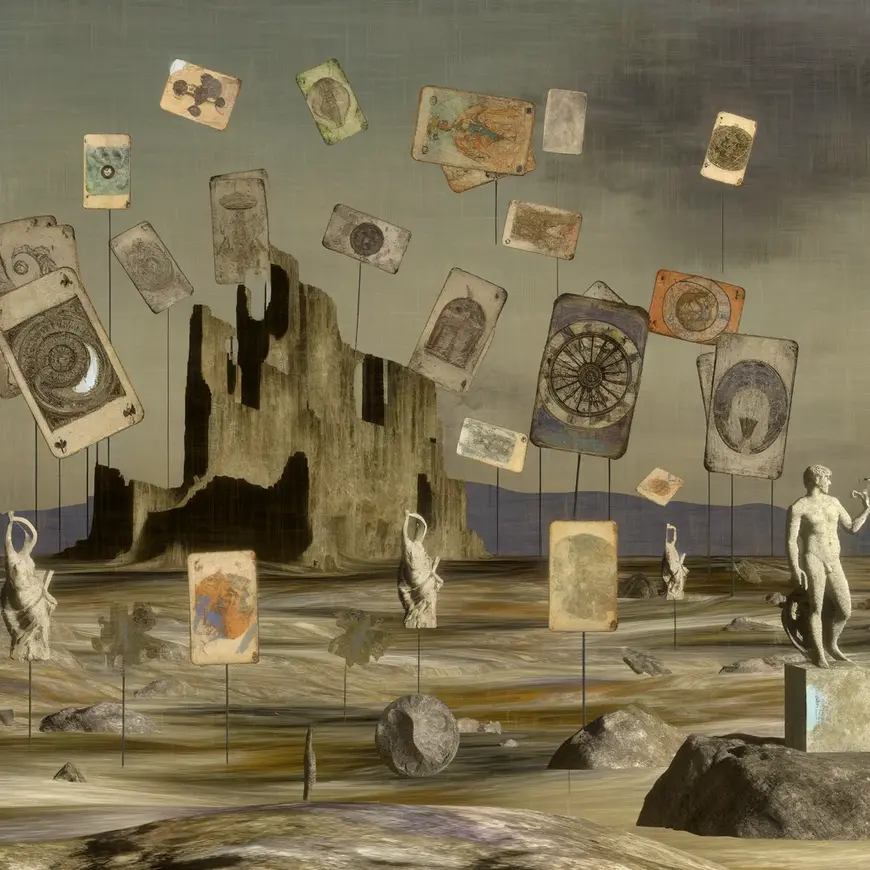
T. S. Eliot’s The Waste Land – A Literary Odyssey What I experienced while reading…