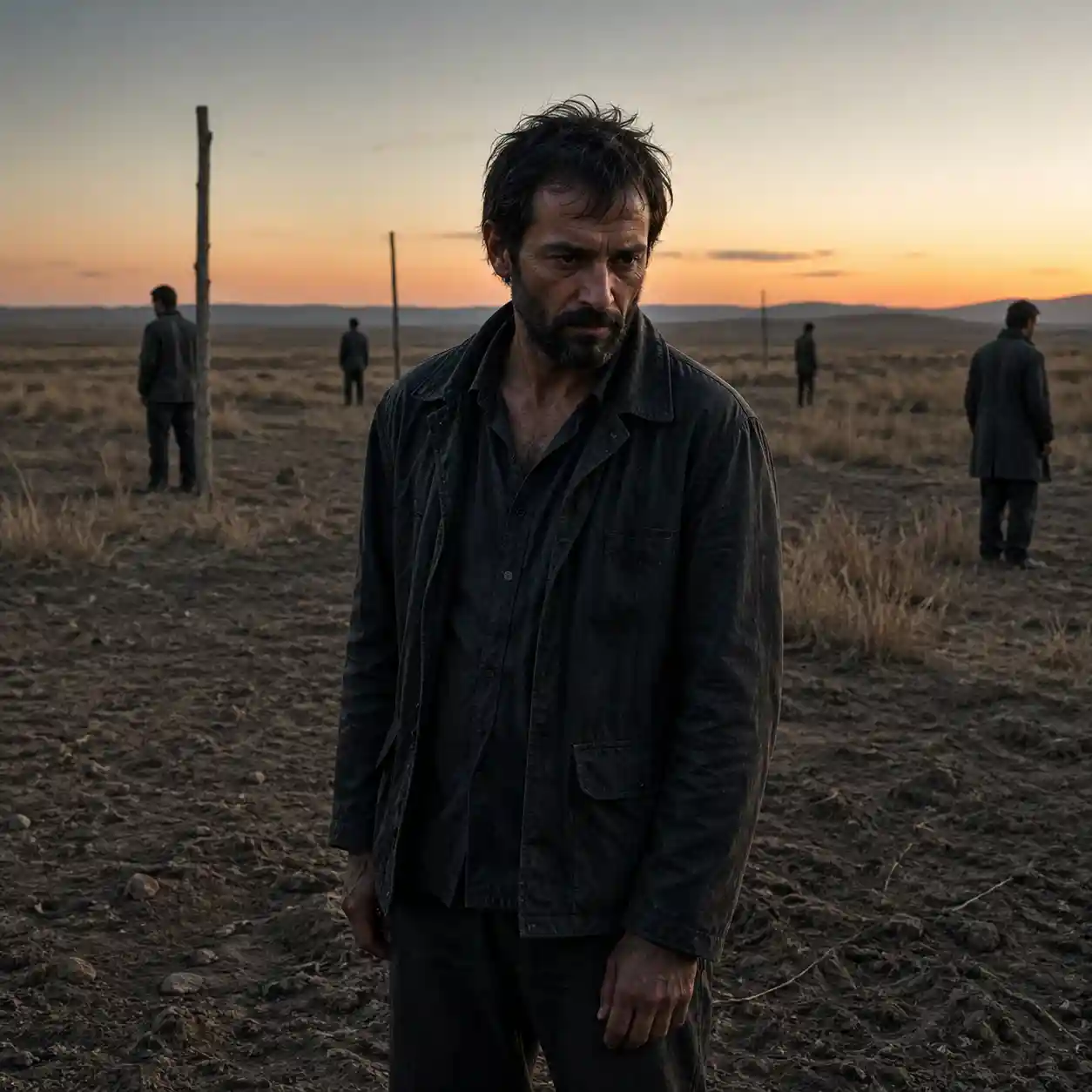
T. S. Eliot’s The Waste Land – Reading a World in Fragments
The Waste Land announces difficulty before its first section begins. An ancient Sibyl appears in the epigraph, suspended between survival and the wish for death. Ezra Pound receives a dedication in Italian. The poem then moves through five titled sections without establishing one speaker, plot, place, or historical level.
T. S. Eliot expects readers to lose their footing. A voice can disappear after a few lines. German, French, Italian, Sanskrit, and English interrupt one another. Myth, opera, scripture, popular songs, pub conversation, and London streets occupy the same field. Disorientation is not a barrier placed before the meaning; it is part of the meaning.
A first reading works best when it follows recurring pressures rather than trying to identify every source. Dry land waits for water. Memory disturbs the present. Crowds move without connection. Desire repeatedly fails to create intimacy. Voices borrow words because no isolated speaker can contain the cultural damage.
The poem is difficult, but it is not shapeless. Images return in altered forms, and sounds create bridges where explanation is absent. A drowned sailor appears as a warning before his death receives its own short section. Fragments of music can connect private longing to inherited stories.
Reading therefore requires two kinds of attention. The poem rewards research into its allusions, yet its rhythm, tonal shocks, and images must work before every reference is known. Entering the work as an acoustic and emotional environment reveals a structure that annotation alone can hide.
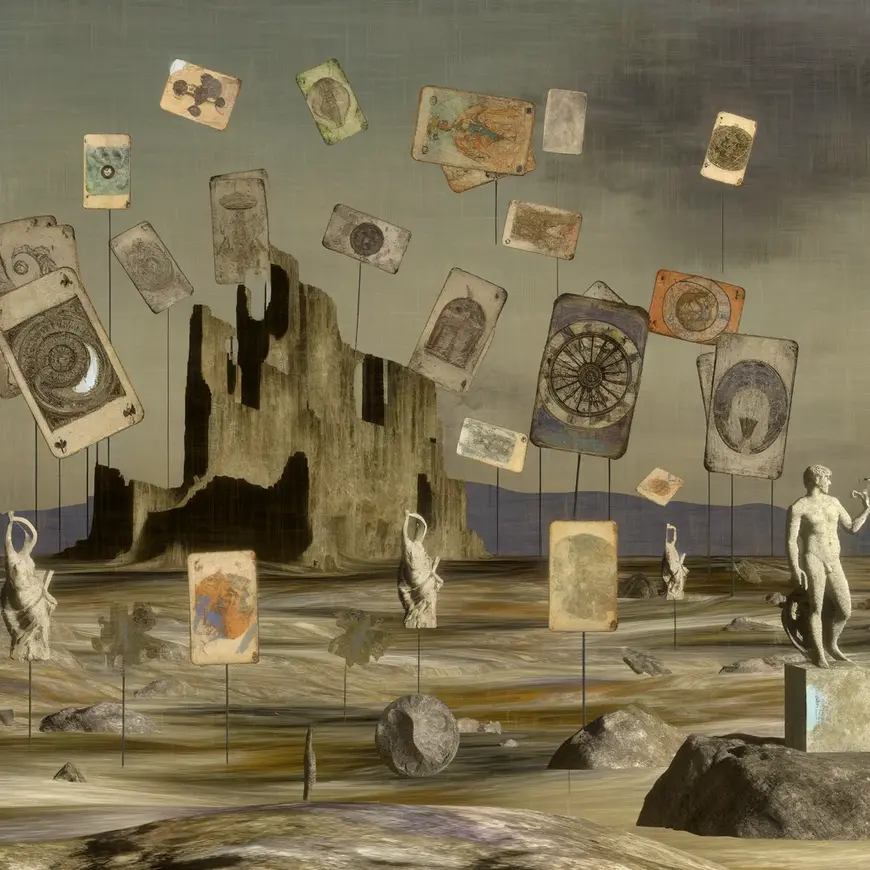
The Burial of the Dead makes renewal painful
The opening of The Waste Land reverses the traditional promise of spring. April is cruel because growth awakens roots, memories, and desires that winter allowed to remain numb. Renewal hurts in a landscape where consciousness has survived by becoming dormant. The movement from seasons to childhood recollection immediately unsettles scale and identity.
Marie’s memory of sledding, the hyacinth garden, Madame Sosostris’s cards, and the crowd crossing London Bridge do not form a continuous biography. Each scene offers a different relation to knowledge. Memory seems vivid but incomplete. Erotic recognition ends in speechlessness. Fortune-telling mixes comedy with warning. Urban routine makes the living resemble the dead.
The section presents experience as a heap that will not become a whole. Its “Unreal City” belongs to modern London and to older visions of the underworld. Commuters flow through recognizable streets while quotations from Dante and Baudelaire alter what those streets mean.
Urban modernity receives an earlier critical vocabulary in 👉 The Painter of Modern Life by Charles Baudelaire. Baudelaire values the artist who catches the fleeting life of the crowd. The poem turns that crowd into a sign of repetition, anonymity, and spiritual exhaustion.
Yet the section is not simply hopeless. Rain, roots, and remembered intimacy retain the possibility of change. The cruelty lies in being stirred when no reliable form of renewal has appeared.
A Game of Chess traps desire inside rooms and voices
The second section of The Waste Land begins in an ornate interior whose surfaces recall Shakespearean and classical luxury. Light, perfume, jewels, carved images, and decorative abundance should create sensual richness. Instead, the room feels airless. Its beauty cannot protect the nervous conversation taking place inside it.
One voice demands response from a silent companion. Questions arrive rapidly, but speech produces no mutual understanding. The scene turns intimacy into pressure. Even the story of Philomela, transformed after sexual violence, survives mainly as an image worked into the room’s decoration. Culture preserves suffering while also making it ornamental.
The poem then moves to a London pub. A speaker reports telling Lil to improve her appearance before Albert returns from military service. The conversation touches childbirth, abortion, damaged health, money, and marital expectation with harsh familiarity. The repeated call announcing closing time gives ordinary gossip the rhythm of judgment and finality.
Fluid movement among private minds takes a more sustained form in 👉 The Waves by Virginia Woolf. Woolf distinguishes six voices through recurring perceptions. This poem makes identity less stable, allowing speech to arrive before readers can securely place its owner.
The two scenes differ in class and diction, but neither offers satisfying connection. One relationship is enclosed by cultivated anxiety; the other by economic and bodily pressure. Desire does not heal social fracture. It repeats demands that the speakers cannot meet.
The Fire Sermon turns London into a damaged chorus
The Thames in The Waste Land enters after summer pleasure has ended. The riverbank holds traces of use rather than pastoral innocence. Literary echoes of cleaner or more celebratory waters remain audible, but modern debris changes their force. The city accumulates voices as the river accumulates what people leave behind.
Tiresias becomes the most important observer, although not a stable narrator in the usual sense. Having lived as both man and woman, the mythical seer watches a typist receive a young clerk in her room. His advances meet exhaustion and indifference rather than mutual desire. The scene is disturbing because the man interprets the absence of active resistance as success.
Mechanical sex mirrors mechanical urban life. Bodies complete expected actions while consciousness withdraws. Afterward, the typist tidies the room and plays music. The poem refuses sentimental tragedy, but its flatness makes the encounter more troubling.
A different form of estrangement from objects, streets, and bodily existence drives 👉 Nausea by Jean-Paul Sartre. Sartre concentrates alienation within one consciousness. The poem distributes it through commercial exchange, popular song, myth, memory, and overheard speech.
The title invokes the Buddha’s teaching on the senses burning with attachment. The conclusion also draws on Saint Augustine’s language of burning desire. Eastern and Western traditions meet without producing an easy synthesis. London remains a chorus whose fragments share suffering more readily than understanding.
Water threatens death and promises renewal
“Death by Water” is the shortest section. Phlebas, once concerned with trade and profit, has been dead for two weeks. The sea reduces age, beauty, religion, and commercial identity to movement inside a current. Water, desired throughout the dry poem, becomes a force that destroys rather than restores.
The final section returns to extreme thirst. Rocky landscapes, exhausted travelers, collapsing cities, and the absence of water create physical and spiritual pressure. References to the journey to Emmaus and the Chapel Perilous suggest revelation, but the route remains unstable. Europe, Jerusalem, Athens, Alexandria, Vienna, and London flicker as centers that can no longer guarantee order.
The poem wants renewal without trusting the old stories that promise it. Thunder finally speaks through the syllable “DA,” which the Upanishadic framework develops as giving, compassion, and self-control. These imperatives offer practices rather than a completed rescue.
A prophetic woman also confronts inherited violence and failed understanding in 👉 Cassandra by Christa Wolf. Wolf gives one mythic figure an extended retrospective voice. The poet lets prophecy break across many speakers and traditions, none of which can command the whole.
The ending gathers fragments and closes with “Shantih” repeated three times. Peace is invoked, not demonstrated. The distinction matters. The poem reaches toward order while preserving the ruins, unfinished obligations, and voices that made order necessary.
Fragmentation works through sound and interruption
The fragments of The Waste Land are often discussed as pieces of cultural history, but their sound matters just as much as their sources. Formal verse can turn abruptly into conversation. Song lyrics interrupt elevated speech. Repetition creates rhythm before it creates explanation. Changes in language alter the reader’s mouth and pace even when the words remain untranslated.
Quotation is therefore active rather than decorative. Wagner, Shakespeare, Dante, nursery rhyme, music hall, scripture, and pub speech do not line up as items in a learned catalogue. They interrupt and transform one another. The poem makes tradition sound like simultaneous radio frequencies. No single channel remains clear for long.
The unstable speakers deepen this effect. A first-person pronoun does not guarantee continuity. Tiresias seems to connect multiple experiences, yet even this figure cannot turn the work into one secure perspective. Voices overlap, borrow, and dissolve.
Fragmentary selfhood takes a quieter form in 👉 The Book of Disquiet by Fernando Pessoa. Pessoa builds discontinuity through reflective prose attributed to an unstable literary persona. He relies more heavily on collision, performance, and abrupt changes of register.
Reading aloud clarifies the design. Recurring vowels, rhyme, street cries, refrains, and sudden silences create relations that footnotes cannot replace. The work does not abandon form after cultural coherence has broken. It rebuilds form from the audible experience of fracture.
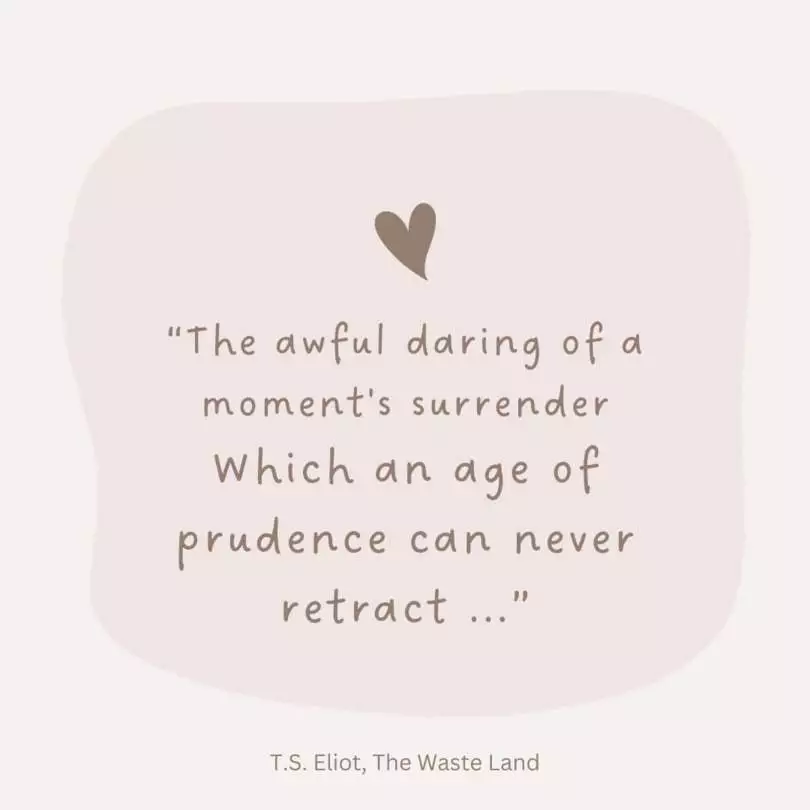
Notable Quotes from The Waste Land
- “April is the cruellest month, breeding / Lilacs out of the dead land, mixing / Memory and desire, stirring / Dull roots with spring rain.” This famous opening line subverts the traditional view of April as a month of renewal and hope. Instead, the poet portrays it as cruel because it awakens memories and desires. In a barren, desolate world, symbolizing the painful revival of life and emotion in a spiritually dead society.
- “I will show you fear in a handful of dust.” This line emphasizes the theme of decay and desolation. The imagery of dust evokes the transience of life and the inevitability of death. Suggesting that even the smallest remnants of existence can inspire profound fear and existential dread.
- “These fragments I have shored against my ruins.” This quote reflects the poem’s structure, which is composed of fragmented and disjointed pieces. It suggests an attempt to preserve meaning and coherence amidst personal and cultural collapse. The speaker tries to piece together a sense of identity and purpose from the remnants of a broken world.
- “The Unreal City / Under the brown fog of a winter dawn.” This line describes a bleak and dehumanized urban landscape, likely representing London.
- “Who is the third who walks always beside you? / When I count, there are only you and I together / But when I look ahead up the white road / There is always another one walking beside you.” This quote finally references the phenomenon of the “third man,” which has been interpreted as a spiritual or psychological presence. It suggests an unseen companion or guiding force, reflecting themes of isolation, companionship, and the search for meaning.
Trivia about The Waste Land
- Publication Year: “The Waste Land” was published in 1922. It is considered one of the most important poems of the 20th century and a central work of modernist literature.
- Influence of World War I: The poem reflects the disillusionment and fragmentation of post-World War I Europe. Eliot’s depiction of a spiritually barren and desolate landscape echoes the widespread sense of loss and disorientation experienced during this period.
- Use of Multiple Languages: The Waste Land includes lines in several languages, including English, French, Italian, German, and Sanskrit. This multilingual approach reflects the poem’s themes of cultural fragmentation and the search for universal meaning.
- Mythological and Literary References: The poem is rich with allusions to classical mythology, religious texts, and literary works. References include the Fisher King from Arthurian legend, the Bible, Dante’s “Divine Comedy,” and Shakespeare. These allusions create a dense and layered text that invites deep analysis and interpretation.
- Editing by Ezra Pound: Ezra Pound, a close friend and fellow poet. He played a significant role in shaping The Waste Land. Pound’s extensive edits helped streamline and refine the poem. Earning him his gratitude, which he expressed in the dedication: “For Ezra Pound: il miglior fabbro” (the better craftsman).
Myth and editing create structure without unity
The published notes to The Waste Land direct readers toward Jessie Weston’s study of Grail legend and James Frazer’s work on ritual. The wounded land and Fisher King can help explain the poem’s drought, failed sexuality, and desire for renewal. However, myth should not become a master key that locks every scene into one system.
The ancient patterns matter because they recur imperfectly. A modern typist is not reduced to a mythical character. London is not simply another version of a legendary wasteland. Myth creates comparison without erasing historical difference. It shows that cultural memory survives, but survival alone does not guarantee wisdom.
Ezra Pound’s editing shaped this compressed effect. He cut large sections from a manuscript roughly twice the published length and helped replace a more expansive design with sharper jumps. The earlier working title, drawn from Dickens, emphasized doing the police in different voices. That phrase still describes the finished poem’s rapid changes of speaker.
Pound’s role does not make the work a seamless collaboration, nor does it explain every formal choice. It demonstrates that fragmentation was produced through selection as well as accumulation. Material disappeared so that remaining pieces could strike one another with greater force.
The published notes add another complication. They illuminate genuine sources, sometimes explain associations, and sometimes create new paths of uncertainty. Readers should use them as one layer of the poem rather than an official solution. The work has architecture, but its architecture keeps several rooms inaccessible from one another.
Several kinds of reading can share the poem
This poem rewards repeated reading because no single method captures its full effect. A first encounter can follow voices, images, and changes in atmosphere. A second can trace water, fire, crowds, music, failed intimacy, or prophetic speech. Notes become more useful after the reader has formed questions of their own.
Listening aloud is especially valuable. It reveals comic timing, seductive rhythms, and tonal violence that a purely scholarly approach may flatten. Reading the five sections separately also helps. Each has a distinct movement, even though images and phrases cross their boundaries.
Difficulty should produce attention, not obedience. Canonical status does not require readers to admire every gesture. Some allusions can feel exclusionary. Prejudicial language and troubling representations of gender, sexuality, and cultural difference deserve direct scrutiny. The poem’s historical power does not excuse those features.
Readers who prefer a clear speaker, continuous argument, or emotional resolution may remain frustrated. Others will find that uncertainty makes the work unusually alive. Its fragments allow different routes through modern urban life, private crisis, inherited culture, and spiritual need.
The Waste Land endures because it does not convert collapse into a clean lesson. It discovers patterns without pretending that pattern equals recovery. The final peace remains an aspiration spoken among ruins. Its achievement lies in making broken forms carry thought, music, fear, and the unresolved possibility of renewal.
What I experienced while reading The Waste Land – A World in Fragments
Upon delving into this work for the time I found myself initially overwhelmed. By its structure and shifting voices which left me feeling disoriented. However the captivating imagery and allusions gradually drew me in as I continued reading.
As I kept going with it all the sense of hopelessness and lack of connection started to stand out. Each part seemed like a mystery to solve. The strong emotions, behind it were evident. I felt a pull, towards the darkness even though not every detail made sense to me.
By the time I finished reading it I felt a bit unsettled. The poem seemed to mirror a world in disarray. There was a glimmer of hope intertwined. Its intricacy and emotional tone lingered in my mind prompting me to delve into its significance. This writing left me captivated by its beauty and profoundness.