The Hollow Men: Paralysis, Prayer, and the Final Whimper
Published in its five-part form in 1925, The Hollow Men presents a collective voice suspended between spiritual desire and the capacity to act. T. S. Eliot assembles images of stuffed figures, dry landscapes, distant stars, inaccessible eyes, broken prayer, and failed ritual. The speakers recognize absence, but recognition does not become transformation.
This movement is crucial because the poem is often misread as a journey through despair toward resilience. Its fragments approach judgment and faith without reaching either. Consciousness persists where decision has failed. The Hollow Men is a Modernist lyric sequence and philosophical-religious poem, as well as a fragmentary dramatic lyric whose speakers cannot complete the words and actions that might carry them beyond paralysis.
Kurtz and Guy Fawkes Frame Two Failed Models of Action
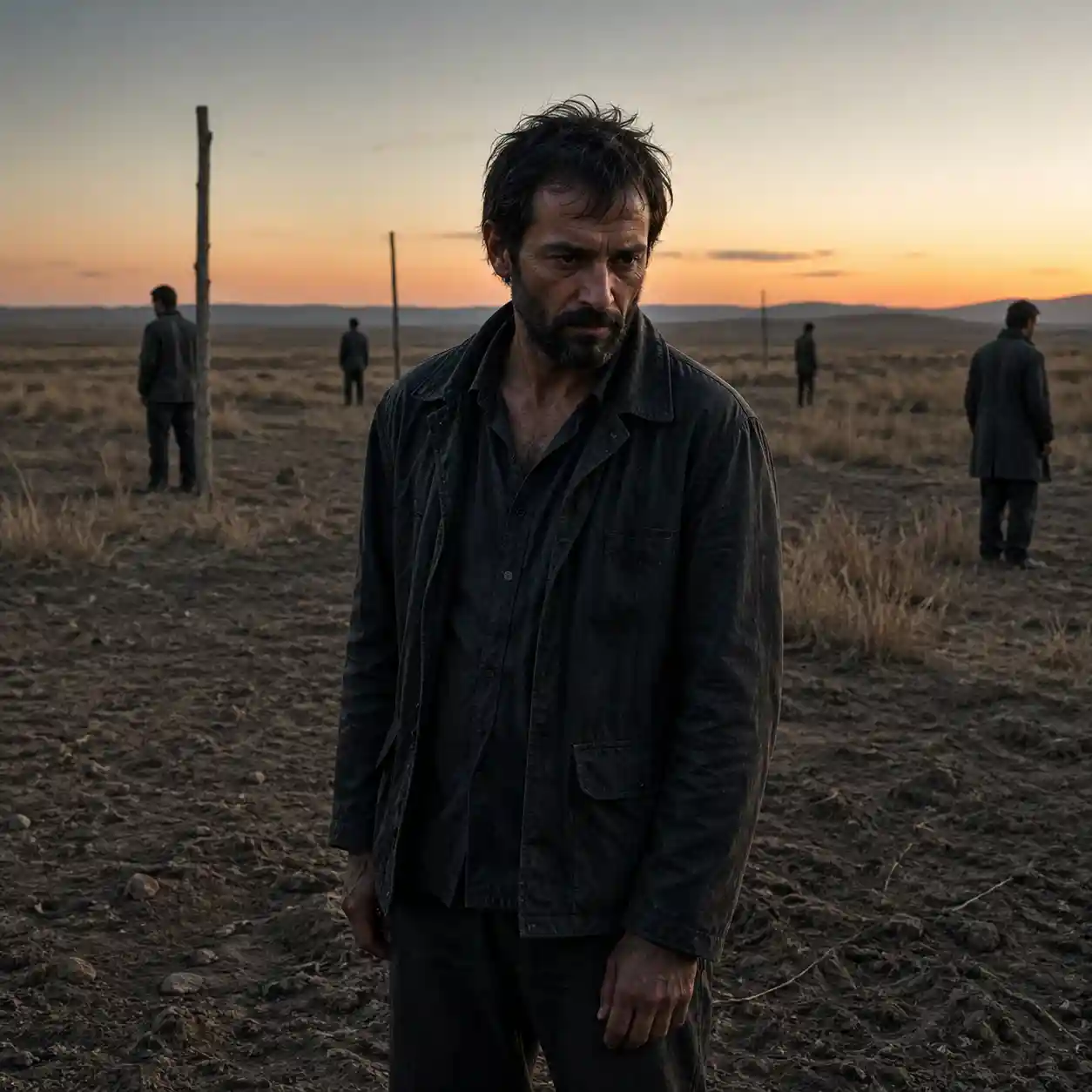
The two epigraphs of The Hollow Men place spectacular failure beside ritualized imitation. The first announces the death of Kurtz, the imperial agent from Joseph Conrad’s Heart of Darkness. The second echoes children asking for money to make a Guy Fawkes effigy. One figure pursued power until it consumed him; the other survives as a stuffed object carried through an annual custom. Violent action and empty representation frame the same void.
A fractured self also speaks from the ruins of intention in The Book of Disquiet by Fernando Pessoa. Pessoa’s semi-heteronymous narrator turns inaction into an immense field of reflection. He creates a plural voice whose members possess less individual continuity, as though personality itself had eroded into a chorus.
Kurtz is not a character who enters the poem’s action. His presence is allusive and judgmental. He represents a terrible concentration of appetite and will, while the hollow speakers cannot convert intention into deed. Guy Fawkes provides the opposite material image: a historical conspirator reduced to straw filling and children’s spectacle. The speakers resemble the effigy more directly, yet the pairing prevents passivity from appearing innocent. Emptiness exists in a world already shaped by destructive action.
The Hollow Men begins, then, without offering a clean alternative between force and paralysis. Kurtz’s intensity leads toward horror, while stuffed commemoration repeats a gesture whose political content has become play. The epigraphs make modern agency appear compromised before the first section begins. Neither decisive domination nor hollow ritual provides a form of action capable of spiritual meaning.
Hollow and Stuffed Describe the Same Paralysis
The opening of The Hollow Men identifies one group through two apparently opposite conditions. The speakers are empty, yet they are also filled with straw. This is not a division between hollow men and stuffed men. Their stuffing has no living center, so fullness becomes another form of vacancy. What occupies them cannot give them inward substance.
Spiritual desolation is joined to seductive form in The Flowers of Evil by Charles Baudelaire. Baudelaire turns urban boredom, sin, beauty, and aspiration into sharply individual lyric conflict. T. S. Eliot disperses identity into a murmuring collective that can describe its condition but cannot establish a stable self from which change might begin.
Physical images intensify the contradiction. The speakers lean together for support, but collective proximity does not create solidarity. Their voices are dry and quiet, their gestures lack force, and their forms resemble scarecrows that imitate human presence without exercising human agency. The poem does not ask readers to admire this weakness as peaceful refusal. The absence of violent power is accompanied by an absence of love, creation, confession, and effective prayer.
The chorus occasionally distinguishes itself from those who crossed into another kingdom with directness, but even that contrast lacks secure moral knowledge. The speakers imagine how the dead might remember them, constructing an epitaph for themselves while remaining unable to change it. In The Hollow Men, self-description becomes circular. Language accurately names paralysis yet supplies no passage out of it. The opening section therefore establishes the poem’s central terror: emptiness can be articulate, communal, and enduring without becoming less empty.
The Eyes Represent a Judgment the Speakers Cannot Face
Eyes recur throughout The Hollow Men as signs of directness, recognition, judgment, and possible grace. The speakers cannot meet them in dreams, while those who have crossed into another realm are associated with an unbroken gaze. Vision is not merely sensory. To be seen would mean becoming answerable to an order that the speakers desire and fear. The missing gaze preserves paralysis from judgment.
An inaccessible authority structures another world of suspended petition in The Castle by Franz Kafka. Kafka’s K. pursues recognition from an administration whose messages never yield secure access. His speakers inhabit a theological rather than bureaucratic uncertainty, but both works make distance from judgment organize every attempted approach.
The imagery changes as the sequence develops. Eyes become sunlight on a broken column, a star, and the hope of a final meeting in a twilight realm. These substitutions make the gaze increasingly impersonal and remote. The speakers can imagine reflected light more easily than a face-to-face encounter. Their evasiveness is therefore built into the poem’s visual field. They see signs of seeing without accepting the encounter those signs imply.
The Hollow Men does not clarify whether grace is objectively unavailable or whether the speakers’ incapacity makes it inaccessible. That ambiguity prevents a simple theology of abandonment. The desired eyes remain present through absence, exerting pressure precisely because they do not appear directly. If they vanished completely, the hollow men could settle into nihilism. Instead, possible judgment remains near enough to haunt them and distant enough to leave them unchanged. The eye motif turns spiritual failure into a crisis of relation: they cannot bear the recognition they cannot stop seeking.
Death’s Kingdoms Suspend the Speakers Between Destinations
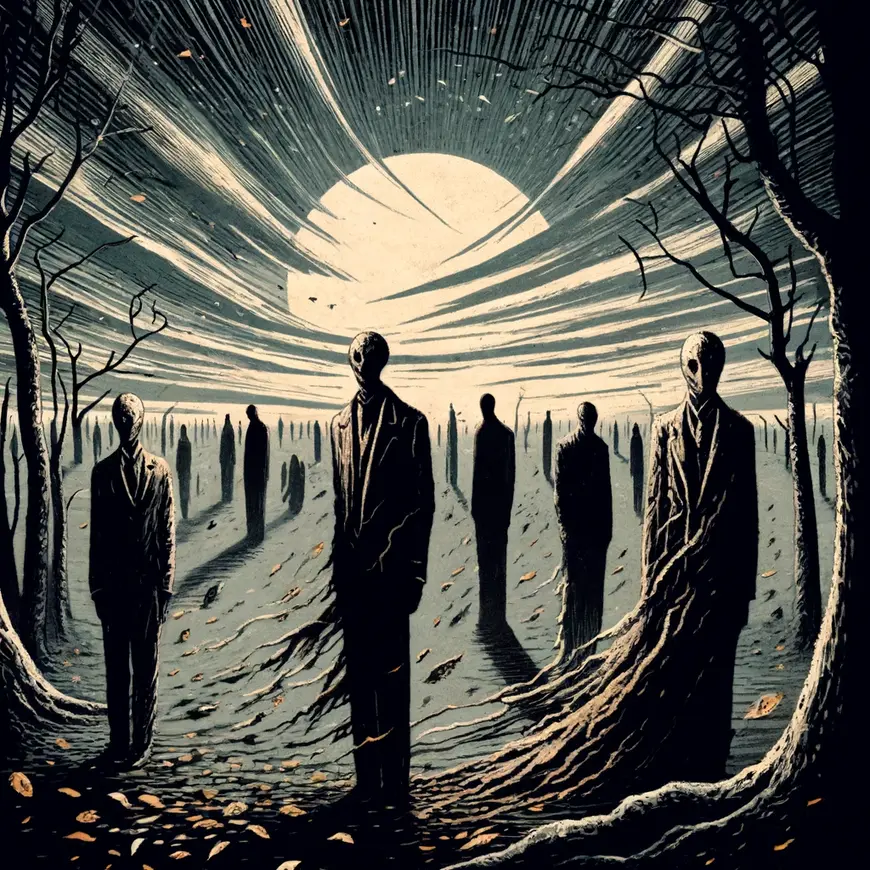
The Hollow Men names several regions associated with death, including a dream kingdom, a twilight kingdom, and another kingdom reached by those who crossed with direct eyes. These spaces are not arranged as a stable map of the afterlife. Their shifting names record the speakers’ uncertain position. They inhabit a threshold without completing a passage.
Existence under the inescapable gaze of others takes a more immediate dramatic form in No Exit by Jean-Paul Sartre. Sartre places three dead characters in a room where mutual judgment never ends. The speakers here remain less individuated and cannot even attain that terrible directness. Their realm is defined by avoidance, distance, and incomplete encounter.
The landscape gives spiritual suspension physical texture. Dryness, stone, cactus, sand, fading stars, and a river that cannot yet be crossed replace the organic promise of growth. Figures gather near the river as though preparing for a final meeting, but they do not move into it. The imagery draws on Christian eschatology and Dantean structures without reproducing a single doctrinal geography. Allusion provides orientation, then fragmentation prevents arrival.
This indeterminacy is more disturbing than a clearly assigned punishment. Hell would at least give action a consequence and the self a determined state. In The Hollow Men, consequence remains diffused across waiting. The speakers seem conscious enough to know that another condition exists, but not capable of the confession, courage, or surrender required to approach it. Their twilight is neither hopeful dawn nor completed night. It is a prolonged interval in which the possibility of destination sharpens the failure to travel.
A Broken Prayer Approaches Faith Without Reaching It
Religious language enters The Hollow Men as damaged speech. The speakers address stone images, imagine supplication, and approach the closing words of the Lord’s Prayer, but the phrases break apart before the prayer can be completed. The fragment “For Thine is” points toward praise and divine sovereignty while stopping before either can be affirmed. Prayer survives as form after conviction loses force.
Divine authority and human responsibility are questioned through a much fuller narrative in The Gospel According to Jesus Christ by José Saramago. Saramago gives biblical figures arguments, motives, and ethical resistance. The poet reduces theological conflict to fragments whose incompletion reveals speakers unable to sustain an address.
The failure is not proof that spiritual desire has disappeared. If nothing were sought, there would be no reason to reach for the prayer at all. The poem instead stages a painful interval between recollection and assent. Words remain culturally available, perhaps even urgently needed, but the hollow men cannot inhabit them. Recitation becomes another threshold at which intention fails to become action.
The Hollow Men also resists an easy contrast between sincere inward faith and empty public ritual. The speakers lack both effective community and integrated inwardness. Their broken prayer is private and collective, remembered and inaccessible at once. It neither earns redemption nor demonstrates that redemption is impossible. The sequence leaves the theological question under pressure. Faith appears as a language whose direction can still be recognized, while the capacity to speak it as a complete commitment has almost vanished.
The Shadow Interrupts Idea, Motion, and Creation
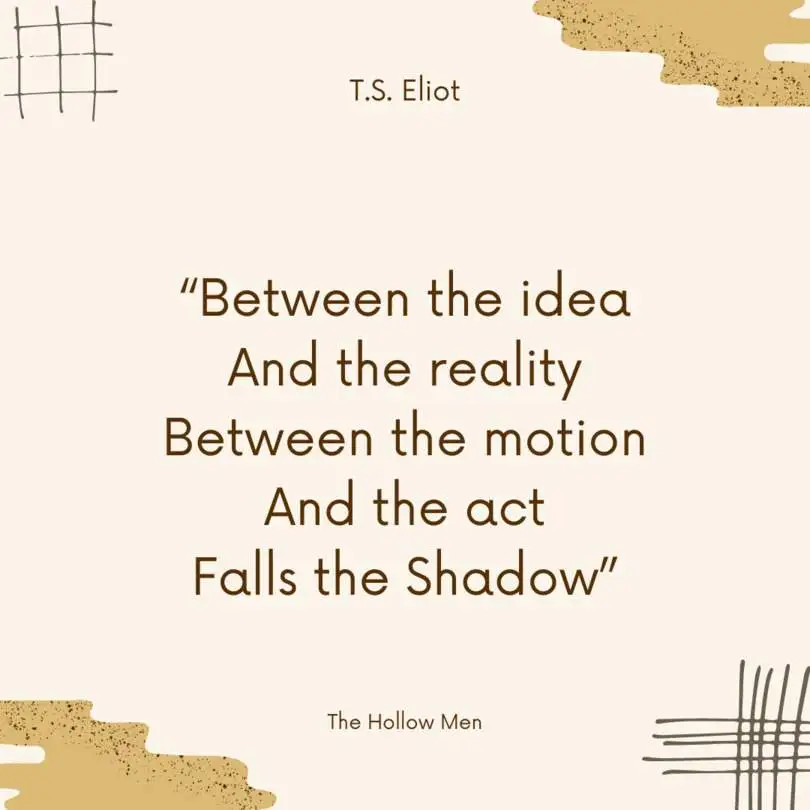
The fifth section of The Hollow Men gives paralysis its most explicit structure. Between mental possibility and realized form, an unnamed shadow intervenes. The sequence moves through idea and reality, impulse and action, conception and creation, emotion and response. Each pair identifies a relation that should produce change, yet each relation is broken. Potential accumulates without becoming an event.
Creative and psychological incapacity shapes Melancholy by Jon Fosse. Fosse enters a painter’s distressed consciousness through obsessive repetition and unstable perception. His choral fragments are less biographically specific, but both works make recurrence enact a mind that cannot move cleanly from thought into life.
The shadow should not be reduced to one allegorical definition. It may suggest fear, spiritual failure, divided will, mortality, or the gap inherent in human agency. Its power comes from occupying several relations at once. Because the poem never turns it into a monster that could be confronted, the obstacle cannot be defeated through heroic force. It appears within every attempted transition.
The line “Life is very long” intensifies the section’s bleak temporality. Duration offers no guarantee of development. More time can mean more repetitions of the same failed passage. In The Hollow Men, awareness of the gap does not close it, and naming the stages of action does not produce action. The speakers can construct a precise grammar of failure while remaining governed by it. Modern paralysis becomes neither simple laziness nor lack of intelligence. It is a divided condition in which thought, desire, language, and embodiment no longer cooperate.
Famous Quotes from The Hollow Men
- “We are the hollow men / We are the stuffed men” These opening lines introduce the central metaphor of the poem: the hollow and stuffed men, symbolizing the emptiness and spiritual barrenness of people. The repetition emphasizes the contradiction between being filled (“stuffed”) with material or superficial things and being hollow or lacking in spiritual substance.
- “Headpiece filled with straw. Alas!” This image further develops the idea of emptiness and lack of intellect or soul among “the hollow men.” The “headpiece filled with straw” suggests a scarecrow, an entity that appears human but lacks life, intelligence, and purpose, emphasizing the theme of existential void.
- “This is the way the world ends / Not with a bang but a whimper.” These lines, which conclude the poem, are among its most famous. They suggest that the end of the world (or the end of humanity) will not be marked by a catastrophic event (“a bang”) but will fade out in insignificance (“a whimper”). It reflects a sense of anticlimax and disillusionment. It counters traditional narratives of apocalypse with a more subdued, yet poignant vision of decline.
- “Between the idea / And the reality / Between the motion / And the act / Falls the Shadow” This passage speaks to the disconnection between intention and action, between potential and realization. “The Shadow” represents the obstacles, both internal and external, that prevent fulfillment and meaning in life. It suggests a profound spiritual and existential paralysis.
Trivia Facts about The Hollow Men
- Published in 1925: The Hollow Men was published in 1925, during a period when Europe was still reeling from the devastating effects of World War I.
- Dedicated to Ezra Pound: The author dedicated the poem to his contemporary and friend, Ezra Pound, who he described as “il miglior fabbro” (the better craftsman) in “The Waste Land”. This dedication highlights the respect T. S. Eliot had for Pound’s literary skill and influence.
- Influence of Dante’s Divine Comedy: His poem is heavily influenced by Dante Alighieri‘s “Divine Comedy”. References to Dante’s work are evident, particularly the depiction of a limbo state resembling the antechamber to Hell. Where souls who never committed to either virtue or vice reside.
- The Straw Men Connection: Initially, the poet considered titling the poem “The Straw Men”. This title echoes the poem’s themes of emptiness and the lack of spiritual substance. The final title retains this notion of hollowness and insubstantiality.
- Structure and Sections: The Hollow Men is divided into five parts. Each deals with different aspects of spiritual emptiness and the human condition. The structure contributes to the poem’s overall mood of fragmentation and despair.
- Famous Ending Lines: The poem ends with a variation on a nursery rhyme. Which juxtaposes the apocalyptic tone of the poem with the triviality of children’s verse. “This is the way the world ends / Not with a bang but a whimper.” These lines have become some of the most quoted in modern literature. They encapsulate the anti-climactic culmination of societal and personal collapse.
- Reflections of his Own Crisis: The poem mirrors his own spiritual and emotional crisis during its writing. It reflects his struggle with the despair of modernity. And his eventual turn towards Anglicanism as a source of solace and meaning.
The Writing Style Turns Fragments into a Failed Ritual
The Writing Style of The Hollow Men combines choral speech, lyric fragments, allusion, repetition, parataxis, broken syntax, and shifting symbolic landscapes. The collective “we” sounds communal, but individual voices never acquire stable biographies. This absence makes the chorus feel less like a political group than a condition speaking through multiple emptied bodies. Form organizes disintegration without curing it.
The writer assembled the final five-part sequence from materials that had appeared earlier in separate publications and combinations. The poem retains that composite history. Sections can feel like distinct lyric fields, yet recurring eyes, stars, kingdoms, dryness, and interrupted speech bind them together. Fragmentation is therefore designed and patterned rather than accidental disorder.
Sound carries meaning when logical continuity weakens. Soft consonants, whispering voices, repeated clauses, and nursery-rhyme rhythms produce language that is memorable but unable to advance. The altered children’s circle song replaces a living tree with a desert plant. Play continues in a landscape hostile to renewal, turning communal rhythm into ritual without transformation. The broken prayer performs a similar change: repetition recalls inherited form while exposing the speakers’ inability to complete it.
In The Hollow Men, allusion does not reward readers with a single code that solves the poem. Conrad, Guy Fawkes, Dante, Christian prayer, Shakespearean echoes, and children’s rhyme bring incompatible cultural materials into contact. Their fragments form a civilization’s debris, available to memory but not integrated into action. The Writing Style makes that failure audible. The poem does not merely describe spiritual paralysis. Its pauses, returns, and unfinished transitions require readers to experience language repeatedly approaching a destination it cannot reach.
The Final Whimper Ends in Paralysis, Not Redemption
The ending of The Hollow Men is famous because it opposes an imagined explosive conclusion to a whimper. Its force depends on everything that precedes it. The speakers have approached eyes, a river, prayer, creation, and final judgment without completing any movement. The world ends through exhausted nonarrival.
The conclusion does not present resilience, successful transcendence, or a defiant choice of life. Nor does it simply predict a literal historical apocalypse. “World” can include a civilization, a spiritual order, a community, or the speakers’ capacity to make meaning. The quiet ending is terrifying because no decisive catastrophe arrives to explain or redeem the accumulated failure.
The author places this conclusion after the broken prayer, so sacred language and cultural cliché overlap without merging. The nursery rhythm continues, the doxology falters, and the final formulation becomes almost mechanically repeatable. Memorability itself is ambiguous. Readers can carry the line away, but the hollow men remain where they were. A perfect verbal ending contains a condition defined by the inability to end.
The Hollow Men closes without proving that grace does not exist. The eyes, star, prayer, and distant kingdom remain traces of another possibility. What disappears is any credible movement toward them. The poem’s judgment falls on a consciousness capable of recognizing its emptiness yet unable to risk the relation, surrender, or action that change would require. Its final whimper is not a small victory over despair. It is the sound of possibility surviving only as language after agency has failed.
More Reviews of Works by the poet

More Reviews of Modernist Works