Daughter of Fortune: Learning to Live Beyond a Love Story
Before Daughter of Fortune sends its heroine across the Pacific, Isabel Allende gives her several incompatible beginnings. A foundling can arrive in a humble container or a basket dressed for a fairy tale. She can possess inconvenient memories or be told that remembering is impossible. Eliza Sommers grows up surrounded by people who care for her and explain who she is. Their explanations are rarely innocent.
First published in English in 1999, this historical novel follows a young woman from Valparaíso to Gold Rush California. It combines a coming-of-age story with romance and adventure, but its most interesting movement concerns the changing purpose of Eliza’s journey. She leaves Chile to find a lover. Along the way, she discovers abilities and attachments that make that original destination less certain. The attraction lies in watching a grand romantic ambition give way to the difficult, practical business of living.
Daughter of Fortune Begins with a Disputed Birth
Miss Rose’s account of Eliza’s arrival becomes more elaborate with repetition. Fine fabrics and signs of respectable parentage turn abandonment into a story fit for the English household taking her in. Mama Fresia supplies an earthier version, attentive to the child’s physical condition and less flattering to the family’s preferred assumptions. The disagreement immediately makes belonging a matter of narration. Someone must decide which details count.
Rose’s affection does not cancel the prejudice in her insistence on English ancestry. Her imagined origin offers Eliza protection while attaching a condition to that protection: the child should resemble the family that has accepted her. Class and race enter through apparently tender domestic speech. The opening is especially good at showing how a comforting story can narrow another person’s possibilities.
Mama Fresia’s competing account prevents Rose from monopolizing the past, although it should not become an unquestioned replacement myth. The reader hears people with different interests describing a child who cannot settle their dispute. That uncertainty is productive. It asks us to examine the authority of those who claim to know us.
Tao Chi’en later brings a different understanding of identity, rooted in ancestry. Beside his position, Eliza’s emphasis on present action looks liberating but incomplete. The contrast invites a useful comparison with Song of Solomon by Toni Morrison, whose protagonist’s journey involves recovering a family past. Here, too, freedom and inheritance remain in conversation. Eliza’s ability to choose matters; Daughter of Fortune also gives her a companion for whom origins carry obligations she cannot simply dismiss.
Love Letters Teach Eliza the Wrong Lessons
Joaquín Andieta offers Eliza a different story about herself. Love promises an intensity beyond the household’s supervision. His letters give that promise language, allowing her to imagine a relationship in which every feeling has extraordinary significance. The distinction between eloquence and attention gradually becomes harder to ignore.
In their encounters, Joaquín’s capacity for expansive language does not guarantee an equal capacity for emotional presence. Eliza wants the lover of the letters to appear before her. The mismatch makes romantic language an unreliable form of evidence. What sounds convincing on paper can encourage her to supply whatever ordinary behavior fails to provide.
This is a more interesting problem than simply choosing the wrong man. Eliza has limited experience through which to test the story she wants to inhabit. Love gives her a reason to resist a prescribed future, even while it provides another script. Her mistake contains an impulse toward independence that will eventually outgrow its immediate object.
The mechanism recalls Northanger Abbey by Jane Austen: Catherine Morland’s reading encourages her to interpret actual people through imagined plots. The literary genres and circumstances differ, but both heroines must learn to distinguish an attractive narrative from evidence about another person. Neither comparison requires treating imagination itself as the enemy.
When Joaquín departs for California, pregnant Eliza follows. Her decision is dangerous, and its motive is absorbing. It would also be a mistake to confuse decisiveness with complete understanding. She can act boldly before she understands her desire. That gap gives the adventure a psychological question worth following beyond the departure.

A Disguise Gives Freedom a Practical Shape
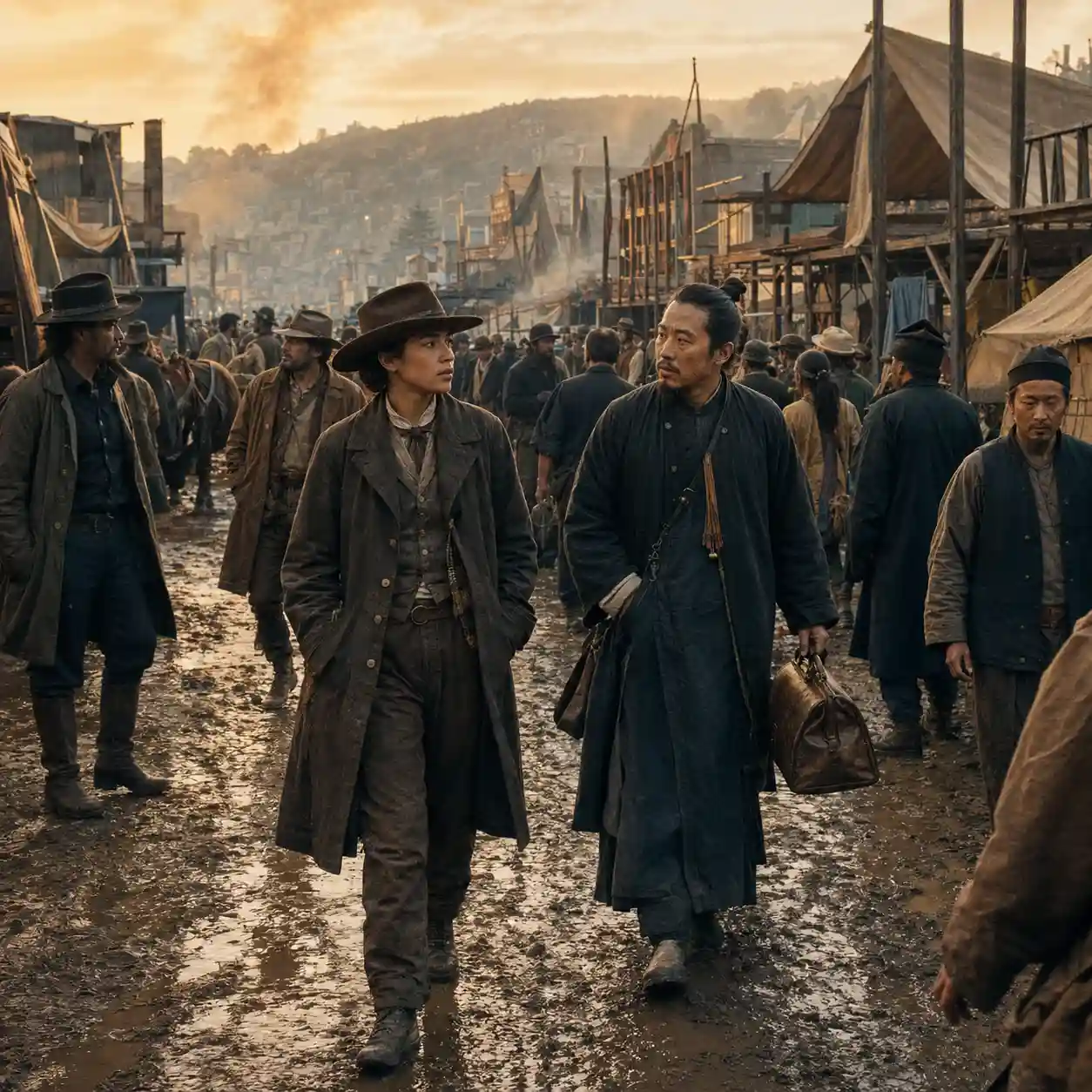
Male clothing changes Eliza’s opportunities, but the novel’s account of disguise becomes more persuasive when it moves beyond the clothes. She must adjust how she speaks, notice the expectations of different groups, and judge when to attract attention. Being taken for a boy requires continuous interpretation of other people.
Her changing accents make freedom a learned practice. Independence involves acquiring usable knowledge, often under pressure. It depends on the judgments strangers make about a body before its owner has said anything. The disguise exposes the extent to which access to ordinary movement has been withheld from her.
There is a revealing point of contact with Orlando by Virginia Woolf, where clothing affects both self-perception and social treatment. Eliza’s disguise differs from that novel’s fantastical change of sex. What connects them is the attention to permissions: who may move confidently, what conduct becomes plausible, and how quickly a stranger decides what someone can be.
Eliza’s work writing letters for others gives the idea another material form. Literacy becomes a means of earning money and interpreting desire. A woman once captivated by a lover’s language now helps other people express their own feelings. The reversal quietly complicates the special authority she had granted Joaquín’s correspondence.
Tao’s help also prevents us from treating the journey as a triumph achieved alone. Agency grows through assistance. The narrative gains emotional credibility when freedom includes dependence, care, and the acceptance of knowledge Eliza does not possess. Its adventurous premise becomes richer as the heroine learns how much living requires from other people.
California Offers Opportunity on Unequal Terms
California invites reinvention, but an invitation does not promise equal treatment. Eliza arrives in a world where nationality, race, gender, and available money shape what people can attempt. Movement opens possibilities while exposing travelers to judgments they cannot control.
The promise of a transformed life gives a useful point of comparison with The Grapes of Wrath by John Steinbeck. The Joad family’s migration belongs to the Depression of the 1930s, far from this novel’s gold rush. Both journeys, however, ask readers to measure California’s promise against the conditions of arrival. The comparison illuminates a recurring destination myth without making the travelers’ experiences interchangeable.
Tao makes the question of belonging intimate. His relationship with Eliza is shaped by racial expectations that affect what the two can imagine for themselves. A possible attachment may be difficult to recognize because their world offers so little encouragement for envisioning it. Desire does not develop outside social history.
That complication gives their companionship weight. Eliza can reject household restrictions and still carry assumptions learned within a divided society. Crossing an ocean does not immediately remove them. Tao, meanwhile, brings commitments and memories that resist reducing him to the function of helpful guide.
Daughter of Fortune is most convincing when these constraints remain active alongside the adventure. Mobility carries unequal risks, even when the central character gains confidence. Readers can enjoy Eliza’s resourcefulness while asking how much her particular skills and relationships make possible. Her expanding life should sharpen our attention to people whose circumstances offer fewer openings.

Freemont Turns Violence into a Story
The episode involving the journalist Jacob Freemont and Josefa in Downieville puts that inequality under terrible pressure. Josefa kills a man who has forced his way into her room. The crowd demands her death, and the supposed hearing becomes a performance designed to authorize a conclusion already reached.
The sequence shows legal language serving a mob. Medical testimony is subjected to intimidation; objections cannot gain a fair hearing. Public procedure offers the appearance of judgment while making judgment impossible. The horror depends on the gap between the dignity claimed by the proceedings and the violence directing them.
Josefa’s composure also matters. The narration notices her deliberate preparations before the hanging. Those actions preserve an individual presence against the crowd’s attempt to reduce her to a racial and sexual category. The scene grants her attention even as it depicts a community refusing to do so.
Freemont condemns the racial injustice, yet his reflections still assign women value according to male demand. His response is therefore unsettling in two directions. He can recognize one form of dehumanization while reproducing another. Sympathy does not guarantee clear sight.
That uneasy relationship between a woman’s life and a public account recalls The Lost Honor of Katharina Blum by Heinrich Böll, where a journalist weaponizes a woman’s associations. Here, the distinction between the crowd’s verdict and the journalist’s commentary remains essential. Freemont is not simply identical to the people he condemns. His partial understanding is precisely what makes the episode a demanding examination of how stories can continue an injustice while appearing to explain it.
Writing Style: Sensation, Memory, and Narrative Irony
The opening connects memory to Eliza’s remarkable sense of smell. This gives recollection a bodily dimension before the adults begin disputing its truth. Experience reaches her through sensation, while social authority arrives in confident declarations. The writing style creates friction between those forms of knowledge.
Material details do much of the work. The objects surrounding the foundling acquire different meanings as Rose’s account changes. Fine cloth becomes evidence of social worth; an embellished container becomes a miniature family legend. Domestic description reveals a hierarchy without requiring a separate lecture on its existence.
The narrator also reaches beyond the immediate moment. References to Eliza and Tao’s later friendship allow a future relationship to enter the beginning. The effect loosens the grip of the apparent romantic destination. Even while Joaquín provides the immediate motive for travel, the narrative has already made room for a life organized around other attachments.
There are costs to this confidence. The language of becoming the author of one’s own life can state the meaning of an experience before its details have finished earning that meaning. Readers who prefer psychological implication may find such moments too explicit. The practical adjustments of disguise often carry greater force than the broader declarations about independence.
The Josefa episode demonstrates a sharper method. Its sequence of coercion, ceremonial language, and compromised sympathy lets contradictions accumulate. Irony emerges from what people fail to notice in their own reasoning. Across these passages, the attraction is the combination of storytelling generosity and skeptical attention. The narrator can give an imagined life warmth while exposing the beliefs that make some lives easier to imagine than others.

Quotes: Five Brief Glimpses of Competing Stories – Daughter of Fortune
These short excerpts concern memory, authority, choice, and public judgment.
- “memories, both real and illusory” The opening narrator gives Eliza a past containing both experience and invention. The distinction invites caution about any single account of her origins. Memory exceeds the household’s explanation, even when its claims cannot be independently settled.
- “no emotions and no memory” Miss Rose uses this assertion about newborns to reject Eliza’s recollections. The categorical phrasing matters: an adult’s confidence attempts to close a question that the narrative has deliberately opened. The voice is protective, dismissive, and revealing at once.
- “not how you come into it” Eliza’s emphasis on conduct rather than birth challenges the importance assigned to respectable origins. Tao’s different view of ancestry complicates her position. The exchange leaves space for a disagreement between people whose friendship does not require identical beliefs.
- “both protagonist and narrator” At her departure, Eliza imagines a new relationship to her own story. The phrase gives independence a narrative form. Her subsequent need for help makes the ambition more interesting: choosing a direction does not mean controlling everything that happens.
- “full majesty of the law” The language used to legitimize Josefa’s hanging exposes the violence inside respectable procedure. Its grandness is inseparable from its hypocrisy. Placed beside Eliza’s expanding possibilities, the scene makes any general celebration of frontier freedom difficult to sustain. bookbrowse.com
Trivia: Publication, History, and a Continuing Family Story – Daughter of Fortune
- An English debut in 1999: The author’s official bibliography dates the first English edition to 1999. The Spanish title is Hija de la fortuna, and Margaret Sayers Peden translated Daughter of Fortune into English. Translation is therefore part of the reading experience discussed here.
- The gold discovery preceded the great migration: James Marshall found gold at Sutter’s Mill on January 24, 1848. The great influx of 1849 gives the forty-niners their name. California State Parks documents that distinction, which helps place the novel’s journeys in context.
- An appearance on Oprah’s show: The author’s official timeline records a 2000 appearance on The Oprah Winfrey Show to discuss Daughter of Fortune. Its reception thus extended beyond conventional literary reviewing into a major television forum for conversations about books. Timeline
- A historical atrocity behind the fiction: Josefa’s episode draws on a documented hanging in Downieville on July 5, 1851. The memorial record hosted by James Madison University names her as Josefa Segovia, also known as Juanita or Josefa Loaiza. The novel’s dialogue remains fictional representation.
- A connected later novel: Portrait in Sepia continues the family story and again explores memory and concealed origins. Its narrator, Aurora del Valle, investigates a past she cannot fully remember. The connection extends this novel’s interest in how people gain access to the stories that precede them.
Daughter of Fortune Changes the Meaning of the Search
The later encounter with the legend surrounding Joaquín Murieta complicates the original pursuit. A name can become a public image, and a lover can become entangled with that image. The question of identification remains uncertain. Treating Joaquín Andieta and the legendary figure as an uncomplicated equivalence would remove an important part of the ending’s force.
More revealing is Eliza’s decision to have her photograph taken with Joaquín’s letters before destroying them. She chooses how to preserve the record of her attachment. Remembering becomes an act of selection. The letters can belong to her history without continuing to direct her future.
That choice also returns us to the disputed birth. In childhood, others assembled the objects and accounts that defined her. Now she participates in making the image that will represent her. A photograph cannot abolish the difficulties of representation, but the change in who chooses matters.
The central promise of Daughter of Fortune is strongest here: a pursuit can remain meaningful after its original goal has lost authority. Eliza has acquired experiences and relationships that cannot be reduced to finding a man. Her continued attachment to Tao gives the idea emotional substance. Freedom can accommodate intimacy without surrendering the right to choose it.
Readers drawn to historical adventure, migration, and the revision of romantic expectations will find a compelling premise in Daughter of Fortune. The more declarative moments may feel too neatly instructive. The lasting interest lies in the concrete changes beneath them: new work, new habits, a chosen portrait, and an old correspondence whose power has finally become negotiable.
More reviews of works by the famous writer



Was this article helpful?
…One vote per user. No account needed.