Paula – Writing Another Person’s Life
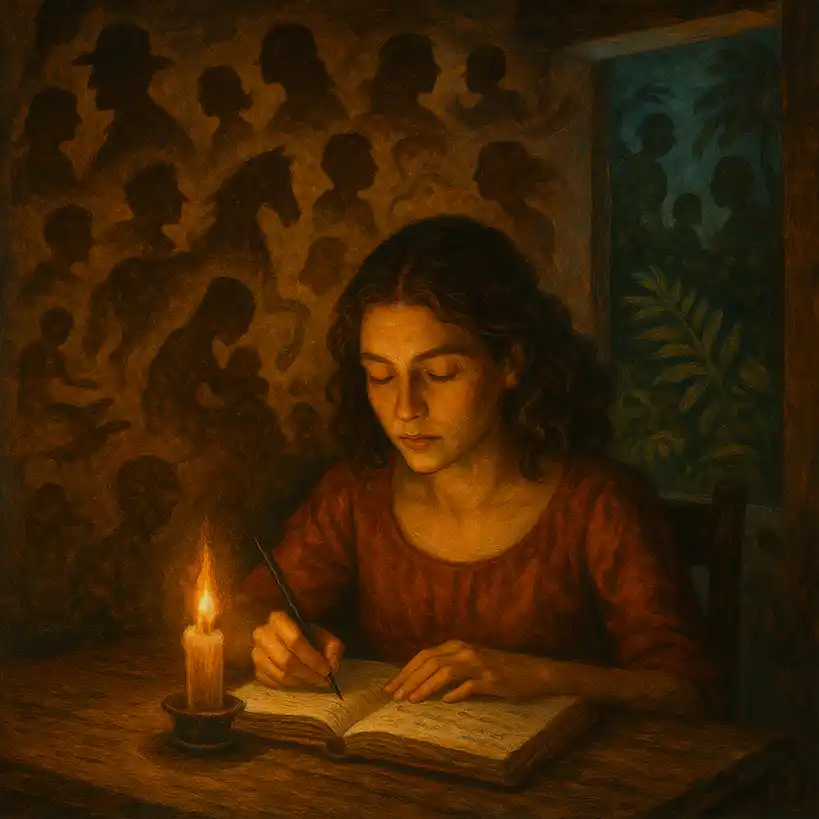
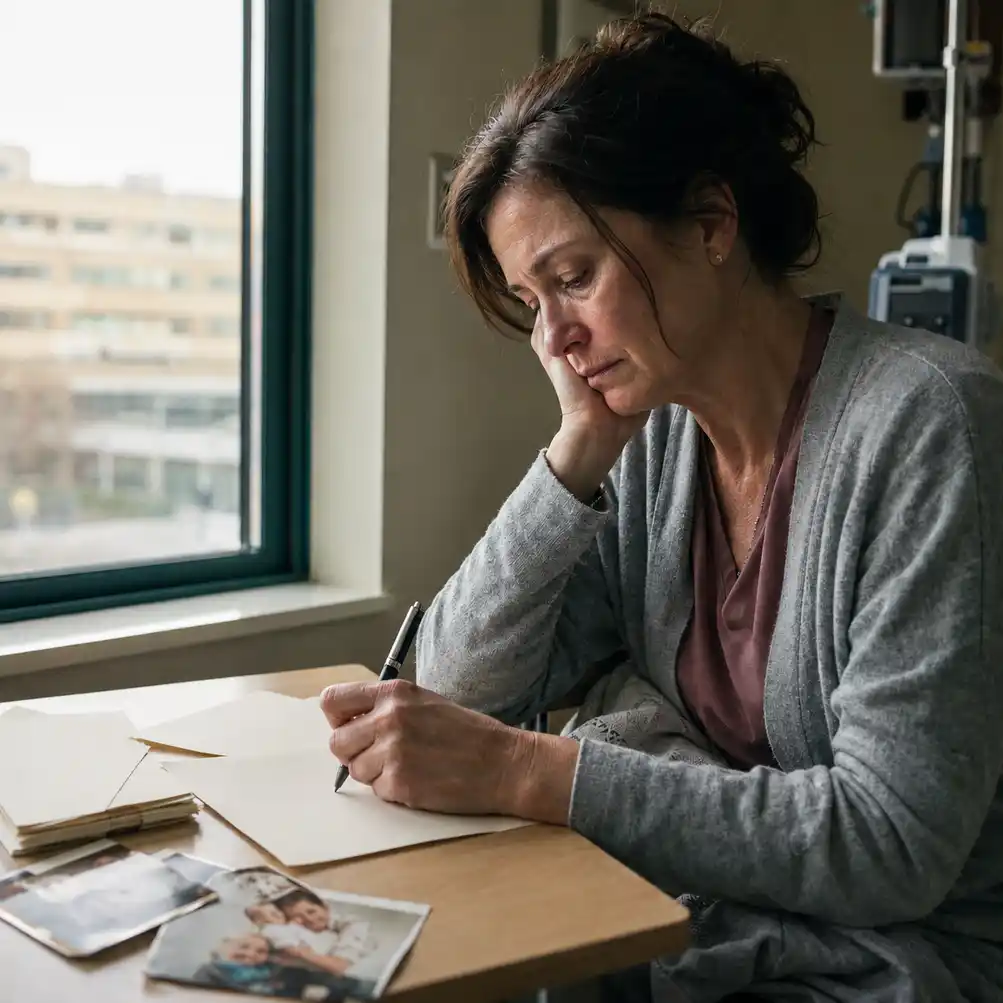
Paula begins as a message intended for a future that still seems possible. In December 1991, Isabel Allende’s daughter became gravely ill and fell into a coma in Madrid. Her mother began writing so that Paula would know the family’s history when she awakened. The pages initially preserve continuity: while the daughter lies beyond conversation, the mother keeps speaking to her.
That hope changes as the medical crisis continues. The letter grows into memoir, family chronicle, political testimony, confession, and vigil. Published in Spanish in 1994, Paula does not hide the conditions of its creation. The reader feels writing respond to uncertainty before knowledge can become retrospective order. The book is composed beside an unfinished event.
This origin gives the narrative unusual pressure. Memory becomes an emergency resource. Ancestors, migrations, childhood, marriages, political upheaval, exile, and literary success enter the hospital because the writer needs to surround her silent daughter with a world.
The title names both the person addressed and the book produced through that address. Paula remains more than a subject. She is the imagined listener who shapes rhythm, explanation, and emotional honesty. Every recollection seeks a daughter’s attention, even when the narrative reaches generations she never knew.
Paula crosses genres. It has the sweep of a family saga but refuses fiction’s protective distance. It records grief while grief is changing form, trying to keep relation alive after ordinary dialogue becomes impossible.

The Hospital Opens an Archive
The hospital present and the family past alternate throughout Paula. Clinical waiting produces one kind of time: repetitive, suspended, organized around signs that may offer hope or fear. Memory produces another. It moves rapidly across countries, generations, and emotional climates. The bedside becomes an entrance to the archive.
This structure prevents one register of suffering. Illness gives way to eccentric ancestors, childhood displacements, ambition, love affairs, political danger, and comedy. The variation shows the abundant life the mother wants her daughter to reenter.
The method resembles oral storytelling. One name calls forth another, and an image carries the speaker across decades. Chronology provides support, but association supplies energy. Paula feels spoken into silence rather than arranged for an impersonal audience.
Readers interested in memory shaped by intellectual and personal development can follow another path through 👉 The Torch in my Ear by Elias Canetti. His memoir differs in tone and circumstance, yet it likewise shows identity emerging from places, relationships, books, and remembered voices.
Recollection remains selective. Family members become vivid characters, and scenes gain narrative concentration. Memory creates form without claiming neutrality. The transmitted family bears the marks of affection, anger, humor, and hindsight.
The archive opened in the hospital is therefore living rather than administrative. Its purpose is not to prove every detail. It restores connection by giving the absent listener a lineage filled with contradiction, survival, and story.

Women Carry the Family Story – Paula
Women occupy the strongest lines of continuity in Paula. Mothers, daughters, grandmothers, relatives, friends, and domestic figures preserve knowledge that formal histories often ignore. Their experiences reveal how family survival depends on emotional labor, improvisation, practical intelligence, and the repeated reinvention of home.
This inheritance is not effortless solidarity. Women can judge, wound, compete, and reproduce restrictions. Yet their stories supply durable knowledge. The family archive travels through female memory. Generations exchange temperament, fear, sensuality, superstition, rebellion, and endurance.
The mother-daughter address intensifies the pattern. The writer tells Paula where she comes from while reassessing her own choices. Maternal authority becomes vulnerable through confession. Successes sit beside mistakes, and love does not erase uncertainty.
A very different fictional world appears in 👉 A Mercy by Toni Morrison, but its fractured maternal history provides a resonant comparison. Both books understand that separation can distort the meaning of a mother’s actions and leave a daughter with an incomplete account.
In Paula, storytelling tries to prevent that incompleteness. The mother cannot control what her daughter experiences, but she can offer context. Narration becomes an act of maternal provision, as necessary in its own way as physical care.
The women determine the genealogy’s movement. Through them, private memory contests public importance. A whispered story or inherited fear may explain a life more deeply than an official record.
Chile Enters the Sickroom
Personal grief in Paula never exists outside history. The family’s past leads repeatedly toward Chile, especially the political rupture of September 1973. The military coup ended the presidency of Salvador Allende, brought dictatorship, and transformed the lives of people connected to the defeated political world. Fear entered homes, friendships, employment, and the possibility of remaining in the country.
The memoir links national upheaval with intimate consequence. History appears through hurried decisions, danger, divided loyalties, and failed protections. Politics changes the meaning of home. Exile divides life into a before and an after.
Another Chilean language for absence, displacement, and grief appears in 👉 Desolation by Gabriela Mistral. Its lyric compression contrasts with the memoir’s narrative abundance, yet both works make loss inseparable from place.
Paula does not make political suffering background. The public and private scales illuminate each other. A country can lose democratic continuity as a family loses its expected future. Both force memory to resist erasure.
The Madrid hospital contains another form of exile. Paula is separated from responsive life while her mother revisits political displacement. The body and the nation become vulnerable archives, carrying damage official language cannot express.
By placing Chile inside the letter, the writer gives her daughter a history larger than illness. She restores political context without allowing public events to absorb individual lives. The memoir insists that history becomes real through the people required to survive it.
Exile Teaches Reinvention
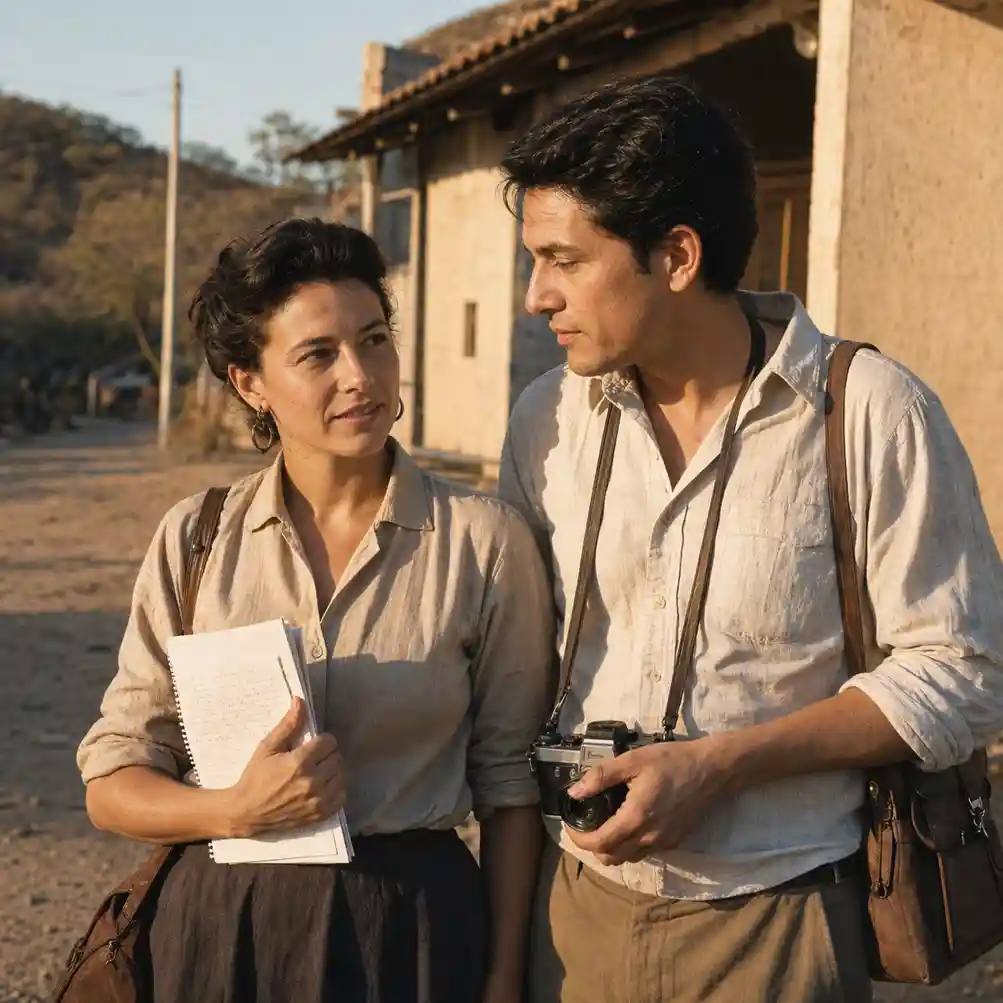
After the coup, exile in Venezuela required the family to rebuild practical and emotional life. Paula presents displacement as loss, but also as a period of adaptation. Professional identity, marriage, motherhood, friendship, and ambition had to be renegotiated outside the country that had organized earlier expectations.
Reinvention eventually intersects with authorship. Storytelling moves from family habit toward published fiction. The memoir recalls a literary life without making success destiny. Work, chance, and rupture all participate. The writer emerges from disrupted continuity.
That history changes the present book. A talent that transformed memory into fiction now faces an experience that cannot be displaced into invented characters. Paula uses narrative skill while admitting that skill cannot master death.
Autobiographical memory takes a different form in 👉 The Lover by Marguerite Duras. Its compressed, unstable reconstruction contrasts with the expansive family voice here, but both books show the adult writer returning to earlier identities that remain emotionally unfinished.
Exile sharpens the meaning of home: a country, household, language, network of women, or particular people. When those elements separate, belonging becomes portable. Stories carry what geography cannot secure.
In Paula, reinvention never cancels the original wound. New work and new relationships grow beside the losses that made them necessary. That doubleness keeps the memoir humane. Survival is neither betrayal nor triumph. It is the difficult continuation of a life whose earlier form cannot be restored.
Magic Without Fictional Shelter
Readers familiar with the author’s novels will recognize the ghosts, premonitions, family legends, unlikely coincidences, and powerful ancestors that move through Paula. Yet these elements operate differently in memoir. They belong to remembered experience, inherited belief, and the family’s way of explaining itself. The marvelous enters as a language of relation.
The book does not force memories into factual, symbolic, embellished, or supernatural categories. Their importance lies in what they express. A ghost carries attachment, a premonition shapes fear, and exaggeration preserves emotional truth.
This texture approaches death beyond medical description. Dreams, spirits, ritual, and intuition let the mother imagine contact with her daughter. Yet physical reality remains. Magic does not remove bodily vulnerability.
👉 Near to the Wild Heart by Clarice Lispector provides a more inward and formally experimental exploration of consciousness. Its fictional intensity differs from this memoir, but both works resist the idea that rational explanation exhausts inner life.
The risk lies in beauty. Lyrical language makes suffering readable but may organize pain too completely. Paula tests that boundary. Form gives grief passage, not resolution.
Its magical register is most persuasive when it admits helplessness. Storytelling can accompany the dying, preserve the dead, and transform the survivor. It cannot reverse the event. The book’s spiritual openness gains force because it remains beside that limit.

Quote List for Paula
- “Listen, Paula. I’m going to tell you a story, so that when you wake up you will not feel so lost.” This opening turns narration into an act of orientation. Moreover, the direct address keeps Paula present as a listener even while she lies unconscious. The future clause, “when you wake up,” preserves hope, yet the promise to explain the world also acknowledges how completely illness has disrupted it.
- “Nothing had prepared my mother for motherhood.” The sentence looks simple, but it begins a multigenerational inquiry into how women learn care without reliable models. Therefore, the memoir does not isolate the narrator’s grief from family history. Instead, it traces inherited improvisation, showing motherhood as a role repeatedly entered through uncertainty, instinct, and stubborn attachment.
- “She named her Isabel and established a dialogue that continues to the present day.” Here, naming immediately becomes conversation. In fact, the line quietly supplies a model for the entire book, since one woman sustains another through speech across distance, silence, and time. That continuity also complicates loss: relationships survive in language, even when her listener cannot answer in ordinary ways.
Trivia for Paula
- A bedside letter grew into a memoir: In December 1991, her daughter entered a coma. While keeping vigil in Madrid, the writer began telling Paula their family story, hoping it would orient her when she woke.
- Private grief opens onto Chilean history: The family narrative also revisits the 1973 military coup, dictatorship, and exile. Therefore, the 🌐 author’s official summary aptly presents the memoir as both intimate reckoning and national remembrance.
- Interior time behaves like a tide: Repeated memories return altered by fear and acceptance. That fluid movement creates a meaningful bridge to 👉 The Waves by Virginia Woolf, where identity likewise emerges through rhythm and recurrence.
- It marked a nonfiction turning point: The memoir appeared in Spanish in 1994 and English in 1995 as the author’s first nonfiction book, according to 🌐 Encyclopedia.com. Yet its suspenseful pacing retains a novel’s pull.
- Two timelines speak to each other: Structurally, Paula moves between the hospital present and a layered ancestral past. Consequently, medical waiting acquires narrative motion, while memories of childhood, marriage, motherhood, and migration gather the force of testimony.
- Readers answered with unusual intensity: The writer notes that no other book brought her more reader letters. Meanwhile, the memoir’s self-searching archive invites comparison with 👉 The Book of Disquiet by Fernando Pessoa, although its emotional destination remains connection rather than solitude.
- The English voice has a named mediator: Margaret Sayers Peden translated the memoir, as the Shakespeare and 🌐 Company edition record confirms. Her role matters because the book moves delicately among humor, politics, spiritual belief, and bereavement.
Writing Another Person’s Life
Every memoir about family faces an ethical difficulty: one person’s truth contains other people’s privacy. Paula intensifies the problem because its central addressee cannot answer, correct, refuse, or shape the published account. The mother speaks from love, but love does not eliminate the imbalance.
The form addresses this tension. Paula is continually called “you,” preserving a relation instead of converting her into a case. The second person resists emotional distance. The daughter retains a life, marriage, convictions, and attachments beyond illness.
Still, the reader remains aware that the letter has entered public circulation. Family secrets, intimate mistakes, and painful judgments now serve a literary work. That exposure may make some passages uncomfortable. It also prevents the memoir from offering a sanitized monument.
The question is not whether Paula achieves perfect ethical balance. No book written from one consciousness can do so. Its achievement lies in making the cost of narration visible. Testimony carries responsibility as well as relief.
The writer’s self-portrait is often unsparing. She records anger, ambition, sensuality, guilt, impatience, and the desire to impose meaning on events that resist it. Such admissions keep maternal devotion from becoming self-congratulation.
Writing another life becomes an act of trust. Readers must not consume suffering as spectacle. This intimacy exists because someone first believed the intended listener would return.
Grief Changes Its Tense
The emotional movement of Paula passes from anticipated recovery toward the recognition of death. That transition does not occur as one clean revelation. Hope weakens, returns, changes vocabulary, and gradually yields to another form of love. The future imagined at the beginning becomes impossible, but the act of address continues.
Writing creates a place where the relationship changes without ending. The daughter moves from expected reader to remembered presence. The mother moves from explanation toward release, though release never means forgetting.
The book can feel overwhelming. Its family stories, spiritual imagery, and direct grief leave little protection. Some passages approach sentimentality because emotional restraint is not treated as the only sign of seriousness.
Paula finally presents mourning as work performed through body, memory, language, and community. Grief is not a single emotion but a changed world. The survivor must learn its new geography while carrying the person who is absent.
The warmth comes from refusing to let death define the daughter. Illness frames the memoir, but family stories restore humor, politics, desire, travel, and eccentricity. Life remains larger than loss.
What endures is the transformation of a letter that could not fulfill its first purpose. It was written to help a daughter awaken into her history. Paula instead awakens history around the daughter, preserving the network of lives, countries, and stories through which her presence continues.