Hernani by Victor Hugo: Honor and Love
Hernani announces its theatrical rebellion through an almost comic intrusion. Don Carlos, King of Spain, enters Doña Sol’s bedroom at night and hides inside a wardrobe. He intends to observe the meeting between her and the outlaw Hernani, whom she loves despite being promised to her elderly uncle, Don Ruy Gomez.
Victor Hugo refuses a ceremonious entrance for royal authority. The king begins as an eavesdropper. Political power enters the machinery of farce before the scene leads toward swords and revenge.
When he arrives, the private room becomes a compressed political world. A king, an outlaw nobleman, a young woman, and an aristocratic patriarch all claim different rights. Desire cannot remain personal because rank and family history determine who may speak, marry, fight, or leave.
The Spanish court conflict in 👉 Don Carlos by Friedrich Schiller also places forbidden love inside dynastic power. Schiller’s prince struggles beneath paternal and imperial authority. His outlaw confronts a younger king whose pursuit of the same woman turns political rivalry into immediate bodily danger.
The Melodrama moves rapidly between tones. The wardrobe may invite laughter, while the exposed lovers face capture and forced separation. The grotesque stands beside the sublime. This mixture was central to his dramatic program and hostile to strict divisions between elevated tragedy and lower comic action. The opening does more than begin a plot. It teaches the audience how to watch a new kind of historical drama.
Four Desires Create One Impossible Choice
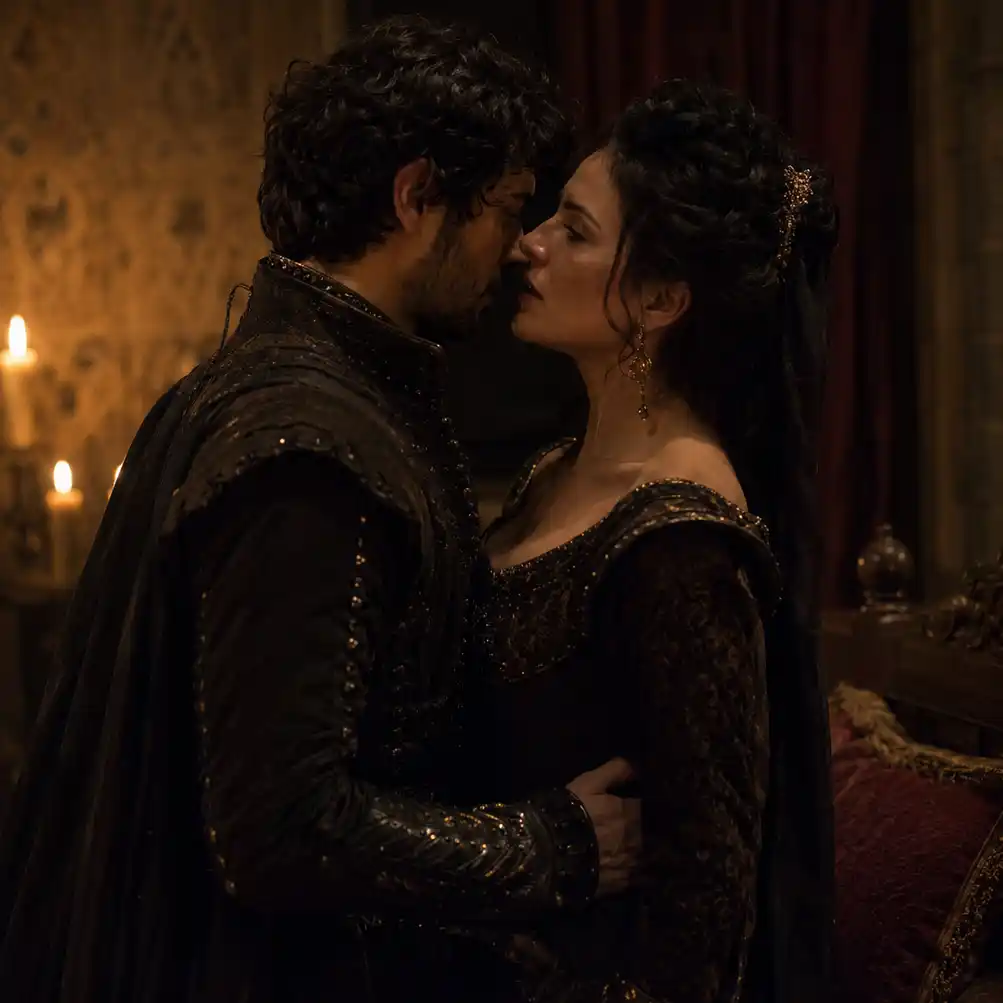
At the center of Hernani stands a severe emotional geometry. Hernani loves Doña Sol and seeks revenge against the king’s family for his father’s death. Don Carlos desires her and possesses sovereign power. Don Ruy Gomez is her uncle, guardian, and intended husband. Doña Sol wants to choose the outlaw.
Each man turns love into a different claim. Hernani offers passion joined to danger. Carlos assumes access because he is king. Ruy Gomez invokes family, age, property, and honor. Desire speaks through systems of authority.
Doña Sol’s choice is clear, but clarity does not give her control over events. Her room can be entered, her marriage arranged, and her body made the ground on which men test one another. She nevertheless rejects the king and prepares to flee with Hernani.
Historical adventure and contested identity shape 👉 The Black Tulip by Alexandre Dumas in a less fatal register. Dumas places private devotion within public conflict and imprisonment. The author intensifies the same collision until love becomes inseparable from aristocratic codes and political vengeance.
Every possible resolution violates a duty. If Hernani abandons revenge, he betrays his father. If Ruy Gomez surrenders a guest, he betrays hospitality. No character can choose love alone. In this tragedy, tragedy grows because inherited roles are stronger than present happiness. The lovers imagine escape, but the past keeps entering every room before them.
Hernani – The Outlaw Carries a Hidden Name
Hernani appears as a bandit leading armed followers, yet his outlaw status conceals noble birth. He is Don Juan of Aragon, the son of a man executed by the previous king. Dispossession has turned him into an enemy of the state without erasing the honor code of his class.
This divided identity powers this work. He rebels against rank while thinking through rank. He remains bound to aristocratic ideas of lineage, vengeance, promise, and worthy conduct.
When he has the king at a disadvantage, Hernani refuses to kill an unarmed man who will not duel him as an equal. The decision saves Carlos and endangers the outlaw’s cause. Honor prevents immediate murder but preserves the cycle that makes later death possible.
The historical revolution in 👉 Danton’s Death by Georg Buechner subjects heroic political language to fatigue, violence, and fatalism. Büchner’s figures are trapped by revolutionary history. His outlaw is trapped by a personal code inherited from the social order he resists.
Hernani’s concealed nobility also destabilizes appearances. The bandit can behave more honorably than the king, while respectable power uses disguise and attempted abduction. Legitimacy and virtue repeatedly separate.
Yet the revelation of his name does not liberate him. Restoration returns status, not freedom from promises. The verse drama treats identity as historical debt. The hero carries his father, title, and oath within him, even when each inheritance threatens the life he wants.
Carlos Learns the Performance of Mercy
Don Carlos begins Hernani as a predatory young ruler. He spies, deceives, threatens, and attempts to seize Doña Sol. His kingship looks like personal appetite backed by force. The imperial election later changes both his title and his theatrical scale.
In Aachen, Carlos waits near the tomb of Charlemagne and imagines the responsibilities of empire. Once elected Holy Roman Emperor, he becomes Charles V. A larger office demands a larger self. He pardons the conspirators, abandons his pursuit of Doña Sol, and permits her marriage to him. The transformation works as a change of role. Carlos learns that majesty requires restraint and that clemency can demonstrate power more effectively than revenge.
The shift also breaks the expected tragic mechanism. Royal mercy appears to clear every obstacle. Hernani recovers his name, the lovers can marry, and political vengeance loses its immediate target. The romantic drama briefly opens the possibility that history can advance beyond inherited retaliation.
Public power proves capable of revision. The irony is that private honor cannot follow. The emperor releases his enemies, but Ruy Gomez and Hernani remain bound by an oath made before that pardon.
The writer therefore reverses easy expectations. The king associated with arbitrary force learns mercy, while the outlaw hero cannot free himself from a voluntarily accepted command. Political authority changes. Personal absolutism survives.
Ruy Gomez Makes Hospitality Fatal
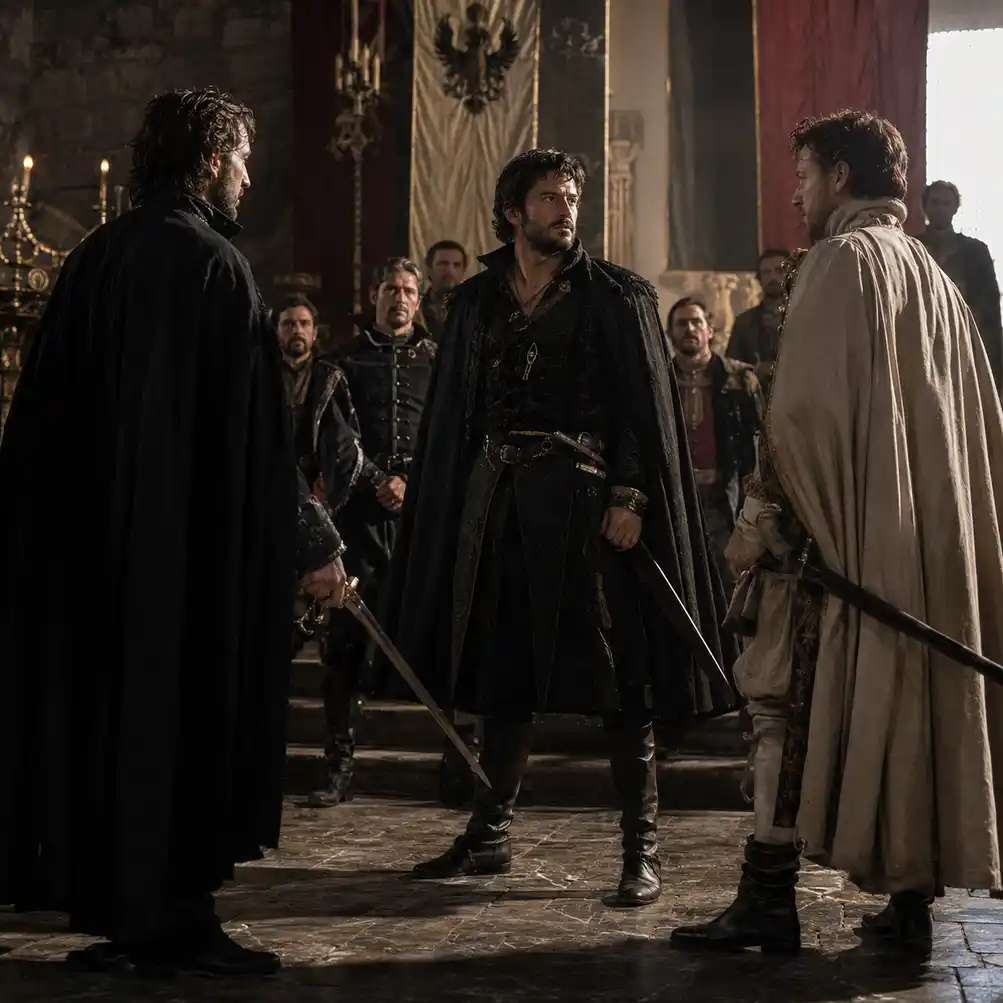
Don Ruy Gomez can appear ridiculous as an elderly man preparing to marry his young niece. Yet this book grants him a formidable consistency. When the outlaw enters his castle disguised as a pilgrim, Ruy Gomez protects him as a guest even after learning his identity.
The king demands surrender. The duke refuses, placing ancestral hospitality above obedience to the crown. His house follows an older sovereignty. Portraits of forebears surround him, turning private conduct into a judgment by the dead.
The fatal pact grows from this code. After discovering the lovers together, Ruy Gomez wants revenge. He gives him a horn and promises to die whenever the old man sounds it. What begins as a guarantee of future satisfaction becomes an absolute claim over life.
Ritualized desire also leads toward death in 👉 Salome by Oscar Wilde. Wilde condenses obsession into a symbolically charged demand. Hugo uses the horn as a delayed command, allowing happiness to arrive before an old grievance calls it back.
Ruy Gomez honors duties that the king ignores, yet makes them incapable of mercy. Principle hardens into vengeance. He protects Hernani, then uses the saved life as property.
The contradiction is central to Hernani. A code can restrain violence in one scene and require it in another. Honor has no value merely because it is consistent. Its ethical meaning depends on whether it serves life, dignity, and freedom.
Doña Sol Chooses but Cannot Govern the Terms
Doña Sol is surrounded by men who describe what she represents, yet she speaks her preference without ambiguity. She loves Hernani, rejects Carlos, resists the arranged marriage, and accepts the dangers attached to escape. Her desire is the plot’s clearest fact.
Still, Hernani limits the practical reach of that desire. Her choices operate inside male agreements she did not design. Carlos can abduct her, Ruy Gomez can promise her in marriage, and Hernani can pledge his own death without asking what the pledge will do to her future.
Doña Sol recognizes that the restored nobleman and the outlaw are the same beloved person. She also understands that shared life should outweigh a code created under anger.
Her final decision to share the poison is active, but it is not simple liberation. Agency survives inside a manufactured catastrophe. The men’s code leaves her a choice among losses rather than a genuinely open future.
This tension prevents the heroine from becoming only a prize. She exposes the cruelty of values celebrated as noble. Love, for Doña Sol, means presence and shared life. For the men, it is repeatedly entangled with possession, ancestry, rivalry, and reputation.
Hernani makes her constancy emotionally powerful while revealing the world that wastes it. The tragedy is not that she chooses the wrong man. It is that every male structure around her treats free choice as insufficient.

Quotes from Hernani
- “Ma race en moi poursuit en toi ta race.” He turns political revenge into hereditary duty, making the living continue a feud inherited from dead fathers.
- “Non. Le bandit, c’est vous !” Doña Sol reverses social rank: the outlaw respects her freedom, while the king uses power like a criminal.
- “Et quand j’aurai le monde ? Alors j’aurai la tombe.” Carlos imagines limitless empire, but Hernani claims death as the one territory beyond royal command.
- “J’en passe, et des meilleurs.” Don Ruy abruptly ends his parade of ancestral portraits. The comic shortcut became proverbial because aristocratic pride survives even its own excess.
- “Vous êtes mon lion superbe et généreux !” Doña Sol’s famous praise enlarges Hernani into a Romantic hero, although the surrounding scene links devotion with fantasies of death.
- “Je n’en viens pas, j’y vais.” The masked Don Ruy answers a question about hell with chilling economy before enforcing his fatal promise.
Trivia List for Hernani
- A premiere became a literary battle: Hernani opened at the Comédie-Française on February 25, 1830. Supporters of Romantic drama and defenders of classicism heckled one another, creating the legendary 🌐 “Battle of Hernani”.
- Wrote at remarkable speed: The surviving manuscript dates from 1829, and the playwright composed the play during August and September. Its subtitle, Hernani, ou l’Honneur castillan, announces the honor code that traps every major character.
- The plot refuses classical confinement: Five acts move from Zaragoza to mountain strongholds, a ducal castle, Charlemagne’s tomb at Aachen, and a wedding palace. Time passes as well, breaking the unities that neoclassical theater defended.
- Casting sharpened the strangeness: At the premiere, forty-six-year-old Firmin played the roughly twenty-year-old Hernani, while fifty-one-year-old Mademoiselle Mars portrayed seventeen-year-old Doña Sol. Romantic intensity depended on theatrical convention rather than literal realism.
- A phrase escaped the portrait gallery: Don Ruy ends his roll call of ancestors with “J’en passe, et des meilleurs.” The line became proverbial because it compresses aristocratic pride and comic impatience.
- Verdi gave the drama an operatic afterlife: Ernani, with a libretto by Francesco Maria Piave, premiered at Venice’s La Fenice on March 9, 1844. The 🌐 San Francisco Opera identifies it as Verdi’s fifth opera. Its musical violence carries forward the fractured urgency found in 👉 Woyzeck by Georg Büchner.
The Premiere Became a Literary Battle
The first performance of this work at the Comédie-Française on 25 February 1830 became famous for conflict between supporters of the new drama and defenders of classical convention. The audience’s reactions turned the theatre into an argument about artistic authority.
Hugo challenged expectations governing tone, setting, character, and verse. The play ranges across locations and months, mixes comic business with royal history, and places irregular pressure on the French alexandrine. Form enacts rebellion before the plot explains it.
The so-called Battle of Hernani sometimes overshadows the drama itself. Yet a familiar verse line disrupted in an unfamiliar place could signal a larger refusal of inherited rules.
The transformation of urban art in 👉 The Flowers of Evil by Charles Baudelaire belongs to a later moment in French literature. Baudelaire also joins beauty to shock and challenges the boundaries of acceptable subject matter. His stage had already made aesthetic conflict into a public event.
The play became a landmark of romanticism because it defended mixture, historical color, emotional extremity, and artistic freedom. Those qualities can feel melodramatic to readers trained by psychological realism. In performance, their scale creates momentum and visual contrast.
Excess is not a failure of control here. It is a challenge to the idea that dignity requires restraint, purity of genre, or obedience to older taste. The play asks the stage to contain wardrobes and tombs, lovers and emperors, laughter and poison.
The Horn Calls the Past Into the Wedding
The final act of the drama begins after apparent resolution. Carlos has pardoned the conspirators. Hernani’s noble identity is restored. He and Doña Sol are married. Then the horn sounds, and a promise made under an earlier order invades the celebration.
The object is theatrically brilliant because sound arrives before explanation. The past becomes audible. He recognizes the summons, while happiness contracts around a command no public authority now requires.
Ruy Gomez offers no future purpose for the death. Revenge will not restore youth, secure Doña Sol’s love, or correct royal injustice. The oath survives as an empty mechanism, powerful only because the men agree to treat it as sacred. Hernani could refuse the poisoned ending. Doña Sol urges him to choose their shared life. Hernani shows a hero who can defy a king but not his own idea of honor.
Freedom fails at the edge of self-command. Carlos changes when his historical role expands. Hernani remains loyal to a version of himself formed by injury and exile. His integrity becomes indistinguishable from self-destruction.
Doña Sol drinks first, turning the imposed death into a final act of union. Ruy Gomez then confronts the devastation produced by his consistency. No one wins the old contest.
The play endures because its spectacle carries a precise question: when does fidelity to a promise become betrayal of the living? The horn offers one terrible answer, but the lovers’ lost future keeps judging it after the stage falls silent.