The Man Who Laughs: A Stolen Face and an Unheard Voice
The Man Who Laughs by Victor Hugo turns a smile into evidence of violence. Gwynplaine, disfigured as a child, earns his living through an expression that strangers mistake for happiness. Published in 1869, this French historical novel combines Gothic terror, Romantic melodrama, political satire, and an unusually tender account of an improvised family. Its central question reaches beyond whether appearances deceive: who has the power to decide what another person’s face means?
The answer changes as Gwynplaine moves from a travelling theatre into aristocratic society. His body becomes entertainment, an object of desire, proof of a concealed identity, and finally a political accusation. Those changes give the novel its extraordinary force. They also expose its weaknesses: the machinery of revelation can overwhelm the characters, and its idealized heroine sometimes seems more symbol than person. Yet few novels make the distance between being visible and being heard so painfully concrete.
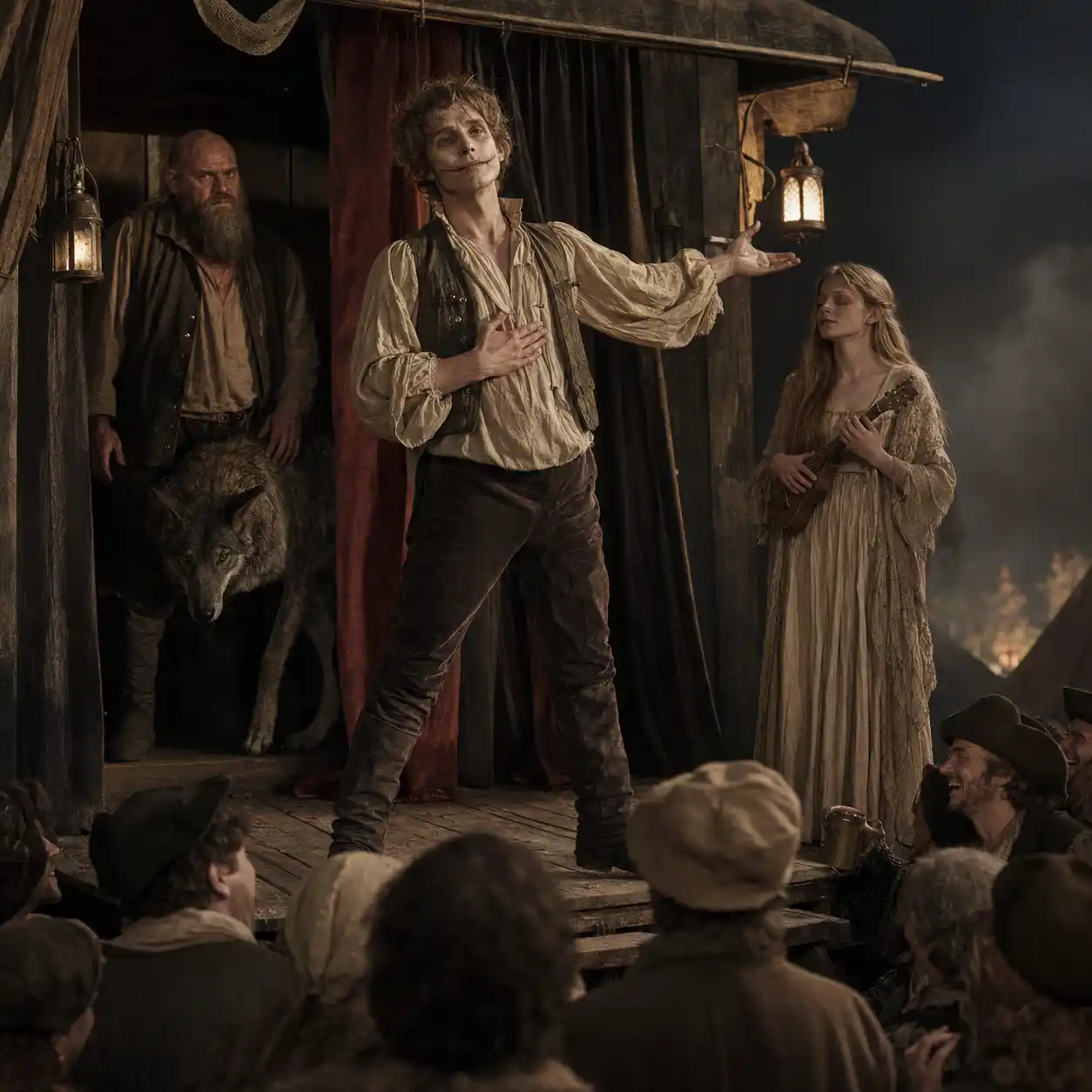
The Man Who Laughs Makes a Smile into Public Property
The premise is horrifying because Gwynplaine’s expression has been manufactured for other people’s enjoyment. The narrative attributes his disfigurement to the comprachicos, child traffickers who reshape bodies for exhibition. These figures belong to the novel’s account of its world; its elaborate explanations should not be treated as a reliable history of an actual organization.
The injury takes away control over expression. An observer sees laughter where Gwynplaine may feel sorrow, anxiety, or moral outrage. Even speech arrives accompanied by an apparently contradictory face. His struggle is therefore more specific than the familiar predicament of a misunderstood outsider. The means through which he might correct a misunderstanding have themselves been damaged.
The narrator in The Man Who Laughs initially participates in the language of monstrosity, piling up anatomical description and spectators’ reactions. That creates an uncomfortable reading experience. We are invited to scrutinize the very face whose public consumption the novel condemns. The Man Who Laughs never entirely escapes this contradiction, but its best scenes make us conscious of it.
Crucially, Gwynplaine’s smile is profitable. People pay to see it; performers build an act around it; fashionable curiosity eventually reaches him. Spectacle has an economy, and his suffering supplies its raw material. The later move into a palace changes the setting and the price of admission, while leaving the habit of treating him as something to look at disturbingly intact.
A Child in the Snow Establishes the Moral Stakes
The opening ordeal gives Gwynplaine a moral identity before the reader receives the full account of his face. Abandoned on the English coast in winter, he encounters a baby beside her dead mother. Already struggling to survive, he carries the infant towards shelter. That child becomes Dea.
The sequence works through physical difficulty: cold, weight, distance, exhaustion. Compassion is an action with a bodily cost. The boy cannot rescue someone else without making his own escape harder. This is one of the novel’s strongest answers to the social judgments that will surround him. We have seen what he does before anyone can tell us what he is worth.
The storm also provides a useful comparison with King Lear by William Shakespeare. Exposure drives the dispossessed king towards an awareness of people who have always lacked shelter. Gwynplaine begins with that knowledge. His first significant response to shared vulnerability is to help another abandoned person. The comparison clarifies the difference between acquiring compassion after losing rank and practising it before possessing any.
There is excess here, too. The landscape becomes almost cosmically hostile, and the child’s journey is stretched towards allegory. But the concrete burden of the baby keeps the episode grounded. Later revelations about noble ancestry cannot improve on this evidence of his character. The Man Who Laughs has already established a claim to dignity independent of birth.
The Green Box Offers Shelter at a Price
Ursus, the itinerant performer who takes in the children, is a more interesting guardian than his misanthropic speeches suggest. He complains while providing warmth, food, and protection. His conduct repeatedly exceeds his declared opinion of humanity. Beside him travels Homo, a wolf whose companionship further unsettles easy distinctions between civilized people and supposedly savage creatures.
Their travelling theatre, the Green Box, becomes a household built through care. Its security is precarious, but it gives Gwynplaine and Dea relationships that do not depend on pedigree. The affection is especially convincing when it appears as practical work: feeding, arranging, performing, keeping the group together.
Yet the household also survives by exhibiting Gwynplaine. In the interlude Chaos Vanquished, darkness, struggling bodies, music, and Dea’s luminous appearance prepare an elevated dramatic experience. Light then reveals his face, and the spectators erupt in laughter. The production’s emotional ambition meets the market’s appetite for a startling body.
Ursus accepts the takings even when the audience responds differently from his artistic hopes. This complicates his kindness without cancelling it. A caretaker may protect someone while depending on the very arrangement that exposes him.
That tension makes The Good Person of Szechwan by Bertolt Brecht a revealing companion. Shen Te’s attempt to remain generous requires the ruthless alter ego Shui Ta to keep her enterprise alive. The Green Box presents a different compromise: care continues inside a business that sells the spectacle of injury. Its tenderness matters because its survival is compromised.
Josiane’s Desire Depends on Distance
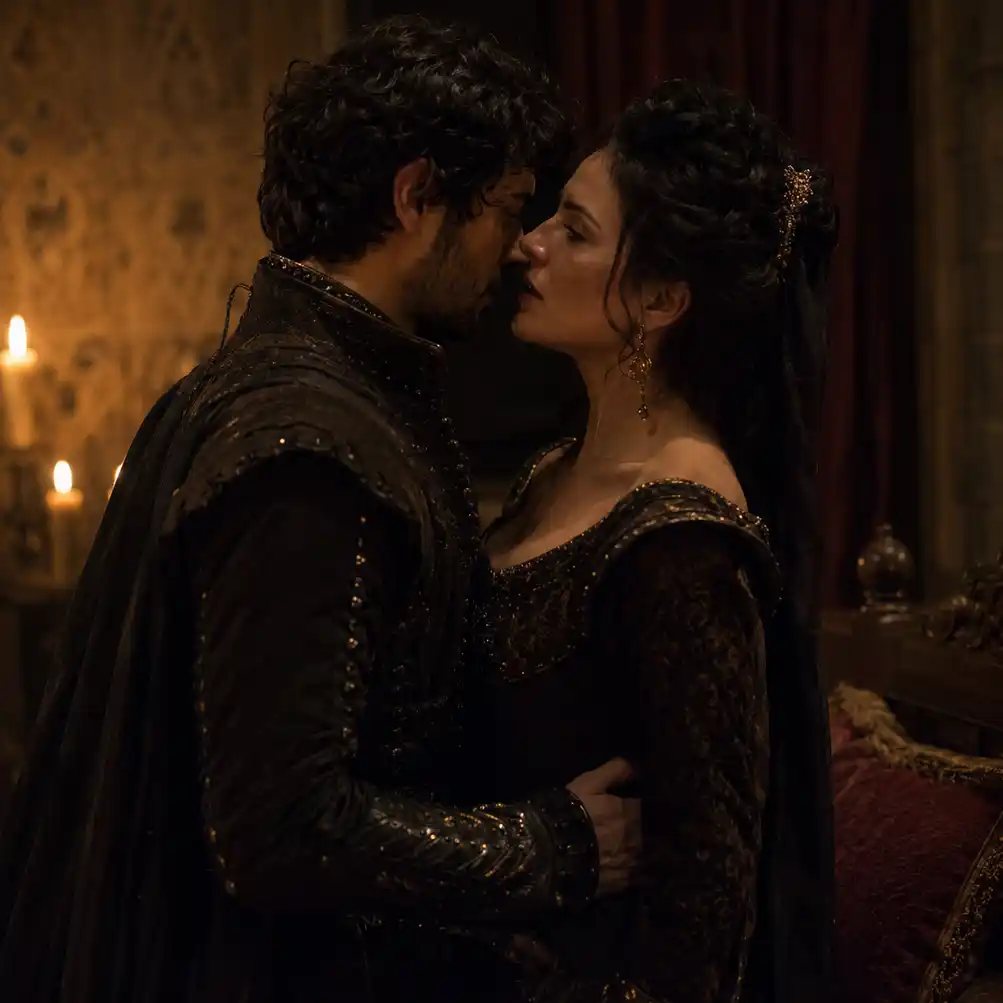
Josiane’s interest introduces another form of looking. She desires Gwynplaine partly because he seems excluded from the world of acceptable aristocratic partners. His apparent lowliness and extraordinary appearance promise an experience outside the familiar arrangements of her class.
The attraction does not amount to recognition. Her desire needs an unequal relationship. When royal authority identifies him as the nobleman she is required to marry, the same person abruptly becomes unacceptable in a different way. What was exciting as a transgression becomes unwelcome as an obligation. Nothing in his body has changed; the social description surrounding it has.
This is a sharper episode than a simple opposition between lust and pure love would allow. Josiane’s reversal exposes the conditions of her fascination. She wants access to the exceptional body without surrendering control over what the encounter means.
An illuminating contrast appears in The Picture of Dorian Gray by Oscar Wilde. Dorian’s beautiful face helps conceal moral corruption while his portrait records it. Gwynplaine’s face records violence inflicted upon him, yet others respond as though it defines the person within. Read together, the novels challenge the confidence with which beauty or disfigurement is made to signify character.
Dea offers an alternative through sustained affection and shared life. However, The Man Who Laughs repeatedly makes her blindness the condition of that acceptance. Its insistence on her angelic purity can limit her independence. The love story is moving, but the suggestion that she must be unable to see in order to love him deserves resistance.
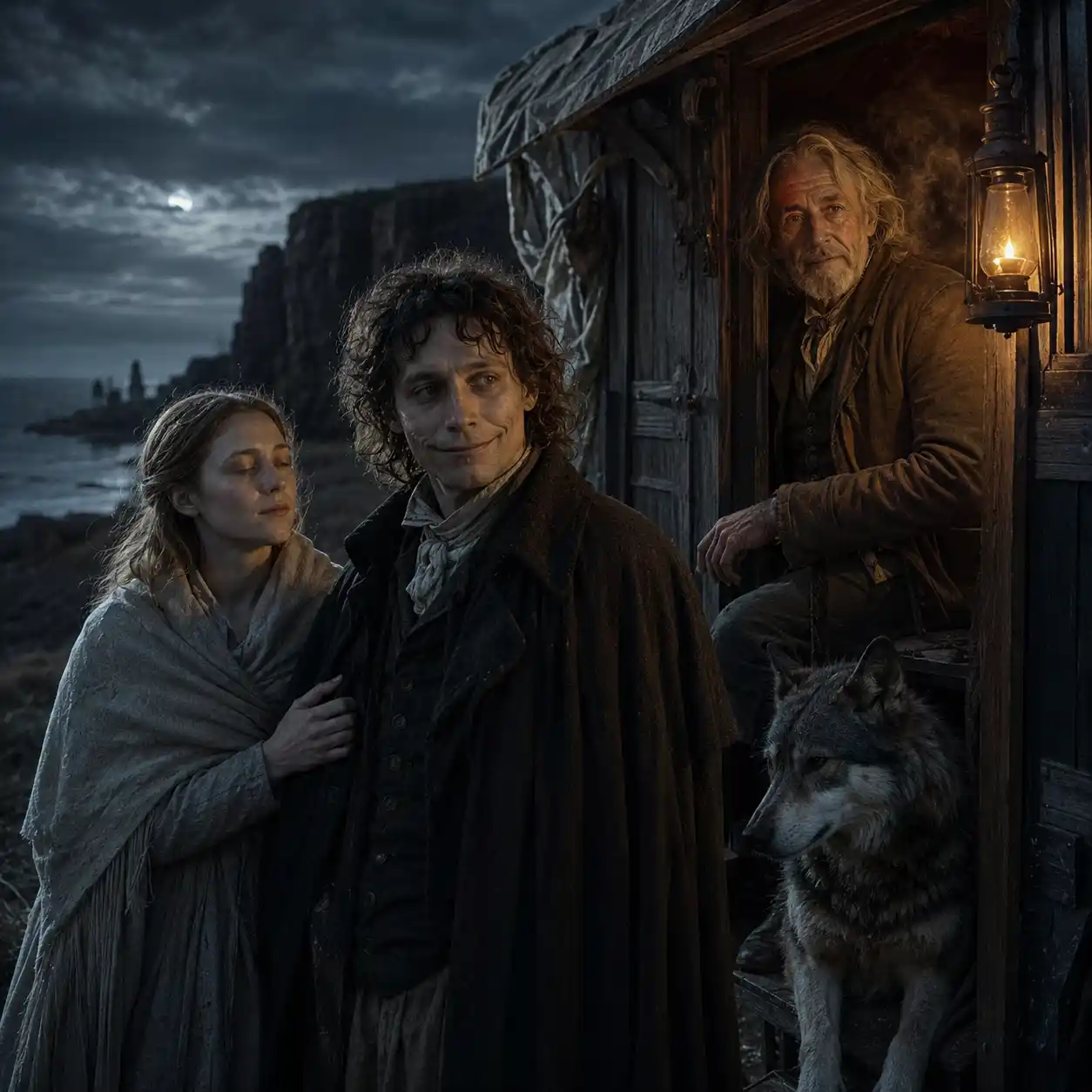
Birthright Arrives as a New Kind of Captivity
The discovery of Gwynplaine’s ancestry initially takes the form of a frightening removal from everything familiar. Officials take charge of him; information is withheld; the people who love him cannot understand what has happened. Before inheritance becomes a reward, authority makes itself felt as control over a person’s movements and identity.
A preserved confession eventually connects the abandoned child to Lord Fermain Clancharlie. Documents can restore his place in a family and the peerage. They cannot restore the childhood that was taken from him or make his existing attachments fit neatly into his new position.
The reversal supplies a powerful narrative temptation. Wealth seems capable of solving the practical insecurity of the Green Box. Rank seems to promise an opportunity to act on behalf of those he knows. Gwynplaine is susceptible to both prospects, and The Man Who Laughs gains something by allowing elevation to confuse him. His goodness does not make him immune to grandeur.
In Great Expectations by Charles Dickens, Pip’s discovery that his prosperity comes from Magwitch forces him to confront the human source of his gentlemanly ambitions. Here, the revelation supplies distinguished ancestry rather than a socially embarrassing benefactor. The moral test still concerns whether advancement can be judged against the lives and obligations it threatens to displace.
The inheritance plot can feel mechanically convenient, especially when long-hidden evidence reorders so many destinies. Its strongest purpose is to give Gwynplaine access to power, then test what that access actually permits.
The Man Who Laughs Gives Its Hero a Voice Among the Lords
The parliamentary scene brings the book’s separate concerns into a single room. Gwynplaine now possesses the hereditary standing required to speak among the powerful. He uses that opportunity to describe suffering outside their experience and to challenge the relationship between their comfort and other people’s deprivation.
His appeal rests on knowledge acquired through suffering. Hunger and exposure are things he has endured. The rescue in the snow and the precarious life of the theatre stand behind the speech, giving substance to claims that might otherwise sound merely declamatory.
The response turns him back into a performance. Laughter interrupts the attempt to translate personal experience into public authority. He has gained a recognized name without gaining control over how his words are received. His face allows the listeners to evade the accusation by treating the speaker as entertainment.
The scene has a useful counterpart in The Trial by Franz Kafka. Josef K. addresses an apparent courtroom, only to discover how little his argument commands the gathering or the proceedings. Gwynplaine knows the grievance he wants to express and has a formally established right to speak. His defeat shows that even those advantages cannot compel an institution to listen.
The speech is excessive, and its speaker can seem to carry the narrator’s entire political programme. Still, its theatrical failure is devastating. Admission does not ensure a hearing. The institution can accommodate his title while refusing the challenge his experience brings into the chamber.
Writing Style: Accumulation, Antithesis, and the Grotesque
The writing style alternates between intimate gestures and enormous rhetorical constructions. A child carrying a baby may be followed by a history of punishment; a private emotion may open into an inventory of titles, possessions, or institutions. The scale keeps expanding around the individual.
At its best, accumulation makes power feel material. Lists of aristocratic distinctions and elaborate ceremonial arrangements suggest a system with innumerable supports. Gwynplaine confronts a world fortified by language as well as property. The narrator’s tendency to explain everything can thus enact the oppressive density of the order being described.
Antithesis works more quickly. Ursus speaks harshly and acts kindly. A wolf behaves companionably. A laughing face conceals distress. The palace dazzles while the fragile theatre offers belonging. These reversals make The Man Who Laughs memorable, although their repeated use can turn complex people into positions within an argument.
The grotesque is equally unstable. Descriptions of Gwynplaine force attention towards a victim of cruelty, yet sometimes reproduce the disgust and fascination they seek to expose. The narrative’s racialized comparisons of facial features are particularly troubling. They belong to the text’s prejudices and should not be accepted as neutral description.
Readers who want brisk historical fiction may find the digressions exhausting. The novel repeatedly suspends forward motion to build a moral or architectural panorama. Some of that expansiveness earns its place; some feels like insistence after the point is already clear. Its achievement depends on the collision between rhetorical excess and vulnerable bodies, rather than on consistent narrative economy.
Quotes: Passages About Appearance and Recognition in The Man Who Laughs
These historical English renderings preserve the difference between expression and feeling. The first four passages follow the Estes and Lauriat text transcribed at Wikisource; the final passage follows the historical English text hosted by Project Gutenberg. Wording varies between translations.
- “The wolf never bit: the man did, now and then. At least, that was his intention.” The narrator introduces Ursus through a joke that immediately qualifies his ferocity. His claim to misanthropy is less dependable than his habit of helping others.
- “It was Gwynplaine’s laugh that so excited the mirth of others; yet he did not laugh himself. His face laughed; his thoughts did not.” This distinction states the central injury: the expression visible to spectators cannot be trusted as an account of the person’s inner life.
- “They had intended to drive him to desperation: they had succeeded in driving him into enchantment.” The passage concerns the unexpected happiness of his relationship with Dea. It describes a reprieve from persecution, though the novel will test its durability.
- “And even in the streets, the passers-by who could see nothing, hearing the laughter, laughed also.” During the theatre performance, laughter spreads beyond direct observation. The reaction becomes contagious, detached even from the face supposedly responsible for it.
- “I am come to impeach your happiness. It is fashioned out of the misery of your neighbour.” Addressing the peers, Gwynplaine connects private comfort to public suffering. The accusation gives the political meaning of the book’s recurring contrast between pleasure and pain.
Trivia about The Man Who Laughs : Publication, Names, and Adaptations
- A four-volume first edition: The original French novel, L’Homme qui rit, appeared in 1869. The first-edition record held by Paris Musées describes four volumes published in Paris by Librairie internationale, A. Lacroix, Verboeckhoven et Cie. Its physical form reflects the considerable scale of the undertaking.
- An alternative title in the preface: The author says the book’s true title should be Aristocracy. He also proposes a possible Monarchy, with both leading towards Ninety-Three. The plan makes the institutional focus explicit before the story begins.
- The human and the bear exchange names: Ursus means bear in Latin, while Homo means human being. The human performer and his wolf companion therefore carry names that cross the boundary between their species, anticipating the narrative’s repeated challenges to conventional judgments of civilization.
- An English story written in exile: The novel belongs to the work produced at Hauteville House on Guernsey during the writer’s exile. The house museum specifically associates it with the glazed rooftop study overlooking the sea, a fitting setting for a book so preoccupied with coastlines and isolation.
- A major silent-film adaptation: Paul Leni directed the 1928 film, with Conrad Veidt as Gwynplaine and Mary Philbin as Dea. The American Film Institute records its production and plot. The film changes the lovers’ fate, so its ending should not be used to summarize the novel.
- A museum exhibition about transformation: In 2014, the Maison de Victor Hugo in Paris devoted an exhibition to the novel and its hero’s changing visual forms. Its treatment of illustration, cinema, theatre, and comics underlines how readily a story about looking becomes material for new images.
What Remains After the Applause
The ending refuses to make noble recognition a cure. Returning to the people who love him cannot undo everything that has happened. Dea dies after their reunion, and Gwynplaine’s subsequent death leaves Ursus and Homo with a loss that neither theatrical success nor restored ancestry can repair.
The tragedy risks making vulnerable people bear too much symbolic weight. Dea’s idealization is particularly costly: her death can feel like the removal of an emblem of consolation. The force of the conclusion lies in the destruction of a shared life. We remember a household with food to find, a performance to arrange, and people expecting one another’s return.
For readers willing to accept its digressions and emotional extremes, The Man Who Laughs offers a formidable account of spectacle and social rank. It is uneven in precisely the places where it most wants to be overwhelming. The long explanations sometimes obstruct the people they are meant to defend, while individual scenes cut through with extraordinary clarity.
Its most enduring image is a man trying to speak while others laugh at the expression imposed upon him. The question it leaves is demanding and precise: what would it take to hear someone whose suffering has already become our entertainment?
More reviews of works by the french playwright
Was this article helpful?
…One vote per user. No account needed.