Crossroads : Faith and Family
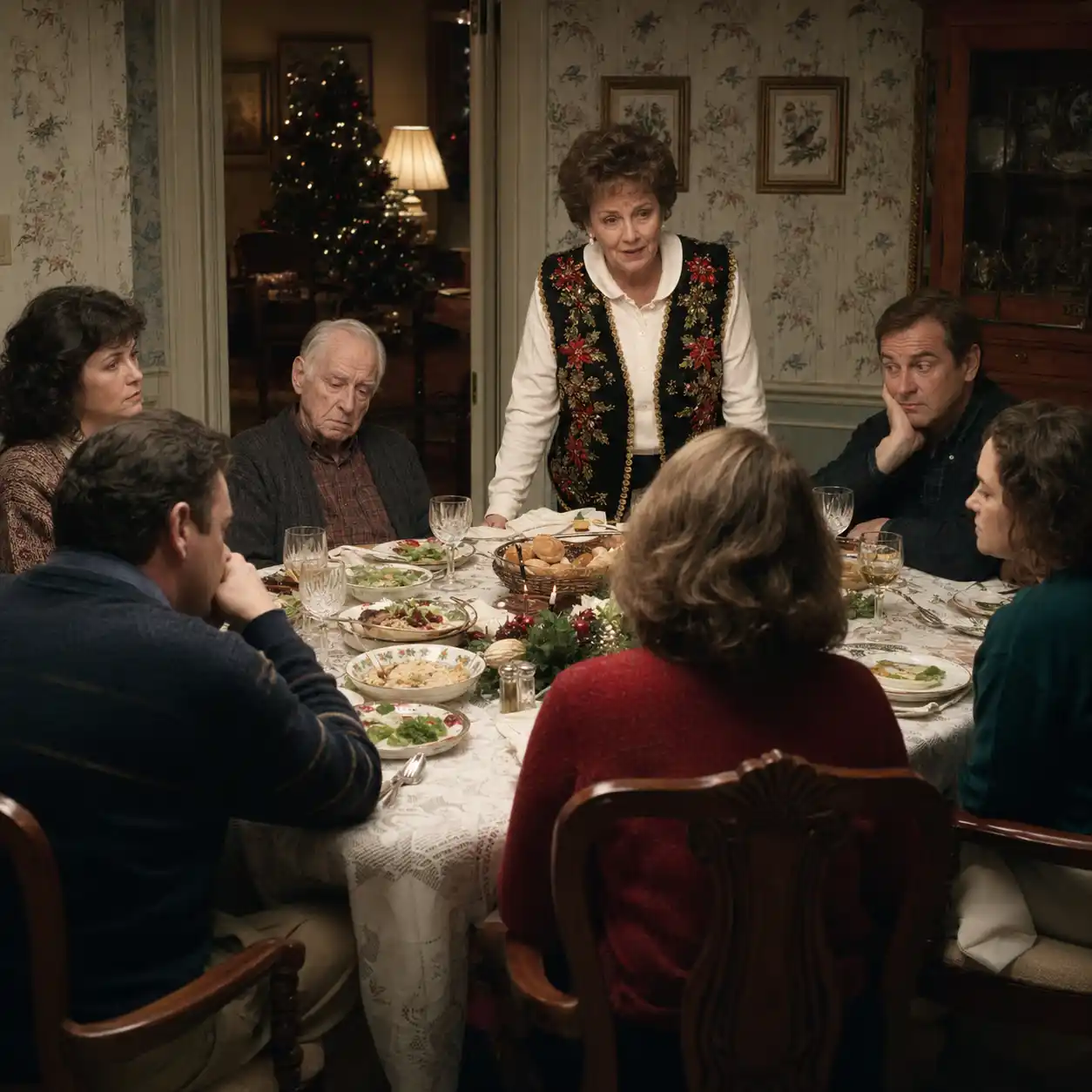
Crossroads begins on December 23, 1971, with heavy snow approaching suburban Chicago. The weather promises confinement, but every member of the Hildebrandt family wants an exit. Russ, an associate pastor, longs for the widowed Frances Cottrell. His wife, Marion, has begun therapy without telling him. Their eldest son, Clem, returns from college carrying a decision about the Vietnam draft. Becky, the admired daughter, is moving toward the counterculture. Perry, brilliant and unstable, has sold drugs to younger children and now wants to become good.
Jonathan Franzen calls the fictional township New Prospect, a name that makes the family’s hunger for reinvention sound almost civic. Yet no prospect belongs to one person alone. Every escape crosses somebody else’s path. Russ’s romantic fantasy requires Marion to remain the dull wife he imagines. Clem’s sacrifice is also an accusation against his father. Becky’s awakening changes Perry’s position inside the family.
The novel’s first major section, “Advent,” concentrates much of this pressure into a single day. Time slows because each consciousness contains years of resentment, longing, and selective memory. A minor exchange at breakfast can reopen an old hierarchy. A ride through town can become a rehearsal for betrayal.
This method makes Crossroads intimate before it becomes expansive. The Hildebrandts are not introduced through a neutral family portrait. Readers meet them from inside competing accounts. Kinship produces knowledge and distortion at once. Each person knows where the others are vulnerable, but nobody sees the whole household clearly. The coming snow cannot preserve the family as it was. It only brings all its separate crises into the same weather.
Goodness Becomes a Dangerous Ambition
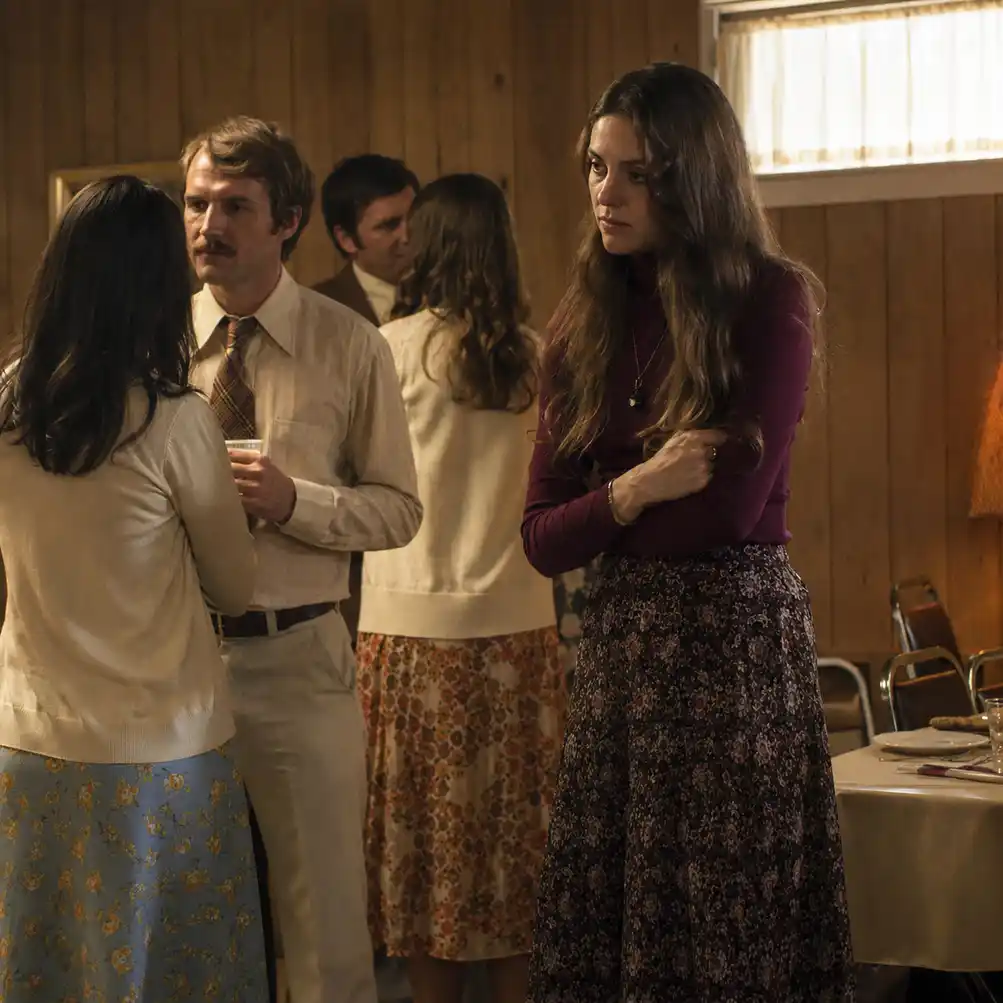
Almost everyone in Crossroads wants to be good. The difficulty lies in deciding whether goodness means sacrifice, honesty, sexual restraint, political responsibility, religious faith, or visible service. These definitions rarely agree. Worse, a moral action can satisfy the ego of the person performing it.
Clem gives up his student deferment because poorer young men have been sent to Vietnam in his place. The decision contains courage, but also absolutism. He makes his conscience into a standard that shames Russ. Perry sees his own selfishness with frightening clarity and resolves to improve. Yet he also calculates how virtue will change the way others see him. Russ remembers civil rights work and service among the Navajo whenever he needs evidence of his decency.
Self-judgment easily becomes self-dramatization. The author does not use that insight to prove that sincere goodness is impossible. Perry’s generosity toward Becky is real. Marion’s concern for her son survives her shame. Clem’s outrage responds to an actual injustice. The novel instead asks whether anyone can act well without turning the act into a flattering story.
The spiritual and familial arguments in 👉 The Brothers Karamazov by Fyodor Dostoevsky also test belief through compromised people rather than abstract doctrine. Dostoevsky makes faith and rebellion clash in public debate. He places moral argument inside kitchens, youth meetings, cars, and bedrooms.
In Crossroads, the wish to be good remains necessary and suspect. A character’s mixed motive does not erase the good that follows. Neither does a noble intention cancel the damage. That tension gives the novel its ethical weight.

Russ Preaches What He Cannot Practice
Russ is trained to turn experience into sermons, and he applies the same habit to himself. He describes his marriage as joyless, Marion as diminished, and Frances as a chance to recover vitality. This account makes adultery resemble liberation. It also protects him from admitting how eagerly he has created the conditions for his unhappiness.
His rivalry with Rick Ambrose sharpens the humiliation. Rick leads the Crossroads youth group with an informality that attracts the church’s teenagers. Russ once tried to enter that emotional culture and lost his place after a painful confrontation. He now resents Rick’s charisma while craving the approval of the same young people.
Russ confuses usefulness with moral authority. His past service, musical taste, pastoral work, and progressive politics all become items in an internal case for the defense. Around Frances, he edits his history in real time. Small lies and half-truths make him appear more courageous, more neglected, and more desirable.
The proliferating explanations in 👉 Herzog by Saul Bellow offer a revealing parallel. Moses Herzog processes marital failure through unsent letters and intellectual argument. Russ has a less dazzling vocabulary, but he shares the impulse to make interpretation outrun responsibility.
The writer makes him comic without making him trivial. The clothes he chooses, the records he mentions, and the poses he adopts expose middle-aged vanity. Still, his longing contains loneliness as well as lust. Moral weakness does not eliminate emotional pain. Crossroads holds both facts together. Russ’s feelings may be genuine, but their sincerity gives him no ownership over Frances and no exemption from the promises he made to Marion.
Marion’s Past Refuses to Stay Buried – Crossroads
At first, Marion appears to be the neglected wife in Russ’s story. Her chapters overturn that reduction. Therapy opens a past she has hidden from her family. Before marriage, she had an affair with a married man named Bradley Grant, became pregnant, had an abortion, and suffered a psychological collapse. The composed pastor’s wife was built over experiences she never resolved.
These revelations do not simply replace Russ’s false version with Marion’s true one. She also arranges memory to survive it. Bradley became the center of a private mythology in which desire, humiliation, cruelty, and rescue remain entangled. Therapy gives her language, but language cannot make the past harmless.
A hidden life has shaped the visible household. Marion fears that Perry’s instability may be connected to her own history. She watches him with a recognition that the rest of the family lacks. Her weight, clothes, domestic habits, and religious role have made her nearly invisible to Russ, yet invisibility has allowed a complex interior world to continue beyond his notice.
Dorothy’s crisis of faith and assigned duty in 👉 A Clergyman’s Daughter by George Orwell creates a different portrait of a woman formed by clerical life. Orwell sends his heroine outside her familiar identity. The novelist lets Marion’s earlier selves erupt inside the home that seemed to contain them.
Her California journey toward Bradley tests fantasy against an aging body and an altered present. Memory loses power when it meets reality. Marion’s renewed commitment to her marriage is therefore neither simple forgiveness nor domestic defeat. It emerges from a clearer view of what she wanted, what she concealed, and what remains possible.
The Children Turn Ethics Into Experiments
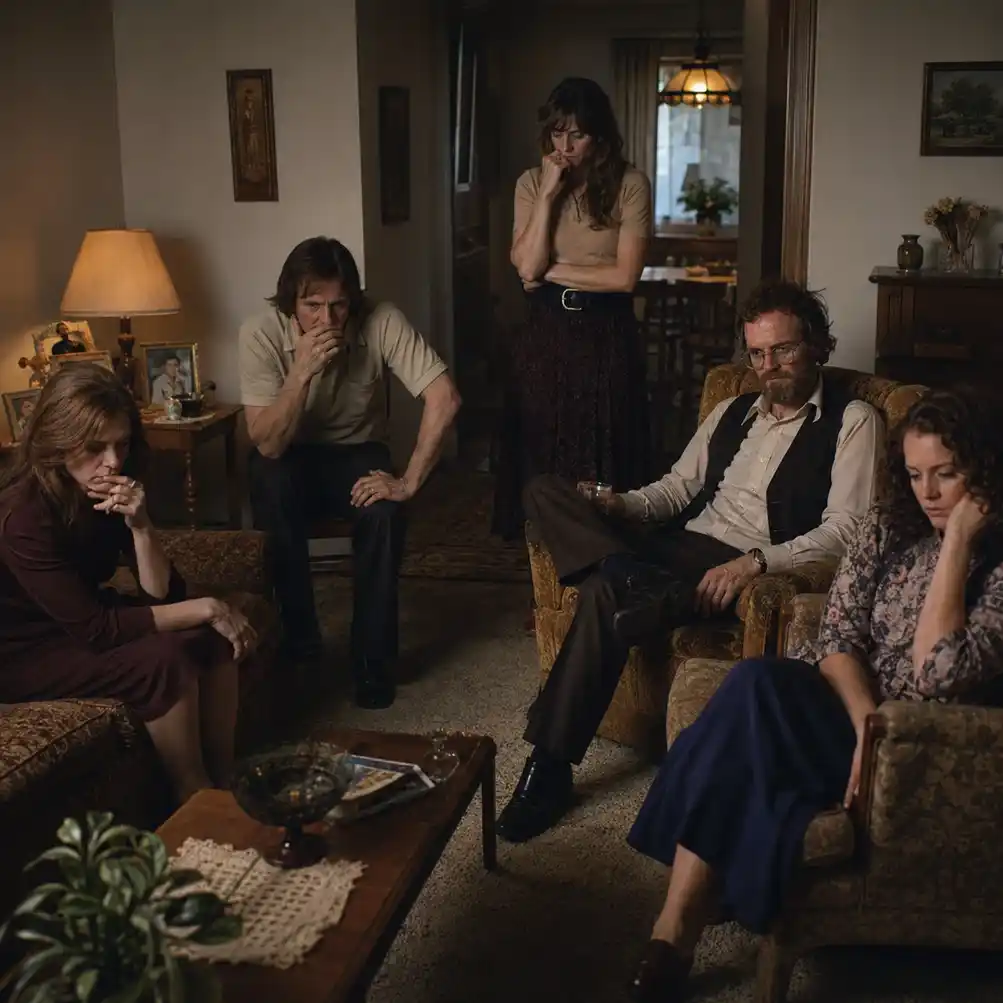
The Hildebrandt children inherit religious language, but each converts it into a personal experiment. Clem pursues fairness through renunciation. He ends his relationship, leaves college, and surrenders his draft protection because he cannot accept benefiting from a war fought by less privileged men. His decision is principled and punishing. It treats private happiness as evidence of complicity.
Becky begins from another position. Popular, beautiful, and socially secure, she joins Crossroads partly because Tanner Evans attracts her. Cannabis, music, desire, and group intimacy then converge in an experience she understands as divine. Crossroads refuses to decide whether the moment is chemical, spiritual, or both. Its consequences matter more than an external verdict.
Perry’s experiment is the most dangerous. His intelligence lets him identify selfish motives before other people see them. It does not give him control over appetite, addiction, or mood. Self-knowledge is not the same as self-command. His decision to become better can produce tenderness, but it can also feed the grandiosity of a mind that treats life as a problem only he can solve.
The inherited struggle between good and evil in 👉 East of Eden by John Steinbeck expands across generations and repeated family roles. The novelist works on a tighter scale. The siblings share one household, yet each assigns different meanings to sacrifice, freedom, and love.
Young Judson receives no equivalent interior section. That absence is telling. Not every affected child gets narrative power. He observes the older family members and depends on choices he cannot influence. Their moral experiments are never private because their consequences pass through him.
The Youth Group Makes Honesty Competitive
Crossroads, the church youth group, offers what the Hildebrandt home cannot: emotional candor, chosen community, music, touch, and permission to reject adult decorum. Rick Ambrose asks teenagers to risk genuine relationships. His methods can create real care. They can also turn vulnerability into a performance watched by peers.
The group’s social rules invert ordinary high-school status. Members gain prestige by welcoming outsiders, admitting weakness, and confronting comfortable falsehoods. Yet status does not disappear. It attaches itself to new behavior. Even humility can become competitive. Perry understands this quickly because he studies every social system for leverage.
Becky finds something sincere within the same structure. Speaking honestly weakens the polished identity that once protected her. Tanner’s presence matters, but attraction does not fully explain her change. The group provides forms through which an unfamiliar spiritual feeling can become legible.
Family breakdown and countercultural experiment also collide in 👉 Rabbit Redux by John Updike. Updike lets the conflicts of the late 1960s enter a damaged Pennsylvania home. He moves teenagers into a church space where rebellion, faith, fashion, and social service borrow one another’s language.
Rick’s authority remains deliberately ambiguous. He is charismatic and capable of manipulation, but he also recognizes the danger of his influence. Russ’s resentment does not prove Rick fraudulent. The group can heal and wound through the same intimacy. Crossroads is strongest when it preserves this double possibility. Radical honesty may break a false peace, but honesty without humility can become another way to dominate a room.

Quotes from Crossroads
- “Where is she now?” Russ’s repeated interest in Frances sounds innocent, but the question exposes how desire hides inside routine pastoral conversation.
- “I’d rather be on the South Side myself than giving sermons.” Russ presents service as authentic faith. However, the scene also reveals his wish to impress Frances with that authenticity.
- “If you’re smart enough to think about it, there’s always some selfish angle.” Perry turns moral intelligence into suspicion. His insight is sharp, yet it traps him inside endless self-surveillance.
- “I’ve started hating God.” Russ finally names the resentment beneath his pastoral role. The confession opens a path toward honesty while exposing how wounded pride has entered his faith.
- “I’m doing the best I can!” Perry’s desperate defense collapses the distance between arrogance and vulnerability. Consequently, goodness sounds less like an achievement than an unstable plea.
Trivia for Crossroads
- Publication began an ambitious sequence: Farrar, Straus and Giroux published Crossroads on October 5, 2021.
- The title works twice: Crossroads names Rick Ambrose’s church youth group. Meanwhile, each Hildebrandt reaches a moral junction where personal freedom threatens another family member.
- Its larger title comes from George Eliot: Crossroads opens A Key to All Mythologies, whose title echoes Casaubon’s unfinished project in Middlemarch. The writer told 🌐 Vulture that Casaubon’s failure made beginning three novels in his sixties a private joke.
- A real youth group supplied raw material: As a teenager, the novelist belonged to Fellowship at First Congregational Church in Webster Groves, Missouri. His 🌐 autobiographical essay recalls trust exercises, guitars, retreats, and friendship rituals that the novel transforms.
- Five viewpoints expose one family: Close third-person narration moves among Russ, Marion, Clem, Becky, and Perry, while young Judson remains outside the main perspective pattern. That fractured intimacy invites comparison with 👉 The Sound and the Fury by William Faulkner.
- The calendar carries theological meaning: “Advent” gathers much of the action around December 23, 1971; “Easter” moves into spring and the Arizona service trip. Thus, expectation and renewal frame relapse, betrayal, and attempted forgiveness.
- The sequel now has visible beginnings: In June 2026, he confirmed that a 🌐 New Yorker story came from the Crossroads sequel and that a Hildebrandt eventually appears. However, the novel remained “far from finished.” Meanwhile, 👉 Rabbit is Rich by John Updike offers another long view of an American family.
Arizona Exposes the Limits of Service
The “Easter” movement carries members of the youth group to Arizona for a service trip on Navajo land. Russ has connections there from his alternative service as a conscientious objector during the Second World War. He treats those memories as proof of courage and cross-cultural understanding. Returning reveals how much nostalgia has edited.
The white visitors assume that labor and goodwill justify their presence. Young Navajo men challenge them. The confrontation raises a question liberal service can evade: who decided these visitors were needed, and whose needs does the mission satisfy?
Good intentions do not cancel unequal power. Russ is wounded because the challenge attacks one of his favorite identities. Instead of listening fully, he turns humiliation back toward his personal drama. His affair with Frances reaches its decisive point while the moral authority he claimed in this landscape is collapsing.
Perry’s crisis gives the trip its most devastating consequence. Neglected while Russ concentrates on Frances, his cocaine spiral ends in robbery, destructive fire, and hospitalization. His breakdown cannot be assigned to one parental failure. Still, the timing exposes the cost of Russ’s selective attention.
The writer also avoids presenting Arizona as a place that exists only to educate the Hildebrandts. The confrontation resists Russ’s sentimental account, although the novel remains centered on the white family’s consciousness. That limitation matters. A critique of paternalism can still preserve its viewpoint.
Marion’s simultaneous journey in California breaks another cherished fantasy. When the emergency draws the parents back toward Perry, service stops being an ideal performed elsewhere. It becomes the exhausting, compromised duty of caring for the person nearest to them.
No Perspective Earns the Final Word
The central achievement of Crossroads lies in its close third-person narration. Five family members receive sustained interior attention. Every shift alters the moral balance. A person who looked ridiculous becomes wounded from another viewpoint. A generous act acquires vanity, while selfishness reveals fear or loyalty.
His free indirect writing style follows each mind without surrendering to it. Russ’s self-defense feels persuasive until a detail punctures it. Perry’s analysis moves with terrifying speed, yet cannot stabilize him. Marion’s retrospect changes the family history while showing how memory creates patterns.
Understanding expands judgment rather than ending it. The novel offers causes for destructive behavior, not automatic excuses. This distinction allows sympathy to move across the family without settling into approval. Its place in contemporary american literature rests on that refusal to turn social observation into a simple prosecution.
The two-part movement from “Advent” to “Easter” promises rebirth, but the religious calendar supplies no clean restoration. By spring 1974, Becky has formed a family with Tanner and become estranged from her parents. Russ and Marion have drawn closer while organizing their lives around Perry’s continuing needs. Clem returns from years of wandering and must decide where to spend Easter.
As the opening volume of the planned trilogy A Key to All Mythologies, the novel leaves decades unwritten. Yet the ending is more than a pause before a sequel. The unresolved choice is the family’s natural form. Every road toward one Hildebrandt leads away from another.
Crossroads treats faith less as certainty than as attention. Grace appears when a character sees another person without using that person as evidence. Such moments are brief, but their difficulty and necessity are impossible to dismiss.