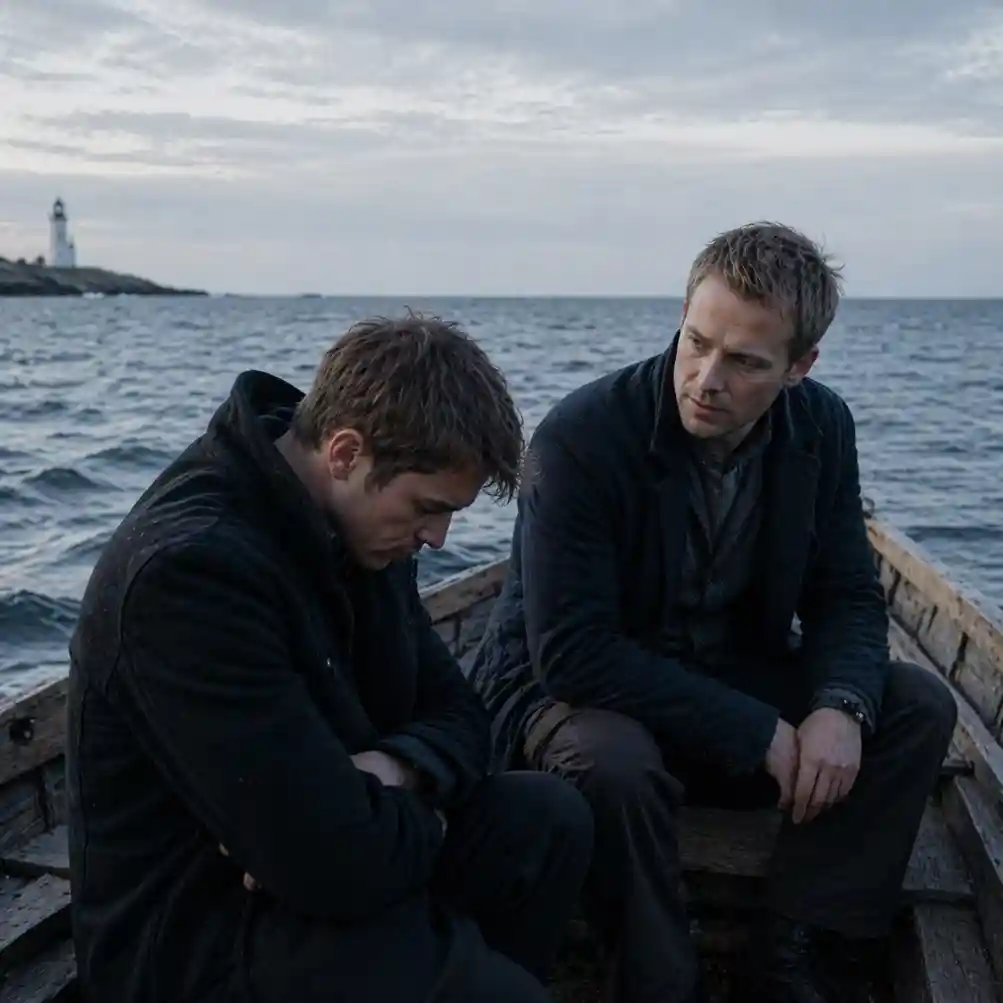
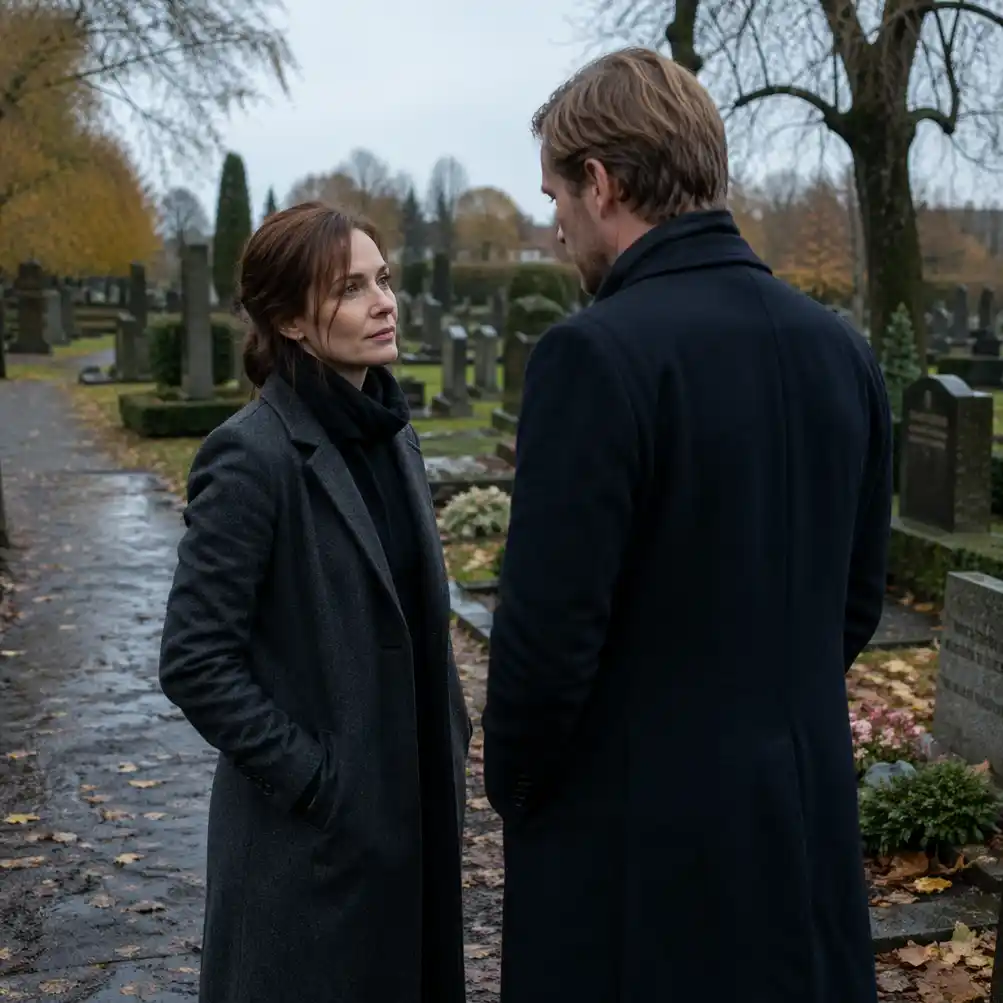
Morning and Evening: An Ordinary Life at the Threshold
A man waits outside a room while his wife gives birth. In Morning and Evening by Jon Fosse, that waiting contains a whole landscape of feeling: practical helplessness, remembered loss, hope, and fear that hope itself might be punished. The child will be called Johannes. When the narrative returns to him as an old fisherman, the familiar world begins to feel different, although he cannot immediately understand why.
This short novel places birth and death beside one another without offering a continuous biography between them. Its compression gives ordinary existence an unusual weight. A life need not contain spectacular achievements to deserve sustained attention; its relationships, work, and habitual surroundings already provide more meaning than a conventional summary can hold.
Morning and Evening is especially moving when it lets understanding arrive slowly. The reader may recognise a change before the person experiencing it can name it. That difference creates tenderness rather than superiority. We watch somebody approach a condition for which the habits that once guided him no longer seem sufficient.
The book’s quietness should not be confused with an absence of tension. Anxiety enters through a repeated thought, an unanswered question, or an alteration in the feel of something familiar. Its scale remains intimate, but the uncertainty concerns the limits of a whole human life.
There is consolation here, although treating the novel as a reassuring message about an afterlife would make it smaller. Morning and Evening gives loss room to remain difficult. Its distinctive achievement is to approach an ultimate threshold through people who have never needed grand language to describe themselves. Their ordinary words acquire force because the circumstances around them are changing.
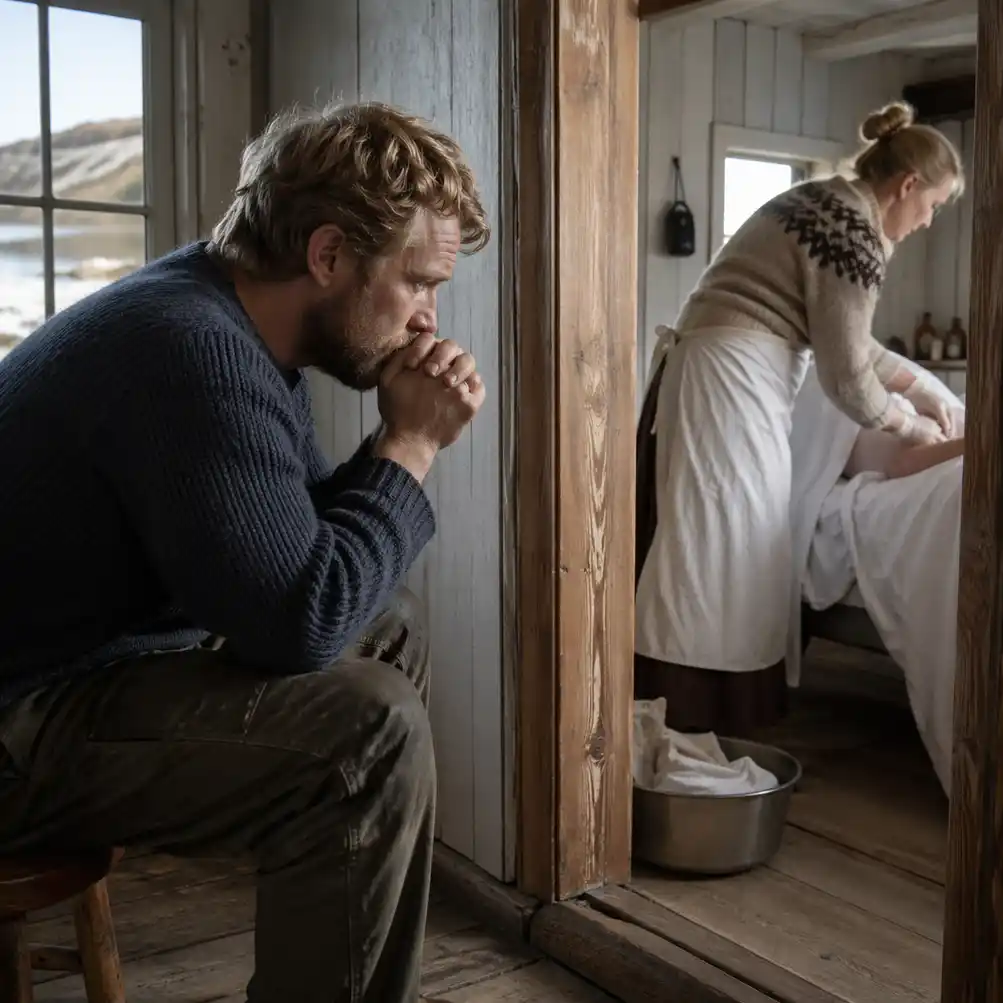
Waiting at the Beginning of Morning and Evening
The opening follows Olai, Johannes’s father, as the midwife Anna attends to Marta. He fetches hot water, receives instructions, and worries about what might happen behind the door. The scene gives the father access to the sounds of childbirth while denying him control over its progress. His thoughts move between what he can do and what he fears he cannot prevent.
Waiting is an active emotional condition. Olai remembers the life he and Marta have built, including their daughter Magda and their house on Holmen. Those recollections do not interrupt the immediate event so much as explain its stakes. A possible loss threatens an entire arrangement of affection, shelter, and shared effort.
His wish to name the boy after his father connects the new child to people who came before him. Yet a name cannot guarantee a future. Morning and Evening lets expectation coexist with the knowledge that neither parent can secure what is about to begin.
Fishing provides a useful connection with The Old Man and the Sea by Ernest Hemingway. Both books grant an ordinary working life substantial literary attention. Here, however, the emphasis falls on dependence and anticipation rather than on an ordeal through which a person demonstrates endurance.
A life begins inside other people’s vulnerability. Before Johannes can become the centre of his own perception, he exists in his father’s hopes and his mother’s danger. That sequence gives the later account of his dying an important frame. Morning and Evening begins by showing that an individual life is already a relationship, long before its owner can recognise or describe it.
When Familiar Surroundings Change Their Weight
The later Johannes inhabits a world shaped by work, domestic routine, and people whose presence has mattered to him. As his experience becomes unfamiliar, the novel does not immediately replace those surroundings with a spectacular new realm. It allows ordinary things to become strange. Recognition persists while the reliability of recognition starts to fail.
Familiarity can survive certainty. A person may know a place through repeated bodily experience even when something fundamental has changed. That separation gives the later movement of Morning and Evening its emotional pressure. Johannes’s habits continue to offer a route through the day, but they no longer explain everything he encounters.
The reader’s position matters here. We can begin to interpret the change while he remains within its immediate sensations. The resulting gap does not make him foolish. It reveals how understanding depends on expectations that experience can overturn without warning.
Time and absence also reshape domestic space in To the Lighthouse by Virginia Woolf. The comparison helps distinguish two ways of making ordinary surroundings carry loss. One expands across a household and an interval of years; this novel concentrates on a single person’s altered relation to what he knows.
The everyday supplies the language of departure. Boats, rooms, familiar movements, and remembered relationships matter because they have accumulated use. Morning and Evening does not require a heroic public record to establish that something irreplaceable is ending. Its attention makes the ordinary substantial enough to bear that recognition. This is also why its strangeness feels intimate. The disturbance enters a world already meaningful to Johannes. What changes is his place within it, not the importance it has held.

Consolation Without a Complete Explanation
Birth and death invite religious language, and the opening makes faith part of Olai’s thinking. He thanks God for what his family has received, then fears what might be taken away. Belief does not provide a secure barrier against anxiety. It gives him another way to ask a question that practical action cannot settle. Faith does not remove helplessness. The movement from gratitude to dread makes the father recognisable without turning him into a spokesman for a doctrine. His thoughts concern a beloved person in danger. Whatever metaphysical significance the reader finds should remain attached to that immediate human situation.
Morning and Evening later approaches death through an atmosphere in which reconciliation becomes imaginable. Yet atmosphere and proof are different things. The novel can give a departure tenderness without supplying an argument that every reader must accept as an account of what follows death.
The relation between mortality and value makes an interesting contrast with All Men Are Mortal by Simone de Beauvoir. Its imagined immortality tests what happens when an ending disappears. Here, the ending remains central, and meaning gathers around the limited life rather than around escape from its limits.
Consolation remains a literary possibility. It emerges through the manner in which perception, companionship, and uncertainty develop. The reader need not convert that possibility into certainty to feel its force. The unanswered question still matters.
A reading that calls Morning and Evening simply comforting would overlook the fear that makes its gentleness necessary. A reading that calls it only bleak would miss its attention to attachment. The novel holds these pressures together, making room for peace without pretending that loss has become easy to understand.
Writing Style: A Thought Keeps Returning
The Writing Style of Morning and Evening depends on repetition, flowing syntax, and the closeness between a character’s immediate thought and the narration that carries it. Ordinary words return because the mind has not finished with what they concern. The effect is more specific than a general impression of poetic minimalism.
Repetition measures pressure. Olai’s fear comes back in altered forms as he tries to think beyond it. A repeated reassurance can briefly steady him, then become the starting point for another worry. The prose gives that unstable movement a rhythm instead of summarising it as an emotion already understood.
Dialogue also enters the flow without the conventional visual enclosure of quotation marks. Anna’s instructions and Olai’s inward responses occupy a shared verbal space, although they perform different functions. The reader must listen for changes in voice rather than depend entirely on typographic boundaries.
Returning voices and phrases also shape The Waste Land by T. S. Eliot. The comparison concerns recurrence as a form of thought. This novel’s repeated words remain especially close to a working person’s immediate hopes and uncertainties.
Morning and Evening asks readers to adjust their pace. Skimming for the next incident can miss the changing force of something apparently said before. That demand will frustrate readers who associate narrative movement primarily with new information. The rhythm creates its own movement. Its strongest effect is to keep perception unfolding before it hardens into explanation. There are moments when the repeated phrasing may feel overinsistent, but the form remains closely connected to the book’s subject: a consciousness approaching something it cannot master by naming it once.

Three Short Passages from a Father’s Waiting
These passages from Damion Searls’s translation of Morning and Evening come from the publisher’s opening excerpt. Together they reveal practical care, inherited expectation, and religious fear within Olai’s waiting. Their value lies in that particular scene rather than in their suitability as general sayings about life. The waiting belongs to the father, not the child.
- “More hot water, Olai” Anna’s instruction establishes a practical task before the narrative enters larger questions. The father can carry water even though he cannot manage the birth. This small action gives care a material form and places his anxious thinking beside somebody else’s competence. It also establishes the movement between spoken instruction and inward response that shapes the passage’s rhythm.
- “Like my father” Olai explains the name he wants for the child. A name carries an imagined continuity. The phrase joins an anticipated future to a remembered family relationship, but the child has not yet arrived safely. The tenderness therefore contains uncertainty. Morning and Evening lets inheritance appear first as a wish, before it can become an established fact about another person’s life.
- “could God be so evil to him?” The narrator follows Olai’s thought as fear threatens his gratitude. The question should not be detached from his anxiety for Marta. It exposes the difficulty of reconciling belief with possible loss, rather than delivering a settled theological position. The father imagines a future he cannot bear, and the sentence lets that fear remain a question instead of converting it into an authoritative answer. Source: Fitzcarraldo’s excerpt, translated by Damion Searls.
A Norwegian Original and Its English Editions
- The 2000 original: Morgon og kveld first appeared with Samlaget in 2000. Its Norwegian title names the two ends of a day, giving the work a temporal frame before the narrative connects that frame with a human life. The original publication predates the international attention generated by the author’s later Nobel recognition. Store norske leksikon.
- Written in Nynorsk: The original uses Nynorsk, one of Norway’s two official written standards. This is a specific linguistic fact about the book, not a reason to treat its characters as representatives of every Norwegian community. The English version necessarily reaches readers through a translator’s choices of vocabulary, cadence, and register.
- The 2015 translation: Dalkey Archive Press published Damion Searls’s English translation in 2015. That date belongs to the translation’s publication history, rather than to the creation of the Norwegian novel. Keeping the two dates separate clarifies the work’s place within the writer’s earlier prose. Morning and Evening is consequently not a newly written work.
- A later British edition: Fitzcarraldo Editions published Morning and Evening in November 2024, retaining Searls as translator. Its edition and public excerpt provide a direct basis for examining the English opening. A new publisher and publication date do not automatically indicate a new translation.
- Inspired by Existentialist Philosophy: The novel explores themes of life, death, and existence, connecting it to the ideas of philosophers like Søren Kierkegaard and Martin Heidegger. His writing often reflects existentialist concerns about meaning and mortality.
What Morning and Evening Asks of Its Reader
The particular strength of Morning and Evening is its refusal to make an ordinary life seem insufficient. It does not enlarge Johannes by giving him extraordinary accomplishments. Instead, it changes the scale of attention, making routine, affection, uncertainty, and bodily existence worthy of the concentration often reserved for dramatic public events.
The book rewards attention to small changes. A repeated word can alter its meaning through context, and a familiar place can become difficult to interpret. Readers willing to remain with these movements will find more emotional development than the compressed outline of birth and death initially promises.
The intimacy has limits. Other people often enter through the consciousness currently organising the scene, so the book offers less independent access to their lives. Marta’s labour, for example, gives the opening its urgency while Olai’s waiting shapes its perspective. That arrangement is effective, but it should not be mistaken for an equally distributed account of everyone involved.
A different concentration on inward experience appears in The Book of Disquiet by Fernando Pessoa. Both works make perception itself substantial reading material. This novel gives that attention a more concentrated narrative boundary, with an individual life approached through its entrance and departure.
Morning and Evening will suit readers drawn to spare language, recurring thought, and uncertainty that remains emotionally precise. Its deliberate pace may offer less to those seeking a sequence of sharply differentiated incidents. That is a meaningful distinction in reading preference, not evidence that the book lacks a story. Its story concerns how a life becomes perceptible when the ordinary world can no longer be taken for granted.
More Reviews of Works by the Norwegian playwright