Tell No One by Harlan Coben – When grief receives an email
Tell No One begins with a wound that should already be closed. David Beck lost his wife, Elizabeth, eight years earlier. Her murder shattered his life, and the official story gave everyone around him a reason to move forward. The killer was identified. The case had an ending. David, however, never truly accepted emotional closure, because grief does not obey legal paperwork.
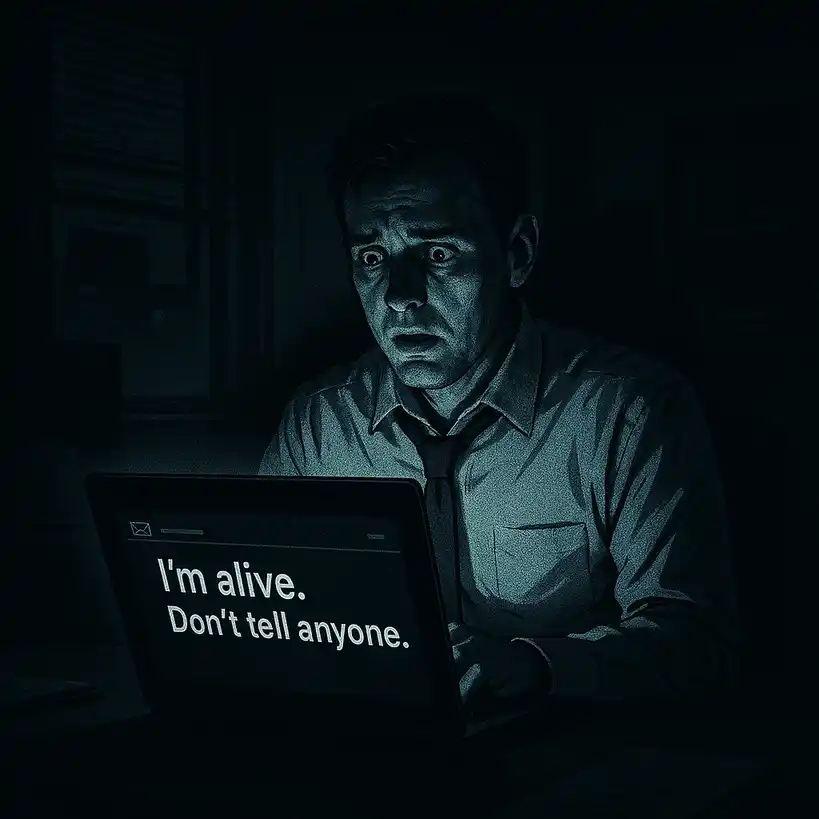
Then an anonymous email arrives. It contains a private signal that only David and Elizabeth should understand. Suddenly, the impossible becomes the engine of the novel. Maybe Elizabeth is alive and maybe someone is manipulating him. Maybe the past was never what everyone believed it to be.
That premise gives Tell No One its immediate force. Harlan Coben does not waste pages before tightening the trap. He starts with loss, then turns hope into danger. The hook is simple but powerful: what would someone risk if the dead seemed to reach back?
The result is not just a puzzle about who killed whom. It is a thriller about the cruelty of renewed hope. David does not chase a clue because he is curious. He chases it because the alternative is unbearable. That emotional pressure makes the story move fast without feeling empty.
Tell No One and the wounded husband
Tell No One works because David Beck is not a professional detective. He is a pediatrician, a man trained to protect children, not to outrun police, criminals, and buried conspiracies. That ordinary position matters. Coben places a decent man inside a thriller mechanism and then forces him to act before he fully understands the rules.
David’s grief gives the book its emotional center. He is not merely solving a mystery. He is testing the boundary between memory and reality. Elizabeth’s possible survival turns his mourning into suspense, and that makes every discovery unstable. If she lives, his life has been built on a lie. If she is dead, someone is using his deepest wound as bait.
David’s love becomes evidence and weakness. He notices details others might dismiss because Elizabeth remains present in his mind. Yet that same love makes him vulnerable. He wants the impossible to be true, and Coben uses that desire to keep the reader slightly off balance.
This emotional setup gives the novel more depth than a standard chase plot. It also connects naturally to 👉 The Lost Honor of Katharina Blum by Heinrich Böll, another story in which suspicion, pressure, and public narratives close around one person faster than truth can defend itself.
Elizabeth as memory and mystery
Elizabeth Beck is physically absent for much of Tell No One, but the novel depends on her presence. She is wife, victim, possible survivor, and mystery. Coben builds her through David’s memory, official accounts, hints from the past, and the shock of the anonymous message. That structure turns Elizabeth into both person and question.
The danger is obvious. A lesser thriller might reduce her to a plot device. Coben mostly avoids that by showing how Elizabeth shaped David’s life before the crime. Their relationship began early, and the annual return to the lake carries ritual weight. The setting matters because it transforms love into habit, and habit into vulnerability.
Still, the novel does not fully belong to Elizabeth’s inner life. It belongs to David’s search for her. That choice strengthens the suspense but limits the emotional symmetry. We understand what Elizabeth means to David more than we understand Elizabeth as a complete independent consciousness.
Her absence controls the story. Every clue circles back to what she knew, what she hid, what happened to her, and what David failed to see. In that sense, Tell No One uses the missing-wife premise effectively. Elizabeth is not just gone. She is the center around which guilt, danger, and memory keep moving.
The thriller built on private knowledge
The most effective device in Tell No One is private knowledge. The email matters because it includes something intimate. It is not just data. It is a shared code from a marriage. That detail changes the emotional temperature of the plot. A stranger could fake many things, but a private phrase seems to cross a line between deception and resurrection.
Coben understands how suspense grows from selective information. David knows too little. The police know part of the old case. Dangerous people know far more than they say. The reader moves between these gaps. Each answer opens another hidden layer, and the novel keeps asking whether truth is protection or threat.
This is where Tell No One shows its strongest commercial-thriller craft. The chapters are short, the reversals are clean, and the pressure rarely drops. Yet the best turns do not come from random shock. They come from the idea that people close to the case have edited the past for different reasons.
Secrets function like delayed violence. They may remain quiet for years, but once exposed, they injure everyone around them. That design gives the book a tight narrative charge and links it well to 👉 The ABC Murders by Agatha Christie, where private patterns and public investigation also compete for control of the truth.
The police chase around David Beck
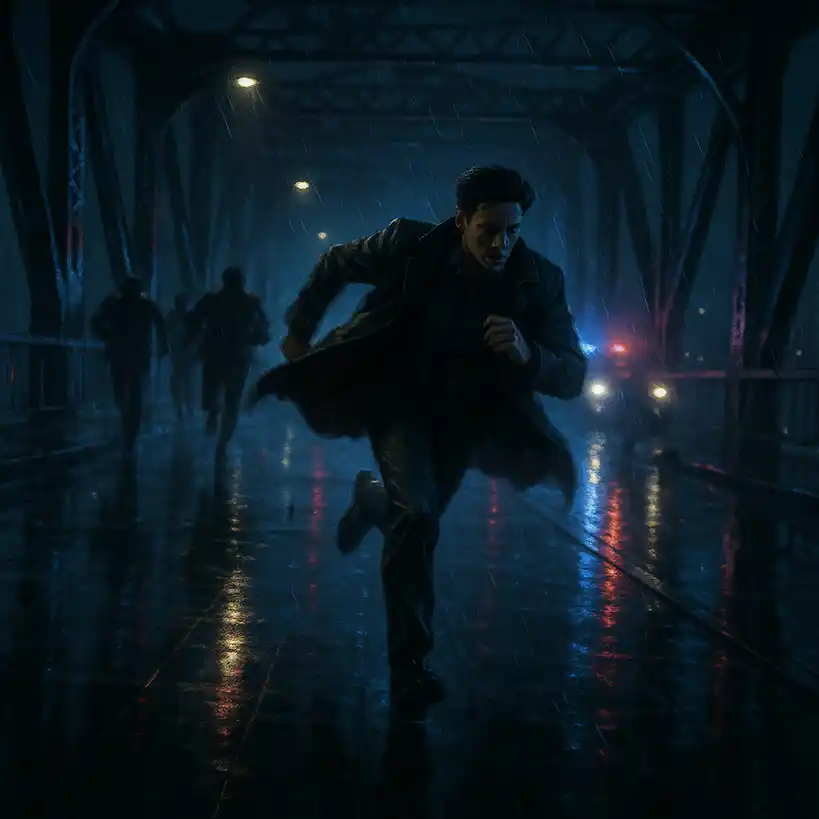
Once David becomes a suspect, Tell No One shifts from grief mystery to fugitive thriller. This section gives the book speed. David must interpret clues while avoiding institutions that should, in theory, protect him. The police do not appear foolish. They act on the evidence available to them. That makes the pursuit more convincing.
Coben’s advantage here is pace. He knows how to move David from one pressured choice to the next. The reader stays close to a man who does not have enough time to process what is happening. Every phone call, meeting, and discovery carries risk. David cannot simply explain himself because the available facts seem designed to incriminate him.
This pressure also changes the moral shape of the story. David begins as a grieving husband and doctor. Soon he must lie, run, hide, trust unlikely allies, and break rules. The novel asks how far an ordinary person can move outside the law when the law appears to be chasing the wrong truth.
The chase keeps grief active. David is not running from the past. He is running toward it, even when that past becomes more dangerous with every step. Coben makes that paradox readable and tense.
Coben’s clean machinery of suspense
The prose in Tell No One is not ornamental, and it does not try to be. Coben writes for velocity, clarity, and control. Scenes tend to arrive with a clear purpose. Dialogue pushes tension forward. Backstory appears when it can sharpen the present danger. This is functional writing, but in a thriller that can be a strength.
The novel’s craft lies in rhythm. Coben understands when to reveal, when to delay, and when to cut away. He also understands that a good thriller needs emotional stakes before it needs complication. Because David’s motive is clear, the reader accepts the increasingly tangled plot without losing the central thread.
That does not mean every twist carries equal weight. Some late turns feel more engineered than organic. Certain secondary figures exist mainly to move the conspiracy into place. Yet Tell No One rarely stalls, because the central question remains strong enough to pull the reader through those mechanics.
The book is built for momentum. Its best quality is not stylistic beauty, but narrative grip. In that sense, it shares a distant craft connection with 👉 The Hound of the Baskervilles by Arthur Conan Doyle, another suspense story that uses atmosphere, threat, and investigation to keep uncertainty alive.
Trust, betrayal, and the cost of knowing
Tell No One repeatedly turns trust into a risk. David has to decide whom to believe before he has full proof. Friends, family members, lawyers, police officers, criminals, and old acquaintances all become possible sources of help or danger. This makes the novel feel socially unstable. No relationship remains entirely safe.
The strongest betrayals in the book are not only personal. They are structural. Institutions have blind spots. Powerful people can redirect attention. Old cases can harden into false certainty. A buried truth can survive not because nobody saw it, but because too many people had reasons not to see it clearly.
That is why the title Tell No One works so well. It sounds like an instruction, but also like a moral diagnosis. Silence protects, silence destroys. Silence gives the vulnerable time, but it also gives the guilty room to operate. Coben keeps returning to this double edge.
Knowledge always demands payment. Once David starts uncovering the truth, he cannot return to the simpler grief he knew before. The search may lead him closer to Elizabeth, but it also strips away comforting versions of the past. This moral pressure gives the thriller its emotional aftertaste.
The city, the lake, and the hidden past
The lake in Tell No One is more than a crime scene. It is a memory site. For David and Elizabeth, it once held intimacy and ritual. After the attack, it becomes the place where love was supposedly severed forever. When new bodies and new evidence emerge, the same landscape becomes unstable again.
Coben uses this contrast effectively. The story moves through urban danger, medical work, police pressure, and hidden networks, but the lake remains the emotional origin point. It reminds the reader that the conspiracy began not in an abstract criminal world, but in a place where two people believed they were safe.
This movement between private memory and public danger gives Tell No One a strong thriller geography. David’s ordinary life is invaded by forces that were always closer than he knew. The past is not distant. It has been waiting under familiar ground.
The buried-crime structure creates a useful connection to 👉 In Cold Blood by Truman Capote. Capote’s book is nonfiction and far more documentary in method, yet both works understand that violence changes the meaning of place. After a crime, a familiar setting can never fully return to innocence.
Why Tell No One still holds attention
Tell No One remains effective because its central premise is emotionally direct. The novel does not ask the reader to care first about a conspiracy. It asks the reader to care about a husband who receives a sign from the wife he buried in his mind. That is a strong engine, and Coben knows how to keep it running.
The book also benefits from restraint in the right places. It does not overexplain David’s grief in sentimental language. Instead, it places grief under pressure and lets action reveal attachment. David’s choices show the depth of his wound more clearly than long reflections would.
At the same time, the novel belongs fully to popular suspense. Readers looking for psychological realism above all else may find some twists convenient. Coben prefers propulsion over ambiguity. He wants the reader to turn the page, and nearly every scene serves that goal.
The emotional hook survives the mechanics. That is why the book works. Even when the plot becomes highly constructed, David’s need for the truth remains understandable.
A useful comparison is 👉 Crime and Punishment by Fyodor Dostoevsky, not because the books are similar in style, but because both understand that hidden truth creates unbearable pressure inside a life.

Taut Quotes from Tell No One by Harlan Coben
- “The past didn’t stay buried; it learned to send emails.” In Tell No One, even an inbox becomes a crime scene, because every message might carry either rescue or ruin.
- “Grief had become his routine checkup.” This line turns sorrow into a job; consequently, Tell No One shows Beck living as both doctor and long-term patient of that one night.
- “Trust is a door you cannot close once the wrong person walks through.” The book ties intimacy to risk, so Tell No One measures every confession against what it can destroy.
- “Facts were easy; believing them was the hard part.” Here the thriller explains itself, because Tell No One fills the file quickly while hearts lag behind the evidence.
- “Hope hurt more than memory.” Although loss already cut deep, Tell No One makes the possibility of a second chance feel sharper than the original wound.
- “The city remembered what the file tried to forget.” Streets, cameras, and witnesses keep the case alive; therefore, Tell No One treats geography as a stubborn kind of conscience.
- “He ran not just from the killers, but from the man he had been that night.” The chase in Tell No One always doubles as a pursuit away from guilt.
- “Some secrets kill fast; some kill by keeping you alive.” Finally, the novel captures its ethic, since Tell No One shows how silence can protect a body while it erodes a life.
Context-Rich Trivia from Tell No One by Harlan Coben
- Cold case that never cooled: The novel treats the lake murder as unfinished business; consequently, Tell No One shows how grief, guilt, and cash keep a “closed” file very alive.
- Doctor as detective: Because David Beck reads bodies for a living, Tell No One turns medical instincts into investigative tools, so every bruise, scan, and scar feels like another hidden clue.
- Tech as ghost channel: Anonymous emails, digital records, and camera logs all behave like hauntings; moreover, Tell No One uses screens to prove that the past can still dial in.
- Suburban noir: Comfortable neighborhoods, clinics, and parks carry old bloodstains; therefore, Tell No One proves noir can thrive under good lighting and fresh paint instead of alleys and rain.
- Shadows in plain daylight: Social surfaces hide damage; consequently, 👉 Those Without Shadows by Francoise Sagan offers a quieter echo of the secrets and emotional debts that power Tell No One.
- Real-world cold case work: Modern cold case units recheck files with new forensics and databases; for a clear overview, see 🌐 Applying Modern Investigation Methods to Solve Cold Cases.
- Thriller expectations: Readers demand tension, reversals, and high stakes; for a concise breakdown of thriller conventions that frame books like Tell No One, see 🌐 Thriller (genre).
- Love as motive, not alibi: Finally, Tell No One treats love as the reason crimes happen and the reason they get solved, so affection never excuses harm and never fully lets go.
What the final revelations change
The ending of Tell No One matters because it forces the reader to reconsider earlier assumptions. Coben does not simply reveal a culprit and close the case. He rearranges motives, loyalties, and the meaning of choices made years earlier. The truth is less clean than David wants, but more emotionally charged than a simple solution would be.
This is where the novel shows both strength and limitation. The strength lies in the way the revelations connect love, fear, protection, and violence. People hid the truth for reasons that cannot be reduced to one motive. The limitation is that the machinery becomes very visible. The reader can feel the plot locking every secret into place.
Still, the ending satisfies the thriller contract. It answers the central questions, gives emotional weight to the past, and leaves David changed by what he has learned. Closure arrives, but not as a return to innocence. Too much has been exposed for that.
The truth does not restore the old life. It only reveals what that life was built on. That is a fitting final movement for Tell No One, because the book has always been about the danger of confusing survival with peace.
A thriller that understands hope as danger – Tell No One
Tell No One succeeds because it treats hope as one of the most dangerous forces in a thriller. David Beck does not risk everything because he is reckless. He risks everything because the possibility of Elizabeth being alive reopens the deepest part of him. That makes the suspense personal before it becomes procedural.
Harlan Coben’s novel is not flawless. Some secondary characters feel more functional than complex. Some twists depend on a high tolerance for thriller architecture. Yet the book’s grip is undeniable. It combines emotional clarity, fast plotting, and a central mystery that is easy to understand but hard to abandon.
The best thing about Tell No One is its refusal to let the past stay buried. Every secret has a cost, every silence creates another danger. Every attempt to protect someone also risks destroying someone else. That structure gives the story more bite than a simple missing-person puzzle.
For readers who want literary subtlety, the novel may feel too engineered. For readers who want suspense with a strong emotional core, it remains highly effective. Tell No One turns one impossible message into a full test of love, memory, and trust. Its final power lies in a cruel question: if the dead seemed to call, who would have the strength not to answer?