The Torch in My Ear by Elias Canetti
The Torch in My Ear continues Elias Canetti’s autobiographical project at the point where childhood has already become memory and the young mind begins to test itself against cities, teachers, books and voices. The book covers the decisive decade from 1921 to 1931, and it reads less like a simple memoir than like the making of a consciousness. The author does not merely remember events. He remembers the pressure they placed on his hearing, pride, ambition and imagination.
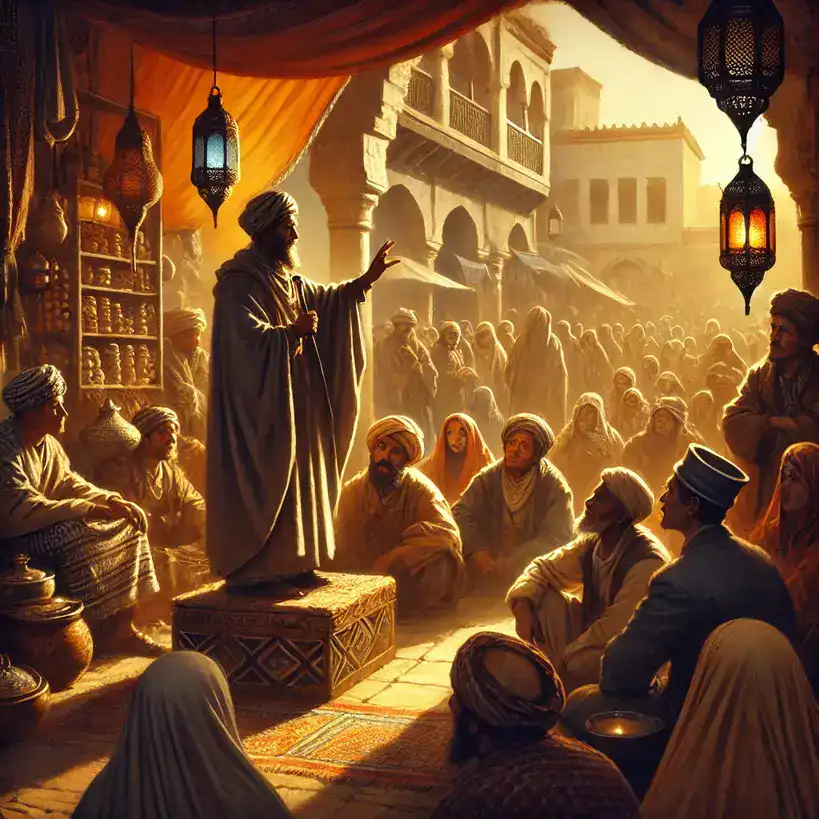
Vienna gives the volume its most intense field of energy. The city is not described as a postcard of culture. It appears as a theatre of lectures, cafés, streets, arguments, writers, political tensions and intellectual vanity. He enters this world with hunger. He wants to learn, but he also wants to measure himself against everything he hears.
That hunger makes the memoir vivid. The young writer is observant, arrogant, wounded, receptive and often severe. He does not present formation as gentle education. He shows it as collision. A writer is made by impact, not by smooth growth.
The title points to that impact. The torch in the ear suggests illumination through sound. The philosopher becomes himself by listening intensely, especially to voices that burn. The Torch in My Ear is therefore a memoir of apprenticeship, but not a peaceful one. It shows a mind becoming sharper because it cannot stop hearing the world too strongly.
Karl Kraus as a burning voice
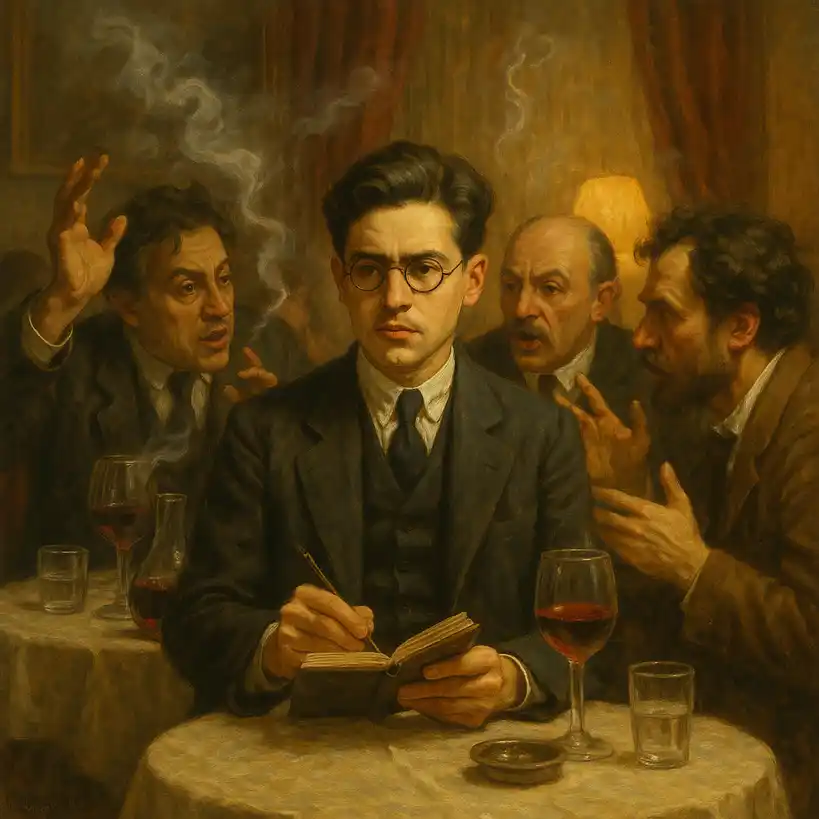
Karl Kraus is the central flame of The Torch in My Ear. He encounters him not simply as a writer, but as a voice. Kraus’s public readings, moral fury and linguistic precision become a force that changes how the young man hears language. The effect is almost physical. The novelist learns that speech can expose corruption, vanity and falseness more powerfully than argument alone.
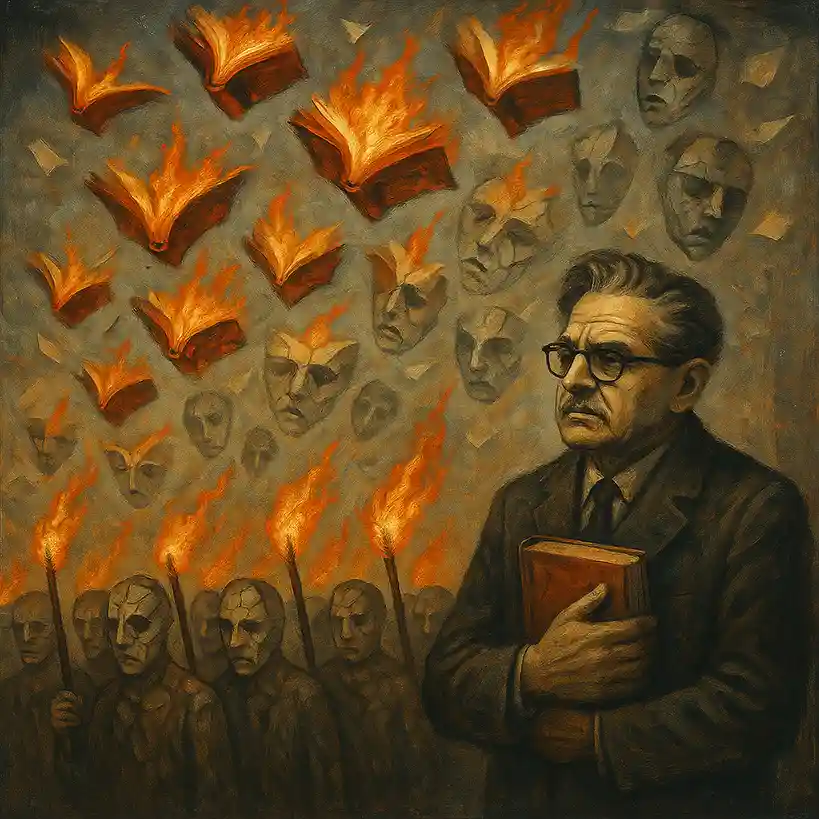
This fascination gives the memoir its title and much of its rhythm. Kraus’s journal Die Fackel, meaning The Torch, becomes more than a publication. It becomes an instrument of judgment. For him, Kraus shows that language is not decorative. It is moral territory. A false phrase is not just a weak phrase. It can be a sign of social decay.
Yet the book does not reduce Kraus to simple hero worship. His devotion is intense, but the reader also senses the danger of discipleship. To hear one voice so strongly can liberate a young writer, but it can also dominate him. Admiration becomes a furnace for independence.
This conflict connects the memoir to 👉 Demian by Hermann Hesse. Hesse also traces youthful formation through powerful figures, inner pressure and the painful separation from inherited paths. He is less mystical and more public, but both works understand that influence can feel like revelation before it becomes a test.
In The Torch in My Ear, Kraus teaches him to hear the world with moral suspicion. The lesson is thrilling, but it is not final. The young writer must eventually transform that burning voice into his own way of seeing.
The mother who will not release him
Canetti’s mother remains one of the strongest presences in The Torch in My Ear. She is not merely a family figure. She is intellectual force, emotional authority and obstacle. Their relationship is charged with admiration, conflict, dependency and resistance. She educates him fiercely, shapes his ambitions and refuses to let his mind grow lazy. Yet her intensity also threatens to hold him inside her expectations.
This makes the memoir emotionally complex. The author does not treat his mother as a sentimental origin. She is brilliant, demanding and often overpowering. Her influence helps create the writer, but it also becomes something he must survive. The young man’s development requires gratitude and separation at the same time.
The tension is painful because it is never purely negative. He owes her much. She gave him language, discipline, literary hunger and a sense that reading matters absolutely. Still, a life formed by another will can become a cage. Love appears as pressure before it becomes memory.
The family drama in this volume is quieter than public scenes with Kraus, but it is just as important. His later obsession with power, voices and crowds has intimate roots. Authority is not only political. It can speak across a dining table, in correction, expectation and maternal judgment.
The memoir becomes especially strong when private dependence meets public ambition. The writer wants to become a writer among writers, but he is still entangled in an older emotional order. His independence is not won in one gesture. It grows through friction, defiance, guilt and the slow discovery that intellectual freedom also requires emotional distance.
Crowds before theory
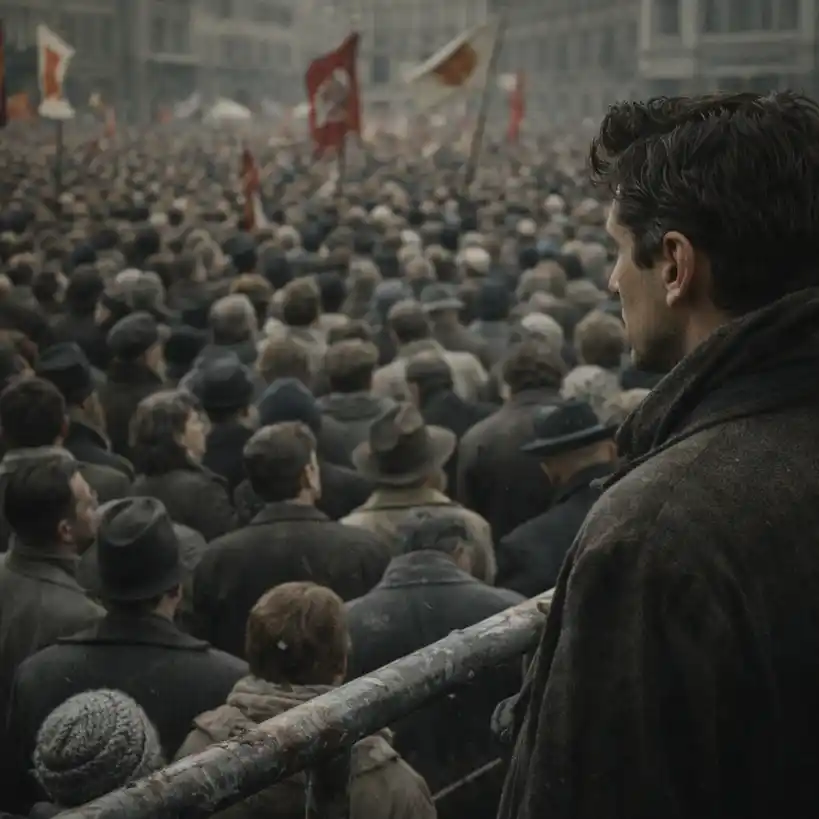
One of the most fascinating aspects of The Torch in My Ear is how it prepares his later thinking about crowds. The book does not present a finished theory. Instead, it shows the experiences, observations and shocks from which such thinking could grow. The author watches gatherings, lectures, cities, movements and collective emotion with unusual intensity. He is drawn to the way people change when they become many.
This gives the memoir an energy beyond private autobiography. He is not only asking who he is. He is asking what happens to human beings when they are absorbed into public force. The interwar world around him is unstable, noisy and politically charged. Crowds are not abstractions. They are presences that can excite, threaten and transform.
His attention to voices matters here too. A crowd is not silent mass. It has sound, rhythm, contagion and hunger. The young Canetti learns to hear how people gather around speakers, slogans, anger or expectation. The crowd becomes a living question.
This theme links the memoir to 👉 Mario and the Magician by Thomas Mann. Mann’s novella also studies voice, performance, domination and the uneasy psychology of collective submission. The novelist writes memoir, not allegorical fiction, but both works understand that public fascination can become dangerous.
In The Torch in My Ear, the seeds of later intellectual work are embedded in lived experience. That is what makes the book so valuable. It shows theory before theory, thought before system, and a writer noticing the emotional mechanics of history before he has named them.
Learning through writers and rivals
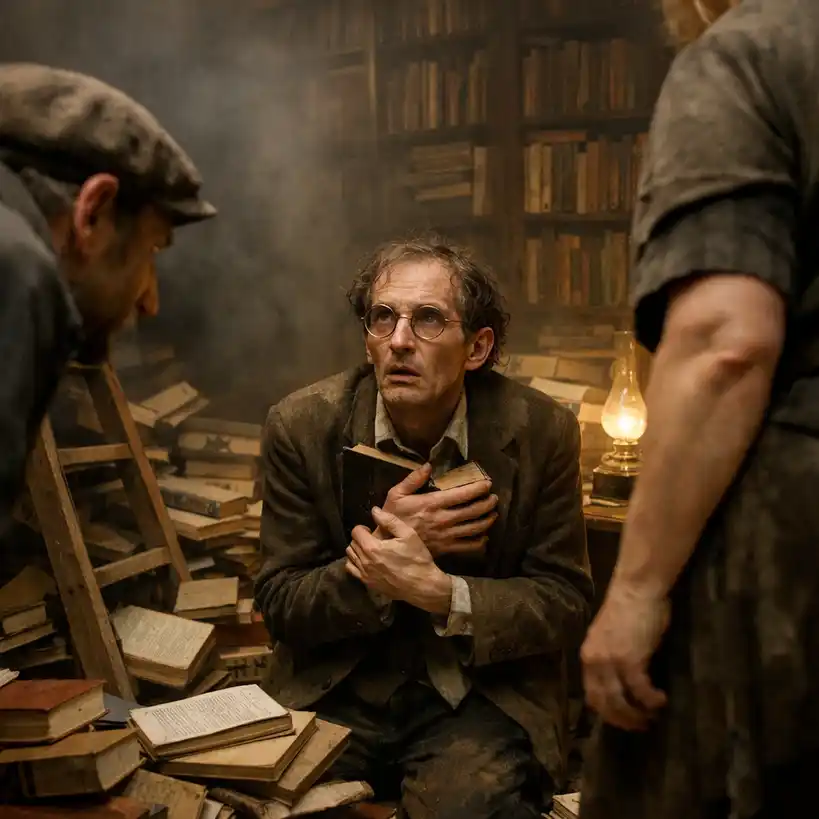
The Torch in My Ear is full of literary encounters, but Canetti rarely treats reading as calm enrichment. Books and writers enter the memoir as provocations. They awaken envy, reverence, resistance and self-testing. The young man wants to absorb tradition, but he also wants to measure himself against it. Literature becomes less a library than an arena.
This is one reason the volume has such nervous energy. His formation is not humble in a conventional sense. He wants greatness, or at least a life intense enough to justify itself. That ambition can be irritating, but it is also honest. The memoir lets us see how a young intellectual turns admiration into pressure. Every powerful writer becomes both nourishment and rival.
This quality connects the book to 👉 Wilhelm Meister’s Apprenticeship by Johann Wolfgang von Goethe. Goethe’s novel follows formation through theatre, society, error and self-discovery. His memoir is sharper and more autobiographical, but it also asks how a young person becomes capable of a vocation.
The answer is never simple. The author learns through reading, but also through vanity, embarrassment, misplaced certainty and correction. Influence becomes useful only after resistance. He must first be overwhelmed before he can judge.
The best passages show the mind in motion. A writer is not born by collecting opinions. He is formed by encounters that disturb his balance. The Torch in My Ear captures that process with unusual honesty. It shows literary education as appetite, conflict and danger, not as a polished path toward culture.
Cities of speech and pressure
The cities in The Torch in My Ear are not neutral settings. Vienna, Frankfurt and Berlin appear as climates of speech, ambition and social force. The writer remembers them through voices, rooms, lectures, streets and the intellectual weather they create. Each place changes the young man’s sense of what is possible. Each gives him a different pressure to resist or absorb.
Vienna dominates because it concentrates cultural authority and theatrical intensity. It is a city where a phrase can feel like a verdict and a public reading can become an event. Berlin brings another tempo, sharper and more restless. Frankfurt has its own place in the passage toward adulthood. He turns these cities into stages of perception.
This urban memory can be compared with 👉 The Book of Disquiet by Fernando Pessoa. Pessoa’s Lisbon is more solitary and inward, while Canetti’s cities are louder and more confrontational. Still, both works understand the city as a mental condition, not merely a location.
Canetti’s gift is to make intellectual life sound crowded. He remembers not only ideas, but the acoustics of ideas: who said them, how they sounded, what authority they carried and how they altered the listener. A city becomes a chamber of voices.
This is why the memoir rarely feels static. Even when it reflects, it moves through pressure. Streets lead to rooms. Rooms lead to performances. Performances lead to inner revolt. The young Canetti is always listening, and the cities are always speaking back.

Quote List for The Torch in My Ear
- “the most critical day of my life” This phrase frames the Vienna events of July 15, 1927 as a biographical rupture. In The Torch in My Ear, the crowd does not remain background history. Instead, it becomes an experience that changes how the writer understands bodies, fear, movement, and collective force.
- “after my father’s death” The comparison makes the political moment intensely personal. Because the phrase places public violence beside private grief, it shows how the memoir joins history and inner life without separating them into tidy categories.
- “abstract philosophy” This compact phrase matters because the memoir turns away from detached theory. The writer wants lived experience, voices, streets, gestures, and danger to feed thought. Therefore The Torch in My Ear becomes intellectual autobiography rather than a simple record of education.
- “the red journal” The object refers to Kraus’s Die Fackel, which first fascinates and frustrates the young reader. He likes the title before he understands the sentences, and that gap gives the memoir one of its best images of influence arriving through difficulty.
- “a violent feeling of expansion” This fragment gives crowd experience a physical charge. The self does not merely observe a mass from outside. Instead, it feels enlarged, unsettled, and endangered, which explains why the theme continued to haunt the writer for decades.
Context-Rich Trivia List for The Torch in My Ear
- Second memoir volume: The Torch in My Ear is the second part of Elias Canetti’s autobiographical trilogy. 🌐 Macmillan describes it as the account of his young manhood, his arrival in Vienna in the early 1920s, his schooling, and the beginning of his life as a writer.
- German title and dates: The original German title is Die Fackel im Ohr. Lebensgeschichte 1921-1931. Nobel Prize records list the German publication in 1980 and the English translation in 1982, directly before the writer received the 1981 Nobel Prize in Literature.
- Vienna as training ground: The memoir matters because Vienna becomes more than a city. It becomes a school of voices, newspapers, lectures, desire, argument, and ambition, which gives the book its restless intellectual rhythm.
- Kraus behind the title: Karl Kraus and his journal Die Fackel shape the title’s meaning. Bookforum notes that the young reader first found the red journal baffling, although its force later entered his imagination.
- Crowd shock in 1927: The July 15, 1927 Vienna crowd experience became decisive for the writer’s later thinking about mass behavior. 🌐 Commonweal links that day to the long intellectual path toward Crowds and Power. This context pairs strongly with 👉 Danton’s Death by Georg Buechner, where political crowds also turn history into bodily pressure.
- Berlin enters the memoir: The book also opens toward Berlin in the 1920s, with figures such as Brecht, Isaac Babel, and George Grosz in its orbit. Therefore 👉 The Threepenny Opera by Bertolt Brecht fits the atmosphere of sharp urban performance and social critique.
- Formation through fracture: The Torch in My Ear follows a young intellectual who absorbs cities, mentors, conflicts, and obsessions. For that reason, 👉 Steppenwolf by Hermann Hesse offers a useful neighboring context for inner division and modern self-fashioning.
Ambition without gentleness
Canetti’s self-portrait in The Torch in My Ear is not always pleasant. That is part of its strength. He does not write himself as modest witness or charming young artist. He shows ambition, severity, hunger for recognition and a sometimes harsh judgment of others. The memoir can feel hard-edged because the young man at its center is hard-edged.
This honesty gives the book its bite. Many autobiographies soften youth into nostalgia. He does the opposite. He preserves the excesses of formation: arrogance, worship, impatience, contempt, dependency and the belief that literature is a matter of life and death. The reader may not always like him, but the intensity feels true.
That intensity is essential to the writer he becomes. A mild temperament might not have produced his later work on crowds, power and voices. His ambition has a dangerous side, yet it also gives him stamina. The young writer is forged by extremity.
This makes the memoir especially valuable for readers interested in artistic formation. It refuses the myth of smooth maturity. The philosopher grows through imbalance. He learns by being too certain, then by discovering that certainty has limits. He attaches himself to powerful figures, then must move beyond them.
The book’s emotional austerity can be demanding. But it also protects the memoir from prettiness. The Torch in My Ear is not a story about becoming wise early. It is about becoming intense enough to begin, then slowly learning what that intensity costs.
Why this memoir still burns
The Torch in My Ear still matters because it captures the making of a writer through sound, pressure and historical unease. His decade of formation is not only personal. It belongs to a Europe between wars, full of brilliance, instability and approaching catastrophe. The reader senses that every lecture, quarrel and act of admiration takes place under a darkening sky.
The memoir also remains powerful because it understands influence so well. A young mind needs voices, but it must not be swallowed by them. It needs teachers, but must escape imitation. It needs ambition, but ambition can deform perception. The writer records these tensions without making them neat.
For modern readers, the book has another urgency. It reminds us that public language matters. Kraus’s influence, the sound of crowds and the moral force of speech all point toward a central insight: language does not merely describe a society. It helps reveal, infect or resist it. To listen carefully is already a form of judgment.
This is why The Torch in My Ear is more than a literary memoir. It is a study of how a consciousness becomes alert to power. The young Canetti learns that voices can command, seduce, expose and wound. He also learns that the writer must develop an ear strong enough to survive them.
The book burns because it keeps formation unfinished. He ends the volume not as a completed monument, but as a mind sharpened by conflict. That unfinished force gives the memoir its lasting heat.