Searching for love and meaning in The Zahir by Paulo Coelho
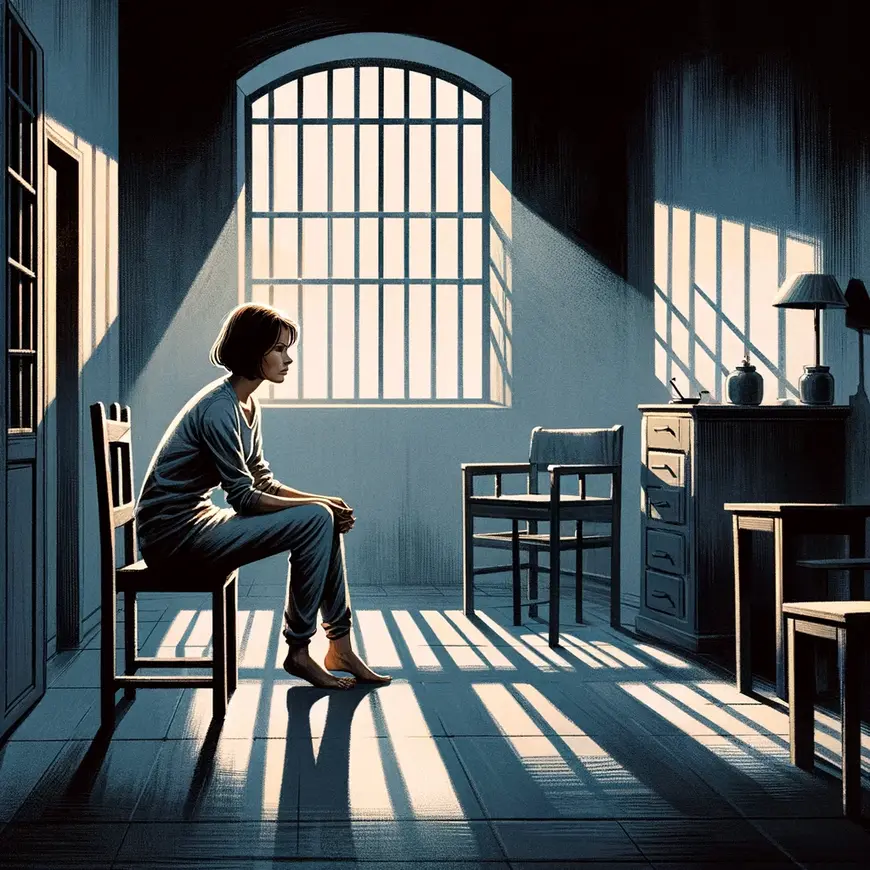
The Zahir opens with a jolt, the narrator’s wife has vanished without warning. Her absence is not just a physical loss but the ignition of an all-consuming obsession. From the first page, love and longing are intertwined with a gnawing need for answers. Paulo Coelho doesn’t waste time on surface emotions; he plunges into the raw space where passion shades into compulsion.
What I find compelling here is how quickly the novel shifts from mystery to inner examination. The narrator is a public figure, used to control, yet now adrift in uncertainty. This loss becomes a mirror, reflecting flaws and unasked questions. Every thought turns inward, searching for the roots of the rupture.
His style makes the journey both intimate and universal. The setting moves between Parisian streets and quieter, reflective spaces, each rendered with just enough sensory detail to anchor the philosophical weight. The absence of his wife is not only the plot’s engine but also a metaphor for the emptiness we try to fill with success, routine, or attachment.
The pacing in this opening is deliberate. The Brazilian Author wants us to feel the stillness between actions, to live in the moments when nothing happens except thinking. It’s in these pauses that the obsession deepens, and the real journey begins.
Love, freedom, and the self in The Zahir
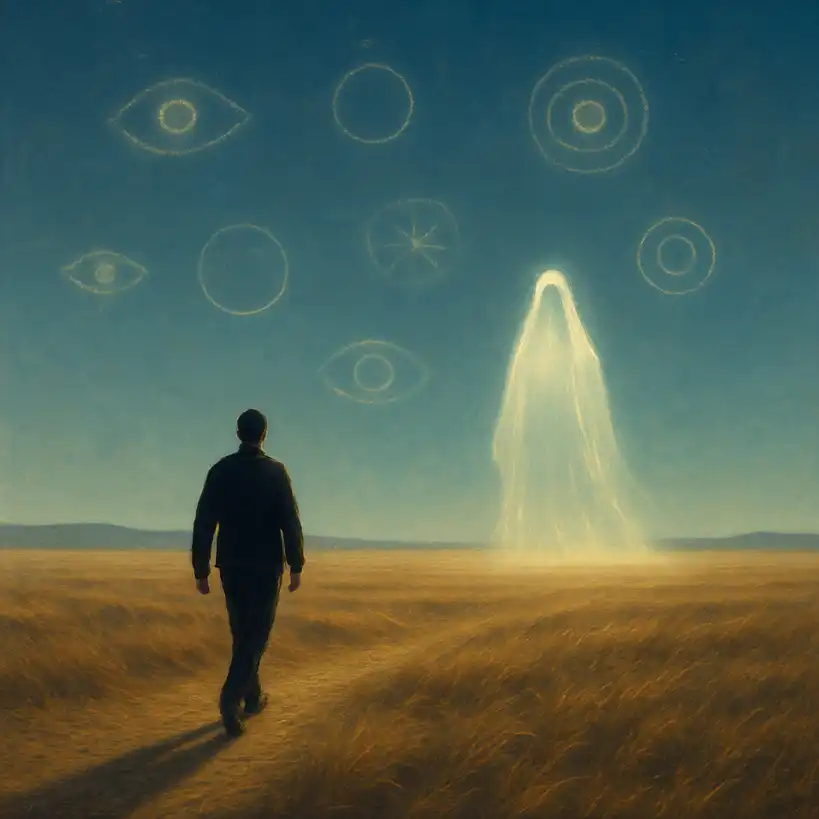
The early chapters show that the narrator’s search is not simply about finding his wife; it is about confronting his own confinement. Love here is both a tether and a key, capable of binding or freeing depending on how it is held. The author uses encounters with friends, strangers, and fleeting acquaintances to strip away the narrator’s assumptions.
In a conversation with a spiritual guide, echoes of 👉 Siddhartha by Hermann Hesse emerge. The sense that wisdom cannot be given, only experienced. The narrator begins to see that his longing for reunion is full with his fear of solitude. The quest becomes as much about understanding himself as it is about recovering a relationship.
This chapter’s strength lies in its balance of introspection and movement. Scenes in bustling cafés contrast with solitary walks along the Seine, creating a rhythm between outer distraction and inner stillness. Freedom is presented not as escape, but as acceptance. The courage to be present without clinging to what is gone.
By its close, the reader can feel the shift: this is no longer a man chasing a person; it’s a man chasing clarity. And with that shift, The Zahir starts to open into something larger, a meditation on the spaces between people, and the truths that live there.
Encounters that challenge certainty
As the narrator moves further along his search, each meeting feels like a small test. A conversation with an old friend forces him to confront how success has reshaped his values, often in ways he did not notice at the time. A fleeting exchange with a stranger on a train plants an idea that will echo through later chapters, that sometimes the people we pursue are not the ones we truly seek.
Coelho keeps these moments grounded in realism, resisting the urge to turn them into grand epiphanies. Instead, he lets them unfold as part of daily life, showing how change often comes in small, persistent increments. The narrator’s reactions swing between openness and defensiveness, revealing that his journey is far from linear.
This evolving awareness recalls the existential questioning in 👉 Nausea by Jean-Paul Sartre, where ordinary experiences force a deeper reckoning with identity. Here, the narrator’s “nausea” is emotional rather than philosophical, a discomfort that unsettles him into reflection.
By the end of this section, the path ahead seems less like a trail toward a reunion and more like a map without clear borders. Every new encounter strips away another layer of certainty, and what remains is both unsettling and liberating.
The mirror of other lives in The Zahir
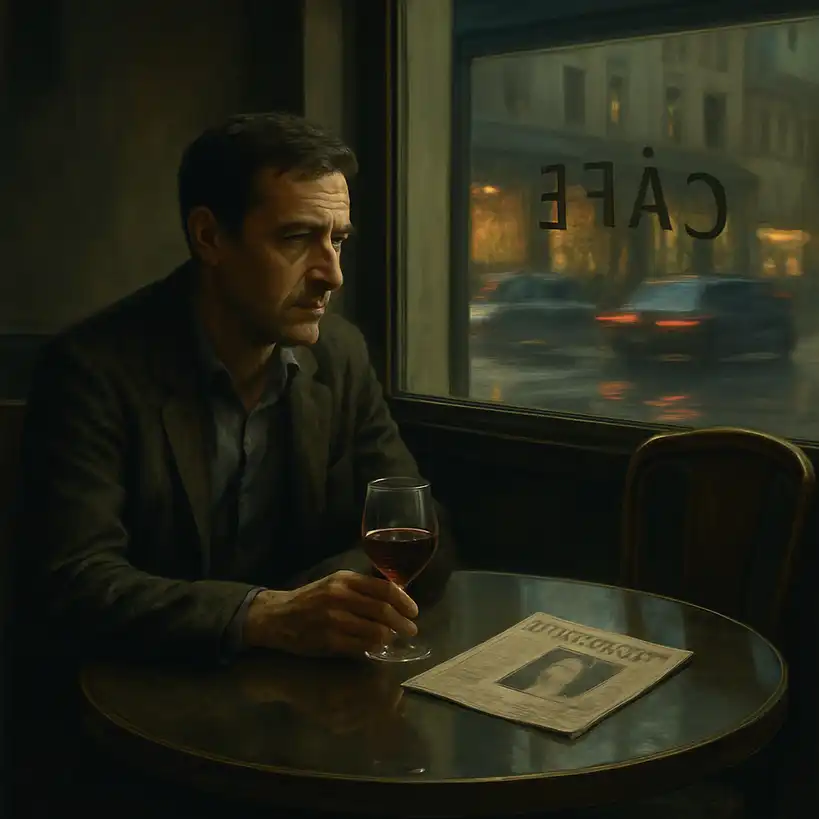
In a quiet, pivotal sequence, the narrator spends time with a couple whose relationship holds a mirror to his own. Their honesty about conflict, trust, and independence unsettles him, because it reveals how much of his marriage was shaped by habit rather than conscious choice.
Through their example, Coelho introduces the idea that love can survive absence if it is rooted in mutual freedom. The couple’s dynamic suggests that possession is the enemy of intimacy, a truth the narrator has long resisted. This insight is not delivered as a single revelation, but as a seed that will grow as the journey continues.
The narrator’s reflections here carry the same clarity I find in 👉 The Stranger by Albert Camus, where detachment becomes a lens for understanding what matters. In The Zahir, this detachment is emotional rather than moral, allowing the narrator to see the patterns that once trapped him.
This chapter closes with a shift in tone. The search begins to feel less urgent in the physical sense, but more pressing in the spiritual one. The narrator starts to understand that the reunion he imagined may never happen, and that the point of the journey may be to change himself enough that it no longer needs to.
Crossroads of desire and detachment
As the narrator continues his search, the question shifts from Will I find her? to What will I do if I do? That subtle change alters the tone of his travels. He moves through foreign cities, meeting people who speak in ways that unsettle his certainty. One evening in a crowded bar, he hears a musician talk about art as a form of letting go, how a song, once performed, belongs to the listener, not the artist. The parallel to love is obvious, yet it strikes the narrator with surprising force.
This period of the journey is marked by moments when desire collides with detachment. The longing to reclaim the past pulls at him, but each new encounter shows that holding on too tightly can crush what one hopes to preserve. The writer captures this tension in small gestures, a hesitation before answering a question, a pause before stepping into a familiar street.
The pacing is careful, and the imagery spare. He trusts the reader to feel the weight of these moments without overexplaining. Like the narrator, we are left to consider whether closure means regaining what was lost or finding peace without it. By now, the search feels like a ritual, each step part of a slow unbinding of the man he once was.
Learning from the language of love
A chance meeting with a woman whose history is as tangled as his own becomes a turning point. She speaks frankly about the cost of love and the necessity of distance, sharing her own story of separation and return. Her candor makes the narrator uneasy, because it mirrors truths he has avoided.
This interaction recalls the layered intimacy of 👉 The Lover by Marguerite Duras, where passion is inseparable from absence. The narrator listens more than he speaks, sensing that this woman is offering not answers, but a vocabulary for understanding what he has been chasing.
Their conversations stretch over several days, moving from crowded cafés to quiet riverbanks. Each talk loosens another knot in the narrator’s thinking. He begins to see love not as possession, but as a shared journey where each person walks in their own rhythm. Freedom, he realizes, does not weaken love; it defines it.
By the end of this chapter, the narrator is no longer sure whether finding his wife will be the conclusion or simply another stage. The search has become less about reunion and more about reshaping himself into someone who can love without holding on too tightly.

Memorable Quotes from The Zahir by Paulo Coelho
- “The Zahir is someone or something that once we come into contact with, gradually occupies our every thought.” This encapsulates the narrator’s obsession, showing how a single absence can become an all-consuming presence in the mind.
- “Freedom is not the absence of commitments, but the ability to choose—and commit myself to—what is best for me.” The narrator learns that love and freedom can coexist, provided the choice comes from awareness rather than fear.
- “We can never judge the lives of others, because each person knows only their own pain and renunciation.” This line underlines the humility the narrator gains, recognizing that his wife’s journey is her own to define.
- “Love is not about possession. Love is about appreciation.” The novel steadily moves toward this realization, dismantling the idea that closeness requires control.
- “The road to wisdom is to live without fear of making mistakes.” Each encounter in the narrator’s journey reinforces that missteps are not failures but necessary steps toward clarity.
- “Sometimes we have to lose ourselves to find out who we are.” The narrator’s physical search mirrors his inner disorientation, making the loss itself part of the transformation.
- “You are what you believe yourself to be.” This reflection invites readers to see identity as a conscious creation, rather than something fixed or imposed.
- “To love is to be in communion with another and to discover in that person the spark of God.” The narrator’s spiritual encounters show love as a shared recognition of the divine within the other.
- “When we meet someone and fall in love, we have a sense that the whole universe is on our side.” Early in the novel, this sentiment fuels the narrator’s longing, even as he later learns that the universe’s role is to guide, not to guarantee.
Trivia Facts from The Zahir
- Title origins: The word “Zahir” comes from Arabic, meaning “visible” or “present,” and in Islamic tradition refers to something that becomes impossible to ignore once it enters one’s life. Coelho adapted the term after reading Jorge Luis Borges’s short story The Zahir.
- A reflection on obsession: The novel explores how fixation can consume one’s mind. A theme also central to 👉 Love in the Time of Cholera by Gabriel García Márquez, where devotion endures across decades. Both works examine love’s endurance under different emotional pressures.
- Global settings: The story moves between Paris and the deserts of Central Asia. A contrast that mirrors the narrator’s inner journey from urban confinement to spiritual openness. His travels in Kazakhstan informed much of the landscape description, as confirmed by his public interviews in The Guardian.
- Exploring spiritual freedom: The narrator’s evolving understanding of love aligns with the moral and emotional transformations in 👉 The Quest for Christa T. by Christa Wolf, where personal liberation and intimate connection are intertwined.
- Multiple language reach: The novel has been translated into over 40 languages, making it one of Coelho’s most internationally accessible works.
- Commercial success: Upon release in 2005, The Zahir became an international bestseller, appearing on top ten lists across Europe, South America, and Asia. Reports from Publishers Weekly note its strong sales in both English and translated editions.
- Philosophy of the journey: The novel suggests that the real destination is not reunion but personal growth, an idea common in many of Coelho’s works.
- Legacy in popular culture: Lines from The Zahir are often quoted in motivational and spiritual contexts, with some even appearing in online mindfulness courses and meditation guides.
The turning point of acceptance
The final stages of the narrator’s journey are quieter, almost subdued compared to the restless energy at the beginning. The urgency to find his wife has given way to a steadier rhythm. As if the act of searching has become its own destination. He spends time in a small village, observing its slow routines, the way merchants arrange their stalls, the unhurried greetings between neighbors, the pauses between words in conversation. These details become part of his education, teaching him that life’s meaning often lies in what does not demand attention.
A letter arrives from someone who claims to have seen his wife. Instead of rushing headlong, the narrator hesitates. This hesitation is telling; it reflects a newfound awareness that discovery can bring as much change as loss. The choice to proceed is deliberate, no longer driven by desperation but by readiness.
This calm acknowledgment of time’s role in healing recalls 👉 In Search of Lost Time by Marcel Proust, where memory transforms not only how we see the past. But also how we live in the present. For the narrator, the journey has already shifted from recovering a person to reclaiming parts of himself he had overlooked.
Love beyond possession
When the narrator finally reaches the place where his wife is said to be. There is no dramatic confrontation, no cinematic embrace. Instead, their meeting unfolds with the simplicity of two people sharing a moment in the present, without rushing to rewrite the past. She has changed; so has he. The recognition between them is not about returning to what was, but about acknowledging what each has become.
Paulo Coelho closes The Zahir with a sense of openness. The narrator understands that love without possession is not a loss, but a release. The journey has shown him that freedom is the soil in which love can grow. And that sometimes, the act of letting go is the truest form of devotion.
There is no definitive ending, and that is the point. The road continues, even if its direction is no longer certain. What matters is that the man who began with obsession now walks with acceptance. In this quiet resolution, The Zahir delivers its most enduring lesson. Some searches are never meant to end, because they are the path itself.