Chico Buarque: The Art of Borrowed Voices
Few Brazilian artists are as recognizable as Chico Buarque, yet much of his work depends on concealment. A singer speaks through a betrayed woman, a censored composer invents another author, and a novelist enters the mind of a man who mistakes privilege for wisdom. Even an intimate voice may have an uncertain owner.
That tension unifies a career divided among song, theater, and fiction. The writer uses each form to test who may speak, who receives credit, and what a polished voice can hide. Melody makes private feeling collective. Drama turns history into an argument. Fiction traps readers inside memories that cannot be trusted.
The central achievement is therefore not versatility alone. Chico Buarque makes language reveal its speaker. A rhyme, repeated phrase, theatrical role, or confident recollection gradually exposes forces that the speaker may not understand: censorship, class, desire, racial hierarchy, or the wish to control the past.
The Household Where Public History Felt Personal
Chico Buarque was born Francisco Buarque de Hollanda in Rio de Janeiro on 19 June 1944 and grew up mainly in São Paulo. His father, Sérgio Buarque de Holanda, wrote Raízes do Brasil, a foundational study of Brazilian society. Maria Amélia Cesário Alvim, his mother, painted and played the piano. Writers, scholars, and musicians visited their home, making books and songs part of the same conversation.
The setting provided an early lesson in crossing boundaries. His father’s work examined how private loyalties enter public institutions. Decades later, Buarque approached a related tension through characters and voices. Political power rarely remains abstract in his writing. It appears in a household, an employment relation, a love affair, or a family story.
From 1953 to 1954, the family lived in Rome while Sérgio taught there. The young Buarque encountered another language and version of urban life. Rome later returned as a place of exile and, in Bambino a Roma, as a city rebuilt through uncertain childhood memory.
Back in São Paulo, he wrote for his school newspaper and began composing songs. He entered the University of São Paulo’s architecture program in 1963 but left without graduating. Architecture did not become his profession. Still, the analogy suits an artist whose strongest writing depends on pressure, proportion, and exact internal design.
Festival Fame and the Public Mask
Brazilian television festivals made songwriting a national spectacle during the 1960s. Chico Buarque entered with an attachment to samba, bossa nova, and narrative lyrics. In 1965, he composed music for a stage version of João Cabral de Melo Neto’s Morte e Vida Severina. The collaboration joined Cabral’s restraint to a landscape of migration, hunger, and labor.
National fame arrived the following year. “A Banda,” performed with Nara Leão, shared first place at the Festival of Brazilian Popular Music with Geraldo Vandré’s “Disparada.” Its marching band briefly interrupts loneliness before passing out of sight. The simplicity contains a recurring pattern: collective hope appears, then time removes it.
Success created an image of the courteous young traditionalist. That label concealed the unease in “Pedro Pedreiro,” where repetition enacts a worker’s endless waiting. It also obscured the hostility toward manufactured celebrity in Roda Viva. Written in 1967 and staged by José Celso Martinez Corrêa in 1968, the play shows a singer consumed by his own marketing machinery.
The production broke sharply with his reassuring public persona. In July 1968, members of the far-right Command for Hunting Communists attacked its São Paulo cast and destroyed the set. The episode showed that entertainment had become a political battleground. It also confirmed a lesson at the heart of his later writing: a public image can become another form of control.
Exile Turned Concealment into a Method
After Institutional Act Number Five deepened repression in December 1968, Chico Buarque was detained and questioned. He left for Italy in early 1969 and returned in 1970. Exile brought homesickness and professional frustration. It also revealed how European markets preferred a cheerful, exotic image of Brazil that his work resisted.
Back home, censorship changed the practical conditions of writing. “Apesar de Você” initially passed as a domestic quarrel, then was withdrawn when its authoritarian “you” became politically unmistakable. “Cálice,” written with Gilberto Gil, joined a biblical chalice to the command cale-se, or “be silent.” The censors prohibited the song, while Calabar, co-written with Ruy Guerra, was blocked shortly before its planned opening.
Buarque responded by inventing Julinho da Adelaide, a composer with a fabricated life story and newspaper interview. Songs submitted under that name passed scrutiny attached automatically to his signature. The joke exposed an institutional absurdity: authorities judged the author before reading the text.
Such evasions should not be romanticized as a game between equal opponents. They were strategies forced by state power. Yet they refined a durable grammar of double meaning. Long after censorship weakened, Buarque continued to build fluent surfaces that conceal another argument.
“Construção” Makes Form Carry the Judgment
Released in 1971, “Construção” is the clearest demonstration of Chico Buarque’s formal intelligence. It recounts a construction worker’s final day in measured lines. Each cycle repeats the same syntax, but the proparoxytone end words change places. Familiar actions return with altered consequences.
The technique does more than display virtuosity. Repetition makes the worker’s routine feel mechanical, while variation denies him a stable identity. His death eventually registers as an obstruction to traffic and productivity. The system notices inconvenience, not the person. Social criticism emerges from the structure before any listener extracts a political message.
That distinction separates him from the narrow category of protest singer. A slogan tells an audience what to conclude. “Construção” reorganizes perception. Its verbal design makes dehumanization audible, then implicates the listener in the pleasure of hearing an exquisitely made song about an expendable life.
The album broadens the effect. “Deus lhe Pague” converts gratitude into bitter accusation, while “Samba de Orly” treats return from exile as longing mixed with caution. Private emotion and public conditions remain inseparable. Buarque had found a form in which beauty could not neutralize violence.
On Stage, Brazilian History Argues with Itself
Theater gave Chico Buarque room for voices that interrupt, seduce, and contradict. Calabar: O Elogio da Traição revisits the seventeenth-century Dutch invasion through Domingos Fernandes Calabar, remembered as a traitor for changing sides. Rather than turning him into a hero, the play asks who has authority to define loyalty. Patriotism becomes a contested narrative.
In Gota d’Água, written with Paulo Pontes and staged in 1975, Euripides’ Medea moves to a poor Rio housing development. Joana’s abandonment remains intimate, but debt, property, patronage, and entertainment determine her choices. The classical source reveals how private tragedy is organized economically.
Ópera do Malandro, first staged in 1978, draws on John Gay’s The Beggar’s Opera and Brecht and Weill’s The Threepenny Opera. Set in Rio’s Lapa district during the 1940s, it connects smugglers, sex workers, businessmen, and corrupt officials through overlapping markets.
These plays reject pure moral positions. Characters may recognize injustice and still exploit someone else. Victims can reproduce the language of power. For Chico Buarque, the stage makes complicity visible because no single narrator can tidy the conflict into one authoritative account.
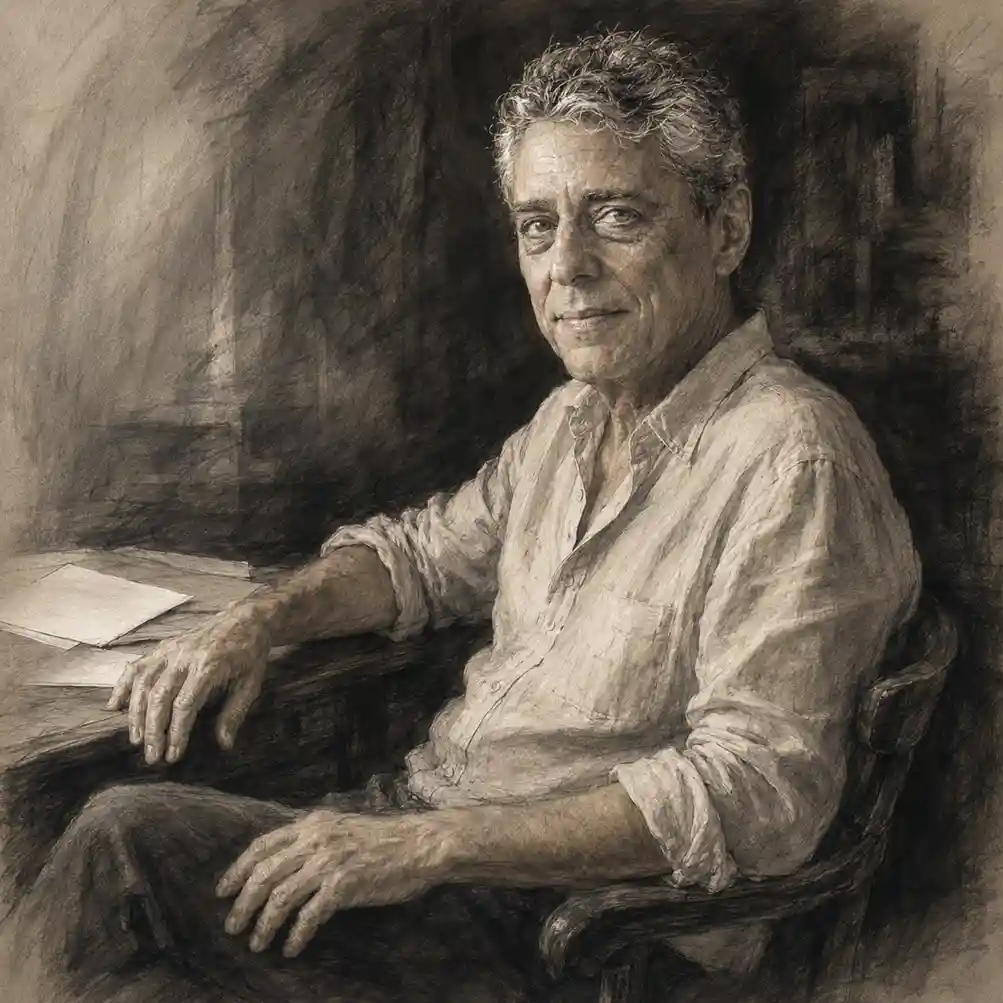
Fiction Replaces the Chorus with a Trapped Mind – Chico Buarque
Chico Buarque entered prose before becoming known as a novelist. Fazenda Modelo appeared in 1974, using livestock management to satirize authoritarian modernization. Bureaucratic language reduces life to productive units. Chapeuzinho Amarelo, published in 1979, instead shows a child weakening fear by changing its verbal shape.
The decisive turn came with Estorvo in 1991, translated as Turbulence. Its unnamed narrator moves through Rio without knowing whether danger is external, imagined, or both. The city offers no stable social map. Doors, money, and family connections deepen his confusion. Movement produces no real knowledge.
Benjamim followed in 1995. Its aging former model experiences life as if an invisible camera were recording him. A woman in the present recalls one from his past, and desire merges with guilt, image, and political memory. Instead of supplying reliable retrospection, the novel makes recollection behave like repeated footage whose meaning changes with every viewing.
Both books narrow the distance between reader and compromised consciousness. Songs often create a community through performance. These novels withhold that release. He uses prose to sustain the claustrophobia of a single perspective, forcing readers to infer the social reality that the narrator cannot assemble.
Budapest Turns Authorship into a Divided Identity
In Budapeste (2003), Chico Buarque places ownership of language at the story’s center. Ghostwriter José Costa succeeds by disappearing behind other people’s names. An accidental stay in Budapest leads him toward Hungarian, a language that first seems resistant and private. He becomes Zsoze Kósta, acquiring another city, lover, and identity.
The doublings are playful, but they also unsettle familiar ideas about originality. Costa wants recognition for work that succeeds because his authorship is hidden. Once language enters public circulation, its apparent owner may be a client, performer, publisher, lover, or invented self. Credit and creation move apart.
The novelist reveals no authentic identity beneath the others. Portuguese and Hungarian organize different desires, yet neither offers a final home. The divided self resembles ghostwritten prose: convincing, intimate, and partly authored for someone else.
That design connects Budapest to the earlier Julinho da Adelaide episode without reducing the novel to autobiography. Under dictatorship, a false name helped writing reach the public. A political necessity has become a broader inquiry into who owns a voice.
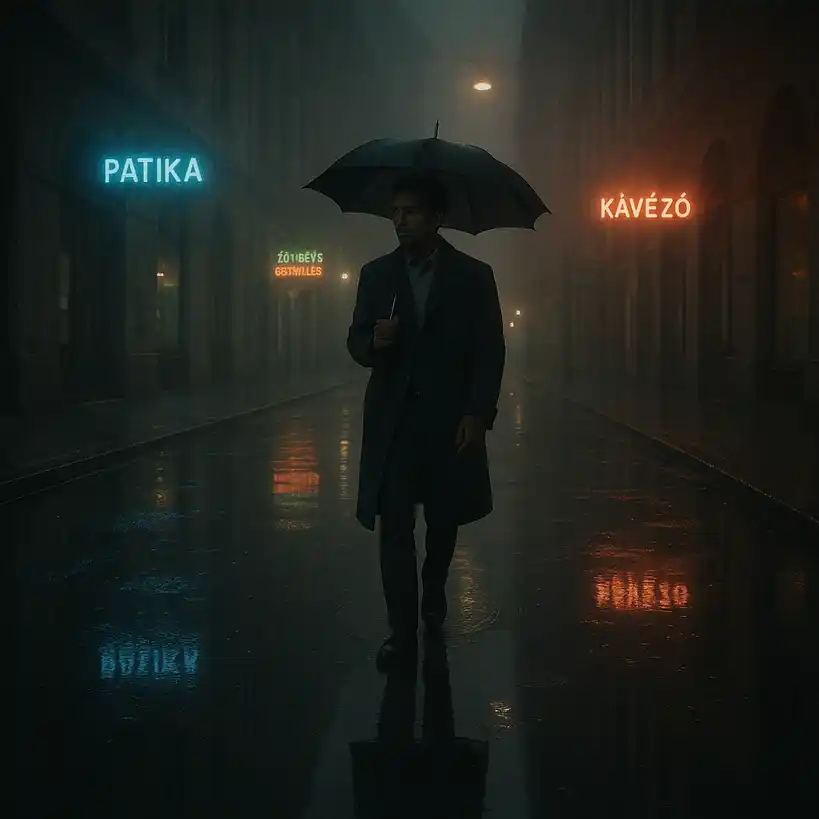
Spilt Milk Lets Privilege Betray Itself
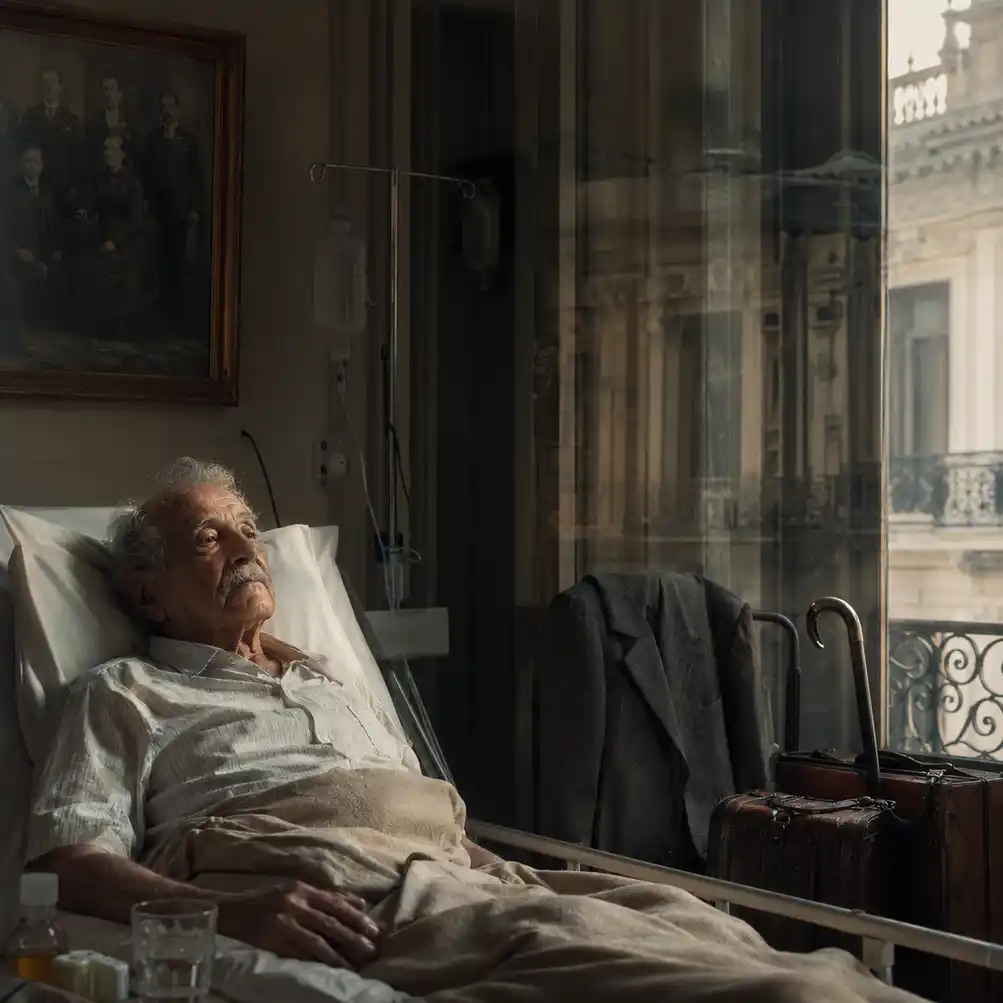
The most historically expansive Chico Buarque novel is Leite derramado (2009), translated as Spilt Milk. Eulálio, a centenarian from a declining elite family, narrates from a hospital bed. He rearranges memories for nurses, relatives, and imagined listeners. His history spans Brazilian wealth, slavery, political access, and social descent.
Eulálio speaks elegantly, but elegance never guarantees insight. He treats status as inherited proof of worth and racism as part of the natural order. Contradictions accumulate without an external narrator correcting them. Readers must notice what his vanity excludes, especially the violence hidden within respectable family continuity. The narrator becomes evidence against himself.
Fragmentation is essential. Names, relationships, and episodes return in altered combinations, leaving readers to reconstruct connections that Eulálio cannot or will not see. Memory becomes both a failing faculty and a class defense.
The novel also clarifies his debt to Machado de Assis. Like the narrators of The Posthumous Memoirs of Brás Cubas and Dom Casmurro, Eulálio seeks authority over his story while irony grows in the gap between his account and the reader’s judgment. In Spilt Milk, Brazilian history enters through that gap, not through an explanatory lecture placed above the character.
Family Archives Become Material for Invention
Later fiction brings Chico Buarque closer to personal history without becoming transparent memoir. O irmão alemão (2014), published as My German Brother, begins with a family secret: before his marriage, Sérgio Buarque de Holanda had fathered a son in Germany. The search combines documents, conjecture, rivalry, and fantasy. Archival absence becomes productive.
Essa gente (2019) shifts toward contemporary Rio. Diary entries, messages, and other fragments record a blocked writer’s personal collapse amid inequality, gated privilege, and reactionary politics. No document commands the whole picture. Fragmentation becomes a social condition, not simply a stylistic device.
In Anos de chumbo e outros contos (2021), narrators recount extreme violence with disturbing calm. Dictatorship, police power, sexual abuse, and social decay appear without the clarity of heroic resistance. Restraint intensifies horror but tests how far detachment can carry political criticism.
Bambino a Roma (2024) circles back to the childhood city. Memory supplies raw material, but fiction rebuilds Rome from within rather than claiming to recover it intact. Across these books, he treats the archive as an invitation, not a verdict. Documents establish limits; imagination enters where certainty ends.
From Censored Stages to Fractured Memory: Essential Chico Buarque Works
- Live Wheel (Roda Viva, 1967): A pop singer is consumed by media machinery and audience appetite. Its confrontational staging became a landmark of cultural resistance during Brazil’s military dictatorship.
- Calabar: The Praise of Treason (Calabar: O Elogio da Traição, 1973): Co-written with Ruy Guerra, this historical drama reconsiders a colonial figure branded a traitor. Censorship prevented its intended production.
- Model Farm (Fazenda Modelo: Novela Pecuária, 1974): Chico Buarque turns cattle breeding into an authoritarian allegory.
- The Last Straw (Gota d’Água, 1975): Written with Paulo Pontes, this musical relocates Medea to a Rio housing project.
- The Hustler’s Opera (Ópera do Malandro, 1978): Inspired by Gay and Brecht, the musical enters Rio’s wartime underworld.
- Turbulence (Estorvo, 1991): A nameless narrator flees through a dreamlike city without understanding the threat.
- Benjamin (Benjamim, 1995): An aging former model becomes obsessed with a young woman resembling his lost love.
- Budapest (Budapeste, 2003): A Brazilian ghostwriter becomes addicted to Hungarian and builds a second identity abroad.
- Spilt Milk (Leite Derramado, 2009): A centenarian narrates his family’s decline from a hospital bed. His unreliable monologue compresses centuries of privilege, racism, and Brazilian history.
- My German Brother (O Irmão Alemão, 2014): A discovered letter sends the narrator searching for a half-brother in Germany.
Writers and Songwriters Who Shaped Chico Buarque
- Sérgio Buarque de Holanda: His father’s Raízes do Brasil examined the unstable boundary between private relationships and public institutions. He does not reproduce its historical argument, but his songs and fiction dramatize power entering family, patronage, work, and intimacy.
- João Cabral de Melo Neto: Setting Morte e Vida Severina to music brought the young composer into sustained contact with a poet of structural rigor and controlled emotion. Cabral’s example helps explain why formal engineering in “Construção” is inseparable from social perception rather than ornamental display.
- Machado de Assis and Oswald de Andrade: The clearest lineage appears in fragmented narration, elite self-deception, and irony created between speaker and reader. Spilt Milk converses with Machado’s unreliable memoirists and the broken form of Oswald’s Memórias Sentimentais de João Miramar. The inheritance is formal as well as thematic.
- Noel Rosa and Vinicius de Moraes: Noel Rosa showed how samba could unite urban observation, colloquial economy, and wit. Vinicius, a family friend and collaborator, embodied the passage between printed poetry and popular song.
- João Gilberto, Tom Jobim, and dramatic predecessors: João Gilberto’s recordings transformed Buarque’s understanding of voice, guitar, rhythm, and restraint, while Jobim became a model and collaborator. Euripides, John Gay, Bertolt Brecht, and Kurt Weill supplied structures that his theater relocated within Brazilian class relations. Adaptation became an argument with tradition.
Writers Who Reworked Chico Buarque’s Example
Direct influence on later novelists is difficult to document with precision. Chico Buarque’s clearest descendants are writers whose words are inseparable from music, theater, or film.
- Criolo: His “Rap de Cálice” rewrites the imperative of silence for a world of racism, policing, drugs, and peripheral urban life. The new verses treat “Cálice,” composed by Buarque and Gilberto Gil, as material that can be disputed and renewed. He later incorporated Criolo’s intervention into his performances, turning influence into a public exchange between generations.
- J. P. Simões: The Portuguese songwriter has described himself as a spiritual son of Buarque. His “luso-samba” joins narrative irony, literary phrasing, and Brazilian musical inheritance without pretending that Lisbon is Rio. Here influence works through translation between cultures, not duplication. His acknowledgment makes the connection unusually explicit.
- Joana Barra Vaz: Her documentary Meu Caro Amigo Chico, co-written with Maria João Marques, was conceived as a response to “Tanto Mar.” Buarque’s song about Portugal’s Carnation Revolution becomes the starting point for examining what remained of its hopes decades later. A song generates a new historical essay in film. The debt lies in the project’s organizing question, not in borrowed style.
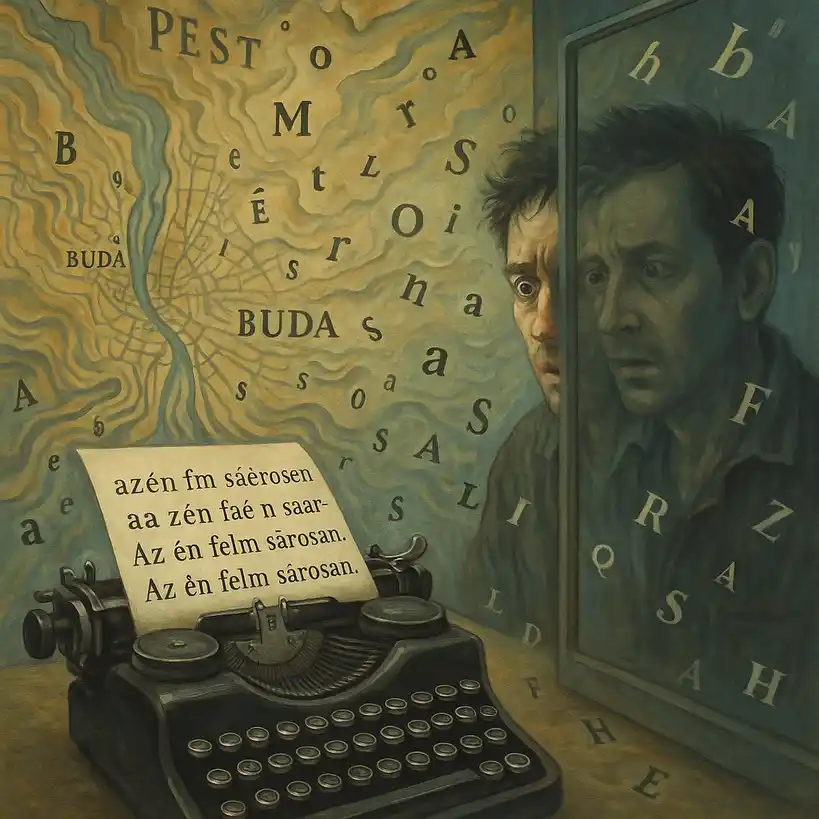
Borrowed Voices Create Both Empathy and Risk
Across forms, Chico Buarque speaks through people unlike his public self. His songs in female voices became especially celebrated. Nara Leão, Maria Bethânia, Gal Costa, and Elis Regina gave them distinct bodies and histories, making authorship a collaboration between composition and performance.
The best examples avoid treating femininity as a single emotional category. Desire may coexist with anger, economic dependence, erotic autonomy, humiliation, or strategic self-command. A borrowed voice can enlarge emotional possibility. It also allows a song to question masculinity without placing the male composer at its center.
Admiration should not close debate. A man writing as a woman does not escape projection through empathy. Some perspectives retain their period’s gender assumptions, while performance can complicate a lyric beyond its written text.
His unreliable male narrators sharpen the same problem from another direction. José Costa, Eulálio, and the narrator of Turbulence speak fluently while misunderstanding themselves. His characteristic tension lies in the distance between eloquence and knowledge.
Formal Control Also Defines the Limits of the Work
His precision creates distance as well as depth. In song, language joins melody, breath, arrangement, and a performer’s presence. Complex design can still produce collective feeling. The novels often deny that communion, asking readers to remain uncertain much longer.
For some readers, that restraint is the fiction’s strength. Others find particular novels more ingeniously constructed than emotionally alive. The unevenness matters because experimentation includes failed pressure points. Budapest sustains its linguistic doublings with remarkable control, while other books sometimes make their formal mechanism easier to admire than their characters are to inhabit.
Political interpretation requires similar balance. He writes incisively about hierarchy, state violence, and elite self-deception. Critics nevertheless identify the limits of a radicalism formed within a privileged milieu.
Those objections do not cancel the achievement. They identify its central wager. Chico Buarque trusts structure to carry judgment without constant explanation. Restraint can make readers work ethically, but it cannot ensure that every reader will experience the distance as productive.

Rhythm, Resistance, and Writing: Chico Buarque in His Own Words
- “I’m an amateur.” The playful self-description minimizes a career that successfully crossed songwriting, theater, and fiction.
- “Music kind of kidnapped me for a while.” Buarque presents his musical career as an interruption of an older literary impulse.
- “It was a challenge.” He describes writing under censorship, when ambiguity became both artistic technique and protection.
- “I’m not proud of it as literature.” He judges his angry first long-form book more severely than its political circumstances might require.
- “Writing a novel is lonely from beginning to end.” Unlike a song, fiction postpones collaboration and public response until the work is complete.
- “Four years of a disastrous government lasted forever because time seemed to go backwards.” His delayed Camões speech joined personal recognition to Brazil’s political memory.
From Secret Pseudonyms to the Camões Prize: Facts About Chico Buarque
- He grew up among words and music: Born Francisco Buarque de Hollanda in Rio de Janeiro in 1944, Chico Buarque is the son of historian Sérgio Buarque de Holanda and pianist Maria Amélia Cesário Alvim.
- His first publication passed a family test: At eighteen, he wrote a short story that his father agreed to forward only after reading it. Folha de S.Paulo subsequently published the piece. 🌐 see the guardian
- Fiction transformed his international reputation: Turbulence established Buarque as a novelist in 1991, while 👉 Budapest made language, ghostwriting, and divided identity central subjects. Its instability also echoes 👉 The Book of Disquiet by Fernando Pessoa.
- Censorship created another identity: After his name became toxic to military censors, the songwriter invented Julinho da Adelaide, complete with a biography and newspaper interviews. The fictional songwriter briefly allowed new compositions to pass official scrutiny. 🌐 See Music and literature
- Exile connected two generations: The author lived in Italy during 1969 and 1970. Years earlier, his father had taught Brazilian literature in Rome. These memories later resurfaced in the autobiographical novel Bambino a Roma. 🌐 Source
- Brazilian history hides inside individual voices: His unreliable narrators expose class, race, violence, and inherited privilege without becoming conventional political spokesmen. That indirect method creates an intriguing counterpoint to 👉 Blindness by José Saramago.
- The Camões Prize arrived four years late: The writer won the Portuguese-speaking world’s leading literary honor in 2019. Jair Bolsonaro refused to sign the diploma, so the ceremony took place only in April 2023. 🌐 more
Recognition Across Forms, and Where to Begin
For decades, Chico Buarque’s fame complicated the reception of his fiction. Some critics treated the novels as a musician’s secondary activity, while admirers protected them from serious comparison. Translation and scholarship gradually gave the prose an independent critical life. Turbulence, Budapest, Spilt Milk, and My German Brother circulated internationally.
Literary prizes confirmed that shift. Estorvo, Budapeste, and Leite derramado received major Jabuti recognition. In 2019, Chico Buarque won the Camões Prize for his body of work in Portuguese. Jair Bolsonaro’s refusal to sign the diploma delayed the ceremony until 2023, adding a political episode to an award that recognized much more than political opposition.
No single work represents the career. Listeners can begin with Construção, where form, labor, and political pressure converge. “Olhos nos Olhos,” “Geni e o Zepelim,” “Apesar de Você,” and “Meu Caro Amigo” reveal different uses of address and character.
For theater, Gota d’Água offers the strongest meeting of adaptation and Brazilian social analysis. Readers can enter the fiction through Budapest for language and divided identity, or through Spilt Milk for history, class, and unreliable memory.
Freedom Found Inside Constraint
It is tempting to summarize Chico Buarque as an artist who learned indirection under dictatorship. That is incomplete. Masks, displaced voices, and unstable identities appeared before exile and remained after censorship weakened. Repression intensified a method whose deeper subject was the uncertain ownership of language.
Across six decades, the scale of that inquiry kept changing. Songs compress lives into rhythm. On stage, national history speaks through incompatible interests. Fiction allows a confident voice enough time to expose its own blindness. Constraint becomes a source of revelation, whether it takes the form of meter, censorship, dramatic adaptation, or a narrator who cannot escape himself.
Buarque rarely tells an audience where to stand. He designs situations in which words betray the systems and speakers that use them. His movement among music, drama, and fiction therefore becomes one sustained investigation into voice, power, and memory.