John Updike: The Prolific Penman of American Life
John Updike (1932-2009) was an acclaimed American author, poet, and literary critic known for his prolific output and insightful explorations of American life. Born on March 18, 1932, in Shillington, Pennsylvania, his literary career spanned over five decades, during which he produced numerous novels, short stories, essays, poetry collections, and criticism. His work garnered critical acclaim, earning him numerous awards and establishing him as one of the most important figures in contemporary American literature.
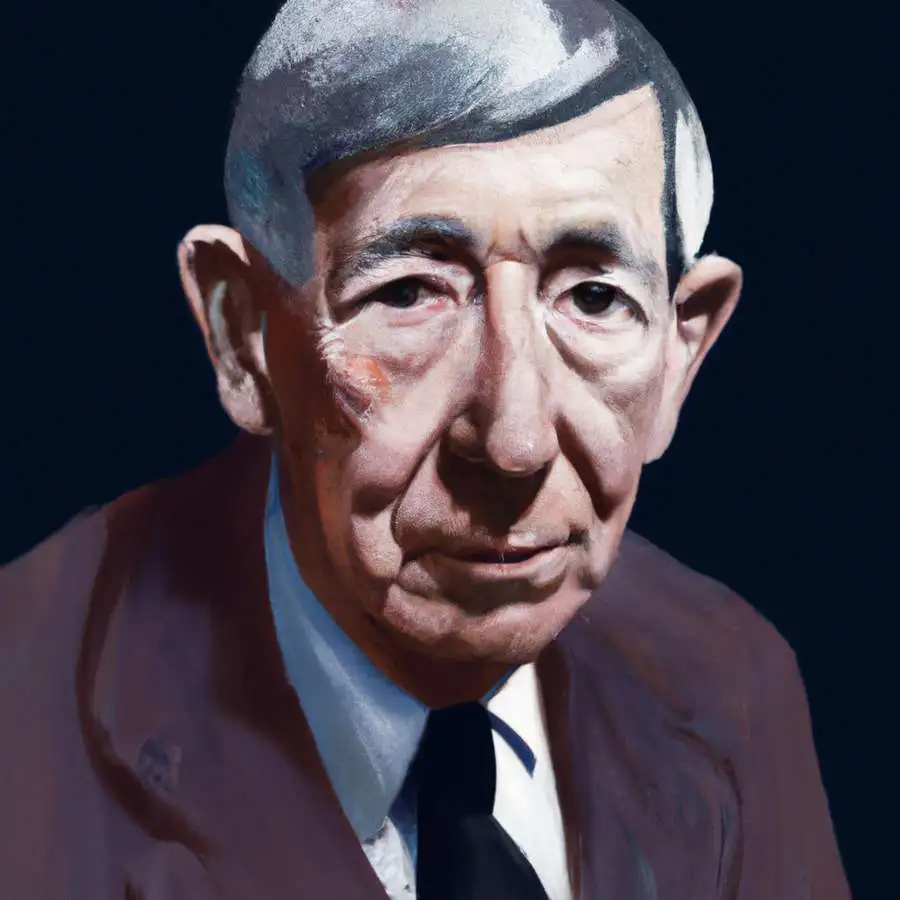
Profile of John Updike – Life and Books
- Full Name and Pseudonyms: John Hoyer Updike, published as John Updike; he did not use pseudonyms.
- Birth and Death: Born 18 March 1932 in Reading, Pennsylvania; died 27 January 2009 in Danvers, Massachusetts.
- Nationality: American writer known for portraits of small town, Protestant, middle class life.
- Father and Mother: Son of teacher Wesley Russell Updike and aspiring writer Linda Grace Hoyer.
- Wife or Husband: Married Mary Entwistle Pennington in 1953; divorced 1977. Later married Martha Ruggles Bernhard.
- Children: Father of four children with Mary Pennington and stepfather to three children from Martha Bernhard’s earlier marriage.
- Literary Movement: Major voice in late twentieth century American realism, tracing postwar suburban hopes and fears.
- Writing Style: Highly crafted, image rich prose with close psychological focus and frank treatment of sex, faith, art, and ageing.
- Influences: Inspired by modernists such as Marcel Proust, James Joyce, Henry Green, Vladimir Nabokov, and by New Yorker peers like J. D. Salinger and John Cheever.
- Awards and Recognitions: Twice won the Pulitzer Prize for Fiction and received major national literary honours.
- Adaptations of Their Work: Novels including Rabbit, Run and The Witches of Eastwick became films and television projects.
- Controversies or Challenges: Criticised for adultery plots, explicit scenes, and some portrayals of women that seemed drawn from his own life.
- Career Outside Writing: Early staff writer at The New Yorker and long time contributor, critic, and essayist.
- Recommended Reading Order:
1. Rabbit, Run
2. Rabbit Is Rich
3. Rabbit at Rest
4. The Witches of Eastwick
The Life of John Updike
John Updike was born on March 18, 1932, in Reading, Pennsylvania, and grew up in nearby Shillington. His early life shaped much of his writing. He often drew from the small-town, middle-class American experience, which became a recurring theme in his stories.
Growing up, he was fascinated by words and images. His mother, Linda, was an aspiring writer. She encouraged his creativity and gave him the confidence to pursue his dreams. The author spent hours reading and writing. He also developed a love for drawing, which influenced his descriptive prose later in life.
As I read his work, I could sense his deep connection to small-town life. He described its rhythms and routines with an intimate understanding. Whether writing about a suburban neighborhood or a struggling marriage, he brought those settings to life with a rare authenticity.
The College Years and Early Ambitions
John Updike attended Harvard University, where he studied English. His time at Harvard sharpened his writing skills and introduced him to the world of literary excellence. He became president of the Harvard Lampoon, the university’s humor magazine, showcasing his wit and storytelling ability.
After graduating in 1954, he received a one-year fellowship to study graphic arts at the Ruskin School of Drawing and Fine Art in Oxford, England. This experience broadened his artistic sensibilities. It also gave him a global perspective, though he always stayed grounded in the American experience. I’ve always admired how Updike infused art and literature into his life. His writing reflects the precision of an artist painting a scene. Every detail feels deliberate and vivid.
The Start of a Literary Career and The Rabbit Series
In 1955, John Updike joined The New Yorker as a staff writer. This was a turning point in his career. He wrote poetry, short stories, and essays for the magazine. His time there taught him discipline and allowed him to refine his craft.
In 1959, he published his first novel, The Poorhouse Fair. This book introduced themes that would define much of his work: religion, community, and the struggles of ordinary people. But it was his second novel, Rabbit, Run (1960), that established him as a major literary voice.
When I first read Rabbit, Run, I felt an immediate connection to the protagonist, Rabbit Angstrom. He captures his restlessness and search for meaning with such precision. The novel’s portrayal of small-town America felt so real, as if I were walking its streets alongside him.
Each book captures a different era in American life. Through Rabbit’s eyes, John Updike explores changing social values, economic struggles, and personal failures. The series earned critical acclaim, with Rabbit Is Rich and Rabbit at Rest both winning the Pulitzer Prize for Fiction. Reading the novels felt like watching a life unfold in real time. John Updike doesn’t shy away from his flaws, which makes him feel human. His struggles and triumphs mirror the complexities of American life.
The novelist wrote about the everyday experiences of ordinary people. He often explored themes like love, marriage, faith, and mortality. His characters grappled with questions about identity, desire, and purpose. In Couples (1968), he examines the lives of married couples in a New England town. The novel caused a stir for its frank depiction of relationships and infidelity. It felt bold and honest, pushing boundaries for its time.
A Literary Style of Precision and Beauty
John Updike was also a master of the short story form. He published hundreds of stories in The New Yorker and various collections, such as Pigeon Feathers (1962) and Problems (1979). These stories capture small moments that reveal larger truths.
When I read his short story A&P, I was amazed at how he transformed a mundane scene in a grocery store into something profound. The story’s observations about youth, desire, and rebellion stayed with me long after I finished it. His ability to find meaning in the ordinary is what sets his short stories apart.
His writing style is known for its lyrical prose and vivid descriptions. He had a painter’s eye for detail, capturing textures, colors, and emotions with precision. His sentences flow like music, making even the simplest scenes feel rich and textured. He also had a gift for introspection. His characters reflect deeply on their lives, often revealing universal truths. Reading his work, I felt as if I were peering into the soul of humanity.
Later Years and Legacy
The author continued writing until his death on January 27, 2009, from lung cancer. In his later years, he reflected on aging and mortality in works like My Father’s Tears (2009). These writings felt deeply personal, as if he were saying goodbye.
He received numerous awards throughout his career. In addition to his two Pulitzer Prizes, he won the National Book Award, the American Academy of Arts and Letters Gold Medal, and the National Humanities Medal. He was celebrated for his ability to blend artistry with accessibility. Despite his success, he remained humble. He once said his goal was to “give the mundane its beautiful due.” This philosophy shines through in all his work.
His legacy endures through his vast body of work. His novels, short stories, and essays continue to inspire readers and writers. He showed us that even the smallest details of life can hold immense meaning.
John Updike lived a life dedicated to words. From his small-town beginnings to his rise as one of America’s greatest writers, he never stopped observing and creating. His stories capture the beauty and complexity of ordinary lives. They remind us to look closer, to see the extraordinary in the everyday.
When I read Updike, I feel connected to the world around me. His words linger, making me reflect on my own life. That’s the magic of his writing, and that’s why his work will always matter.

List of works and books by John Updike
- The Carpentered Hen and Other Tame Creatures (1958) – Poetry collection
- The Poorhouse Fair (1959)
- Rabbit, Run (1960)
- Pigeon Feathers and Other Stories (1962) – Short story collection
- The Centaur (1963)
- The Music School (1966)
- The Poorhouse Fair (1966) – Revised edition
- Couples (1968)
- Bech: A Book (1970)
- Rabbit Redux (1971)
- Marry Me (1976)
- Tossing and Turning: Poems (1977) – Poetry collection
- The Coup (1978)
- Rabbit Is Rich (1981)
- The Witches of Eastwick (1984)
- S. (1988)
- Rabbit at Rest (1990)
- Odd Jobs: Essays and Criticism (1991) – Non-fiction collection
- Brazil (1994)
- Bech at Bay (1998)
- Gertrude and Claudius (2000)
- The Early Stories: 1953-1975 (2003) – Short story collection
- Terrorist (2006)
- Due Considerations: Essays and Criticism (2007) – Non-fiction collection
- The Widows of Eastwick (2008)
John Updike: The Art of Capturing Everyday Life
Reading John Updike feels like watching a painter at work. His sentences are rich with detail, creating vivid images of people, places, and moments. He observes the smallest things, like the curve of a hand or the color of the sky at dusk. These details make his writing feel alive.
In Rabbit, Run, I could see the world through Harry Angstrom’s eyes. The peeling paint of a house, the worn fabric of a chair — every detail felt real. His descriptions bring the mundane to life. It’s as if he’s reminding us that beauty exists everywhere, even in the ordinary.
His focus on detail immerses readers. It slows us down, making us notice things we might otherwise miss. His descriptive language creates a strong sense of place and emotion.
The Complexity of Ordinary Characters
His characters are not heroes or villains. They are regular people with flaws, dreams, and regrets. He writes about suburban families, small-town workers, and middle-class professionals. But he does so with a level of depth that makes their lives feel extraordinary.
When I read The Centaur, I saw the struggles of a father and son in a small Pennsylvania town. The writer captures their fears, failures, and quiet hopes. These characters reminded me of people I know. They were so relatable, so human.
John Updike’s focus on ordinary characters makes his stories universal. He shows that even the most unremarkable lives are worth exploring. Readers see themselves in his characters, making the stories deeply personal.
Exploring Themes of Desire and Mortality with Poetic and Lyrical Prose
His writing often delves into deep, universal themes. He writes about love, desire, faith, and death. His characters grapple with these issues in ways that feel real and raw. He doesn’t offer easy answers, but his stories provoke thought.
In Couples, Updike explores the messy, complicated lives of married people in a small town. The way he writes about relationships, infidelity, and longing struck me. It was honest and unflinching. He doesn’t shy away from difficult topics. His exploration of these themes adds depth to his work. Readers connect with the questions his characters ask, even if the answers remain elusive. His honesty makes his writing powerful.
His prose feels like poetry and his sentences are carefully crafted, with rhythm and beauty. He often uses metaphors and similes to bring his ideas to life. In A&P, a short story about a grocery store clerk, his descriptions elevate the mundane. When I read lines like “her bare feet were… delicate in their tan, the upper part of the foot near the ankle was the shade of a creamy tan ice cream,” I could feel the artistry in his words. He makes the everyday magical.
His poetic prose gives his writing a unique voice. It transforms even simple scenes into something memorable and profound. It also keeps readers engaged, drawing them into the beauty of his language.
Mastery of Dialogue with A Focus on the Passage of Time
John Updike’s dialogue feels natural. His characters speak like real people, with all the hesitations, interruptions, and quirks of everyday conversation. But their words also reveal deeper truths about who they are.
In Rabbit Redux, the dialogue between Harry and his wife is sharp and emotional. Their conversations showed their frustrations and misunderstandings without needing long explanations. I felt like I was eavesdropping on a real couple. Good dialogue makes characters believable. The skill with dialogue adds authenticity to his stories. It also reveals layers of emotion and tension without excessive narration.
Time is a recurring theme in his work. He writes about aging, change, and how the past shapes the present. His stories often follow characters across years, showing their growth and struggles. The series, spanning four novels, traces Rabbit’s life from youth to middle age. Watching him age, make mistakes, and reflect on his choices felt like following a real person’s life. John Updike captures the inevitability of change with grace and sensitivity. His focus on time resonates deeply. It reminds us of our own journeys and the fleeting nature of life. His ability to capture this passage gives his work emotional weight.
Blurring the Line Between Fiction and Autobiography
The author often draws from his own life. His stories are filled with observations from his upbringing, marriages, and experiences. He doesn’t copy his life exactly, but he weaves elements of it into his fiction. In Self-Consciousness: Memoirs, John Updike reflects on his own struggles with illness, faith, and fame. It gave me insight into how his life shaped his writing. Reading this made his novels and short stories feel even more personal.
This connection between his life and his work adds authenticity. Readers feel like they’re getting a glimpse into his thoughts and experiences, making his writing more intimate. John Updike’s writing style is a masterclass in observing life. His attention to detail, poetic language, and focus on ordinary people make his work timeless. He explores universal themes with honesty and depth, inviting readers to reflect on their own lives.
Reading him is an experience. His words linger, making you see beauty in the everyday and complexity in the mundane. His writing reminds us that life, with all its imperfections, is worth noticing and celebrating. That’s what makes his work so unforgettable.

John Updike’s Literary Circle: Influences and Legacy
Updike’s writing changed the way we look at life. He taught us that even the smallest details matter. His influence extends far beyond the writers mentioned here. He paved the way for a generation of authors to explore ordinary lives with depth and honesty.
When I read the writer, I feel like I’m sitting with someone who understands the world deeply. His words remind me that beauty is everywhere, if only we take the time to see it. His legacy lives on in every writer who dares to look closely and write honestly.
Writers Who Inspired him
- F. Scott Fitzgerald: When I first read John Updike, I couldn’t help but notice a certain elegance in his prose. It reminded me of F. Scott Fitzgerald, who he admired deeply. Like Fitzgerald, John Updike had a way of painting scenes with words, making even the mundane feel glamorous. In Rabbit, Run, his lyrical descriptions of suburban life felt similar to Fitzgerald’s shimmering portrayal of the Jazz Age in The Great Gatsby. Both writers captured the beauty and fragility of the American dream.
- James Joyce: He was also influenced by James Joyce, particularly Joyce’s focus on everyday life. When I read Updike’s short stories, like A&P, I saw this influence clearly. Updike admired Joyce’s stream-of-consciousness style and his sharp attention to detail. While his language is more restrained, he shares Joyce’s ability to uncover profound truths in simple experiences.
- Vladimir Nabokov: John Updike once said he admired Vladimir Nabokov for his inventive use of language. After reading Nabokov’s Lolita, I understood why. Nabokov plays with words, twisting them into unexpected shapes. The writer does the same, though in a quieter way.
- Marcel Proust: The novelist was fascinated by Marcel Proust, and it shows in his writing. Proust’s In Search of Lost Time dives deeply into memory and the passage of time. Updike’s Rabbit series echoes this same theme. Reading about Harry Angstrom over the decades felt like witnessing the unfolding of a real life. I could see how Proust’s exploration of the past shaped his ability to create layered, reflective characters. Both writers remind us how memory shapes who we are.
Writers Influenced by him
- David Foster Wallace: When I read David Foster Wallace, I noticed echoes of his sharp observations about contemporary life. Wallace’s essays, like those in Consider the Lobster, dissect modern culture with a mix of humor and depth. Wallace didn’t shy away from critiquing John Updike, calling him out for his focus on male-centered stories. But it’s clear Wallace borrowed from Updike’s detailed, almost obsessive portrayal of human behavior. Both writers examine what it means to live in their time.
- Jonathan Franzen: Jonathan Franzen often explores the lives of families and individuals, much like he did. In The Corrections, Franzen dives into the complexities of relationships, ambition, and regret. I could feel the influence of the Rabbit series in Franzen’s sprawling yet intimate storytelling. Both writers explore suburban life with an unflinching honesty. Franzen, like John Updike, digs into the contradictions of the American middle class. Reading Franzen feels like continuing the conversation he started.
- Elizabeth Strout: Elizabeth Strout, author of Olive Kitteridge, brings Updike’s sense of observation into her own work. Strout’s stories focus on small-town life, relationships, and personal struggles. Like John Updike, she finds beauty in the mundane. When I read Strout, I felt the same quiet power that I found in his writing. Both authors create characters who feel like real people. They remind us that even ordinary lives hold extraordinary depth.
- Jhumpa Lahiri: Jhumpa Lahiri, known for Interpreter of Maladies, writes with a precision and sensitivity that echoes him. Her stories often focus on small moments, like a strained conversation or a quiet realization. Lahiri’s characters, much like Updike’s, grapple with identity, relationships, and belonging. When I read Lahiri, I saw how his influence shaped her ability to capture the complexities of human emotion with such grace.

Famous Quotes from John Updike
- “Dreams come true; without that possibility, nature would not incite us to have them.” John Updike encourages hope and ambition. He believes dreams exist because achieving them is possible. This quote inspires optimism and the pursuit of goals.
- “The great thing about the dead is that they make space.” This quote reflects his dark humor and perspective on loss. He acknowledges the sadness of death but points out how it creates room for the living. It shows his ability to find meaning in life’s complexities.
- “We are most alive when we’re in love.” The author highlights the transformative power of love. He suggests that love brings energy, joy, and purpose. This quote ties to his recurring themes of relationships and emotional intensity.
- “Rain is grace; rain is the sky condescending to the earth; without rain, there would be no life.” The writer uses rain as a metaphor for life’s blessings. He shows how even ordinary things like rain are essential and beautiful. This quote reflects his poetic appreciation of nature.
- “Writing and rewriting are a constant search for what it is one is saying.” This quote reflects Updike’s thoughts on the creative process. He believes that writing involves discovering and refining ideas. It shows his dedication to the craft of storytelling.
- “Celebrity is a mask that eats into the face.” John Updike critiques fame, suggesting that it can change a person. He highlights how public attention often consumes individuality. This quote reflects his insight into the pressures of success.
Trivia facts about John Updike, the The Prolific Penman
- Prolific Writer: Throughout his career, John Updike wrote more than 60 books, including novels, short story collections, poetry collections, essays, and literary criticism. His remarkable output and versatility as a writer contributed to his enduring impact on American literature.
- Pulitzer Prize Winner: John Updike received the prestigious Pulitzer Prize for Fiction twice in his career. He won the award for Rabbit Is Rich in 1982 and for Rabbit at Rest in 1991. The Pulitzer Prizes recognized his exceptional storytelling, keen observations, and insightful exploration of American society.
- The New Yorker: John Updike had a long-standing relationship with The New Yorker, one of the most esteemed literary magazines. His first published story, “Friends from Philadelphia,” appeared in The New Yorker in 1955, and he continued to contribute to the magazine throughout his career.
- Literary Critic: In addition to his fiction writing, he was highly regarded as a literary critic and essayist. He wrote thought-provoking essays and criticism on a wide range of topics, including literature, art, and culture.
- Golf Enthusiast: He was an avid golfer, and his passion for the sport often found its way into his writing. Golf served as a metaphor in some of his works, symbolizing life’s challenges and the pursuit of personal fulfillment.
- National Humanities Medal: In 2003, John Updike was honored with the National Humanities Medal, which recognizes individuals or organizations that have made significant contributions to the humanities in the United States.
My Conclusion on Updike
John Updike captured life with unmatched precision. His words painted vivid pictures of ordinary moments, making them extraordinary. He wrote about small towns, family struggles, love, faith, and aging. His characters felt real, with all their flaws and dreams.
Reading Updike’s work felt personal. He had a way of making me reflect on my own life while exploring his characters’ worlds. His Rabbit series showed me how deeply he understood people and their journeys, while his short stories, like A&P, revealed how much beauty exists in the smallest details.
His dedication to his craft and his ability to find meaning in the mundane made him one of America’s greatest writers. This legacy continues to inspire readers and writers. For anyone who loves words and storytelling, Updike’s work offers a window into life’s complexities and truths.