Reading Pablo Neruda: where to begin
Pablo Neruda meets readers where feeling turns precise. I start with that because the poems sound simple and then keep opening. Love poems that travel brought many of us in, yet the range is wider: political witness, sea-salted elegies, playful odes to onions and socks. Curiosity is a good first tool. No jargon, only clarity will be our promise as we sketch life, themes, style, and a reading path that respects your time.
You do not need a specialist’s map to begin. A short, approachable book lets you hear the cadence, then a fuller collection shows how the voice holds history and intimacy at once. A simple path to the poems is what you will get here, along with quick facts that actually help. Movement and peers will anchor context; titles will appear in English throughout these chapters so nothing blocks the flow.
Style sections stay friendly. I will point to the “camera” in the lyric, to rhythm and image, and to the way plain nouns feel new under steady attention. Read to feel, then to see will be our method: feel the line first, then notice what the technique is doing. If you want nearby voices for contrast, follow the Chilean line back to Gabriela Mistral and forward into Latin American fiction; for a kindred moral clarity in narrative, try 👉 Chronicle of a Death Foretold by Gabriel Garcia Marquez. Poems for common life is the bridge I keep in mind: ordinary objects, lifted and made durable.

Profile of Pablo Neruda – Life and Works
- Full Name and Pseudonyms: Ricardo Eliécer Neftalí Reyes Basoalto; wrote as Pablo Neruda.
- Birth and Death: 12 July 1904, Parral, Chile; 23 September 1973, Santiago, Chile.
- Nationality: Chilean.
- Father and Mother: José del Carmen Reyes Morales, railway worker; Rosa Neftalí Basoalto Opazo, teacher.
- Wife or Husband: María Antonieta Hagenaar (m. 1930); Delia del Carril (m. 1943); Matilde Urrutia (m. 1966).
- Children: One daughter, Malva Marina Reyes (with María Antonieta Hagenaar).
- Literary Movement: Latin American modernism; avant-garde currents; later civic and public lyric.
- Writing Style: Expansive free verse; long lines and catalogs; concrete imagery; plain nouns with radiant attention.
- Influences: Walt Whitman; Gabriela Mistral; Federico García Lorca; César Vallejo; Arthur Rimbaud.
- Awards and Recognitions: Nobel Prize in Literature (1971); Chile’s National Prize for Literature (1945); international honors and doctorates.
- Adaptations of Their Work: Poems widely set to music and stage; the novel The Postman (basis for the film Il Postino) fictionalizes the poet’s Italian exile period.
- Controversies or Challenges: Political disputes linked to Communist Party ties; passages from the memoir criticized for conduct; circumstances of death debated in later inquiries.
- Career Outside Writing: Diplomat and consul (Asia, Spain, Mexico); senator; ambassador to France.
- Recommended Reading Order:
1. Elemental Odes
2. Twenty Love Poems and a Song of Despair
3. Extravagaria
4. Residence on Earth
Parral to Temuco: a name, a mentor, a habit of work
Parral, 1904, sets the birth record; Temuco sets the weather of childhood. A railway worker father favored practical paths. A mother, a teacher, died soon after his birth. Loss at the beginning left a quiet space that poems would later fill. A stepmother, Trinidad Candia Marverde, kept the house warm and steady. School corridors smelled of wood and rain; notebooks held early drafts.
A name arrived before fame. Ricardo Eliécer Neftalí Reyes chose “Pablo Neruda” as a pen name while still young, a move that gave the writer room to grow in public without a family quarrel. A name that made space is how I think of it now. The decision carried a second homage: Jan Neruda, the Czech poet, stood behind it like a gentle tutor from afar.
Temuco offered a real tutor in the flesh. Gabriela Mistral worked in the local school and fed the boy books with a librarian’s love. A mentor at the right hour mattered more than any single exam. Reading widened quickly: modern Spanish lyric, classical models, and travel writers. The habit of daily pages began and never really stopped.
Santiago called next. The University of Chile gave him a desk, a city, and a set of magazines to publish in. Learning by publishing turned into the best schooling. Early collections arrived in quick succession, and the tone stretched from intimate to public, from whisper to chant. If you want to hear the generational echo, pair Neruda’s early heat with Mistral’s tender authority in 👉 Tenderness by Gabriela Mistral, then step into Chile’s later family saga through 👉 The House of the Spirits by Isabel Allende. The line from place to page stays visible: rain, rail, and regular work.
Posts, passports, and a voice that won’t sit still
He learned to gather the world with a diplomat’s itinerary and a poet’s notebook. Asia gave new colors and silences; Spain gave urgency. Diplomat, then witness is how I hold this turn in mind. Consular posts paid the rent and opened doors, yet the poems kept changing shape—more public, more tidal, more sure of their own music.
Spain’s Civil War changed the scale of the page. Friends were killed, cities burned, and language had to carry grief without losing clarity. Spain and a public voice names the pivot: love lyrics widened into collective song, elegy, and protest. The long work that followed braided history with geography until the continent felt legible in verse.
Exile hardened resolve. Chile grew dangerous for a senator who spoke plainly, and crossings followed—Mexico, Europe, stages where a reading felt like a rally and a prayer at once. Exile and the big book became a rhythm: gather voices, count rivers, carry the dead with care. When the heat needed air, he turned back to the small and the bright—odes to bread, sea, onion, socks—each object polished into a common treasure. Odes to common things kept the scale human.
If you want companion routes through Latin American feeling under pressure, try 👉 The Green House by Mario Vargas Llosa for tangled power and place, or 👉 The Passion according to G.H. by Clarice Lispector for interior fire that holds steady against the world. These novels don’t echo Neruda’s music, yet they share the insistence that language must face life directly and still find room for tenderness.
Return, prizes, and pages that keep breathing
He came home with a public’s embrace and a traveler’s patience. Crowds filled plazas; readings felt like weather systems moving through a city. A country’s voice, a personal room captures the balance I hear. Private mornings stayed quiet, the notebook steady, the lines pared down to air and stone.
The world answered with honors. The Nobel brought microphones and headlines; an ambassadorship in Paris added rooms where poetry and statecraft shared a coat rack. Nobel and the wide embrace made him more visible, not less precise. Late books kept surprising me: elemental odes that refused cynicism, compact sequences where mountains, salt, and skies turned into simple, singing nouns.
Politics did not loosen its grip. Chile swayed, then cracked. Friends took office, hope filled kitchens, and fear returned with boots on stairs. A life woven with history meant the poems could not look away; they stayed clear and warm even when the news grew cold. Health failed in the final months, but the work did not. Drafts and notebooks kept their promise to show the world as a shared table.
For parallel routes through public feeling and private fate, consider 👉 Of Love and Shadows by Isabel Allende, where love holds its ground against terror, or 👉 East of Eden by John Steinbeck for moral weather carried by families and work. Late clarity, not late comfort is the rule of these pages.
Circles, coastlines, and why the poems keep burning
I place Pablo Neruda inside Latin American modernism in motion rather than a tidy school. The through-line is a public lyric that can widen to history without losing the table, the sea, or the onion. Chilean vanguard currents and realism cross in the work: surreal pressure arrives in Residence on Earth, then clears into civic song in Canto General, then turns playful and intimate in the odes.
Peers and neighbors mattered. Gabriela Mistral set an early standard for tenderness with gravity; her authority let a young poet trust plain nouns. Federico García Lorca showed how music can hold grief without melodrama; the Spanish war sharpened that lesson. César Vallejo modeled ethical tension inside experiment. Octavio Paz offered a reflective, architectural lyric that conversed with Neruda’s wider river.
Closer to home, poets of the Southern Cone insisted that work, weather, and bread belong in serious verse. When you want narrative companions, try 👉 Hiroshima Mon Amour by Marguerite Duras for memory under pressure, or 👉 The Book of Sand by Jorge Luis Borges for the uncanny turned exact.
Themes return as variations rather than formulas. Love and matter—bodies, salt, wood, stone—refuse abstraction and ask language to honor touch. Witness and belonging push the voice outward: Spain’s devastation and Chile’s rivers enter the page as responsibilities, not scenery. Exile and return test the public poet’s patience; the line must stay warm while the news grows cold. Finally, praise as a practice steadies the late work: odes to socks or onions become moral exercises in attention.
The net effect is a lyric that breathes in two directions at once—toward people and toward things—so feeling earns its place beside fact. That is why the poems keep finding new readers.
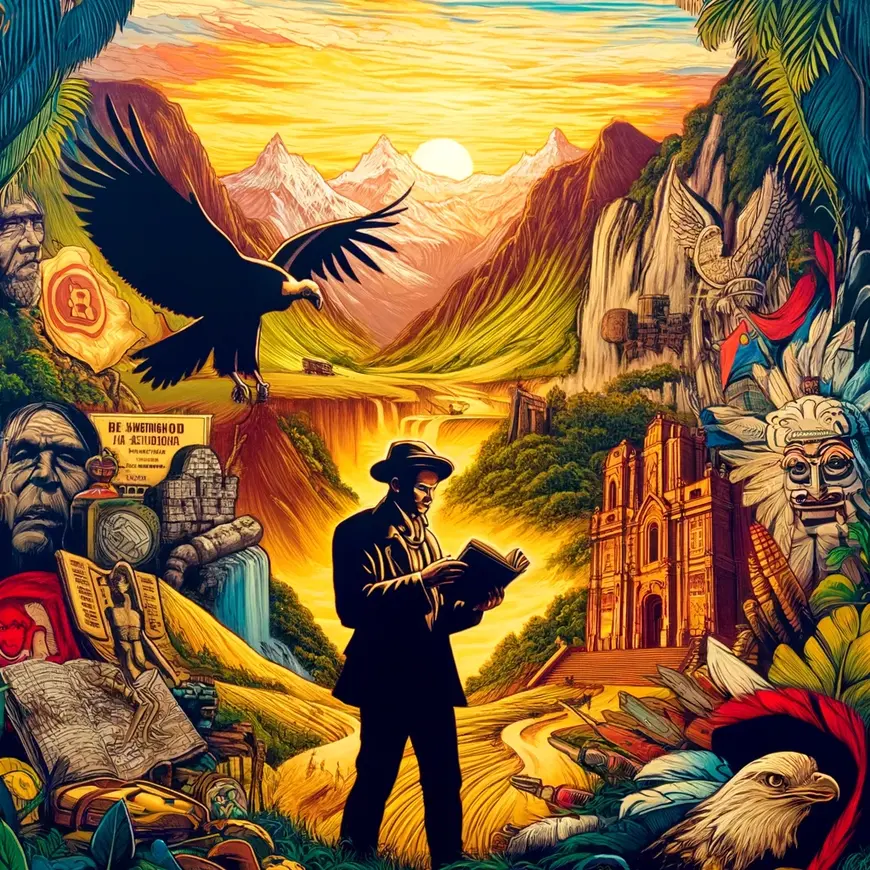
Famous Works of Pablo Neruda
- 1923 — Crepusculario (Book of Twilight); poetry. First collection; youthful lyric poise with dusk-lit images.
- 1924 — Veinte poemas de amor y una canción desesperada (Twenty Love Poems and a Song of Despair); poetry. Love sequence that made the young poet famous and remains widely read.
- 1933–1935 — Residencia en la tierra (Residence on Earth); poetry. Surreal density and modern unease coalesce across two volumes that reshaped his style.
- 1937 — España en el corazón (Spain in Our Hearts); poetry. Civil War witness printed in wartime; grief and solidarity in public song.
- 1950 — Canto general (General Song); poetry. Pan-American epic in fifteen parts; geology, flora, labor, and struggle braided into one chronicle.
- 1952 — Los versos del capitán (The Captain’s Verses); poetry. Intimate love poems, first issued anonymously in Italy.
- 1954 — Odas elementales (Elemental Odes); poetry. Everyday objects praised in lucid lines; start of a celebrated ode cycle.
- 1958 — Estravagario (Extravagaria); poetry. A personal, autumnal turn; wit and freedom after years of public thunder.
- 1959 — Oda al gato (Ode to the Cat); poem (in Navegaciones y regresos / Voyages and Homecomings). A playful, precise praise of feline mystery that became one of the best-loved odes.
- 1959 — Cien sonetos de amor (One Hundred Love Sonnets); poetry. A sustained address to Matilde Urrutia, arranged by hours of day.
- 1962 — Plenos poderes (Fully Empowered); poetry. Nimble late mode; reflective, open, and deliberately humane.
- 1964 — Memorial de Isla Negra (Isla Negra: A Notebook); poetry. Five-volume poetic autobiography gathering places, selves, and seasons.
What fed the fire: influences on Pablo Neruda
Neruda learned by trying on tools and keeping what worked. I hear him borrowing freedom, music, and courage, then turning them toward ordinary life. Whitman’s open catalogs offered space for crowds and rivers without losing tenderness.
- Walt Whitman — form and breath: Leaves of Grass (1855–1892) showed how a poem can speak as a continent. Long lines, lists, and democratic address gave Neruda license to include mountains, miners, and markets in one rolling sentence.
- Gabriela Mistral — tenderness with gravity: Desolation (1922) pairs love with loss in a voice that refuses ornament. Early mentorship and example taught Neruda to honor plain nouns and care. Start with 👉 Desolation by Gabriela Mistral to hear that moral calm.
- Federico García Lorca — music and duende: Gypsy Ballads (1928) and Poet in New York (1940) proved that song can carry grief without melodrama. Spain’s war sharpened the lesson; public feeling can stay lyrical and exact.
- César Vallejo — experiment under pressure: Trilce (1922) bent grammar to ethical stress. Pablo Neruda learned that risk in language can honor suffering when clarity returns at the right moment.
- Arthur Rimbaud — visionary heat: A Season in Hell (1873) and Illuminations (1886) gave permission for surreal leaps. That charge surfaces in the denser passages of Residence on Earth before his voice clears again.
- Vicente Huidobro — avant-garde nerve: Altazor (1931) argued that language can invent its world. Neruda took the confidence, then chose a warmer register for people and things.
Across these threads, praise as a practice becomes Neruda’s signature. He keeps the political gaze, the tender eye, and the big breath, but he brings them down to onions, salt, and sea so that the world feels shared, not distant.
After Pablo Neruda: voices that widened because he did
His poems taught many writers how to be public and intimate at once. I hear the lesson travel as steadiness, praise, and courage. Technique as conscience is the trait that sticks.
- Ernesto Cardenal — civic lyric made human: Epigrams (1961) mixes love notes with protest. Plain diction and clear address echo Neruda’s odes while keeping politics local and lived.
- Raúl Zurita — landscape as moral field: Purgatory (1979) maps grief onto Chile’s coast and sky. The large civic lyric—after dictatorship—carries Neruda’s scale, but with scar tissue and stone.
- Mario Benedetti — office light, real hearts: Poems of the Office (1956) turns desks and corridors into sites of tenderness. Everyday detail and accessible cadence show a Nerudian belief in ordinary dignity.
- Gioconda Belli — eros and republic: Line of Fire (1978) (English selections) brings the love lyric to the square. Praise and protest share one heartbeat, a balance many learned from Pablo Neruda.
- Octavio Paz — reflective architecture: Sunstone (1957) folds myth and city into a single spiral. The kinship is tonal rather than direct; both trust vast structures to carry feeling. For a prose river fed by poetry, try 👉 Love in the Time of Cholera by Gabriel Garcia Marquez.
How the “I” becomes a chorus – Style & Technique
Pablo Neruda writes an “I” that welcomes “we.” The speaker starts intimate, then widens until a city can fit inside a single breath. I hear a public lyric that breathes, where love, bread, and rivers sit at the same table. In Twenty Love Poems and a Song of Despair, the voice leans close; in Canto General, it steps into plazas and forests without losing tenderness.
Perspective shifts cleanly. A whisper turns outward to address readers as neighbors, not spectators. Second person as invitation appears in odes and political poems, a gentle way to say: come see what I see. The poet keeps the camera low to the ground, so objects carry dignity. Socks, onions, and salt are not props. They are citizens.
Time expands and contracts. Sequences like Residence on Earth feel tidal, with recurring images that mark returning hours. A single line can hold night, labor, and the next dawn because syntax stays flexible.
Comparisons help tune the ear. For a prose mirror of multiplicity and wonder in the everyday, read 👉 The Aleph by Jorge Luis Borges and notice how one point of view holds worlds. When you want narrative pressure braided with public feeling, try 👉 The Green House by Mario Vargas Llosa.
Plain words, radiant objects – Syntax, Imagery, Tone
I love how Pablo Neruda trusts plain words with deep light. Nouns arrive first. Verbs stay active. Adjectives earn their keep. The line grows by addition, not ornament, so rhythm feels like walking beside the sea. He uses syntax as a tide, building lists that crest into praise or grief, then fall back to a simple statement that lands like truth.
Imagery does the moral work. Objects with aura—onions, bread, stones, oceans—carry human feeling without lecture. The poet watches texture, weight, and smell until a thing becomes a companion. In the odes, attention turns into ethics: to praise is to care. Even in darker books, a shell or a star keeps a small, stubborn brightness.
Tone stays warm while the gaze stays exact. Tender, not soft is the balance. Humor enters through surprise, never mockery. Anger, when it comes, names harm clearly and then returns to human needs: water, labor, shelter, love. I notice how often a stanza ends on a concrete image rather than a slogan; the poem trusts the reader to finish the thought.
If you want nearby guides to economy and radiance, pair this sensibility with 👉 The Hour of the Star by Clarice Lispector, where spare lines hold a life’s ache, or revisit 👉 The Book of Imaginary Beings by Jorge Luis Borges to feel how precise naming can make wonder plausible.
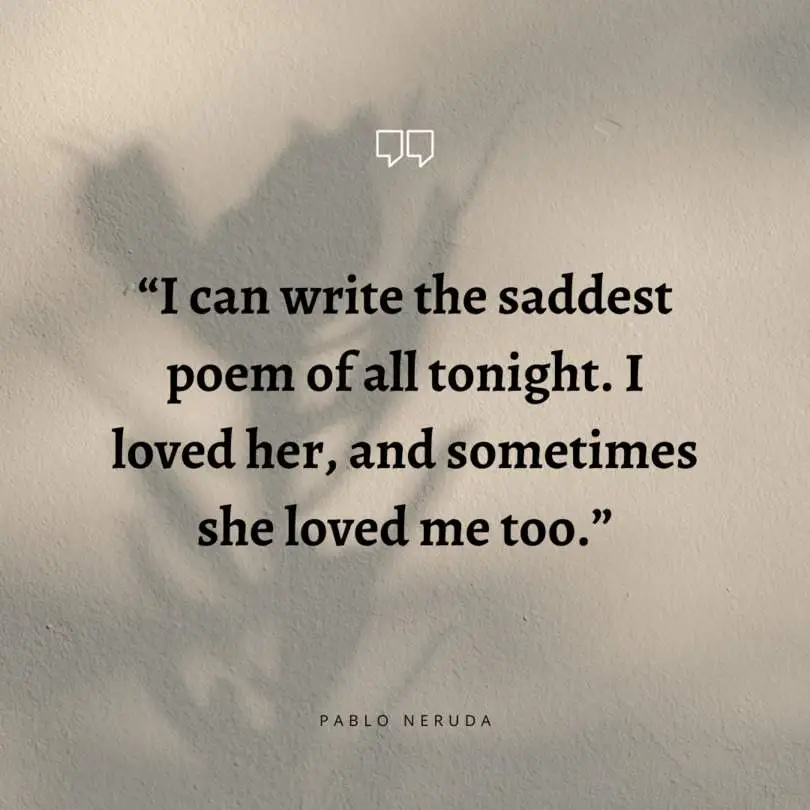
Famous Quotes by Pablo Neruda – The lines that keep opening
- “Tonight I can write the saddest lines.” A plain opening that lets feeling arrive without flourish; the grief is measured, not staged.
- “Love is so short, forgetting is so long.” Time becomes the argument; brevity hurts more because memory refuses to end.
- “I want to do with you what spring does with the cherry trees.” Desire turns seasonal and generous; renewal is the image, not possession.
- “It so happens I am sick of being a man.” A confession that widens into social weariness; the poem seeks air, not despair.
- “Rise up to be born with me, my brother.” History becomes invitation; the speaker gathers the living and the dead into a shared task.
- “Now we will count to twelve and we will all keep still.” Silence turns into ethical practice; the poem asks for a pause large enough to hear others.
- “Onion, luminous flask, your beauty formed petal by petal.” Praise treats a common thing like a cathedral; attention becomes gratitude.
- “I like for you to be still; it is as though you were absent.” Distance inside love can be tender or uneasy; the poem trusts readers to weigh both.
- “I love you as certain dark things are to be loved, in secret, between the shadow and the soul.” Quiet intensity without ornament; intimacy tuned to mystery.
Small doors into a very large life – Trivia Facts about Pablo Neruda
- Three houses, three museums: Isla Negra, La Chascona (Santiago), and La Sebastiana (Valparaíso) preserve rooms, collections, and views that shaped the poems. 🌐 Fundación Pablo Neruda (Isla Negra Museum House) confirms the sites and their exhibits.
- A pen name with roots: Born Ricardo Eliécer Neftalí Reyes, he chose “Pablo Neruda” in youth, later making it legal; Jan Neruda’s surname offered a literary shelter for early publication.
- Three museum houses network: Isla Negra, La Chascona, and La Sebastiana form a coordinated set of foundations, archives, and public programs.
- Teacher to a teacher: As a student in Temuco, he was encouraged by Gabriela Mistral, whose guidance and example set a high bar for tenderness and clarity.
- Spain’s imprint: Work as consul in Madrid drew him into circles with Federico García Lorca and others, setting the stage for public witness during the Civil War.
- A continental epic: Canto General mapped people, minerals, rivers, and battles into one song; the scale helped define a public lyric for the Americas.
- Nobel and a wider echo: The Nobel Prize in Literature (1971) recognized “a poetry that… brings alive a continent’s destiny and dreams.”
Reading the neighbors: For a landmark of Latin American narrative that shares public feeling and private fate, try 👉 One Hundred Years of Solitude by Gabriel Garcia Marquez.
Stages, classrooms, and the long echo of Pablo Neruda
Early readers met Pablo Neruda as a prodigy of feeling. Early praise, later argument became the pattern: Twenty Love Poems and a Song of Despair drew crowds and frowns in equal measure, while Residence on Earth won respect for difficulty and modern unease. Spain’s Civil War made the lyric public.
Universities placed the poems beside history and geography. Screens widened the circle as concerts, documentaries, and staged readings carried the voice past the page. Anthologies kept renewing the doorway; translators shaped tone for each generation, so editions felt like fresh rooms in the same house.
Today he sits in the syllabus and in the street. Weddings borrow lines, protests borrow cadences, kitchens borrow odes. A living classic is the fairest label: admired, contested, quoted, and still useful. If you want a strong starting shelf in English, pair a broad anthology with one focused book. Try The Poetry of Pablo Neruda (ed. Mark Strand) for range, then add The Essential Neruda: Selected Poems (ed. Mark Eisner) for a tighter lens.
Follow with the odes in a single volume to feel how attention becomes praise, and return to Canto General when you want the continental scale. Biographies by Adam Feinstein or Mark Eisner supply context without smothering the voice. Read one guide, then return to the poems. The poems do the lasting work.
What to hold, and where to start tonight
Pablo Neruda shows how a lyric can welcome the world. I come back for the steadiness: love beside bread, sea beside city, tenderness beside grief. Plain words, deep light is the feeling that lingers after a dozen lines. The speaker starts as “I,” then becomes “we,” so readers move from witness to company.
The life arc explains the range. Diplomatic posts opened continents; war and exile demanded public courage; late mornings at the desk turned attention into praise. Praise as a practice is the secret engine: name the onion, honor the worker, keep faith with the sea. Style keeps this honest—long lines that breathe, lists that crest, verbs that carry weight.
Themes gather as you read. Love and matter ask the body to teach the mind. Witness and belonging pull the lyric outward without losing the room. Exile and return sharpen the tone, then the odes warm it again. None of this needs jargon. A kitchen, a street, a shoreline will do.
Start small, then widen. Begin with a short selection from Elemental Odes to hear clarity without strain. Move to a landmark like Canto General when you want history to sing. Add intimacy with One Hundred Love Sonnets to feel how tenderness and craft share one breath. When you crave density and risk, open Residence on Earth and let the darker tide work on you.
Take ten quiet minutes and choose one poem aloud. Vary your pace, circle an image, and close the book only when a question forms. Read to feel, then to see—the poems will meet you halfway, and the world may look a touch more shareable when you’re done.
More Reviews of Works by Pablo Neruda
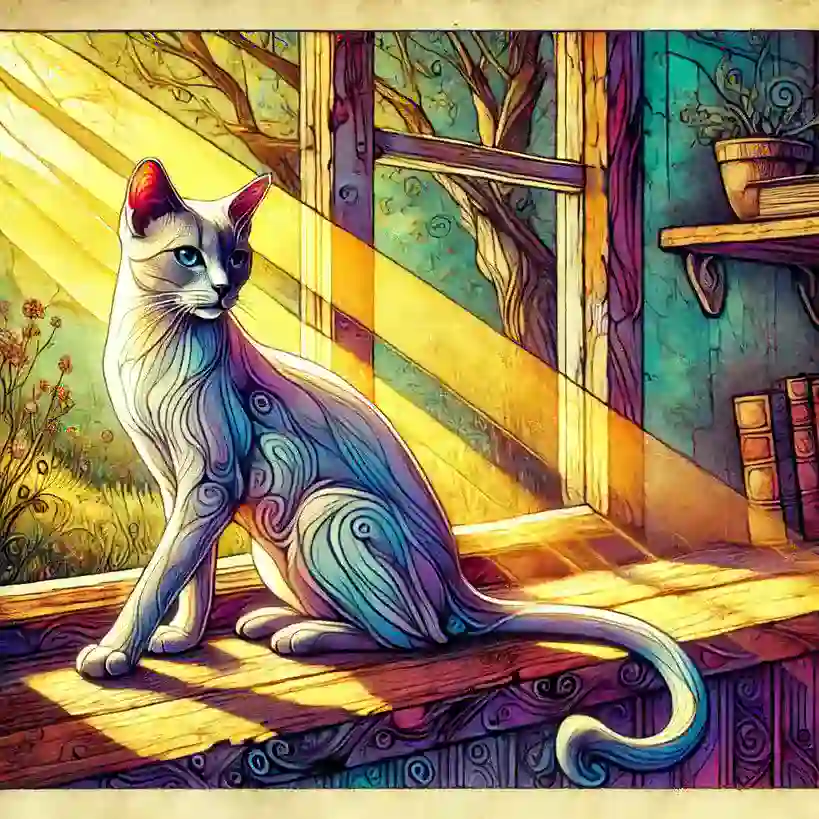
Ode to the Cat by Pablo Neruda – A Quiet Giant in Verse Pablo Neruda’s Ode to the Cat is…
Pablo Neruda’s Canto General – The Soul of Latin America Canto General is one such book by Pablo Neruda that…