Captain Pantoja and the Special Service
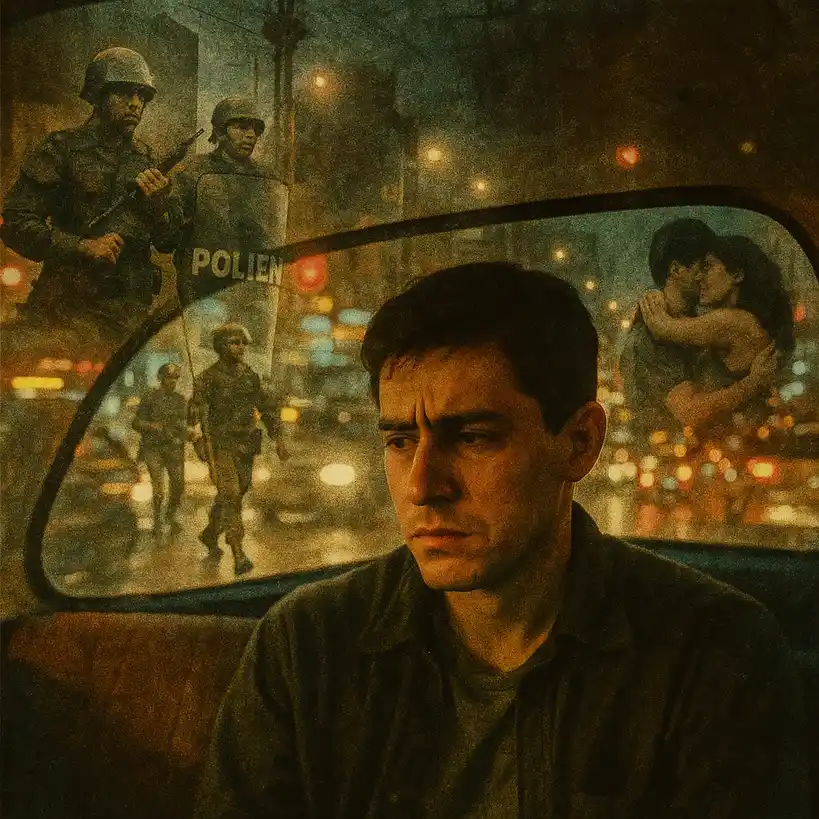
Captain Pantaleón Pantoja receives an assignment suited to his reputation for discipline and completely opposed to his moral expectations. Soldiers stationed in the Peruvian Amazon have committed sexual assaults against local women. The army wants the scandal controlled without examining the institution that produced it.
Mario Vargas Llosa builds the central joke from this response. The officers secretly order Pantoja to create a mobile prostitution service for isolated garrisons. The mission must remain unofficial, but its operation must meet military standards. The institution treats women as logistical equipment. Instead of confronting violence, command converts sexual access into a regulated benefit. The proposed solution preserves the assumption that male desire is irresistible while transferring its consequences onto recruited workers.
Collective breakdown receives a different institutional response in 👉 Blindness by José Saramago. Saramago shows authorities meeting crisis with confinement and abandonment. The writer uses comedy, yet both novels expose systems that protect themselves by redefining human beings as manageable categories.
Pantoja initially objects. Nevertheless, obedience is the foundation of his identity. The absurd order becomes sacred because it is an order. In Captain Pantoja and the Special Service, the army’s hypocrisy appears immediately. Senior officers demand secrecy because the mission would embarrass them, even though they consider it necessary. Pantoja must behave like a civilian while remaining perfectly military. The contradiction does not obstruct the service. It becomes the condition of its spectacular growth.
Pantoja Makes the Impossible Efficient
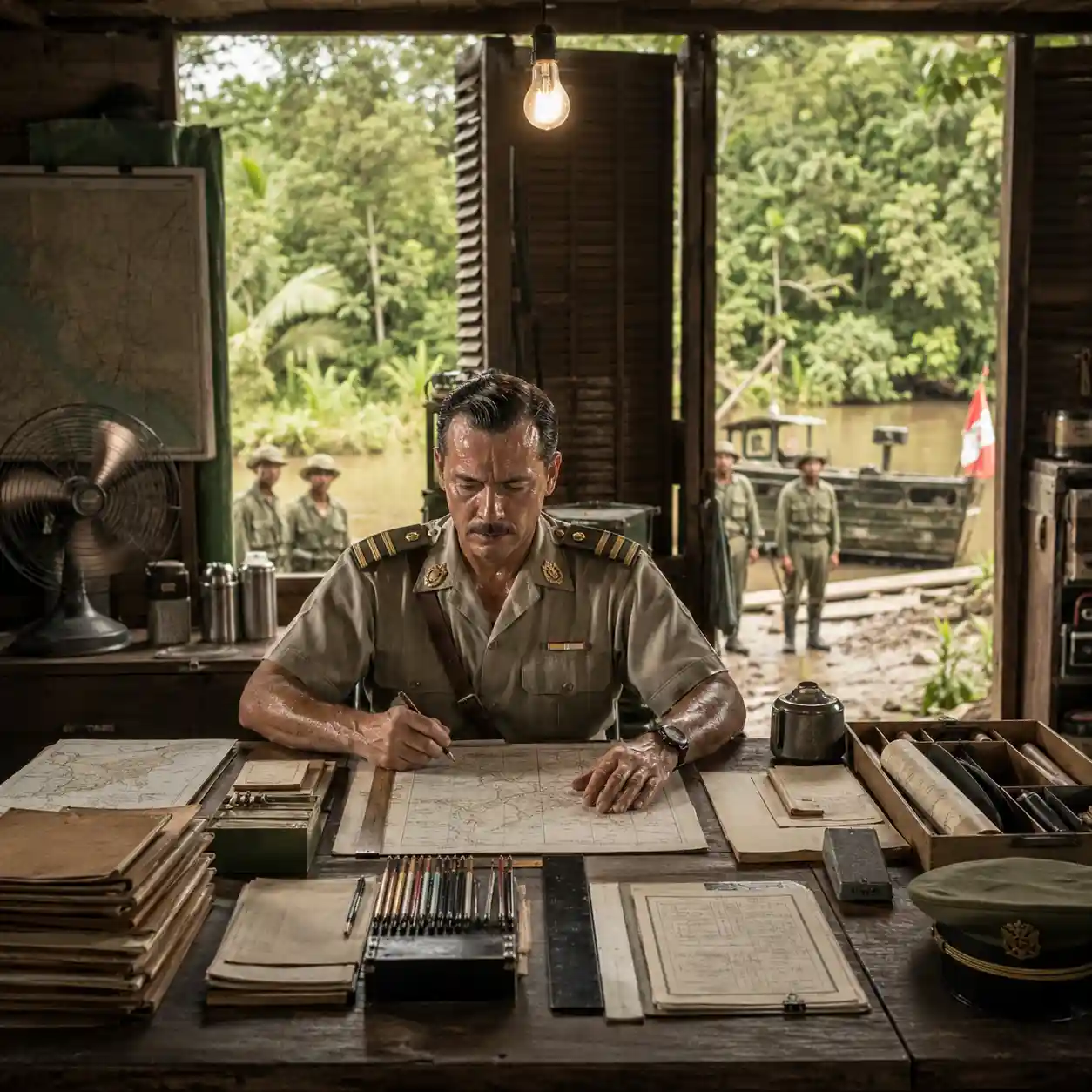
Pantoja studies demand, transportation, staffing, medical checks, timetables, security, and projected growth. He recruits through local intermediaries, creates procedures, and transforms an improvised scheme into a highly organized service.
His excellence produces the novel’s sharpest comedy. Competence reveals the obscenity of the assignment. An inefficient officer might have allowed the operation to disappear inside disorder. Pantoja’s reports make its scale measurable. He calculates how many “services” each garrison requires, how long visits should last, and how personnel can be moved by boat. The language of optimization separates physical activity from the women performing it.
Grotesque narration also exposes institutional history in 👉 The Tin Drum by Günter Grass. Grass uses an unreliable performer to disturb respectable accounts of the past. The novelist lets official language incriminate itself through excessive clarity.
Pantoja does not begin as a sensual adventurer. He is a serious husband, a dutiful son, and a professional who dislikes disorder. Yet success gradually absorbs him. The mission becomes the purest expression of his identity.
This is why the satire reaches beyond military sexuality. Any organization can make a destructive purpose appear respectable once it acquires targets, forms, transport plans, and favorable statistics. In Captain Pantoja and the Special Service, bureaucracy does not suppress desire. It industrializes desire while pretending that quantification has removed its ethical content.

Documents Speak More Clearly – Captain Pantoja and the Special Service
The novel does not rely on a single conventional narrator. Military memoranda, reports, letters, radio broadcasts, newspaper accounts, and conversations build the story from competing forms of evidence.
Pantoja’s documents are unintentionally comic because their style remains solemn while their subject becomes increasingly explicit. Official precision intensifies absurdity. Every euphemism tries to preserve military dignity and instead reveals how much labor is required to disguise the truth. Personal letters offer another register. Pochita writes about marriage, suspicion, and domestic frustration. Her language exposes costs that Pantoja’s reports cannot count.
The treatment of official history in 👉 One Hundred Years of Solitude by Gabriel García Márquez provides a revealing contrast. García Márquez shows public memory erasing mass violence. He stages several records at once until the contradiction between institution and experience becomes impossible to hide.
Radio personality El Sinchi introduces performance, rumor, blackmail, and regional pride. His broadcasts can expose wrongdoing, but he also understands information as a commodity.
No medium possesses moral authority by itself. A military report may contain accurate numbers and a dishonest purpose. A sensational broadcast may reveal a truth for corrupt reasons. A private letter can be emotionally sincere while preserving its own blind spots. The formal variety makes Captain Pantoja and the Special Service move quickly. Readers assemble the institutional disaster from documents whose authors rarely comprehend the full design.
The Visitors Perform the Work Behind the Joke
The women recruited into the Special Service are officially described through sanitized categories. Pantoja subjects them to selection, medical examination, scheduling, and behavioral rules. Their labor becomes visible as data while their individual circumstances receive less institutional attention.
Chuchupe helps connect the captain with the local sex trade. Olga Arellano, known as the Brazilian, later becomes the service’s most prominent visitor. The women make Pantoja’s success possible. Yet the army praises his organizational ability rather than their work.
Political history enters domestic lives through women’s memories in 👉 The House of the Spirits by Isabel Allende. Allende gives female testimony the power to revise a patriarchal record. The author keeps closer to farce, which creates a more uncomfortable problem: the visitors can be vivid characters while remaining objects inside the joke’s machinery.
The service may reduce assaults against local civilians, but that practical result does not make the arrangement just. It redistributes sexual risk toward women whose economic options are limited. Regulation can improve conditions without ending exploitation. Medical checks, payment, transport, and rules matter. They also make it easier for command to describe the system as humane.
Captain Pantoja and the Special Service lets laughter and discomfort coexist. Readers admire the operation’s ingenuity while seeing what that admiration overlooks. The women occupy the boundary between employee and military resource, public scandal and secret necessity. When the institution later abandons the service, they will carry consequences that its officers can escape.
The Secret Mission Enters Pantoja’s Marriage
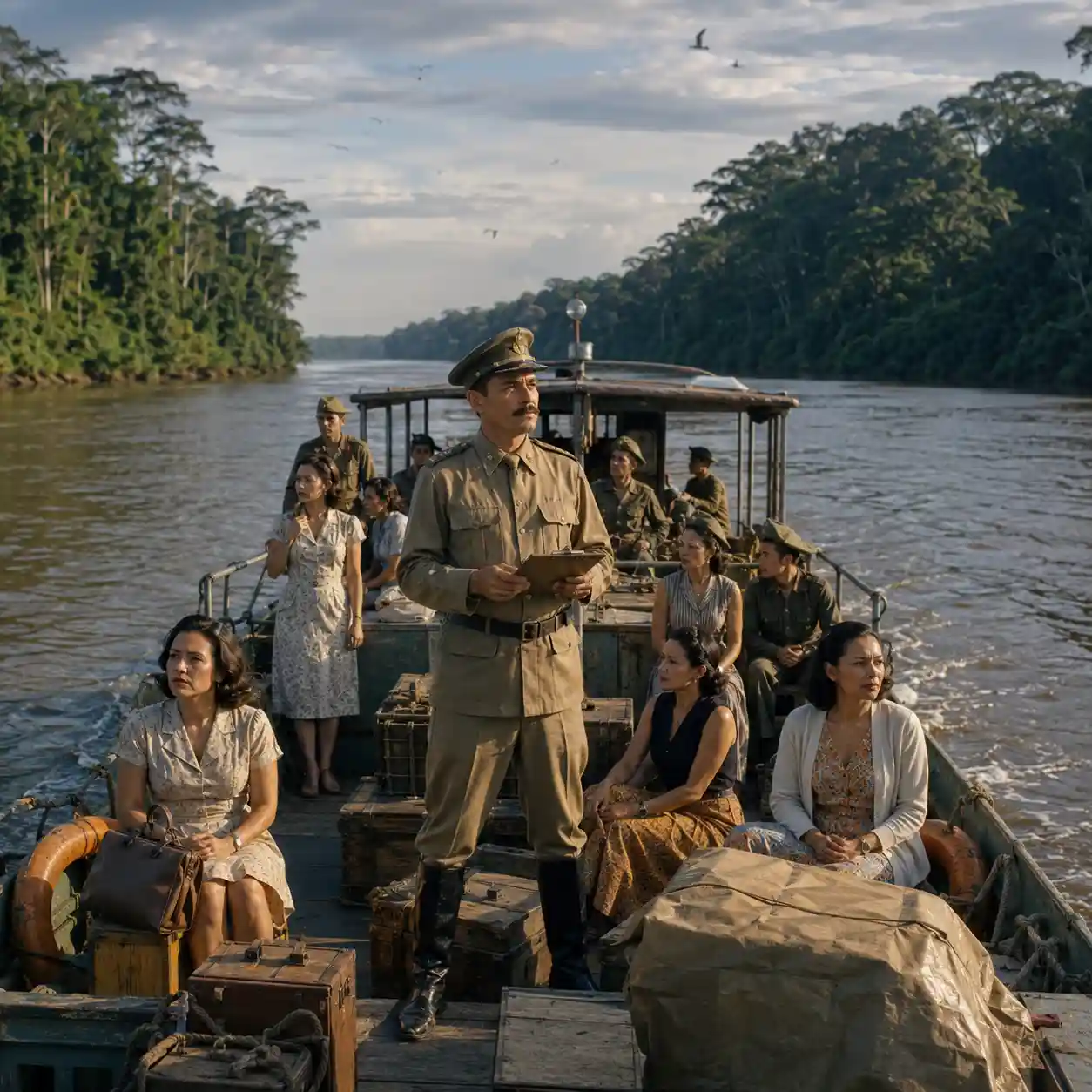
Pantoja conceals his assignment from his wife, Pochita, and his mother. The secrecy is officially required, but it also divides his identity. At home he must appear unchanged. At work he manages an expanding sexual institution.
The separation cannot hold. His schedules, absences, and evasions enter domestic life long before Pochita knows the full truth. Official secrecy becomes personal deception. The Brazilian intensifies the collapse. Pantoja’s relationship with her crosses the boundary between organizer and participant. The man chosen because he appeared immune to vice becomes involved in the world he was assigned to regulate.
Sexual freedom and social control also collide in 👉 Gabriela, Clove and Cinnamon by Jorge Amado. Amado’s Gabriela resists possession through vitality and independence. His Brazilian operates inside a harsher institutional structure, where charisma increases both influence and exposure.
Pantoja’s affair is not merely proof that every moralist is secretly corrupt. His transformation is more specific. He becomes loyal to the system he created. Its success gives him purpose, status, and a private world beyond ordinary military life.
Pochita recognizes betrayal at two levels. Her husband has deceived her sexually, but he has also made their marriage subordinate to a mission she was never allowed to evaluate. In Captain Pantoja and the Special Service, obedience does not protect the family from moral disorder. It transports institutional hypocrisy directly into the home.
El Sinchi Converts Secrecy Into Public Entertainment
El Sinchi presents himself as the voice of Amazonian morality and regional interests. Through radio, he can transform rumor into public pressure. He discovers enough about the Special Service to threaten Pantoja’s operation. His conduct complicates any simple opposition between courageous journalism and military concealment. El Sinchi can expose hypocrisy, yet he also seeks influence and payment. Truth becomes valuable because somebody fears it.
Pantoja initially treats publicity as a technical danger. He tries to preserve secrecy through negotiation rather than questioning why the institution depends upon concealment. The captain’s problem is not that the service is ethically indefensible. It is that exposure would violate his orders. Radio changes the scale of the farce. What began as a classified response to local misconduct becomes a story that civilians, religious authorities, soldiers, and commanders can contest.
Public morality depends on selective knowledge. Many people tolerate prostitution as long as it remains unofficial. The scandal grows when the army’s involvement becomes undeniable, not when the underlying exploitation first occurs. The media chapters also interrupt Pantoja’s controlled reports with emotional performance. Voices overlap, accusations accelerate, and institutional language loses command over the story.
In Captain Pantoja and the Special Service, secrecy never removes an activity from public life. It only creates unequal access to knowledge. Once El Sinchi broadcasts that knowledge, senior officers prepare to distance themselves from the system they ordered. Pantoja’s efficiency has produced evidence too extensive to disappear quietly.
Duty, Secrecy, and Euphemism: Quotes from Captain Pantoja and the Special Service
- “I’ve always tried to do my duty, nothing more.” Pantoja’s defining virtue contains the mechanism of his downfall. He asks whether an order can be executed, not whether it should exist.🌐 Source
- “This business demands the utmost secrecy.” Secrecy protects the army’s reputation rather than the people harmed by its soldiers. Institutional appearance immediately outranks accountability.
- “Dress as a civilian, mix with civilians, work as a civilian.” The army demands that Pantoja conceal his identity while maintaining military discipline. His divided role anticipates the collapse of his professional and private selves. 🌐 Ecampus
- “But always think as an officer.” The instruction exposes the assignment’s central contradiction. Pantoja must look independent while remaining psychologically governed by the institution.
- “And do they call rape a ‘misfortune’ nowadays? … Because that’s what it was: rape.” Father Beltrán temporarily punctures the officials’ euphemisms. Precise language restores the violence that bureaucracy attempts to hide. 🌐 UBC.CA
- “It has to be the heat, the climate, don’t you think?” Geography becomes an excuse for human behavior and institutional failure. The absurd rationalization is funny precisely because its moral evasion is recognizable.
Efficiency Gone Mad: Eight Facts About Captain Pantoja and the Special Service
- The farce began with reported fact: The author encountered stories about an army-organized prostitution service during visits to the Peruvian Amazon. The improbable institution became the foundation of Pantaleón y las visitadoras, 🌐 published in 1973.
- Its English edition arrived in 1978: Gregory Kolovakos and Ronald Christ translated the novel as Captain Pantoja and the Special Service. Their title preserves the military euphemism while omitting the Spanish pun surrounding visitadoras, or “female visitors.”
- He originally resisted comedy: He first attempted to treat the material seriously. The contradiction between solemn bureaucracy and an officially administered sexual service eventually convinced him that parody was the form the story demanded.
- Pantoja is selected because he is incorruptible: His sobriety, fidelity, administrative brilliance, and unquestioning obedience supposedly make him the safest officer for the assignment. The satire begins when admirable professional qualities produce an increasingly monstrous institution.
- The narrator nearly disappears: Conversations collide with military reports, statistics, letters, radio broadcasts, newspaper material, dreams, and memoranda. Readers assemble the story from institutional voices instead of receiving a stable authorial explanation.🌐 Vanderbilt Library
- Language performs the moral concealment: Rape becomes a “misfortune,” prostitutes become “visitors,” and organized exploitation becomes a “Special Service.” This bureaucratic distortion of reality creates a comic but disturbing parallel with 👉 Animal Farm by George Orwell.
- Success causes the catastrophe: Pantoja measures demand, transport, productivity, and employee performance so efficiently that the supposedly secret operation expands beyond control. The army condemns the scandal produced by the very obedience it demanded.
- It has been filmed twice: The writer co-directed a 1975 adaptation, while Francisco Lombardi directed the better-known 1999 film. Its mixture of entertainment, institutional violence, and compromised survival also complements 👉 Mother Courage and Her Children by Bertolt Brecht.
Brother Francisco Builds a Rival Organization
Alongside the Special Service, a religious movement spreads through the Amazon. Brother Francisco preaches salvation through crucifixion. His followers begin with insects and animals, then move toward human sacrifice.
The cult initially appears to be a separate grotesque subplot. Gradually, its resemblance to Pantoja’s operation becomes clearer. Both systems organize bodily acts through ritual, hierarchy, special language, and promises of relief.
Desire and devotion become administrative forces. Pantoja measures sexual demand. Brother Francisco channels fear and spiritual longing. Each structure expands because it offers a definite procedure for needs that ordinary institutions have failed to address.
Within Latin-American literature, the parallel also challenges exotic accounts of the jungle as a place where irrationality simply flourishes. The military bureaucracy is no less strange than the cult. Its memoranda merely give absurdity a modern vocabulary.
Pantoja believes in numbers, while Francisco’s followers believe in sacrifice. Yet both systems treat individual bodies as means toward collective order. Modern planning does not guarantee moral reason. The captain’s tables may be more accurate than the preacher’s visions, but accuracy cannot decide whether the organized purpose is just.
He avoids making the Amazon a passive background. Heat, distance, river transport, local media, sex work, military isolation, and religious enthusiasm shape how the institutions grow. Captain Pantoja and the Special Service presents rationality and fanaticism as distorted relatives. Both promise to control appetite. Both create new appetites through the systems built to manage them.
The Army Sacrifices Its Most Obedient Officer
The Brazilian’s death forces Pantoja to choose between secrecy and loyalty to the people under his command. He attends her funeral in uniform and publicly honors her service. The gesture recognizes her dignity, but it also exposes the military connection that senior officers need to deny. Pantoja finally disobeys in order to act honorably. His uniform acknowledges responsibility at the moment the institution demands distance.
The army closes the Special Service and treats its visibility as his failure. Commanders who authorized the mission can preserve their reputations because the classified structure isolates accountability around the officer who implemented it. Pantoja’s tragedy remains comic because he still understands events through military duty. He does not become a revolutionary critic of the system. Even after humiliation, he wants another assignment.
Obedience survives the betrayal of authority. The army eventually sends him to a remote post near Lake Titicaca. His career continues, but the institution has removed the evidence of its experiment from the Amazon.
The conclusion of Captain Pantoja and the Special Service does not restore the earlier moral order. Pochita has discovered the deception. The visitors have lost the structure that employed them. The victims of military violence remain outside the official resolution.
Pantoja has been punished not because the operation was exploitative, but because it became public. That distinction completes the satire. The model officer created exactly what his superiors requested. His perfection made their hidden assumptions too visible to defend.