The Snowman by Jo Nesbø: Murder in the First Snow
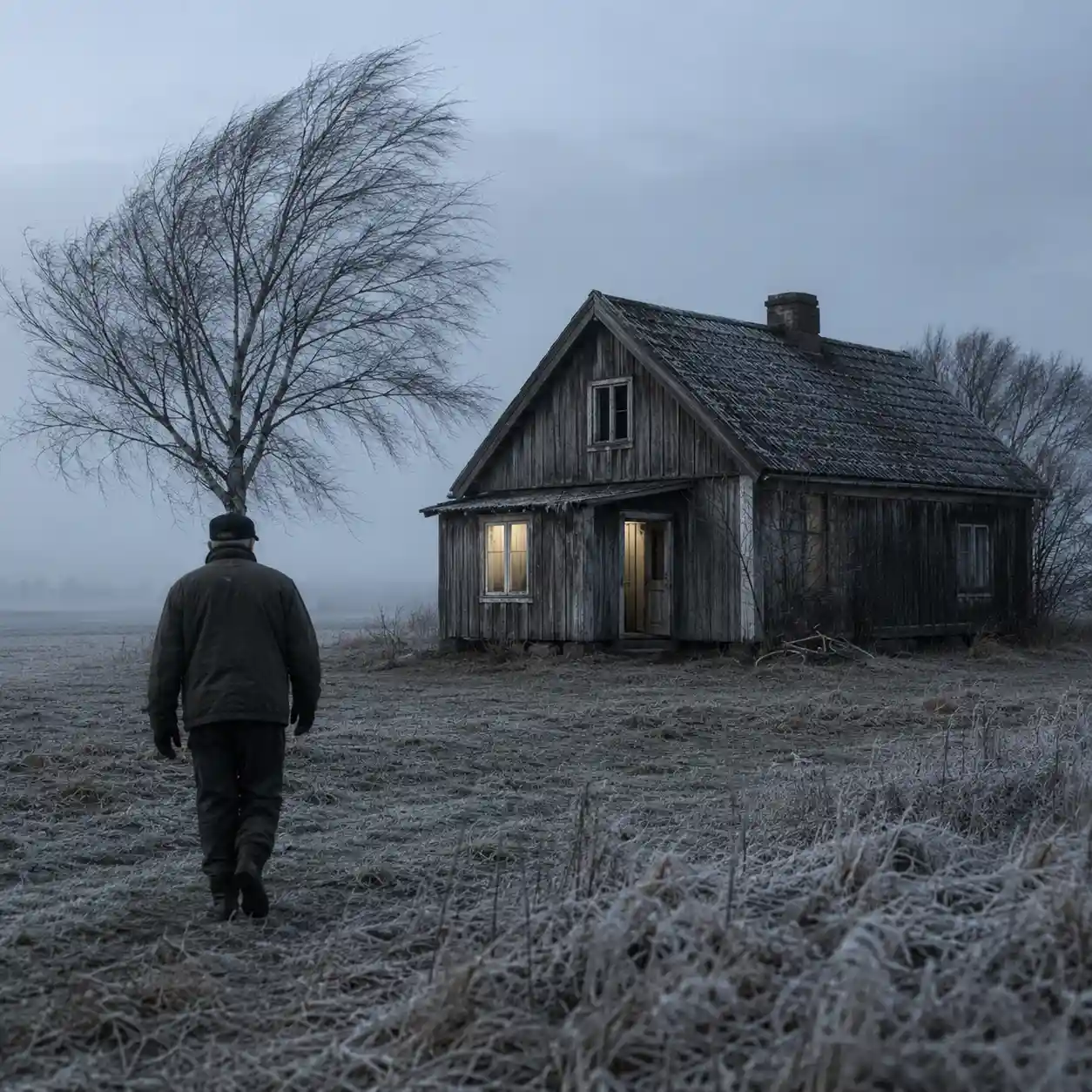
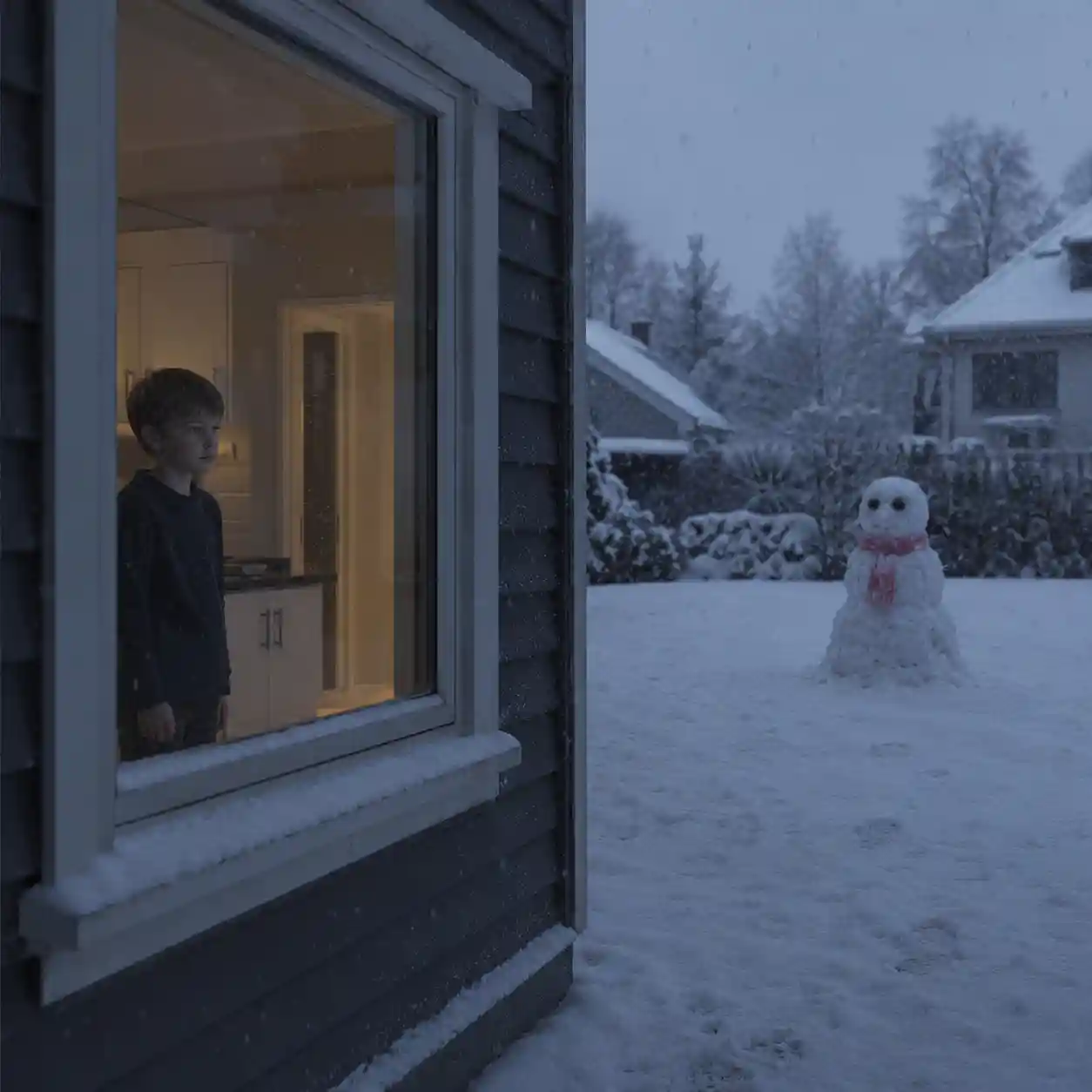
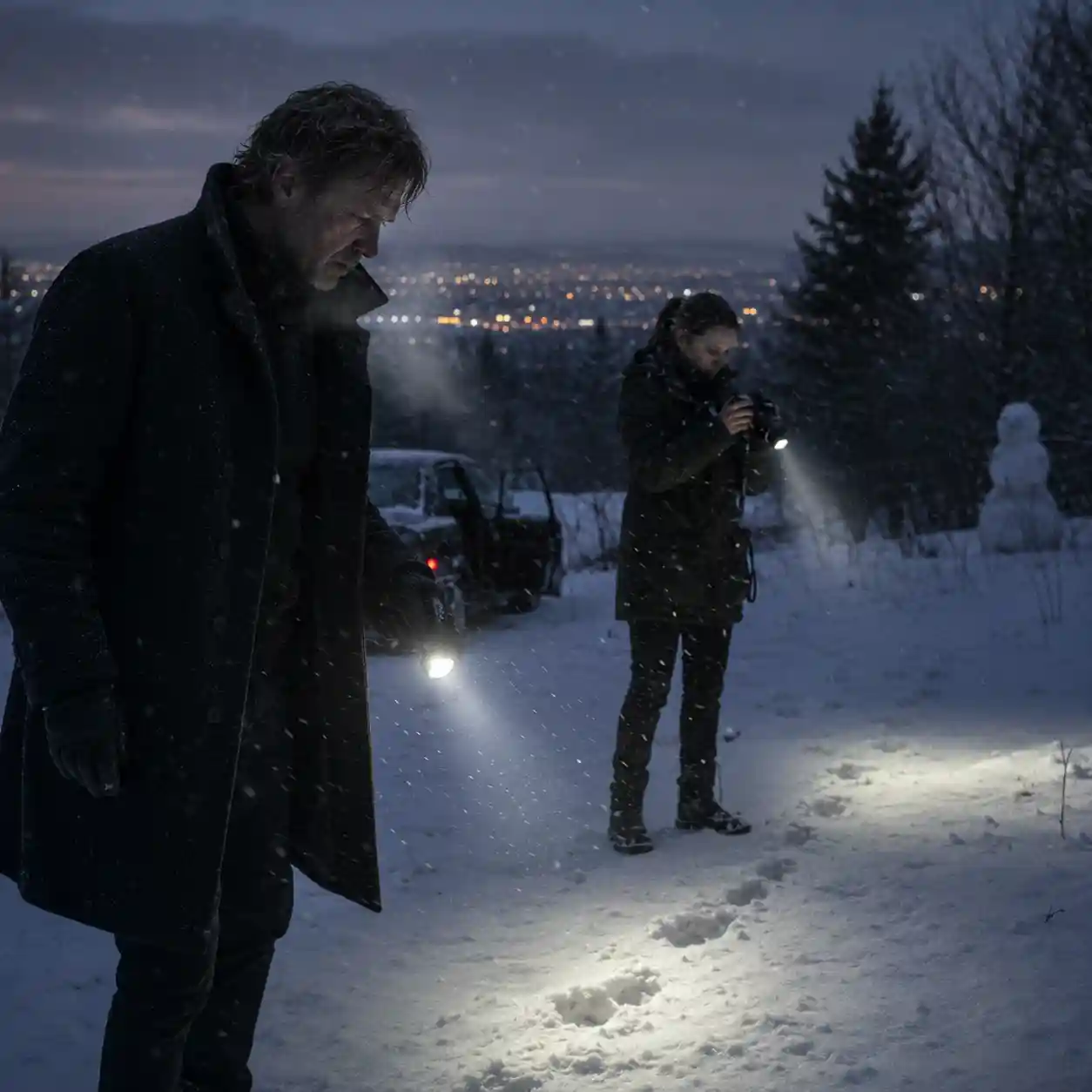
A boy named Jonas wakes after Oslo’s first snowfall and discovers that his mother, Birte Becker, has disappeared. Outside stands a snowman that nobody in the family remembers building. Birte’s pink scarf has been placed around its neck.
Jo Nesbø turns three familiar objects into a complete threat: fresh snow, a child’s creation, and a mother’s clothing. Domestic safety has been rearranged overnight. Nothing supernatural has occurred, yet the scene feels governed by an intelligence that has entered the family’s private space.
Inspector Harry Hole suspects that the disappearance belongs to a pattern. A strange letter addressed to “Mister Police” has already challenged him to recognize something his colleagues have missed. The snowman functions as signature, witness, and taunt.
Atmospheric investigation also drives 👉 The Hound of the Baskervilles by Arthur Conan Doyle. Doyle places rational detection inside a landscape shaped by inherited fear. He reverses the temperature and setting, but he uses the same productive tension between physical evidence and an image that seems to possess supernatural intention.
The symbol is frightening because it will melt. A snowman appears solid while the temperature holds, then loses its form and erases part of the crime scene. From its opening disappearance, The Snowman makes winter an accomplice. The season provides concealment, visibility, ritual, and a deadline. So Harry must learn how to read what the killer has built before the weather changes.
Harry Hole Sees a Pattern Nobody Wants
Harry has studied serial killers with the FBI, but Norway’s police culture has little practical experience with the category. When he connects Birte’s disappearance to older cases, the theory initially seems too dramatic. Missing women have been classified separately, investigated unevenly, or absorbed into explanations about marriage and voluntary departure.
The killer survives inside administrative separation. Each case looks incomplete on its own. Together they reveal women vanishing around the first snow, often with a snowman nearby.
Harry’s value lies partly in his refusal to respect the borders between files. He searches cold cases, compares family histories, and keeps testing links after individual suspects collapse. His thinking can appear intuitive, but the novel repeatedly grounds it in accumulated details.
The Snowman also preserves his familiar weaknesses. Harry is an alcoholic struggling to maintain sobriety. He resists authority, neglects ordinary routines, and depends on work to organize a life that becomes unstable outside an investigation. Recognition does not make him well adjusted. His sensitivity to criminal patterns coexists with failures of attention toward colleagues and loved ones.
The author avoids presenting this damage as magical proof of genius. Harry’s obsession helps him remain with the case, but it also narrows his world. Other investigators conduct essential work, and several mistakes follow when private motives overtake procedure. The detective is therefore not the opposite of the killer. Both are men who build systems from hidden connections. The moral difference lies in what they do when another person refuses to fit.
The Snowman Makes Childhood Hostile
A snowman ordinarily records play. It depends on collaboration, temporary weather, and the pleasure of giving a body to shapeless material. The killer adopts that form and converts it into surveillance. In The Snowman, the figure often appears close to a home. Its blank face looks inward. Buttons, clothing, or displaced body parts give it a relation to the missing woman. A child’s object becomes an adult message.
The buried return of violence in 👉 Tell No One by Harlan Coben offers a useful thriller comparison. Coben uses an unexpected digital message to reopen a death presumed settled. The writer uses a physical emblem whose simplicity makes it immediately memorable but difficult to interpret.
The snowman also changes the role of weather. Snow covers tracks while recording new footprints. Its brightness increases visibility, yet winter darkness restricts what can be seen. The same material can preserve and destroy evidence.
The landscape never remains neutral. Oslo’s streets, suburban gardens, cabins, and frozen spaces acquire menace because the killer understands how seasonal expectations guide attention. He repeats the image without exhausting it. Each appearance modifies what readers think the snowman announces. It can mark a victim, claim a location, mock the police, or reproduce a childhood memory.
This flexibility keeps the symbol from becoming mere decoration. The killer does not choose an arbitrary logo. He turns the unstable body of snow into a fantasy of purity, punishment, and rebirth. The thaw promises disappearance, but Harry’s investigation depends on proving that melted evidence still belongs to a pattern.
Paternity Turns Evidence Into an Ideology
The investigation uncovers a link involving hidden biological fathers. Several victims had children whose presumed fathers were not their genetic parents. Medical records and DNA therefore become central to the case.
This discovery gives The Snowman one of its most disturbing tensions. Scientific evidence can establish biological relationships, but the killer turns those relationships into moral verdicts. A genetic fact becomes an excuse for misogynistic punishment.
The documentary reconstruction of violence in 👉 In Cold Blood by Truman Capote also moves between evidence, family, and the stories imposed on victims. Capote’s method is nonfictional and ethically different. Both works nevertheless show how a crime attracts explanations that can threaten to replace the people who suffered it.
The novelist makes the killer’s logic coherent enough to investigate but never ethically sound. The targeted women are reduced to sexual conduct and maternity. Their marriages, fears, personalities, and reasons become irrelevant to the punitive system constructed around them.
The motive explains selection, not guilt. This distinction matters because thrillers can accidentally reproduce a murderer’s categories when they organize victims only through the traits that made them targets. Harry’s bond with Oleg provides the novel’s clearest counterargument. He is not Oleg’s biological father, yet their relationship carries affection, obligation, disappointment, and trust. Fatherhood emerges through repeated care rather than DNA alone.
The case therefore places two ideas of family against each other. One treats biology as destiny. The other accepts that attachment is made through conduct. The murders occur when the first idea becomes absolute.
Katrine Bratt Investigates Her Own Past
Katrine Bratt arrives from Bergen with intelligence, ambition, and a private interest in unsolved disappearances. She recognizes Harry’s abilities and challenges him more directly than many colleagues. Their attraction complicates the professional relationship, but her importance does not depend on romance.
Katrine has entered the investigation with concealed motives connected to her father, Gert Rafto. His earlier work on related cases and his compromised reputation have shaped her career. She is solving a crime and contesting an inheritance. Her secrecy eventually makes her look capable of the murders. He uses the suspicion as a major redirection, allowing accurate observations to appear incriminating when separated from motive.
Narrative reliability becomes a more radical weapon in 👉 The Murder of Roger Ackroyd by Agatha Christie. Christie changes the mystery through control of narration. The author creates uncertainty by placing truthful evidence inside misleading personal behavior.
A hidden purpose is not necessarily a criminal one. Katrine manipulates evidence and crosses procedural lines, but her actions grow from obsession with her father’s case rather than the serial killer’s ideology.
The subplot also exposes institutional anxiety. Police leaders worry about scandal, professional reputation, and the need for a convincing public account. Once suspicion settles on Katrine, administrative closure becomes tempting even while parts of the pattern remain unexplained. Harry’s refusal to stop distinguishes persistence from loyalty. He does not need Katrine to be innocent of every wrongdoing. He needs the evidence to account for every murder. That demand keeps the case open after a less stubborn institution might have declared success.
Rakel and Oleg Give the Investigation Its Heart
Harry’s former partner Rakel has built a life that cannot remain suspended until he becomes reliable. She is now involved with Mathias Lund-Helgesen, a doctor who appears stable, attentive, and emotionally available. Harry experiences Mathias as a painful contrast to himself.
Oleg complicates the separation. Harry loves Rakel’s son and occupies a paternal role without possessing a biological claim. Their relationship gives him access to family life while reminding him that affection cannot erase his absences.
Harry wants belonging without mastering continuity. Police work and alcoholism have repeatedly made him unpredictable. His love may be genuine, but Rakel must judge whether genuine feeling can support an ordinary household.
The Snowman uses this domestic triangle for more than personal background. The murder investigation centers on paternity, hidden sexual histories, and men who treat women’s choices as injuries against themselves. Harry’s jealousy could move toward a weaker version of that possessive logic. Instead, his connection with Oleg teaches another model. Care does not require biological ownership. Harry can matter deeply to the boy while accepting that Rakel remains free to choose a different partner.
The case eventually enters this private world. Rakel and Oleg stop being the safe life waiting beyond the investigation and become vulnerable within it. That convergence gives the final pursuit emotional force, although it also places familiar thriller pressure on a woman through the detective’s fear of losing her. His best corrective lies in Rakel’s clarity. She recognizes Harry’s courage and damage without confusing either quality with a promise of stability.
Professional Respectability Hides Predatory Systems
Doctors, police officers, journalists, researchers, and public figures circulate through the investigation. Their professions create access to confidential information, bodies, institutions, and public trust. The Snowman repeatedly asks what happens when authority becomes camouflage.
Medical knowledge is especially important. DNA testing can identify concealed paternity, while hereditary illness turns family history into physical evidence. Clinics and professional networks connect people who appear unrelated. Expertise can solve the crime and enable it. The same knowledge that helps Harry interpret a pattern can help another person select victims and conceal intent.
Corporate respectability hides criminal control in 👉 The Firm by John Grisham. Grisham gradually exposes a prestigious workplace as a system of surveillance and coercion. The novelist distributes that suspicion across several professions, making credibility itself part of the killer’s cover.
The police are not exempt. Information leaks, personal agendas distort evidence, and leaders consider sacrificing individuals to protect institutional reputation. The procedure seeks truth and manages appearances.
Harry operates awkwardly inside this system. His fame as an investigator gives him authority, yet his history makes him easy to discredit. The institution values his results more consistently than it protects his methods or health. This tension strengthens the procedural chapters. Evidence does not move automatically from discovery to truth. It must survive ambition, fear, media pressure, and the human preference for a suspect who makes the case feel finished. The murderer’s most effective disguise is therefore not invisibility. It is usefulness.
Darkness Has a Taste: Quotes from The Snowman
- “We’re going to die.” The novel’s opening warning immediately poisons an apparently ordinary journey. Its full meaning emerges only after the narrative returns to the scene from another perspective.🌐 Source
- “Sometimes you don’t know what you’re looking for until you find it.” Harry defines detection as attentive uncertainty. The investigator must notice what exists before deciding what it means.
- “Pain is a good thing; we would never survive without it.” Pain functions as biological warning and emotional evidence. The danger begins when suffering is ignored, concealed, or deliberately transferred to others.
- “There’s a strong social urge in man to be needed.” He connects belonging with vulnerability. The wish to appear indispensable can sustain love, professional ambition, manipulation, or violence. 🌐 Goodreads
- “For justice is a blunt knife, both as a philosophy and as a judge.” Institutional justice cannot separate guilt, grief, and collateral suffering as precisely as its defenders imagine.
- “We aren’t where it happens. We are what happens.” Place does not contain the novel’s violence; human choices do. The line turns geography into psychology and fate into accumulated action.
First Snow, Hidden Families: Eight Chilling Facts About The Snowman
- It is Harry Hole’s seventh investigation: Originally published as Snømannen in 2007, the novel comes between The Redeemer and The Leopard in the official series order. It can stand alone, although Harry’s relationships carry consequences from 🌐 earlier books.
- Don Bartlett created its English voice: Bartlett’s translation helped transform Nesbø’s Norwegian bestseller into an international crime phenomenon. The major American edition appeared in 2011, followed by the Vintage paperback in 2012.
- Eleven disappearances create the pattern: Harry connects the case with women who vanished over approximately a decade, each around the first snow. This use of pattern and misdirection makes the novel a modern counterpart to 👉 The ABC Murders by Agatha Christie.
- The killer is unusually important to the series: Norwegian publishing material describes the Snowman as Harry’s first “true” serial-killer opponent since The Bat. The case therefore tests investigative methods Harry learned from studying serial murder abroad.🌐 Source Books from Norway
- Parenthood is the hidden thematic engine: Beneath its icy imagery, the novel repeatedly examines paternity, inherited identity, domestic deception, and the fear that families rest upon false assumptions. Clues become intimate rather than merely forensic.
- Its construction resembles cinematic editing: Translator Don Bartlett observed that he thinks like a filmgoer, moving rapidly between scenes and visual perspectives. That pace modernizes the clue-driven detective tradition established by 👉 A Study in Scarlet by Arthur Conan Doyle.
- The screen adaptation assembled an exceptional cast: Tomas Alfredson’s 2017 film starred Michael Fassbender as Harry Hole, with Rebecca Ferguson, Charlotte Gainsbourg, Val Kilmer, and J. K. Simmons. Its troubled reception contrasted sharply with the novel’s international success.
Red Herrings Accelerate and Overload the Plot
The Snowman is engineered around repeated reversals. One suspect fits the medical evidence but not the chronology. Another possesses the right secrecy but the wrong motive. A death that appears conclusive later becomes part of the concealment.
The writer keeps several investigative systems active at once: old case files, DNA, missing-person records, sexual histories, medical expertise, letters, phone data, and physical traces in snow. Every answer opens a second question. This abundance creates momentum, but it also produces strain. Some coincidences arrive at exactly the moment the plot requires them. Women frequently enter the story as victims, sexual partners, suspects, or emotional tests for Harry. The brutal set pieces can threaten to overpower the individuality of the people killed.
Still, the best redirections grow from character rather than arbitrary deception. Katrine’s conduct looks criminal because grief has made her secretive. Harry overlooks danger close to Rakel because personal jealousy encourages him to simplify Mathias as merely the better boyfriend.
Emotional assumptions become investigative blind spots. The detective who sees distant connections can fail to interpret the person already inside his domestic circle. The pace also depends on contrast. Scenes of forensic discussion are interrupted by bodily horror. Quiet exchanges with Oleg sit beside images designed to shock. Snow gives the transitions a visual unity even when the case expands rapidly.
Readers who prefer tightly economical mysteries may find the construction crowded. Yet the excess suits Harry’s experience. He is not solving an elegant puzzle placed outside life. He is moving through a system where professional history, addiction, family, medicine, and murder have become inseparable.
The Final Revelation Rejects Biological Destiny
Mathias Lund-Helgesen is revealed as the Snowman. His position beside Rakel placed him within Harry’s private life while his medical knowledge connected him to the case. The apparent alternative to Harry’s instability was itself a calculated performance.
Mathias’s childhood supplies the emotional origin of his murders. He witnessed his mother’s infidelity and discovered a biological inheritance that he experienced as contamination and betrayal. He later built a punitive system around mothers, concealed paternity, and hereditary illness.
Trauma becomes dangerous when converted into a law. Mathias does not merely remember injury. He decides that other women must represent his mother and that their children prove moral corruption. The explanation gives the killer a history without reducing the murders to an inevitable product of that history. The Snowman is strongest when it separates causation from excuse.
Harry reaches Rakel and Oleg because he finally connects the professional clues to the emotional blind spot before him. The confrontation tests more than investigative intelligence. It opposes Mathias’s biological absolutism to Harry’s imperfect but genuine fatherhood. The unstable man understands family more humanely. Harry has failed Rakel in important ways, but he does not treat love as ownership or DNA as moral destiny.
The resolution cannot make him whole. The case ends, while his addictive patterns, professional isolation, and uncertain domestic future remain. That incompleteness suits the Harry Hole series. In The Snowman, winter reveals tracks and then covers them again. Harry’s victory lies in reading enough of the pattern before the thaw, not in escaping the damaged life that made him recognize it.
More reviews of detective fiction