Group Portrait with Lady by Heinrich Böll
The title Group Portrait with Lady appears to promise a stable picture. Heinrich Böll delivers the opposite. Leni Pfeiffer, born Gruyten, stands at the center, yet readers seldom receive her through direct self-explanation. An unnamed investigator reconstructs her life from interviews, documents, observations, rumors, calculations, and the testimony of people who have known her. The portrait emerges through a crowd, and every member of that crowd changes the light.
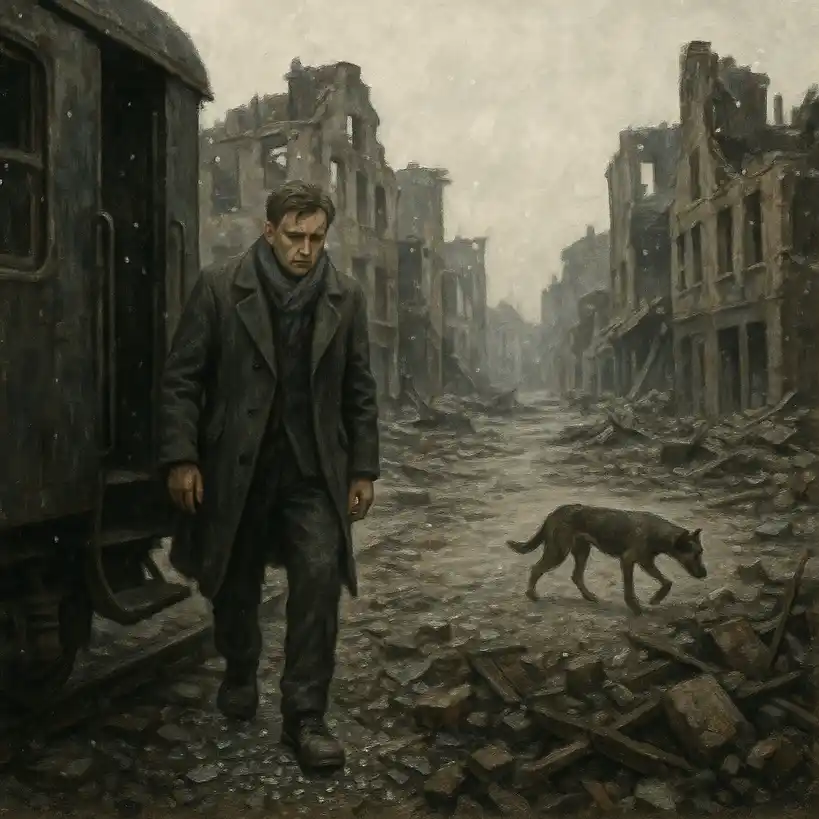
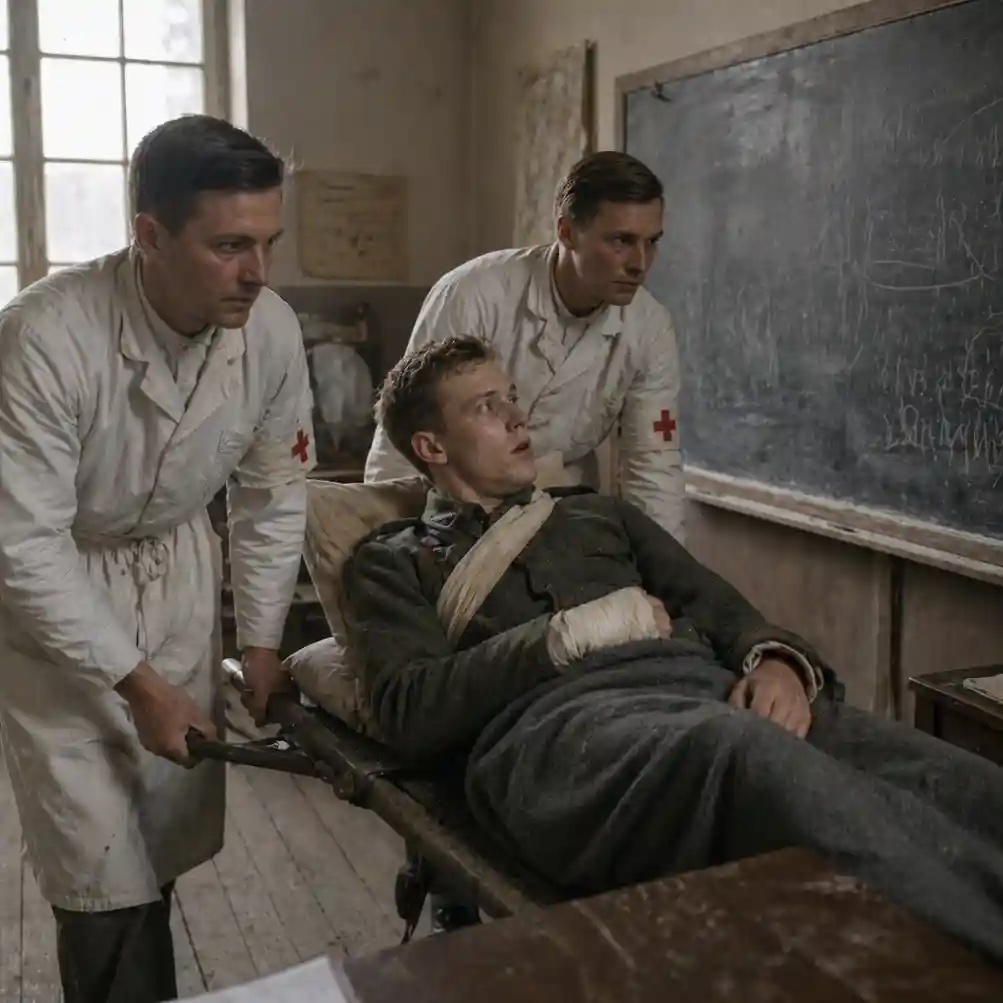
Originally published as Gruppenbild mit Dame in 1971, the novel surveys German life from the aftermath of the First World War to the Federal Republic around 1970. War, National Socialism, defeat, reconstruction, and prosperity appear through work, marriage, housing, food, money, mourning, and damaged relationships. Public history enters through private evidence.
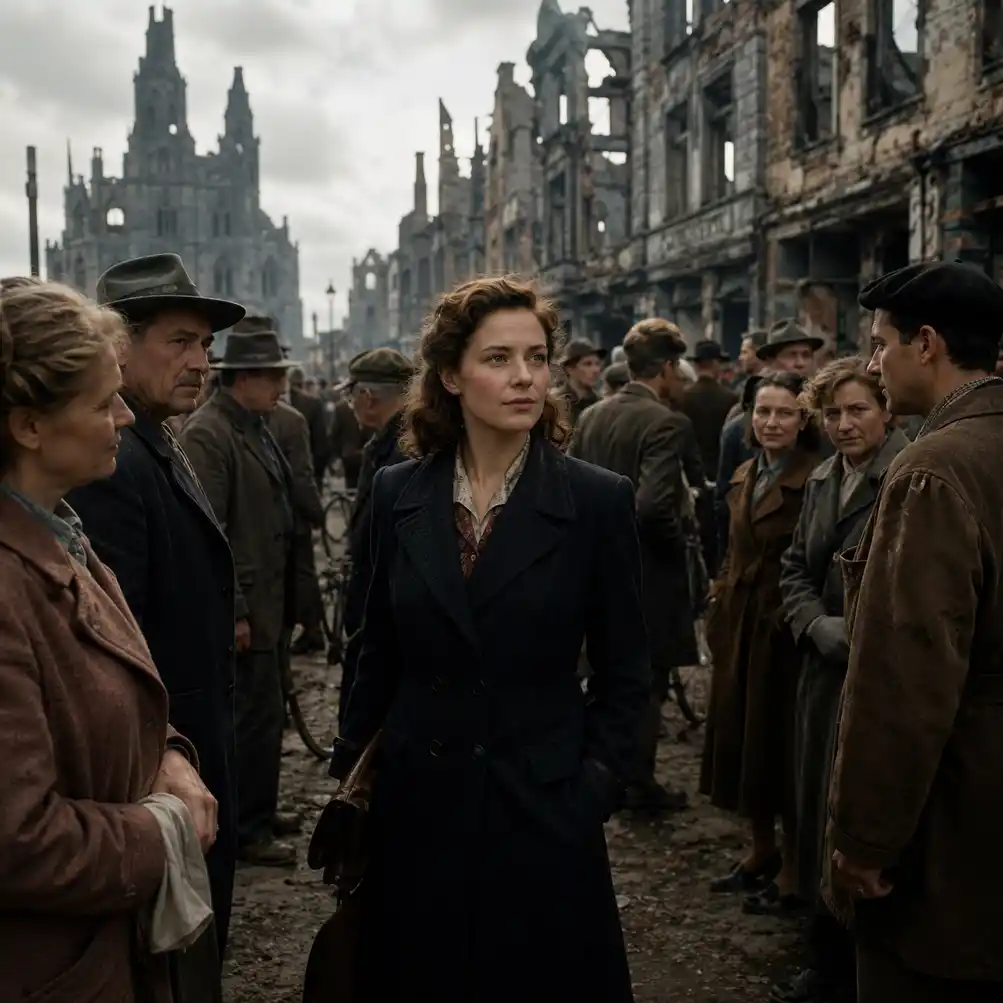
At forty-eight, Leni faces economic pressure and the possible loss of her home. Her son Lev is in prison. Her unconventional household and relationships offend respectable opinion. These present difficulties lead backward into a life marked by family wealth, wartime bereavement, precarious labor, forbidden love, and stubborn generosity.
The “lady” of the title is both singular and resistant to isolation. Group Portrait with Lady asks whether one person can be understood apart from the systems that classify her. Leni is visible through other people’s judgments, but never becomes their sum. Her elusiveness is not a puzzle to solve but a boundary the portrait must respect.
The Investigator Exposes Himself
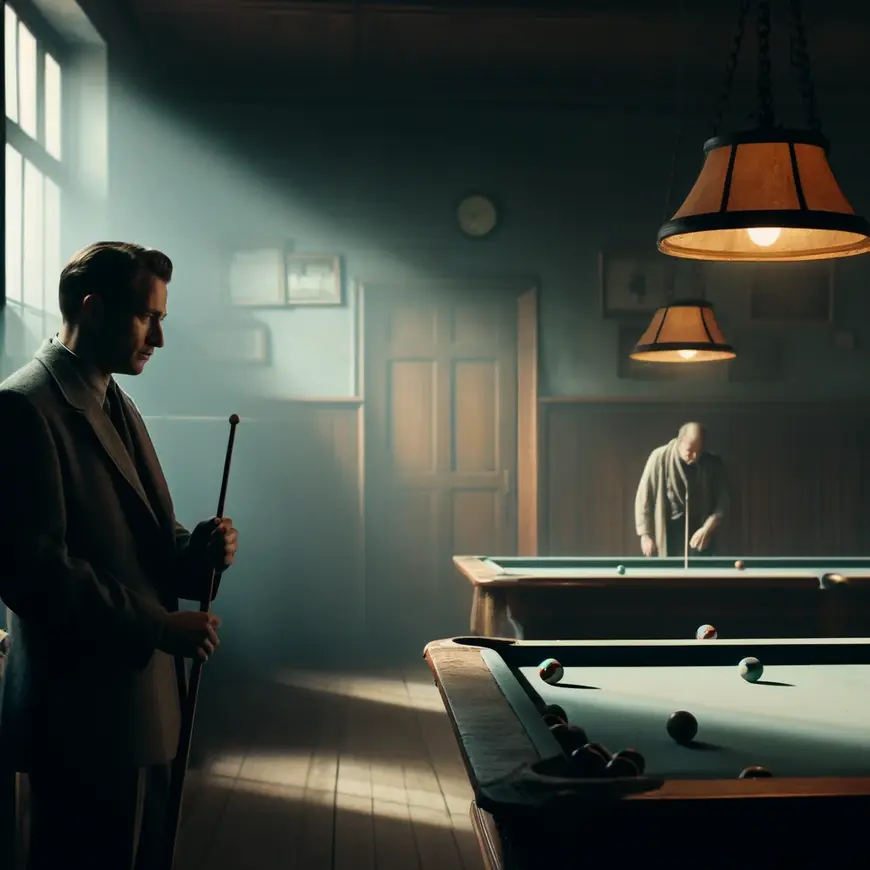
The narrator often sounds methodical. He identifies sources, weighs their reliability, supplies percentages, cites records, follows leads, and comments on missing evidence. The manner resembles a sociological report or legal dossier. Yet his procedures never produce neutral knowledge. He likes Leni, protects her, pursues intimate details, and gradually enters the world he claims merely to document. The researcher becomes part of the evidence.
This self-implication gives Group Portrait with Lady much of its humor and complexity. The narrator’s pedantry looks absurd when he quantifies emotion or applies bureaucratic precision to contradictory memories. Yet he refuses society’s quick labels. The investigation defends complexity against administrative judgment.
Witnesses also reveal themselves while discussing her. Their language exposes class assumptions, political evasions, jealousy, affection, prejudice, and self-protection. A testimony may contain valuable facts while distorting their meaning. Documents offer no perfect correction because records are produced by institutions with their own interests. Every archive has a point of view.
This reconstructive method creates a strong thematic path toward 👉 The Quest for Christa T. by Christa Wolf. Wolf’s quieter, more intimate novel also approaches a woman through fragments and remembered impressions, asking what remains beyond an official account.
The investigator never solves Leni like a case. His material demonstrates why a human life exceeds a file. The report becomes a critique of reporting, and objectivity turns into an involved act of attention. Care, the novel implies, may produce truer knowledge than a performance of distance.
Leni Refuses the Grammar of Success – Group Portrait with Lady
Leni is not presented as a political theorist or heroic dissident. She often fails to interpret institutions in abstract terms, and her education is limited. Yet she possesses a practical moral clarity that cuts through the euphemisms of her surroundings. She responds to hunger, grief, tenderness, and vulnerability more readily than to prestige. Her ethics begin with the person in front of her.
This disposition makes her appear naïve to people trained by competition. She does not preserve property efficiently, cultivate useful alliances, or convert suffering into social credit. She offers rooms cheaply, remains loyal to stigmatized people, and treats prosperity with indifference. Conduct that looks irrational within the market often looks humane within the novel.
Her resistance is bodily as well as moral. Music, flowers, food, sexuality, sleep, and domestic rhythms matter to her. These attachments protect experience that church, state, family, and commerce try to regulate. She practices freedom in choices that respectable observers call wasteful.
However, Group Portrait with Lady does not make Leni simple. Her passivity can frustrate. So her inwardness limits her political awareness, while the narrator’s admiration risks idealizing her.
Her deepest challenge to postwar society is the refusal to make advantage sacred. She loses according to conventional measurements, yet people gather around her because she creates forms of shelter that successful institutions do not. The novel quietly asks which life is truly impoverished: Leni’s materially threatened existence or the comfortable existence that has forgotten solidarity. Her apparent impracticality exposes how narrowly the prosperous define practical behavior.
Love in the Funeral-Wreath Workshop
During the war, Leni works in a flower business producing funeral wreaths, an occupation that condenses the regime’s economy of death. Flowers become standardized responses to industrialized loss. The workshop links commerce, mourning, propaganda, and forced labor.
There Leni meets Boris Koltowski, a Soviet prisoner of war. Their relationship violates Nazi racial law and places both in danger. Böll avoids turning the affair into decorative wartime romance. The lovers create privacy inside surveillance, and their tenderness directly contradicts a system organized around dehumanization. Love becomes dangerous because it recognizes equality.
Their son Lev carries that forbidden bond into the postwar world. Boris, however, does not receive a liberating peace. Through a cruel confusion of identities, he falls into Allied captivity and later dies in a mining accident. His fate breaks any neat story in which the defeat of Nazism immediately restores justice. Institutions change, but individuals can remain trapped in classifications produced by war.
The mixture of survival, commerce, and moral compromise opens a useful connection to 👉 Mother Courage and her Children by Bertolt Brecht. Brecht’s theatrical distance differs from the novel’s documentary accumulation, yet both works place ordinary labor beside organized killing and ask what survival costs.
In Group Portrait with Lady, the wreath shop is a miniature Germany. Some workers exploit the system, some submit, and others show courage. Leni’s bond with Boris cannot stop the machinery. It preserves a human relation the machinery cannot justify. That limited victory matters because the novel never mistakes personal goodness for historical rescue.
Germany Seen From Below – Group Portrait with Lady
The novel’s large historical span never becomes a procession of leaders and dates. Instead, history appears through people whose names rarely enter public chronicles: domestic workers, nuns, laborers, prisoners, small employers, immigrants, relatives, profiteers, and survivors. Their stories gather around Leni until the individual portrait becomes a cross-section of society.
This perspective complicates divisions between perpetrators, victims, resisters, opportunists, and bystanders. Daily behavior does not always fit one category. A person may perform one courageous act and many cowardly ones. The novel studies compromise without erasing responsibility.
The family’s changing fortunes trace Germany’s transformations. Initial prosperity, wartime destruction, postwar scarcity, and the later economic miracle alter who possesses money and who controls memory. Success after 1945 often rests on selective forgetting. Former loyalties disappear from conversation, property acquires a clean biography, and social respectability returns faster than moral candor.
Readers interested in the unstable social world before the Nazi seizure of power can follow this thread through 👉 The Black Obelisk by Erich Maria Remarque. Its inflation-era setting differs from Leni’s later story, but it also reveals how economic instability and public rhetoric enter ordinary lives.
Group Portrait with Lady refuses a triumphant national recovery narrative. New buildings and consumer goods do not by themselves establish justice. The novel measures reconstruction by the treatment of inconvenient people. A society reveals itself at its margins, where official progress meets those it would prefer not to see. Material improvement remains morally incomplete when memory is organized around convenience.
Waste, Property, and Respectability
By the novel’s present, Leni’s home has become a political space. She shares it with tenants whom more prosperous Germans treat as socially inferior, including migrant workers. She charges little and resists the logic that property must always maximize return. That choice makes her vulnerable to pressure from people who see housing as an instrument of profit.
The recurring language of dirt, rubbish, and waste sharpens this conflict. Lev works in refuse collection, as does Mehmet, the Turkish man with whom Leni forms a relationship. Respectable society places certain occupations, bodies, and forms of intimacy near what it discards. The book reverses that judgment. The people handling waste often preserve more dignity than those using polished language to remove human beings from valuable property.
Housing connects the novel’s historical and contemporary concerns. Under dictatorship, institutions classify lives by race, nationality, and usefulness. In the affluent republic, exclusion adopts contracts, prices, reputation, and redevelopment. Habits of devaluation survive by learning new vocabularies.
The broader bourgeois history behind property and family prestige can be explored in 👉 Buddenbrooks by Thomas Mann. Mann’s merchant dynasty belongs to an earlier social order, yet its concern with wealth, inheritance, and respectability helps illuminate the values Leni repeatedly fails to honor.
Her apartment becomes a modest counterinstitution. It shelters relationships that dominant society treats as disorder. Hospitality interrupts the market’s verdict. The threatened home thus matters beyond sentimental attachment. It is the material form of Leni’s ethics, a place where space is assigned according to need rather than social rank. The domestic interior becomes a quiet argument about who deserves room in the rebuilt nation.
Comedy Inside the Archive
Despite its grave history, Group Portrait with Lady is often very funny. Its comedy arises from bureaucratic phrasing, obsessive documentation, social hypocrisy, improbable coincidences, and the narrator’s determination to measure what resists measurement. The language of objectivity repeatedly exposes its own absurdity. Numbers may clarify a circumstance, but they cannot settle the meaning of love, grief, or decency.
This humor protects the novel from solemn monumentality. Leni could become a saintly victim, while German history could harden into approved lessons. Irony disturbs both. The narrator’s devotion coexists with vanity and intrusion. Witnesses remain morally relevant even when ridiculous. Comedy keeps judgment flexible.
Böll also uses exaggeration to reveal ordinary cruelty. A respectable phrase may hide an eviction. A concern for order may express xenophobia. Religious propriety may coexist with indifference to suffering. By allowing the official register to continue slightly too long, the prose makes its evasions audible.
The expanding archive demands patience. Some episodes seem peripheral until another testimony changes them. That sprawl belongs to the group portrait: no single line contains so many lives without visible edges.
The humor never cancels pain. Instead, it gives readers enough distance to recognize how violence survives in habits of speech. A society can laugh while indicting itself. The novel’s comic dossier makes moral seriousness more exact because it refuses the self-flattering tone through which nations often narrate their past. Laughter breaks the authority of phrases that otherwise pass as respectable common sense.
Quote List for Group Portrait with Lady
- “The Au. imagined nothing, his sole desire being for factual information.” The narrator’s claim sounds scrupulous, yet its comic stiffness immediately invites doubt. His investigation depends on selective witnesses, private judgments, and obsessive classification. Therefore, the sentence establishes Gruppenbild mit Dame as both documentary imitation and critique: “facts” accumulate, while Leni’s inner life keeps escaping the file.
- “We are dying for an honorable profession, for the arms trade.” Erhard delivers this bitter sentence during the court-martial that condemns him and Heinrich. Its polite phrase “honorable profession” collides with the machinery of execution, exposing war as commerce dressed in patriotic language. Moreover, the remark turns doomed defiance into satire, because the regime protects weapons more fiercely than human beings.
- “Shit on Germany.” Heinrich’s final cry compresses refusal into one blunt sentence. The vulgarity matters because official rhetoric has already emptied respectable language of moral value. Consequently, he rejects not a people in the abstract but the murderous state about to execute him. Its brevity also breaks through the novel’s elaborate reports and summaries with a human voice that no institution can sanitize.
Context-Rich Trivia List for Group Portrait with Lady
- A 1971 social panorama: Heinrich Böll follows Leni Pfeiffer from 1922 into West Germany around 1970. Therefore, Gruppenbild mit Dame spans Nazism, war, defeat, and reconstruction through one unconventional woman’s life.
- The English route: Leila Vennewitz translated the novel as Group Portrait with Lady. A 🌐 library catalogue traces the 1971 German original to Kiepenheuer & Witsch and the 1973 American edition to McGraw-Hill.
- A fellow German panorama: For another formally daring reckoning with Nazism and postwar memory, continue with: 👉 The Tin Drum by Guenter Grass.
- A deliberately incomplete portrait: The narrator calls himself “Au.” and interviews relatives, employers, nuns, and neighbors. However, their testimony never fixes Leni completely. Instead, the mock-documentary exposes prejudice and the limits of objective files.
- The Nobel connection: The book appeared one year before the 1972 Nobel Prize in Literature. In fact, the 🌐 Swedish Academy called it his “most grandly conceived work” and his crowning achievement to that point.
- A critique of the economic miracle: Postwar prosperity does not rescue Leni. Meanwhile, speculation and eviction threats reveal how the achievement-oriented society forgets complicity and punishes anyone who refuses profit.
- The soldier’s view: For a starker account of war stripping youth of inherited ideals, read: 👉 All Quiet on the Western Front by Erich Maria Remarque.
- A multinational film: Aleksandar Petrović directed the 1977 adaptation with Romy Schneider and Brad Dourif. Moreover, the 🌐 director’s archive records its Palme d’Or nomination and Schneider’s German Film Award.
Why the Group Still Matters
Group Portrait with Lady is demanding in a different way from a tightly plotted historical novel. Its investigation pauses, doubles back, introduces minor lives, and allows evidence to accumulate beyond immediate necessity. Readers looking only for Leni’s story may initially resist the detours. Yet the detours are the story. A group portrait needs crowded margins.
The novel’s lasting force comes from its understanding that memory is social. No life can be reconstructed without witnesses, but witnesses bring prejudice and desire. No archive is complete, but incomplete records still shape reputations. So no national history stands apart from housing, labor, marriage, migration, and the distribution of sympathy.
Its critique of postwar prosperity also remains sharp. Economic recovery can conceal moral continuity when ownership is treated as proof of virtue and vulnerability as failure. A later family panorama such as 👉 The Corrections by Jonathan Franzen explores a different society and period, yet it similarly uses domestic disorder to test a culture’s promises of success.
Leni answers the world without a competing program. She offers attention, shelter, sensual pleasure, loyalty, and indifference to hierarchy. These qualities cannot repair history, but they provide a scale for judging institutions.
The lady at the center changes how the group is seen. Opportunists reveal fear, damaged people recover names, and official categories lose authority. Group Portrait with Lady turns historical judgment into the patient reconstruction of human connections. Its incompleteness is honest, generous, and politically awake. The unfinished portrait finally feels more truthful than any polished national image could be.
More Reviews of Works by the famous German novelist