Memories of My Melancholy Whores by Gabriel García Márquez
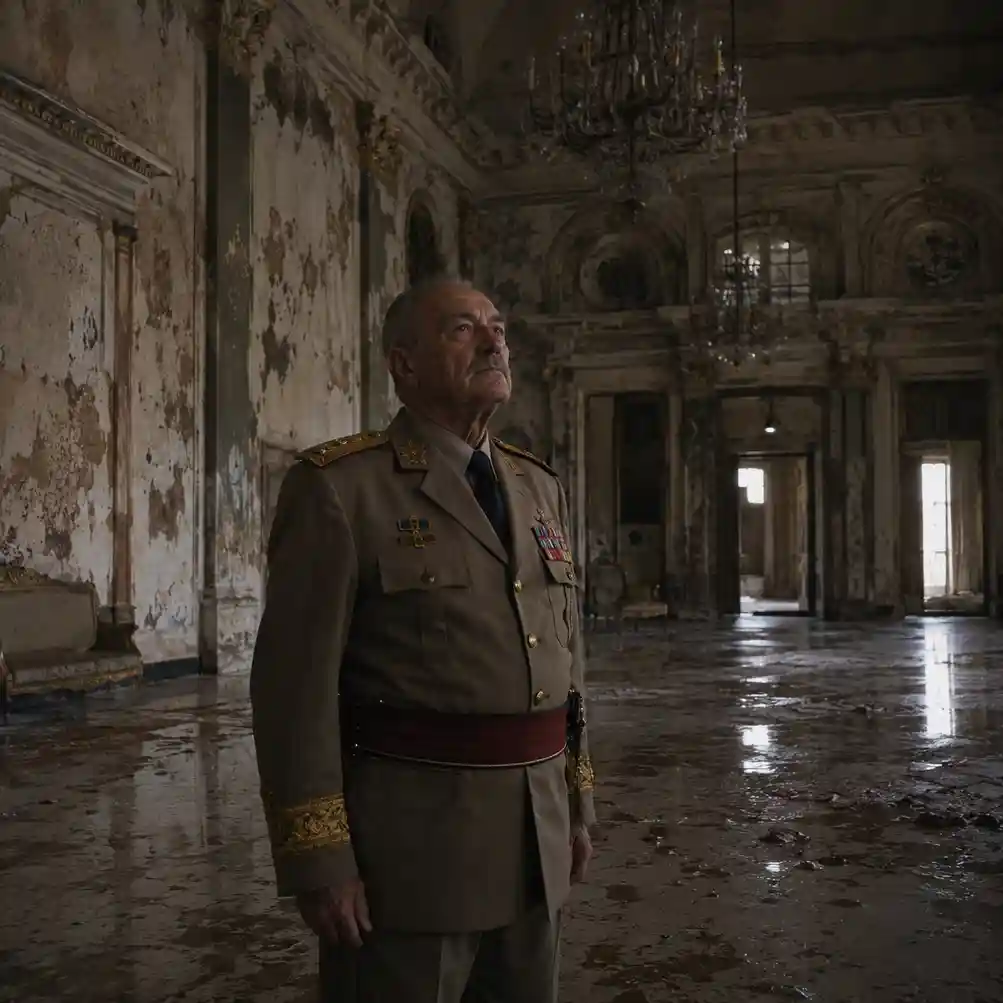
Memories of My Melancholy Whores is a small book with a deliberately uneasy glow. Gabriel García Márquez writes in a late, compressed register, far from the vast architecture of his great family sagas. Here the world narrows to an old man, a room, a city of habits, and a final surge of feeling that may be love, illusion, vanity, or all three at once.
The unnamed narrator turns ninety and looks back on a life filled with routines, paid encounters, journalism, classical music, and emotional avoidance. He believes he has lived freely, yet the novella slowly shows another truth. His freedom may have been a long refusal of intimacy. His memory is rich, but his life has often remained emotionally poor.
The book moves through twilight. Its atmosphere is tender, comic, troubling, and self-conscious. García Márquez lets the narrator speak beautifully, but beauty does not make him reliable. The voice seduces, and the reader must listen carefully. Memories of My Melancholy Whores is not only about late desire. It is about the stories people invent when they want their lives to end with meaning.
Memories of My Melancholy Whores and old age
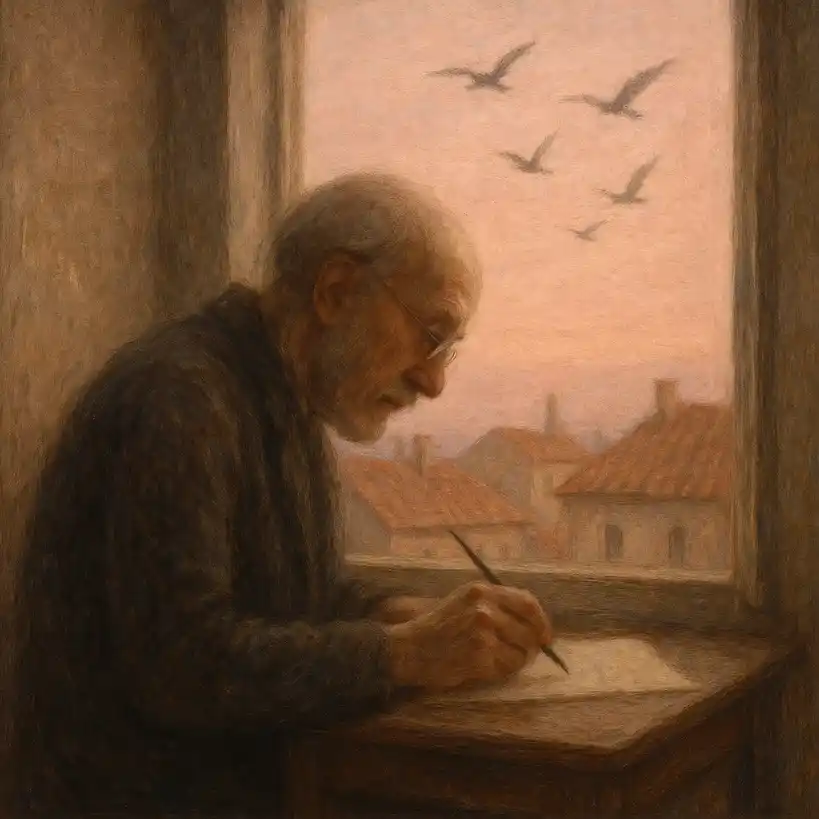
Memories of My Melancholy Whores treats old age not as peace, but as exposure. The narrator has survived almost everyone and everything. He has habits instead of commitments, memories instead of relationships, and a polished style instead of moral certainty. At ninety, he does not become wise automatically. He becomes more aware of what he has failed to live.
That is one of the novella’s strongest ideas. Age has not purified him. It has given him distance, wit, and a certain freedom from social embarrassment. Yet it has not removed vanity, desire, fear, or self-deception. García Márquez understands that old age can be lyrical without being noble.
Age sharpens the need for illusion. The narrator wants one last revelation before death. He wants to believe that his late feeling is not merely appetite, not merely loneliness, not merely the vanity of a man who wants to be surprised by himself.
This gives the novella a natural connection to 👉 The Old Man and the Sea by Ernest Hemingway. Hemingway’s old man tests himself against the sea. García Márquez’s old man tests himself against memory, desire, and the terrifying possibility that he has never truly loved.
Delgadina inside the narrator’s dream
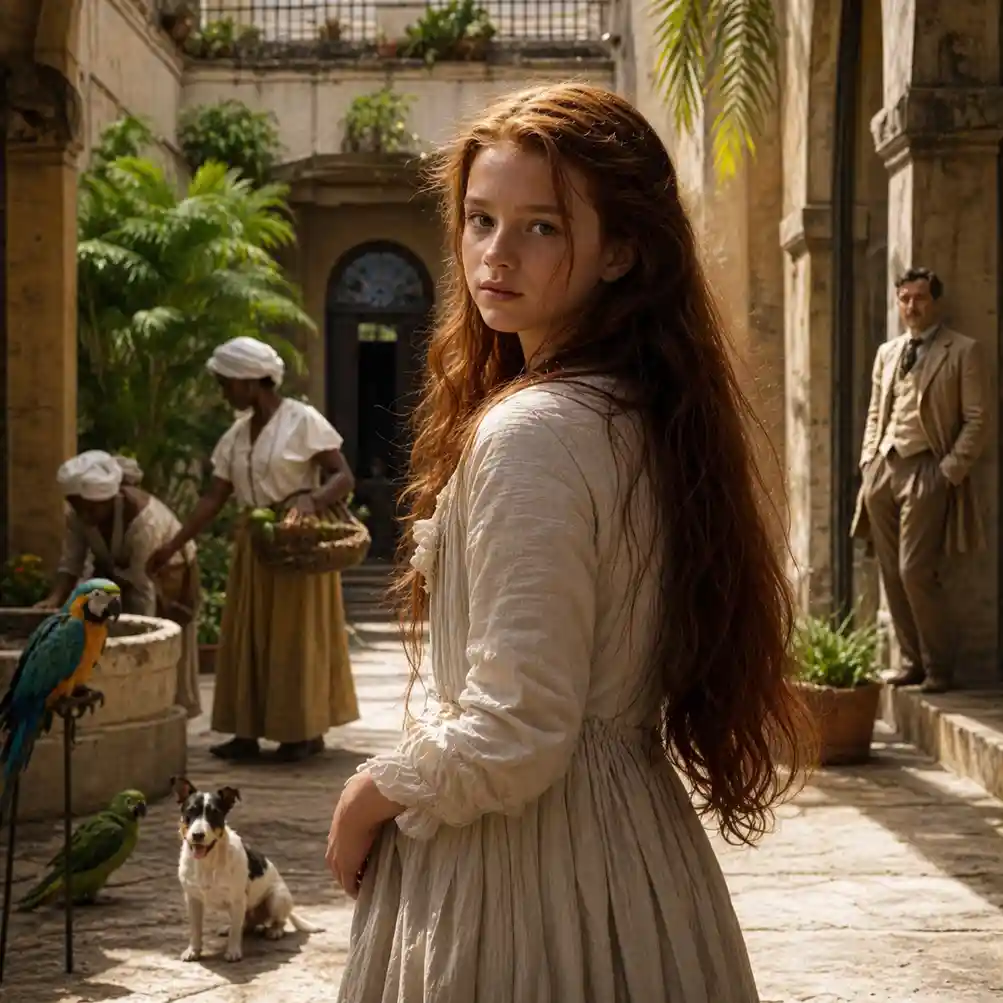
Delgadina is less a fully developed character than a figure inside the narrator’s imagination. That is not accidental. It is part of the novella’s design and part of its discomfort. He names her, watches her, imagines her, and turns her into a private symbol of renewal. Yet her own voice remains limited.
This imbalance is crucial. Memories of My Melancholy Whores is filtered through a man who knows how to beautify his own feelings. He gives Delgadina an almost fairy-tale aura, but that aura belongs to his perception. The reader must notice the gap between the living girl and the image he creates.
Delgadina becomes a mirror of longing. The narrator sees in her youth, silence, fragility, and possibility. He also sees a version of himself that still wants to awaken. The question is whether he truly sees her at all.
A useful comparison is 👉 The Hour of the Star by Clarice Lispector. Lispector also builds a story around a narrator who shapes a vulnerable young woman through language. The difference is tonal and philosophical, but both works ask how much power a narrator holds over the person he describes.
The narrator as a maker of excuses
The narrator of Memories of My Melancholy Whores is charming because he is dangerous with language. He can turn selfishness into anecdote, regret into elegance, and moral discomfort into melancholy music. His voice is one of the novella’s great achievements, but it also demands resistance.
He has spent decades treating intimacy as something available without consequence. Yet he tells his life with such polish that he nearly persuades the reader to admire him before judging him. García Márquez uses that tension carefully. The narrator is not a monster in his own account. He is cultivated, funny, lonely, and emotionally evasive.
He edits his life into grace. That editing is the real drama of the book. The story is not only about what happened. It is about how an old man arranges what happened so that his final self-image can survive.
This is why the novella can be read beside 👉 The Fall by Albert Camus. Camus also gives us a speaker who confesses while controlling the terms of confession. García Márquez is warmer, more sensual, and more musical, but his narrator also turns self-exposure into performance.
Love or late self-invention
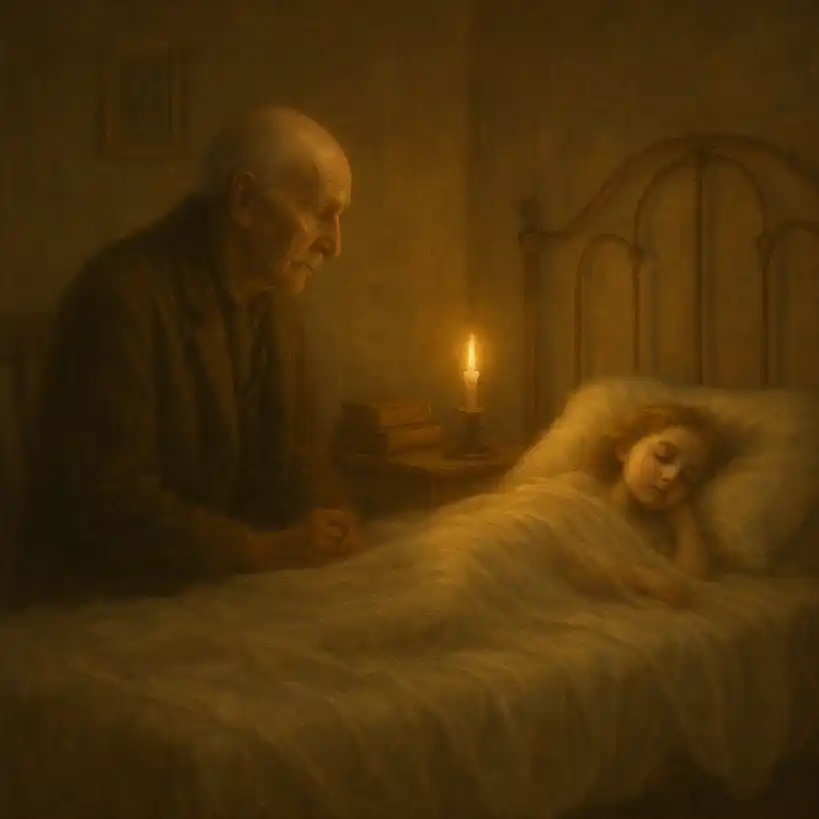
The central uncertainty in Memories of My Melancholy Whores is whether the narrator discovers love or invents a beautiful name for his final illusion. The novella does not answer this cleanly. Its power comes from holding both possibilities at once.
On one level, the narrator changes. He becomes attentive, tender, nervous, almost adolescent. He begins to care about another presence with an intensity he has never known. On another level, that care remains shaped by distance and projection. Delgadina’s silence allows him to imagine love without the full difficulty of reciprocity.
Late love may also be late fiction. That is the unsettling brilliance of the novella. The narrator may be more alive than he has ever been, but his aliveness depends on a fantasy that the reader cannot fully trust.
This ambiguity keeps the book from becoming sentimental. García Márquez does not write a simple redemption story. The narrator’s emotional awakening is real to him, but the novel asks whether reality inside one person’s heart is enough. Love, in this book, is never separate from imagination.
The city of habit and decay
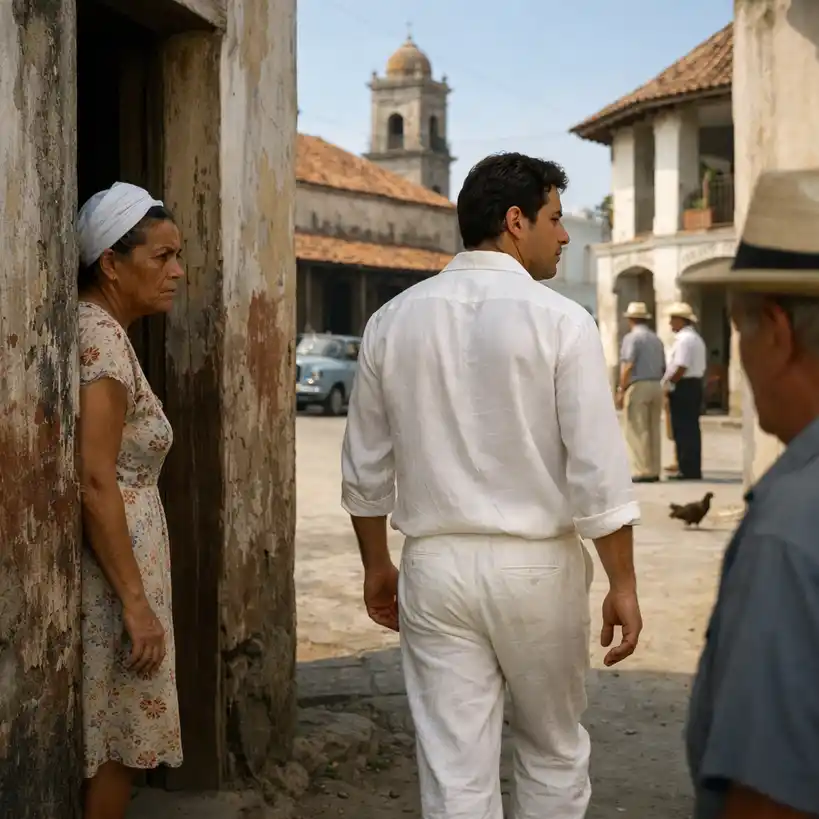
The city in Memories of My Melancholy Whores feels old, humid, musical, and morally tired. It is a place of newspapers, brothels, aging acquaintances, old houses, familiar streets, and rituals that have gone on too long. The narrator belongs to this city because he has become like it: elegant in memory, worn in body, and full of hidden compromises.
García Márquez makes the setting intimate rather than panoramic. The city does not expand into epic history. It presses inward. Rooms, beds, offices, and streets become spaces where memory repeats itself. The narrator has moved through this world for decades, but only near the end does he feel its loneliness clearly.
The city stores his evasions. Every place seems connected to some earlier version of himself. The external world becomes an archive of his appetite, pride, habits, and missed chances.
That atmosphere links the novella to 👉 Do you like Brahms? by Françoise Sagan. Sagan also writes about late emotional hunger, social surfaces, and the ache of discovering that a life can look complete while remaining internally starved. García Márquez’s tone is more ornate, but both books understand loneliness inside cultivated lives.
The beauty and danger of style
García Márquez writes Memories of My Melancholy Whores with remarkable softness. The prose often feels like a final song. It gives old age texture, gives memory warmth, and turns small gestures into emotional weather. This stylistic beauty is one of the main reasons the novella continues to interest readers.
Yet that beauty is also dangerous. It can soften what should remain disturbing. The narrator’s language glows, and the glow can make the reader forget the imbalance at the center of the story. García Márquez is too skilled to be read passively. His sentences enchant, but enchantment is not the same as absolution.
The style creates moral haze. That haze is not a flaw in the simple sense. It is part of the book’s identity. The novella asks what happens when a morally compromised story is told with extraordinary delicacy.
This is where the late García Márquez feels most complicated. He can make decay luminous and he can make vanity sound like longing. He can make illusion feel almost holy. The reader’s task is to admire the music without surrendering judgment to it.
Memories of My Melancholy Whores as a late work
Memories of My Melancholy Whores belongs to the final phase of García Márquez’s fiction, and it has the concentration of a late work. It does not try to rival his larger masterpieces in scope. Instead, it returns to several lifelong concerns in miniature: solitude, memory, desire, death, storytelling, and the fragile border between reality and invention.
The book’s small scale can disappoint readers expecting the abundance of his most famous novels. There are no vast family trees here, no political panorama, no large mythic town. Instead, the novella offers a chamber piece. It is narrow, but intentionally narrow. Everything turns around one voice and one final fantasy.
The smallness is part of the design. Old age has reduced the narrator’s world. The book’s form reflects that reduction. What remains is not action, but recollection. Not history, but aftertaste. Not destiny, but a late attempt to arrange meaning.
This makes the novella both modest and risky. It cannot hide behind narrative abundance. It depends almost entirely on voice, atmosphere, and the reader’s willingness to remain inside an uneasy consciousness.
The troubling center of tenderness – Memories of My Melancholy Whores
A strong review of Memories of My Melancholy Whores must hold two truths together. The novella can be tender, funny, and beautifully written. It also rests on a disturbing imbalance of age, money, and power. Ignoring either side weakens the reading.
The book’s tenderness is real within the narrator’s experience. He does feel changed. He does discover a kind of gentleness that his earlier life seems to have lacked. So he does become capable of waiting, imagining, and caring in a new way. Yet this tenderness remains filtered through his own desire.
The tenderness is not innocent. That is the crucial point. García Márquez creates emotional beauty, but the situation beneath it remains ethically strained. The reader should not flatten the novella into scandal alone, but should also not let lyricism make the scandal disappear.
The book’s discomfort is part of why it lingers. It forces us to ask whether a feeling can be sincere and still morally compromised. The answer, in this novella, seems to be yes. That makes the narrator more human, but not more trustworthy.
What memory saves and distorts
Memory in Memories of My Melancholy Whores is both treasure and trap. The narrator remembers with great vividness, but his remembering is selective. He has spent his life turning experiences into anecdotes and women into episodes. Near the end, he wants memory to give shape to love. Yet memory has always served his vanity too.
García Márquez shows how memory can rescue a life from oblivion while also distorting it. The narrator’s past becomes more graceful in the telling. His loneliness becomes more poetic. His failures become part of a final design. This is moving, but also suspicious.
Memory wants to become art. In the narrator’s hands, life is edited until it almost looks redeemed. The novella’s beauty depends on that editing, but its unease comes from the same place.
This theme connects well with 👉 Nausea by Jean-Paul Sartre. Sartre’s narrator confronts existence without the comfort of beautifying memory. García Márquez’s narrator does the opposite: he covers existence with style, music, and reminiscence. Both books ask what happens when consciousness can no longer live comfortably inside its old stories.

Quotes from Memories of My Melancholy Whores by Gabriel García Márquez
- “Morality, too, is a question of time.” This line gives Memories of My Melancholy Whores its most unsettling moral hinge; consequently, age becomes excuse, pressure, and accusation at once.
- “Sex is the consolation…” The fragment separates appetite from love; therefore the narrator’s late awakening reads as both confession and self-indictment.
- “The year I turned ninety…” The opening places scandal before sentiment; as a result, Memories of My Melancholy Whores demands judgment before sympathy can settle.
- “The wise know everything, but not all.” The sentence punctures male vanity; moreover, it lets the old narrator sound experienced and foolish in the same breath.
- “Inspiration gives no warning.” Here, desire and art blur; consequently, Memories of My Melancholy Whores treats late feeling like a sentence that arrives before permission.
- “At my age, every hour is a year.” Time becomes bodily; therefore urgency replaces patience and makes every choice feel borrowed.
- “It was, at last, real life…” The ending turns fantasy into claimed rebirth; however, the phrase keeps its ache because reality arrives through memory and projection.
- “I am ugly, shy, and anachronistic.” The narrator’s self-portrait is comic but revealing; finally, Memories of My Melancholy Whores lets vanity confess while pretending to disappear.
Trivia from Memories of My Melancholy Whores by Gabriel García Márquez
- Novella compression: The book works through concentration rather than breadth; therefore Memories of My Melancholy Whores fits the novella tradition of short, tightly structured fiction with amorous and satiric roots. 🌐 Britannica’s novella overview gives useful form context.
- Controversy around adaptation: The film version faced protests and legal delays because critics argued the story could normalize exploitation; consequently, the book’s ethical discomfort followed it beyond the page. 🌐 The Guardian reported the 2009 dispute.
- Late-style farewell: The short scale, old narrator, and backward gaze make the book feel like a chamber piece; moreover, Memories of My Melancholy Whores turns erotic fantasy into a meditation on mortality.
- Aging and beauty: For a sharper comparison on old age, desire, and dangerous aesthetic fixation, see 👉 Death in Venice by Thomas Mann.
- Interior solitude: The narrator’s self-enclosed voice also echoes notebooks of loneliness and inward performance; compare 👉 The Book of Disquiet by Fernando Pessoa.
- Death as provocation: Because the book treats late desire as a challenge to extinction, 👉 A Happy Death by Albert Camus offers a useful counterpoint on mortality and chosen intensity.
- Memory as invention: Finally, Memories of My Melancholy Whores asks whether love arrives as fact, fantasy, or self-deception, and it never lets the answer become simple.
A final room, not a grand world
The room where the narrator visits Delgadina becomes the novella’s central stage. It is private, controlled, and charged with fantasy. In that room, he can imagine a different life. Outside it, he remains an aging man with a long history of emotional avoidance. The room allows transformation, but also illusion.
That confined setting gives the novella a theatrical quality. The old man enters, observes, arranges, waits, imagines, and leaves. The repetition turns the room into a ritual space. It is less a realistic bedroom than a chamber of projection.
The room becomes his last fiction. It lets him believe that life has opened again, even as death approaches. It also lets him avoid many forms of reciprocity that real love would demand.
This is why the novella feels both delicate and claustrophobic. The room gives the narrator meaning, but meaning built in such a closed space remains fragile. The reader can feel the beauty of his attachment and the limits of the world he has built around it.
The last glow of an uneasy novella
Memories of My Melancholy Whores is not a simple celebration of late love. It is a strange, brief, morally uneasy meditation on age, fantasy, loneliness, and the power of narration. Its beauty is real, but it does not settle the questions the book raises.
Gabriel García Márquez gives the narrator one last illumination. Yet that illumination comes through a story that modern readers must approach with caution. The novella asks us to listen to an old man’s longing without surrendering entirely to his version of events. It asks us to see how language can make even compromised desire sound tender.
As a late work, Memories of My Melancholy Whores is minor in scale but not empty in meaning. It gathers several García Márquez themes into a narrow vessel: solitude, the persistence of desire, the unreliability of memory, and the human need to turn life into a story before death arrives.
The book remains difficult because its final emotion is mixed. It is graceful and troubling, lyrical and evasive, intimate and ethically unstable. That mixture is exactly what makes it worth discussing. Memories of My Melancholy Whores leaves a fading light, but also a shadow that the reader should not ignore.
More Reviews of Works by Gabriel Garcia Marquez