Strong Motion by Jonathan Franzen
Strong Motion begins with Louis Holland arriving in the Boston area during a season of unexpected seismic activity. The first earthquake causes limited regional damage, yet it kills his step-grandmother Rita Kernaghan in a freak domestic accident. Jonathan Franzen makes randomness feel structurally suspicious before any conspiracy has been proved. A small tremor reorganizes an entire family. Death transforms geological movement into an inheritance dispute and gives private greed the same unstable foundation as the buildings above it.
Louis is a recent college graduate with a low-level radio job and no convincing direction. His mother, Melanie, unexpectedly receives a fortune of roughly twenty-two million dollars, much of it connected to Sweeting-Aldren stock. Strong Motion places Louis close enough to wealth to feel entitled and distant enough to resent every decision about it. His demand for fairness is inseparable from pride, hostility, and the hope that money might validate him. Inheritance exposes desires that affection concealed.
The numbed privilege of Less Than Zero by Bret Easton Ellis provides a revealing comparison. Ellis portrays young people damaged by effortless access to money, while this writer gives Louis less luxury and more combative self-consciousness. Both novels understand wealth as an emotional environment rather than a neutral resource.
In Strong Motion, the earthquake does not create the family’s fractures. It makes them measurable by forcing everyone to declare what they believe they deserve. Rita’s improbable death also establishes the book’s risky tonal mixture of menace and grotesque comedy. An event can be statistically unlikely and still carry irreversible consequences. He uses that tension to prevent probability from becoming a source of moral reassurance.
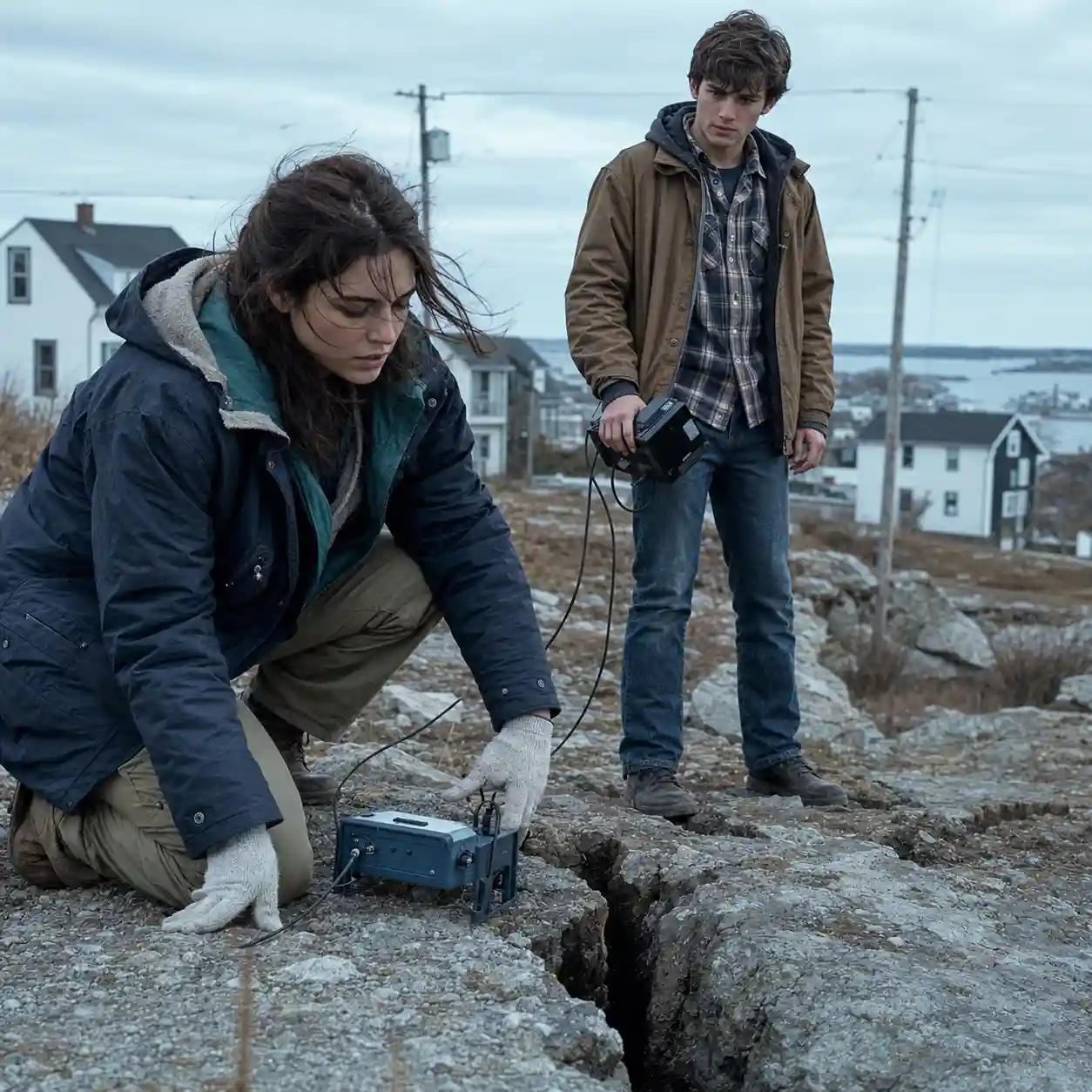
The Holland Family Turns Money Into Judgment
Melanie wants to preserve her new fortune while insisting that it has not fundamentally changed her. Louis interprets this restraint as hypocrisy because the possibility of distribution already affects every family conversation. His sister Eileen appears better able to negotiate support, intensifying his sense that affection and money are being allocated through the same hidden hierarchy. Nobody discusses wealth without discussing worth. Strong Motion uses the inheritance to reactivate grievances that long predate Rita’s death.
Louis condemns his relatives readily, but his judgments often protect him from acknowledging dependency. He wants a share while resisting the posture of someone asking for help, and he attacks others before they can define the terms of refusal. Melanie’s caution may be selfish, yet Louis’s anger is not pure moral clarity. Strong Motion keeps redistributing sympathy because each character recognizes another person’s contradiction more quickly than their own. The result is a family argument in which accurate accusations rarely produce honest understanding.
Competing consciousness and inherited decline take a more experimental form in The Sound and the Fury by William Faulkner. Faulkner fractures narrative time around a Southern household, whereas the novelist works through expansive comic realism and intellectual confrontation. Money functions similarly in both novels by recording older patterns of love, shame, rivalry, and exclusion. The fortune amplifies rather than invents resentment.
Through the Hollands, Strong Motion shows that economic power becomes most corrosive when a family treats it as an objective measure of emotional obligation. Even apparent generosity can become another mode of control when the giver alone defines fairness. Recipients must then choose between accepting unequal terms and appearing ungrateful. The inheritance turns affection into negotiation without ever making its rules explicit.

Renée Seitchek Reads What the Earth Records
Renée Seitchek is a Harvard seismologist investigating earthquakes in a region not associated with this pattern of activity. Instead of treating each tremor as an isolated anomaly, she compares locations, depths, and possible industrial causes. Her hypothesis leads toward Sweeting-Aldren, a petrochemical and weapons corporation with a concealed deep well. Scientific attention connects events power wants separated. In Strong Motion, geology becomes a record of decisions that corporate paperwork was designed to hide.
The possibility of induced seismicity gives the novel its ecological thriller structure. Hazardous material deposited far underground appears to have changed pressure along existing weaknesses, turning waste disposal into a regional danger. He does not portray nature as a mystical force taking revenge on capitalism. The earth responds materially to physical interventions, regardless of whether executives recognize those consequences in public. Strong Motion makes research dramatic because accurate interpretation threatens people whose authority depends upon keeping causes invisible.
Environmental catastrophe and economic exploitation also converge in The Grapes of Wrath by John Steinbeck. Steinbeck follows displaced families after ecological and financial collapse, while he focuses on a corporation manufacturing geological instability beneath inhabited land. Both connect apparently natural disaster to human systems of profit and neglect. The ground remembers externalized costs.
Renée’s work gives Strong Motion its strongest moral method: examine what institutions call accidental, identify who benefited from not knowing, and follow the concealed pressure back toward its source. Her scientific authority remains vulnerable because evidence does not interpret or publicize itself. Data must enter professional communities whose members possess reputations, funding concerns, and institutional loyalties. Discovery becomes political at the moment its explanation threatens an established distribution of power.
Louis and Renée Make Intimacy Another Fault Line
Louis meets Renée through the circumstances surrounding the earthquakes, and their attraction develops through argument, sexual energy, curiosity, and mutual irritation. Neither offers the reassurance of a conventional romantic lead. Renée protects hard-won professional authority through aggression, while Louis often converts insecurity into sarcasm or withdrawal. Recognition arrives before trust. Strong Motion makes their intelligence double-edged because each can identify the other’s defenses without knowing how to respond generously.
The relationship acquires greater pressure through Renée’s pregnancy and abortion. The author places reproductive choice inside a specific life rather than leaving it as a public slogan, connecting the decision to embodiment, timing, work, and an unstable partnership. Louis’s reactions expose both genuine feeling and his tendency to experience another person’s autonomy as a judgment upon himself. Strong Motion refuses to simplify either character into a position within an ideological debate. Their intimacy remains meaningful precisely because agreement and tenderness do not arrive automatically.
Female interiority and bodily experience organize The Waves by Virginia Woolf through a radically different form. Woolf dissolves conventional plot into interwoven consciousness, while the writer surrounds Renée with satire, scientific argument, and thriller mechanics. Both understand that identity cannot be separated from how time, embodiment, and social expectation are experienced.
Love does not cancel structural pressure. In Strong Motion, the romance succeeds as a narrative center because it makes vulnerability as consequential and unpredictable as the seismic forces Renée studies. Their arguments repeatedly reveal the difference between knowing another person and possessing useful knowledge about them. Psychological accuracy can become cruelty when offered without care. Intimacy requires a form of restraint that neither science nor verbal brilliance automatically provides.

Corporate Secrecy Connects Wealth and Public Risk
Sweeting-Aldren links the Holland inheritance directly to Renée’s investigation. Melanie’s financial security depends heavily on the company’s value, so evidence of corporate wrongdoing threatens the fortune around which the family has reorganized itself. The same shares can represent personal independence to one person and concealed environmental damage to another. Private wealth rests on distributed danger. Strong Motion refuses the comfort of imagining that investment returns remain morally separate from the operations producing them.
The corporation treats depth as a form of disappearance. Waste placed beyond ordinary sight becomes administratively manageable, while technical language fragments responsibility among experts, managers, and legal structures. Institutional respectability conceals criminal purpose in The Firm by John Grisham. Grisham follows a lawyer discovering corruption inside a prosperous business, whereas he makes scientific causation and environmental risk essential to exposure. In both books, professional competence serves wrongdoing when institutions define success without public accountability.
The threat becomes increasingly direct as Renée’s research gains credibility. Corporate protection no longer consists only of denial because people capable of proving causation must also be intimidated or removed. Strong Motion is most effective when thriller escalation remains attached to ordinary economic motives rather than an exotic conspiracy. Sweeting-Aldren suppresses knowledge because recognition would endanger profit, authority, and legal survival. Secrecy is an operating system, not one lie. The company’s violence merely reveals the coercion already embedded in its quieter procedures.
This design also implicates people who benefit without directing the crime. Shareholders, families, and communities can remain technically distant while depending upon the company’s success. The novelist asks when ignorance stops being innocent and becomes a service that profit quietly rewards.
Religious Activism Occupies the Same Unstable Ground
The Church of Action in Christ introduces an anti-abortion community led by Reverend Philip Stites. Its members combine absolute moral language with media strategy, property, fundraising, and communal discipline. When they occupy a physically vulnerable building, ideological certainty becomes inseparable from seismic danger. Bodies carry the cost of public performance. Strong Motion brings religious activism into the ecological plot because both corporations and moral movements depend on controlling which risks their followers can perceive.
Franzen’s satire can be fierce, yet Renée’s abortion prevents the subject from remaining an easy caricature of believers. The novel places political language beside a woman’s concrete decision and shows how institutions attempt to claim authority over experiences they cannot inhabit. At the same time, Renée is not protected from contradiction merely because the narrative respects her choice. Strong Motion subjects secular certainty, academic status, male entitlement, and religious conviction to the same pressure. Every group can confuse confidence with moral completeness.
This crowded ideological field helps explain the novel’s unsettled position in american literature of the late twentieth century. Family saga, campus fiction, romance, ecological warning, corporate thriller, and religious satire compete within one large design. Boston’s universities, radio stations, neighborhoods, companies, and activist spaces form a network whose participants imagine themselves more independent than they are.
The city connects arguments through material consequences. By placing opposed convictions over the same moving ground, Strong Motion asks whether people can revise their beliefs before reality makes revision unavoidable. No institution remains outside the novel’s pressure system. Media turns conviction into programming, property converts belief into physical vulnerability, and universities convert research into prestige. The resulting network is excessive, but its excess expresses the reach of interdependence.
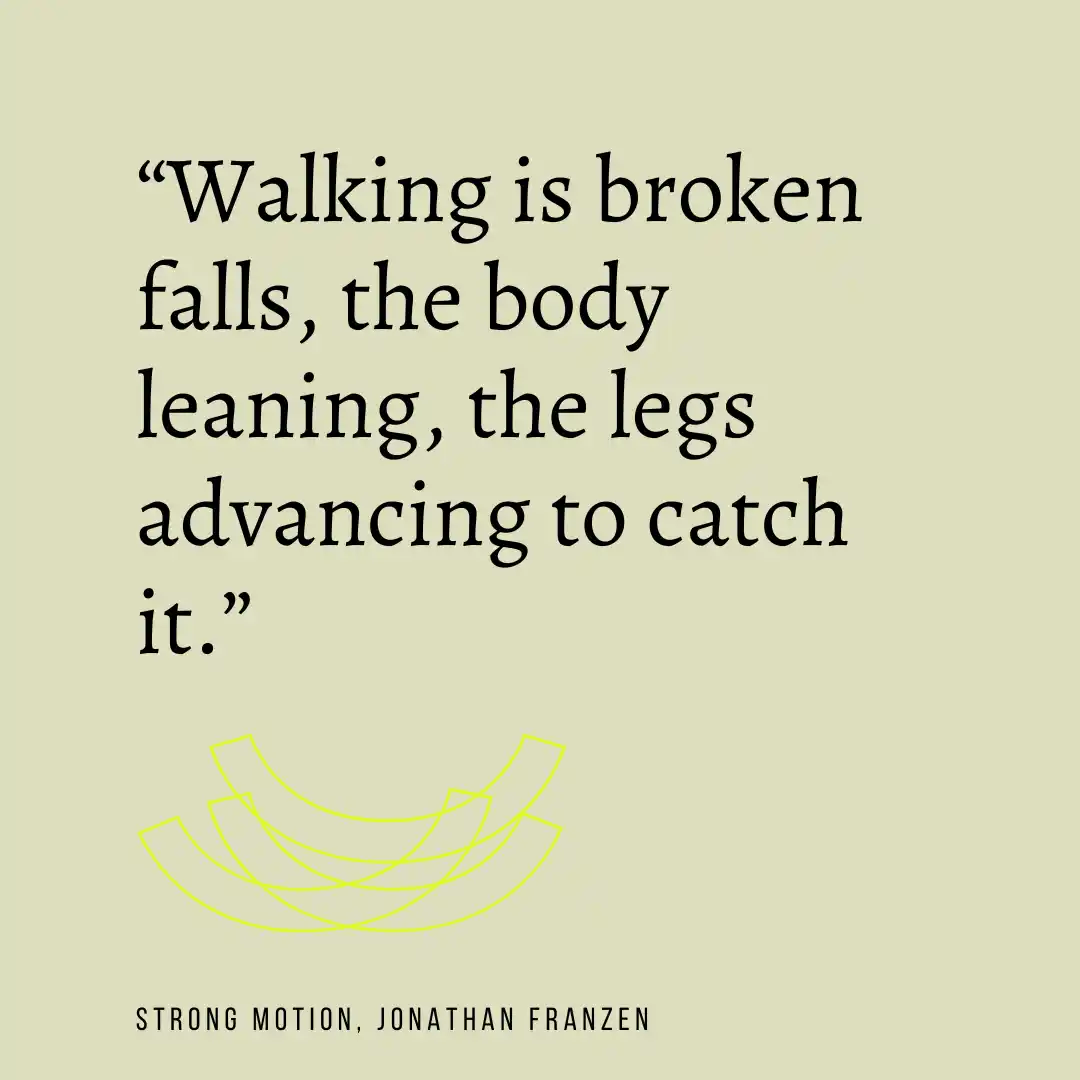
Falling Bodies, Moving Ground: Quotes from Strong Motion
- “She was left holding the jump rope and feeling as if she’d fallen and no one would help her.” Eileen experiences abandonment without physically falling. The childhood image anticipates the novel’s emotional earthquakes.
- “You feel it?” The question concerns an earthquake but also demands belief. Physical sensation becomes contested evidence.
- “Who’s calling.” The missing question mark makes the inquiry sound procedural and hostile. Louis discovers danger through a stranger’s voice. Macmillan excerpt
- “It took hours to turn the clock back 30 seconds.” Emotional damage distorts time more powerfully than chronology can repair it. Regret turns one moment into prolonged labor. Quote
- “Walking is broken falls, the body leaning, the legs advancing to catch it.” Ordinary stability is revealed as repeated rescue. The sentence condenses the novel’s seismic imagination.
- “All I want’s an equal shot at the market.” Religious persuasion adopts the language of advertising and competition. Moral conviction becomes another product fighting for attention. Quoted passage
Earthquakes Beneath Ordinary Life: Strong Motion Facts
- It was Franzen’s second novel: Published in 1992 after The Twenty-Seventh City, it predates the international success of The Corrections by nine years. The current Picador edition runs 528 pages.
- Its thriller begins with an apparently natural event: Louis Holland moves to Boston just as a series of unusual earthquakes strikes the region. The first kills his grandmother and initiates a bitter dispute over her fortune.
- Renée Seitchek makes science part of the romance: The young seismologist develops a theory explaining why a supposedly stable region is shaking. Louis’s attraction to her grows alongside his involvement in her investigation.
- The earthquakes are both mystery and accusation: The search eventually connects seismic activity with industrial waste and corporate secrecy. Scientific evidence must compete with money, institutional reputation, and deliberate disbelief, much as health policy becomes coercive power in The Method by Juli Zeh.
- Inheritance functions like an economic aftershock: The Holland family’s new wealth exposes resentment, opportunism, and competing versions of entitlement. Its poisonous effect creates an unexpected kinship with The Firm by John Grisham.
- The novel places abortion politics beside environmental politics: Evangelical activism, corporate pollution, feminism, science, and consumer culture struggle for control of the same public language. Every faction understands the power of images and fear.
- Later criticized its essayistic tendencies: In a 2021 interview, he said the novel contained too much opinion-driven material at the expense of its characters. That retrospective explains both its intellectual ambition and its argumentative density. Interview Magazine
- Its original literary reception was modest: He recalled giving only two bookstore readings for Strong Motion. The long interval before The Corrections allowed him to move from overt satire toward a more character-centered comedy. FSG interview
Excess Becomes Both the Method and the Risk in Strong Motion
He fills the novel with seismology, family grievance, sexual politics, abortion, religious spectacle, workplace comedy, corporate crime, and generational resentment. This abundance gives Strong Motion unusual energy, but it also makes the book feel less controlled than his later fiction. Some subplots compete for emphasis, and certain characters occasionally appear shaped by the argument they embody. Ambition repeatedly exceeds elegance. The excess remains a meaningful feature because the novel wants several systems to become visible at the moment they collide.
The prose moves between intimate embarrassment and panoramic explanation. The author may follow a failed conversation in close detail before widening the frame toward geology, capitalism, feminism, or urban development. Those changes create tonal instability, since farce can become physical threat within a few pages. Yet Strong Motion depends upon that instability to place domestic cruelty and environmental catastrophe inside one moral field. The technique sometimes strains plausibility, but the strain echoes a plot about accumulated forces exceeding the structures meant to contain them.
The final earthquakes make corporate consequences impossible to classify as isolated accidents, while violence against Renée turns intellectual conflict into a struggle for survival. Exposure brings partial vindication without restoring every damaged relationship or removing every danger. The ground becomes evidence of the crime. The title names measurable earth movement, but it also describes emotional, financial, and ideological pressures that alter seemingly stable lives. Strong Motion ultimately argues that stability is often an arrangement maintained by selective blindness.
Families conceal resentment, companies conceal waste, movements conceal dependence, and lovers conceal fear until motion reveals the connected fault lines beneath them. That exposure is the novel’s resolution, but not its promise of permanent safety. Pressure can be identified more easily than eliminated.