Winepress : Poetry Under Pressure
The Spanish title Lagar (Winepress) names the place or device where grapes are crushed so that their juice can be released. Rendered here as Winepress, the image gives the poet’s collection a demanding central metaphor. Pressure destroys a former shape, yet it may also produce another substance.
Published in Chile in 1954, Winepress by Gabriela Mistral was the last poetry collection issued during the poet’s lifetime. It followed the Nobel Prize in Literature she received in 1945, but it does not rest inside public honor. The poems remain exposed to private mourning, global catastrophe, physical decline, religious uncertainty, and the violent transformations of memory.
The title joins suffering with creation. Bodies, voices, nations, and identities enter forms of pressure. What emerges is not purified consolation. The collection retains bitterness, residue, blood, and resistance.
Winepress contains seventy-four poems arranged in thirteen sections. “La Otra,” or “The Other,” stands as a prologue, while “El último árbol,” or “The Last Tree,” closes the volume like an epilogue. This deliberate framing gives the book movement without turning it into one continuous narrative.
The late poetic reckoning of 👉 Romanzero by Heinrich Heine offers a distant comparison. Heine’s final poems combine illness, memory, wit, and historical judgment. The collections differ in imagery, but both late works refuse to make suffering aesthetically polite, rather than merely naming it.
The Other Self Opens the Book
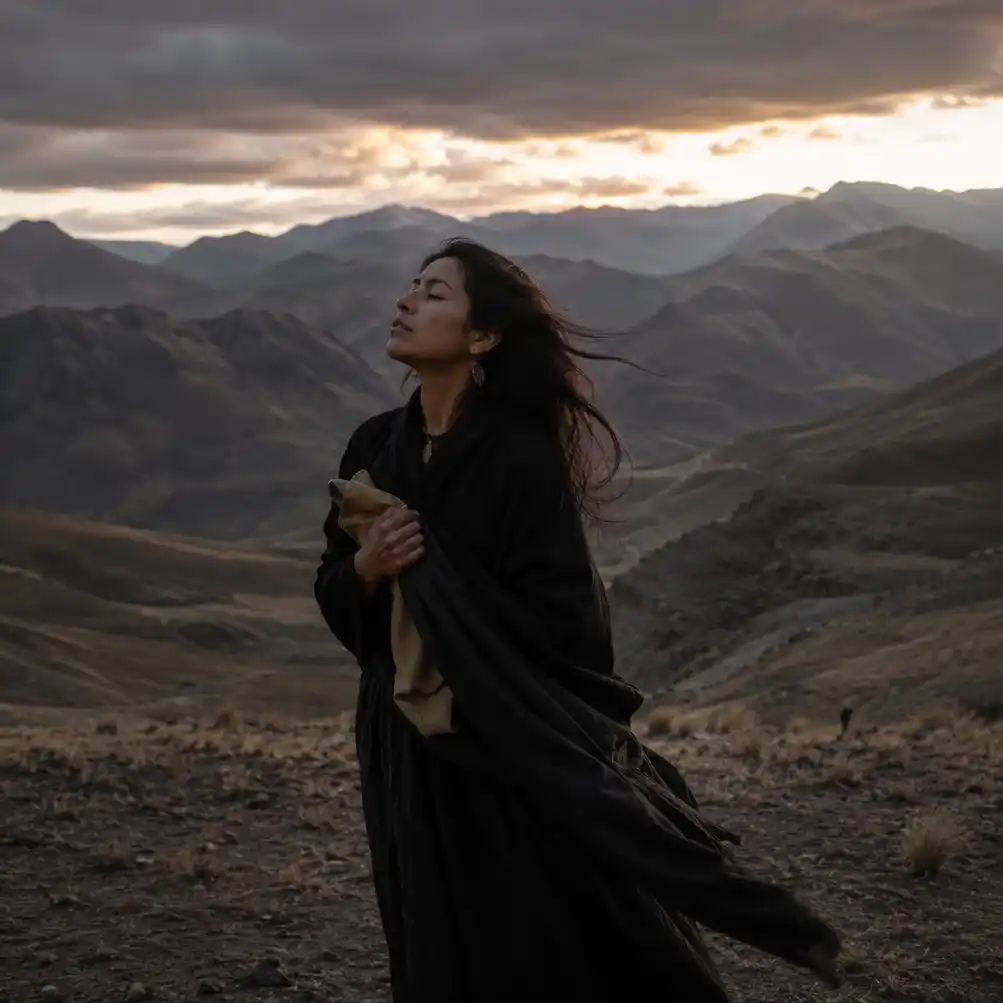
“La Otra” begins Winepress with internal division. The speaker evokes another woman within herself who must be confronted, transformed, or symbolically killed. Identity appears neither stable nor singular. The collection opens through a divided voice.
The prologue prepares speakers who inhabit abandonment, estrangement, ecstasy, bodily difference, and emotional extremity. The “Locas mujeres,” or “Madwomen,” sequence gives speech to women whose experience exceeds available identities.
Figures such as the abandoned woman, the dancer, the disburdened woman, and the devout woman become dramatic positions rather than simple autobiographical masks. Each voice carries a distinct rhythm and relation to the world. Together, they resist the expectation that a woman’s inner life should appear coherent, domestic, and socially legible.
The impossible object in 👉 The Book of Sand by Jorge Luis Borges multiplies without a stable beginning or end. Winepress is not fantastic fiction, but its divided speakers likewise challenge the hope that a self can be held in one orderly sequence.
Multiplicity becomes a form of truth. The poems keep contradiction active instead of resolving it into confession. Reducing every woman to the writer herself would narrow the imaginative range. Personal pressure becomes a chorus of fiercely individual voices. Their extremity is not a spectacle from outside; each poem grants the speaker formal authority.
Mourning Changes the Shape of Time
Death had long accompanied her poetry, but Winepress speaks from accumulated loss. The death of her nephew Juan Miguel, whom she called Yin Yin and regarded as a son, intensified its grief. War and displacement enlarged that private wound.
Biography matters, yet it cannot decode every poem. Mourning becomes a structure of perception. Absence alters landscapes, objects, sleep, prayer, and the movement of time. The dead may feel intensely near while remaining unreachable.
The epidemic world of 👉 The Plague by Albert Camus offers a prose counterpart to this altered time. Camus follows collective separation through a sealed city. The poet compresses loss into lyric voices, but both works understand mourning as a condition that reorganizes ordinary reality.
Winepress rarely treats grief as a smooth path toward acceptance. Repetition returns speakers to the same pressure from changed angles. Memory can preserve relation and reopen pain in the same gesture.
The language often places death beside physical matter: earth, blood, roots, wood, fruit, hands, and breath. Loss remains embodied even when it becomes spiritual. This materiality keeps sorrow from dissolving into abstraction.
The poems do not simply submit to death. Their speakers bargain, accuse, remember, resist, and sometimes imagine release. Mourning becomes active work, a way of continuing to address what cannot answer. It remains restless, not linear.
History Leaves No Private Refuge
Winepress emerged after the Spanish Civil War, the Second World War, the Holocaust, and early Cold War tensions. These catastrophes enter through dispossession, mourning, fear, and societies that divide people into worthy and disposable lives.
The personal voice remains historically exposed. Private pain cannot seal itself away from persecuted peoples, workers, children, or those displaced by political violence. Her long public concern for vulnerable communities gives these poems an ethical horizon beyond autobiography.
The spiritual exhaustion of 👉 The Hollow Men by T.S. Eliot comes from another modernist setting. Eliot emphasizes paralysis and emptiness, while her speakers often retain fierce attachment. Both works, however, confront cultures whose inherited religious language has been damaged by modern violence.
In Winepress, lament can become accusation. Prayer does not guarantee confidence in divine order, and historical catastrophe makes easy providence morally suspect. Faith speaks through protest as well as devotion.
The collection avoids a documentary catalogue of events. Its historical force arises through pressure on images and voices. A divided world appears in damaged bodies, interrupted belonging, and the struggle to maintain compassion.
Indirectness does not weaken the politics. Catastrophe disturbs language itself. After mass death, inherited beauty and prayer must prove they can still carry truth. Compassion becomes disciplined attention rather than an easy consoling emotion.
Hands Preserve the Dignity of Work
She repeatedly attends to bodies shaped by labor. Hands dig, grind, carry, harvest, and make. In “Manos de obreros,” or “Workers’ Hands,” physical effort becomes worthy of spiritual attention rather than remaining an anonymous resource for wealth.
Work leaves knowledge inside the body. Roughness, fatigue, and repeated gesture testify to lives that official culture often treats as background. The poems do not beautify hardship until exploitation disappears. They raise laboring bodies into the field of moral vision.
This attention connects Winepress with her advocacy for children, workers, Indigenous communities, and the poor. The poems turn solidarity into image and rhythm rather than correct positions.
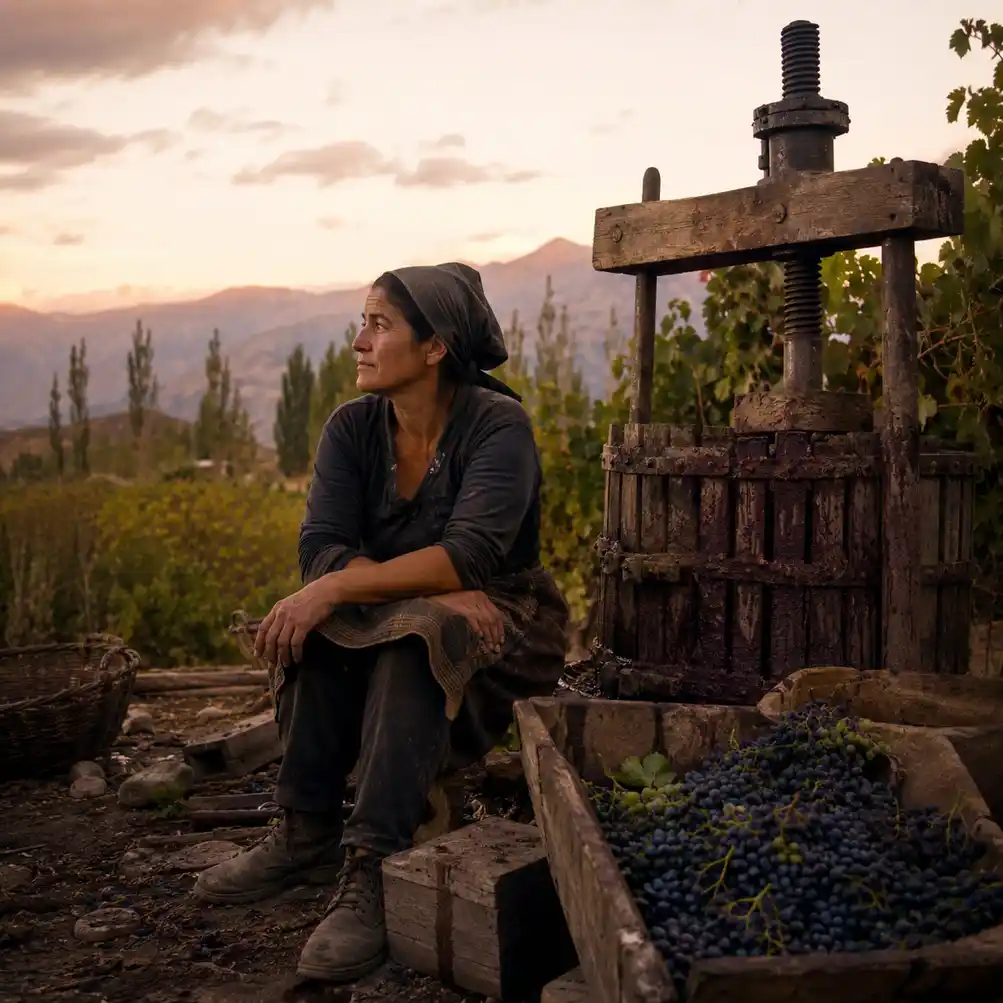
The press of the title also resembles labor. Grapes yield their substance through force, just as workers are pressed by economies and history. Creation carries the mark of exertion. Poetry itself becomes manual work performed on resistant material.
Religious imagery sometimes places workers’ hands close to sacred hands, overturning hierarchies between physical and spiritual value. Holiness appears in endurance, care, and making rather than social rank.
Representative figures sometimes carry more symbolic weight than individual detail. Even then, Winepress looks toward hands and matter when public culture prefers monuments. That attention is part of its justice. Poetry honors skill without separating it from exhaustion or poverty.
Nature Bears Witness
Trees, earth, fruit, animals, water, stone, and wind move throughout Winepress. Nature does not provide a decorative refuge from human history. It participates in memory, labor, death, and renewal. The landscape feels wounded yet animate.
Her images move from physical observation into spiritual relation. A tree can be shelter, witness, child, grave, or self. Fruit carries sweetness and crushing. Earth receives bodies while generating life.
The affectionate attention to another creature in 👉 Ode to the Cat by Pablo Neruda uses humor and sensuous precision. Her late collection is more severe, yet both Chilean poets allow ordinary beings and materials to challenge an exclusively human scale of importance.
In Winepress, nature does not promise that all damage will heal. Cycles of growth and decay may intensify grief because renewal continues without restoring a particular person. Consolation remains partial and physical.
This tension gives the final tree special force. The tree is not merely a reassuring emblem of life. It stands at the edge of exhaustion, memory, and imagined rest. Its roots connect ending with continuity without cancelling either.
Nature expands the collection’s ethics. Human suffering belongs within material existence without becoming insignificant. Stone, wood, blood, and breath retain relation when explanations fail. Matter is not a symbol observed from afar; it actively participates.
Faith Argues with Silence
Biblical rhythms, Christian imagery, prayer, and prophetic address shape much of Winepress. Her religious language can sound ancient, but it does not create a protected world of certainty. God may be invoked with devotion, desperation, anger, or bewilderment.
Prayer becomes a form of confrontation. The speaker addresses silence because silence remains intolerable. Questions about suffering are not solved by repeating doctrine. Faith survives through the refusal to stop speaking.
The collection draws spiritual meaning from matter. Workers’ hands, crushed fruit, earth, mothers, abandoned women, and trees become revelation beyond institutional religion.
This mixture creates productive tension. Winepress can sound orthodox in one moment and radically unsettled in the next. The poet does not separate Christian inheritance neatly from Indigenous American landscapes, personal grief, or global history. Belief carries several cultural memories at once.
Religious vocabulary may feel remote. Its function becomes clearer when prayer is heard as pressure rather than solution. The poems test inherited words against death and horror.
Silence never disappears, but it changes meaning. It may suggest divine absence, the quiet of the dead, exhausted speech, or a space where another kind of listening begins. The spiritual drama of Winepress lies in continuing the address without receiving a stable reply. The unanswered address becomes evidence that relationship has not been abandoned.
Interesting Quotes from Winepress
- “Una en mí maté: yo no la amaba.” This opening confession from “La otra” immediately divides the speaker against herself. Moreover, the verb “maté” turns inward change into violence rather than gentle maturation. The rejected double carries hardness, heat, and mountain imagery, so self-remaking demands both loss and culpability. As the collection’s prologue, the sentence prepares a book in which pressure transforms identity but never erases its cost.
- “La bailarina ahora está danzando la danza del perder cuanto tenía.” Dance becomes a disciplined process of dispossession. However, movement does not simply liberate the dancer. She sheds family, landscape, name, childhood, and eventually even a stable self. The sentence therefore joins beauty to social and historical violence, while its repeated “danza” makes loss feel both ceremonial and relentless.
- “Remaron por mí en los barcos, mordiendo las olas malas, y mi huesa la harán justa aunque no vieron mi espalda.” “Manos de obreros” shifts attention from celebrated individuals to anonymous laboring hands. In fact, the speaker recognizes how workers sustain her life and will finally shape her grave. The maritime image enlarges gratitude into an ethics of interdependence, while “no vieron mi espalda” stresses solidarity between strangers.
Trivia and facts for Winepress
- Chile received this collection first: She released Lagar, whose title English sources commonly render as Winepress, through Editorial del Pacífico in Santiago in 1954. Unlike her three earlier major poetry collections, this one first appeared in her homeland.
- The architecture resembles a ritual passage: The collection contains seventy-four poems across thirteen sections, with “La otra” as a prologue and “Último árbol” as an epilogue. The 🌐 Chilean National Library highlights this unusual framing.
- Private grief meets collective catastrophe: The poems register the Second World War, concentration camps, religious anxiety, illness, and bereavement. Therefore, readers may hear a meaningful echo in 👉 The Waste Land by T.S. Eliot, another work that converts historical fracture into broken lyric form.
- “Locas mujeres” resists one simple biography: Critics once tied the entire sequence to the 1943 death of her nephew Yin Yin. However, University of Chile research shows that several poems had appeared between 1941 and 1943, complicating that explanation.
- Late style does not mean stillness: Dancers, wanderers, workers, exiles, plants, and elemental forces keep the poems moving. Moreover, their compressed imagery rewards comparison with 👉 The Flowers of Evil by Charles Baudelaire.
The Last Tree Holds the Ending
The closing poem, “El último árbol,” brings the book beneath a final tree. It gathers journey, rootedness, death, shelter, and return. After “La Otra,” the volume ends not in perfect reunion but where exhaustion may rest.
The structure moves from fracture toward relation. That movement should not be mistaken for a cure. The losses remain, history remains violent, and the self remains multiple. The final tree holds these conditions rather than resolving them.
Winepress can be demanding in English because translation cannot reproduce every biblical echo, regional association, sound pattern, and Spanish ambiguity. Its short lines may carry prayer, command, song, and lament at once.
The collection rewards slow reading. A poem that first appears sealed may open when its physical nouns, repetitions, and changes of address are followed closely. Meaning accumulates through pressure and return.
Late works are sometimes read only as summaries of a writer’s established themes. This book does more. It reorganizes mourning, motherhood, labor, female identity, nature, faith, and history inside a harsher poetic architecture.
Winepress leaves readers with no easy vintage made from suffering. It preserves the crushing and the residue alongside whatever transformation poetry makes possible. The final achievement is resistance: death presses upon the voice, but it does not force that voice into silence. Rest becomes relation to earth, not escape from material existence.