The Hypnotist by Lars Kepler – A Family Massacre Leaves One Possible Witness
The Hypnotist opens with extreme violence in Tumba, outside Stockholm. A man is found murdered at a sports facility, and police soon discover his wife and young daughter stabbed to death at the family home. Teenage son Josef Ek remains alive despite devastating injuries. Lars Kepler presents the attacks as an attempted destruction of an entire family rather than a sequence of unrelated killings. One survivor may also be the final target.
Detective Inspector Joona Linna learns that an older sister, Evelyn, was not found at either scene. If the killer intended to eliminate the family, her absence creates urgent danger. Josef drifts in and out of consciousness and cannot endure an ordinary interrogation, so the investigation faces a cruel conflict between medical fragility and the need for speed. The Hypnotist builds its first mystery from that pressure. Police need access to a mind that the body is struggling to protect.
The bloody introduction recalls the evidentiary excitement of 👉 A Study in Scarlet by Arthur Conan Doyle, although the two novels create very different emotional effects. Doyle turns the strange crime scene into a demonstration of Holmes’s deductive brilliance. The author team emphasizes bodily damage, shock, and the possibility that evidence itself may harm the person carrying it.
Violence makes memory medically dangerous. That idea gives The Hypnotist more than a sensational opening. The central question is not simply what Josef saw. It is whether truth can be recovered without repeating the violation already inflicted upon him, and whether the apparent victim is the person the investigators believe him to be.
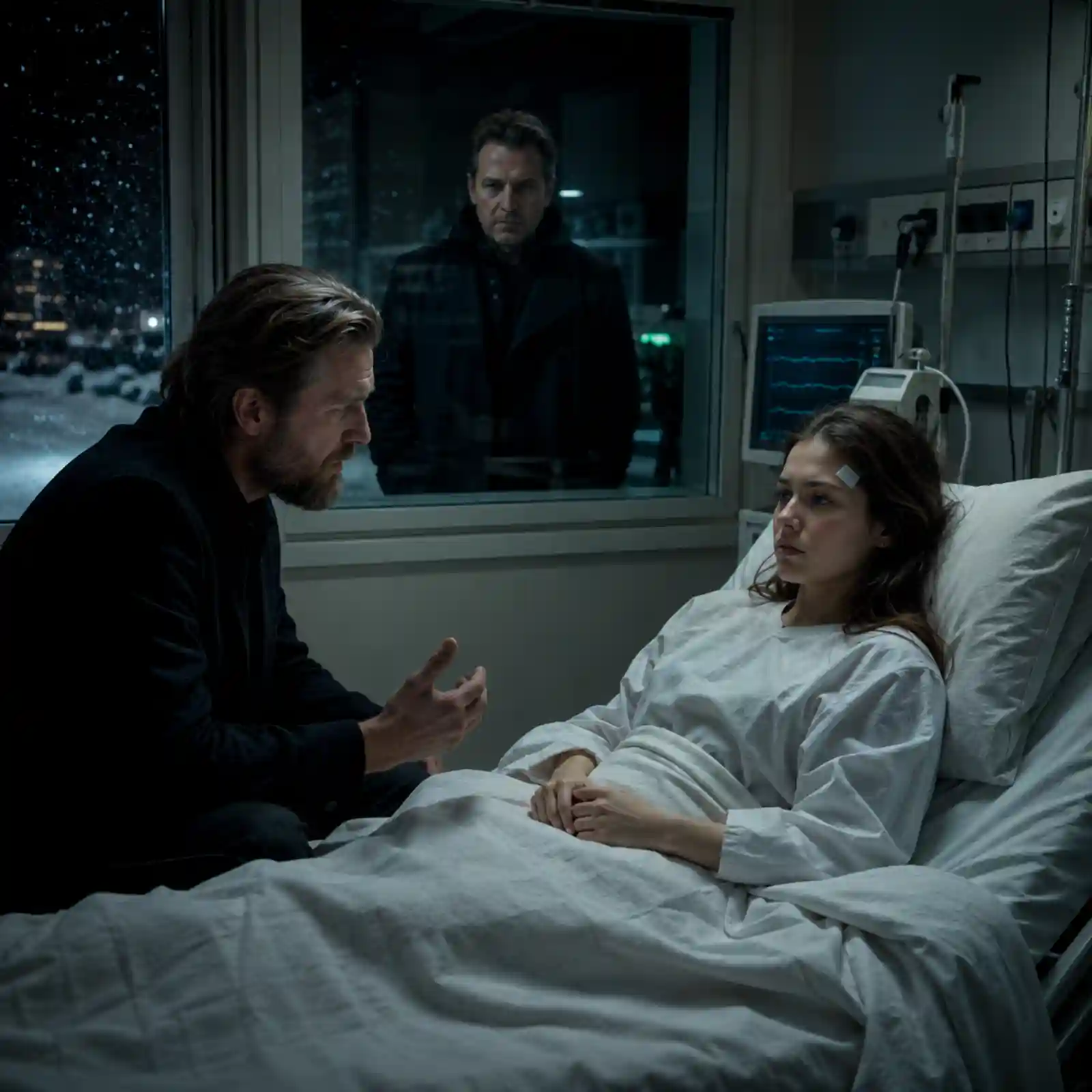
Joona Linna Refuses the Most Convenient Theory
Joona Linna enters the novel as a detective of unusual certainty. He often says that events must have happened in a particular way before he can demonstrate every step, a habit that irritates colleagues and creates suspense around his reasoning. In The Hypnotist, confidence is valuable because urgency punishes hesitation. It is also dangerous because the investigation begins with a survivor whom everyone naturally wants to classify as innocent. Joona treats sympathy as distinct from proof.
His interest in hypnosis comes from practical desperation rather than mystical belief. Conventional questioning may kill Josef or deepen his shock, while Evelyn could still be exposed. Joona therefore contacts physician and trauma specialist Erik Maria Bark, once known for therapeutic hypnosis. Erik has sworn never to use the method again. The request places two forms of expertise in conflict: the detective wants recoverable information, and the doctor remembers damage caused when treatment crossed ethical and emotional boundaries.
A comparable pattern of apparently separate victims hiding a private design drives 👉 The ABC Murders by Agatha Christie. Christie’s Poirot defeats a scheme built to misdirect rational attention. Joona works in a more violent register, yet he shares the refusal to accept the arrangement a killer has prepared for observers.
Certainty must remain answerable to evidence. Joona’s strongest quality is not that his first intuition is always correct. It is his persistence when institutional boundaries, wounded witnesses, and competing cases make a complete account difficult. The first investigation establishes the method that will define the Joona Linna series: an improbable conviction followed through until hidden violence becomes visible.
Erik Bark Breaks a Promise and Opens the Wrong Memory
Erik Maria Bark initially refuses to hypnotize Josef because he promised never to practice hypnosis again. Ten years earlier, his research group ended in scandal, professional punishment, and personal damage that the novel reveals only gradually. Evelyn’s possible danger finally outweighs his resistance. The emergency turns an old boundary into a present choice. In The Hypnotist, breaking the promise may be defensible, but it cannot be harmless.
Under hypnosis, Josef’s account overturns the investigation’s emotional assumptions. The injured boy is not simply a witness to his family’s murder. His recovered narrative implicates him in the killings and reveals the threat he posed to Evelyn. The twist is effective because the writer team has used the body as a moral disguise. Josef’s wounds invite compassion, yet victimhood in one moment does not erase violence committed in another.
The hypnotic confession also creates legal and scientific uncertainty. Material produced in such a state cannot function like an ordinary voluntary statement, and hypnosis does not provide magical access to an infallible recording. Suggestion, reconstruction, fear, and desire can shape recollection. The Hypnotist gains tension by treating the session as a lead that changes behavior rather than a perfect solution.
Guilt presses toward speech through a very different psychological method in 👉 Crime and Punishment by Fyodor Dostoevsky. Porfiry waits for Raskolnikov’s contradictions to expose him, while Erik guides a traumatized mind into imagery and memory. Confession does not automatically become justice. When details of the session reach the public, Erik faces outrage and Josef gains a motive for revenge, showing how recovered truth can create new danger before authorities know how to use it.
The Bark Family Is Already Living With Fragile Trust
Erik returns from the hospital to a marriage that has never fully recovered from his earlier infidelity. Simone suspects renewed betrayal, while Erik’s dependence on sleeping medication and evasive habits make reassurance difficult. Their teenage son Benjamin lives with a blood disorder that requires regular treatment and makes physical injury especially dangerous. The family’s ordinary life depends on careful maintenance. Throughout The Hypnotist, the writer couple places that fragility beside the spectacular violence of the murder case.
Benjamin prevents Erik and Simone’s conflict from remaining a private marital drama. Both parents love him, but fear can make their care controlling, impatient, or divided. Erik’s work exposes the household to a threat no one understands, while Simone’s distrust makes cooperation harder when rapid decisions become necessary. Kepler treats emotional history as a practical force. An old lie changes how a present warning is interpreted.
The social breakdown in 👉 Blindness by José Saramago occurs on a vastly larger scale, but both novels test care under conditions of fear and bodily vulnerability. Saramago strips institutions from an entire population. The Hypnotist narrows the question to a family whose trust has weakened before crisis removes their remaining margin for error.
Domestic tension becomes part of the danger system. Erik cannot separate professional ethics from home because the consequences of hypnosis follow him there. Simone cannot postpone judgment about their marriage because a threat enters the apartment. Benjamin cannot remain merely the child they protect because his own choices, relationships, and medical condition determine how the family responds. The thriller works by making existing fractures operational.
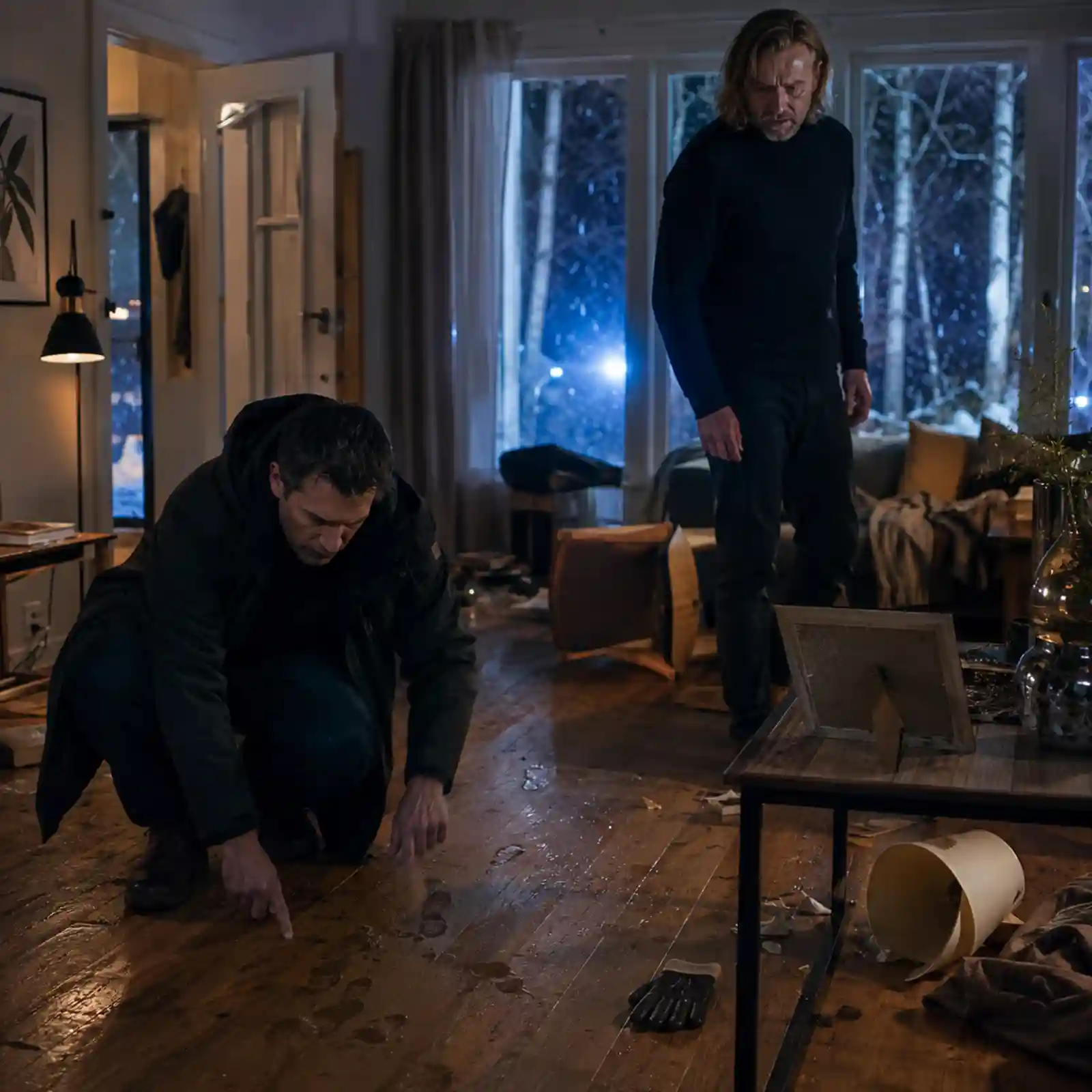
Benjamin’s Abduction Changes the Shape of the Novel
When Benjamin disappears from the family apartment, suspicion initially points toward Josef. The timing makes that theory almost irresistible because the hypnotized teenager has expressed rage toward Erik. Yet the kidnapping soon expands beyond the Ek murders. The apparent consequence becomes a second mystery. From that point, The Hypnotist changes from a police investigation centered on Joona into a family rescue story driven by Erik, Simone, and Simone’s father, retired detective Kennet Sträng.
Benjamin’s medical condition supplies a relentless clock. Separation from his medication and the possibility of injury mean that delay is not emotionally painful alone. It may be fatal. They repeatedly uses the body to convert information into urgency. The detectives cannot wait for every lead to become certain because biological risk continues while institutions decide who owns the case.
Structurally, the shift can feel excessive. Readers who expect the Ek murders to dominate the entire book may experience the kidnapping as a second thriller attached to the first. That abundance is also central to the novel’s identity. The Hypnotist is interested in chains of violence, where one intervention awakens consequences connected to a different buried history.
Collective fear places ordinary judgment under strain in 👉 The Plague by Albert Camus. Camus emphasizes endurance and civic duty, while they accelerates toward pursuit and rescue. Both works nevertheless ask what responsible action looks like when certainty arrives more slowly than danger. Urgency reveals the quality of cooperation. Erik and Simone must work through distrust, and Joona must follow a case that official divisions might leave fragmented.
The Old Hypnosis Group Contains the Kidnapper’s Motive
The search for Benjamin forces Erik to revisit the research group that destroyed his earlier career. A long flashback slows the immediate chase while revealing why hypnosis became intolerable to him. Patients’ accounts blurred recollection, fantasy, group influence, and real harm. One participant, Lydia, described abusing a child, prompting Erik to alert authorities. The investigation appeared to discredit her account, and the aftermath ruined the project. A clinical failure concealed an incomplete truth.
In The Hypnotist, the past becomes newly legible when evidence shows that Lydia’s story was not simply invented. Her child had existed, suffered, and died. Erik’s intervention therefore contained ethical necessity, but his method and the institutions surrounding it failed to establish the truth in time. The Hypnotist refuses the comfort of making him either a persecuted genius or a reckless fraud. He acted from concern, crossed unstable boundaries, and remained vulnerable to information he could not verify.
Lydia’s fixation transfers the lost child’s identity onto Benjamin. The kidnapping becomes a distorted attempt to restore a relationship through possession and punishment. That motive connects the second plot to the first. Josef and Lydia both reorganize family bonds through violence, blaming others for resistance to their demands.
Memory can preserve injury without preserving fact. This principle explains why hypnosis remains both useful and frightening in the novel. Recovered images may direct attention toward real events, yet their meaning depends on corroboration. Erik’s return to the group’s history is therefore not a therapeutic triumph. It is an admission that buried experience continues shaping the present when neither medicine nor law has contained it.
Memory, Promises, and Manipulation: Six Lines from The Hypnotist
These quotations use Ann Long’s 2011 translation.
- “Like fire, just like fire.” Josef’s first hypnotic words offer sensation without explanation. Memory returns as an image that may illuminate the crime or lead everyone further into error.
- “The dream is completely gone, as if he had never had it.” Erik awakens already confronting an inaccessible mind. His vanished dream anticipates the witness’s damaged memories.
- “I’m doing this my way.” Joona’s confidence can resemble arrogance. The declaration explains both his investigative effectiveness and his willingness to pressure others.
- “That might be all that’s needed to save his sister.” A hypothetical possibility becomes a moral argument. Joona uses potential rescue to overcome medical reluctance.
- “I was a fake.” Erik reduces an entire professional history to four defensive words. Self-condemnation conceals a more complicated combination of guilt, trauma, and ability.
- “I promised myself I would never use hypnosis again.” The promise reveals that hypnosis previously caused serious harm. Breaking it therefore reopens the past as well as the witness’s memory.
The Mind as a Crime Scene: Eight Facts About The Hypnotist
- The novel launched the Joona Linna series: Hypnotisören appeared in Sweden in 2009 and became the country’s bestselling crime novel of the year. Its success transformed an experimental collaboration into a continuing series.
- “Lars Kepler” is two established novelists: Alexandra Coelho Ahndoril and Alexander Ahndoril created the pseudonym because their individual literary styles resisted combination. Writing crime fiction through a third identity gave them a new shared voice. 🌐 NPR interview
- The pen name contains two tributes: “Lars” honors Stieg Larsson, whose success renewed their interest in Swedish crime fiction. “Kepler” refers to astronomer Johannes Kepler, who discovered an underlying order in seemingly mysterious planetary motion. 🌐 Author interview
- The title character is not the series protagonist: Psychiatrist Erik Maria Bark is the hypnotist, while Finnish detective Joona Linna becomes the saga’s recurring investigator. Their uneasy cooperation establishes a pattern in which intuition challenges professional caution.
- Hypnosis is both evidence and violation: Bark has sworn never to hypnotize anyone again, yet a gravely injured witness may hold information capable of saving another life. The conflict between rational investigation and psychologically dangerous knowledge recalls 👉 The Hound of the Baskervilles by Arthur Conan Doyle.
- The investigation invades the home: What begins with a murdered family in Tumba gradually exposes Bark’s past and threatens his wife and son. That fusion of scientific expertise, private guilt, and family danger creates a useful parallel with 👉 Dark Matter by Juli Zeh.
- The film marked a major homecoming: Lasse Hallström’s 2012 adaptation was his first Swedish film in more than twenty-five years and his first thriller. Sweden selected it as its submission for the Academy Award for Best Foreign Language Film. 🌐 Swedish Film Institute
The Hypnotist – The Frozen-Lake Rescue Turns Knowledge Into Action
The final search leads toward an isolated location in winter, where Benjamin is held among people connected to Lydia and Erik’s former group. Snow, darkness, cold, and a frozen lake convert the rescue into a physical ordeal. Benjamin’s illness makes every wound dangerous, while Lydia’s unstable identification of him as her child prevents rational negotiation. The mind’s private delusion acquires a lethal landscape.
Joona, Erik, and Simone reach Benjamin, but rescue does not arrive through deduction alone. Vehicles, ice, water, and bodily endurance determine who survives. A bus moves onto the frozen lake and breaks through, forcing Erik into direct action. The hypnotist who entered the novel by guiding another person inward must now respond to immediate material danger. Through this rescue, The Hypnotist closes its psychological labyrinth with cold, weight, breath, and rescue.
The ending reunites the Bark family without pretending that reunion repairs trust. Benjamin survives, but kidnapping and near death add trauma to a household already carrying addiction, betrayal, and fear. Erik has broken his promise, reopened his professional past, and discovered that the scandal contained truths no one understood. Survival begins recovery rather than completing it.
Published in Swedish in 2009 as Hypnotisören, the novel introduced Joona Linna and the shared pseudonym, used by Alexandra Coelho Ahndoril and Alexander Ahndoril. Its short scenes, graphic violence, abrupt reversals, and interlocked plots created a deliberately maximal form of Scandinavian crime fiction. The Hypnotist can feel overextended, especially during its long flashback, yet that excess serves its central vision. No memory remains isolated, and no act of violence stops with the person first harmed.