Kairos by Jenny Erpenbeck: Love at the End of the GDR
Kairos begins after Hans has died. Katharina receives two boxes containing letters, notebooks, photographs, and other remains of the relationship they once shared. The archive does not deliver a stable past. Its contents place tenderness beside deception and remembered intensity beside later knowledge.
Jenny Erpenbeck builds the novel through this friction. A document may preserve the words used at a particular moment, but it cannot settle what those words meant. Evidence survives while certainty changes. Katharina sorts objects that belonged to both lovers, yet the order of their story remains contested.
The opening gives Kairos a double timescale. The older woman knows where the affair led. The nineteen-year-old who enters the recovered scenes does not. Memory therefore creates suspense without hiding the outcome. Readers watch early happiness acquire meanings that were unavailable when it was lived.
The vast reconstruction of experience in 👉 In Search of Lost Time by Marcel Proust also makes the past active rather than complete. Proust follows involuntary memory across an expansive social world. She uses a tighter archive whose letters and objects reveal how intimacy can preserve incompatible truths.
The boxes also raise a question of ownership. Hans collected, recorded, and interpreted much of the relationship while alive. Katharina becomes the final reader of a history partly arranged by the man who dominated it. To inherit the archive is not to inherit his verdict. In Kairos, looking back becomes an act of separation. The past cannot be changed, but its authority can.
A Bus Ride Becomes the Chosen Moment
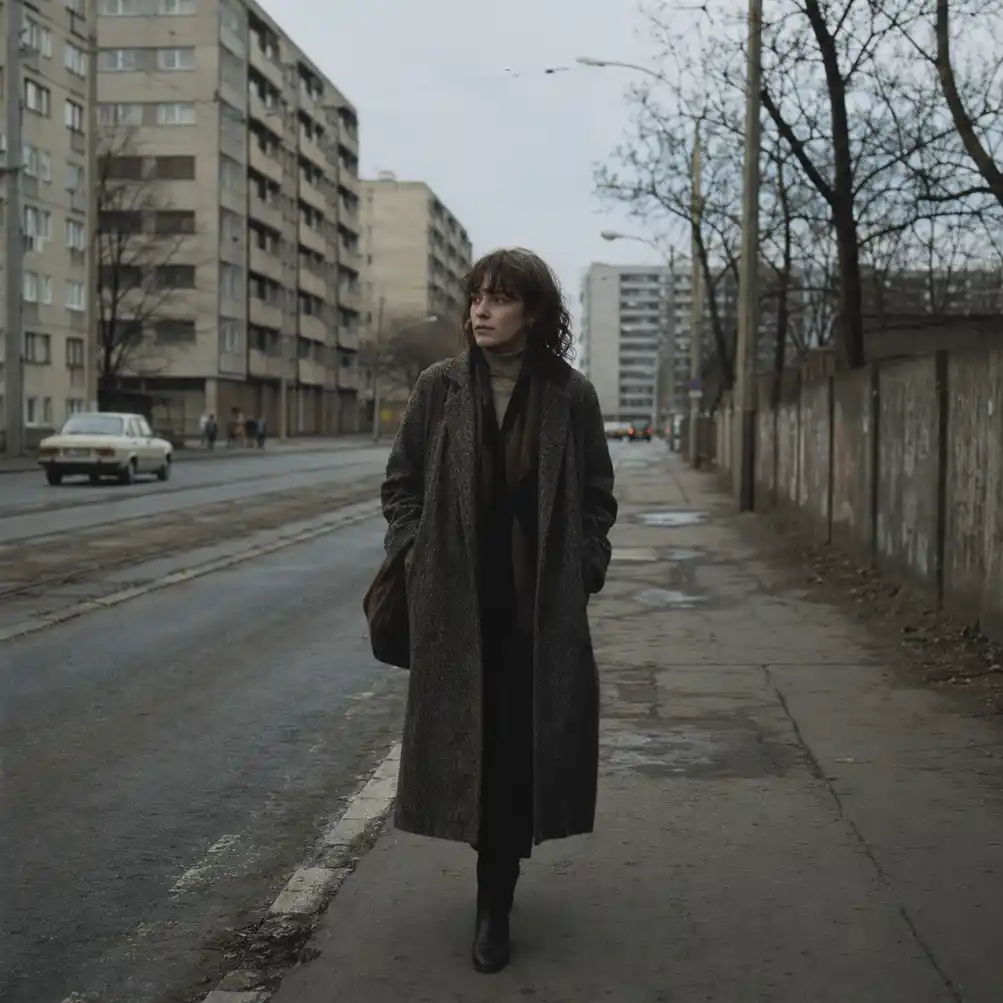
On 11 July 1986, Katharina and Hans meet by chance on a bus in East Berlin. She is nineteen. He is fifty-three, married, the father of a teenage son, and an established writer who works in radio. Their attraction is immediate, intellectual, and physical.
The title Kairos names the opportune or decisive moment, a break in ordinary time when action suddenly seems possible. The lovers experience their meeting as exactly such an opening. Chance quickly acquires the language of fate. The age difference, Hans’s marriage, and the need for secrecy appear less important than the sense that the encounter had to happen.
The writer renders the beginning with warmth and sensory concentration. Streets, apartments, food, skin, music, and hurried meetings give the affair a world of its own. Katharina discovers new art and new forms of attention. Hans feels renewed by her youth and responsiveness.
Yet the imbalance is present from the first pages. He possesses cultural authority, professional status, sexual experience, and an established household. She is still forming her adult life. Their desire may be mutual, but their freedom is unequal.
The divided lovers in 👉 Divided Heaven by Christa Wolf face a different historical and emotional crisis, but both novels connect private attachment with an East German society approaching decisive change. Love does not escape history. It reveals how history enters choice.
The brilliance of Kairos lies in refusing to declare the beginning false simply because the relationship becomes destructive. The happiness was real. So were the conditions that made its later transformation possible.
Culture Creates a Private Country – Kairos
Hans and Katharina build intimacy through books, painting, theatre, and classical music. He introduces works with the confidence of an older cultural guide. She listens, responds, and brings the intensity of discovery. Their shared attention turns art into a private language.
Music is especially important in Kairos. A composition can hold simultaneous lines without forcing them into a single voice. For a time, the lovers imagine their differences in similar terms. Harmony makes inequality feel like complementarity. Hans supplies knowledge and Katharina supplies wonder, a division that flatters them both.
The pattern is seductive because cultural education genuinely enlarges her life. The novel does not treat every gift from an older lover as a disguised weapon. Instead, it follows the point at which generosity becomes authority. Hans increasingly assumes that teaching gives him the right to judge how Katharina thinks, works, dresses, and desires.
The bodily and intellectual initiation in 👉 The Lover by Marguerite Duras also joins a young woman’s self-discovery to an unequal relationship. Duras fractures autobiography through image and retrospection. The novelist uses alternating consciousness and accumulated documents to test who controls the story of initiation.
Art cannot remain innocent of that struggle. A favorite piece becomes shared property, then a reminder, then evidence in a private prosecution. Beauty records both closeness and command.
This is one of the novel’s sharpest insights. Cultural refinement does not protect people from cruelty. Hans can understand complex music while simplifying Katharina into a role. In Kairos, aesthetic sensitivity and ethical sensitivity never become the same achievement.

Hans Turns Hurt Into a System
After Katharina sleeps with another man, Hans treats the act not as a breach to confront but as grounds for prolonged punishment. He demands details, repeats questions, assigns meanings, and constructs an account in which her guilt must continually renew itself.
The cassette tapes are the relationship’s most frightening objects. His recorded voice can continue the interrogation when he is absent. Katharina listens alone while accusation fills the room. Technology gives control duration and reach. There is no conversation because the tape cannot hear an answer.
Hans converts emotion into procedure. He creates rules, inventories offenses, and presents submission as the only proof of love. His own marriage and earlier infidelities do not enter the same moral calculation. The inequality that once appeared romantic becomes explicit.
Kairos depicts coercive control without reducing it to explosive scenes. Repetition does the damage. The same charge returns until Katharina begins to speak in Hans’s categories. She cuts her hair, accepts humiliation, and tries to restore a harmony whose terms he alone defines.
The isolation and self-division of 👉 The Clown by Heinrich Boell emerge from another postwar German setting. Böll’s performer speaks from social and romantic abandonment. She instead shows a young consciousness being occupied by an older lover’s relentless interpretation.
Abuse presents itself as wounded devotion. That disguise explains why leaving is not a simple act of insight. Katharina remembers genuine tenderness and still hopes the earlier relationship can be recovered. Hans uses that memory as leverage, making the best moments of Kairos part of the trap.
Katharina’s Consciousness Does Not Disappear
Katharina is vulnerable to Hans’s authority, but Kairos does not portray her as empty or passive. She works as a trainee typesetter, travels, develops artistic ambitions, forms friendships, and encounters experiences beyond the affair. Her life keeps exceeding the structure Hans tries to impose.
The author moves close to both lovers’ thoughts, sometimes allowing their perspectives to approach or overlap. The effect is not equality. Readers can feel how a shared sentence contains different amounts of power. Narrative proximity reveals emotional distance.
Katharina’s younger self does not possess the vocabulary that an older observer might use for coercion. She experiences shame, longing, defiance, and renewed attachment before she can arrange them into a judgment. Kairos respects that temporal difficulty.
Her moments away from Hans are crucial. Travel and work open spaces in which his interpretation weakens. Other people respond to her without demanding that every action confirm a grand love story. The world becomes plural again. Her work in theatre design also lets her arrange space and perspective rather than merely inhabit a scene directed by Hans.
Still, independence does not arrive in one clean decision. Katharina conceals, returns, resists, complies, and imagines alternatives. Contradiction is part of survival. The novel refuses the reassuring fiction that recognizing harm instantly cancels attachment.
Its place in contemporary german literature rests partly on this exactness about memory. The later Katharina neither excuses Hans nor pretends that she never loved him. She can understand the affair as formative and destructive at once. That capacity to hold incompatible truths becomes a freedom the younger woman did not yet have.
East Germany Is More Than a Metaphor
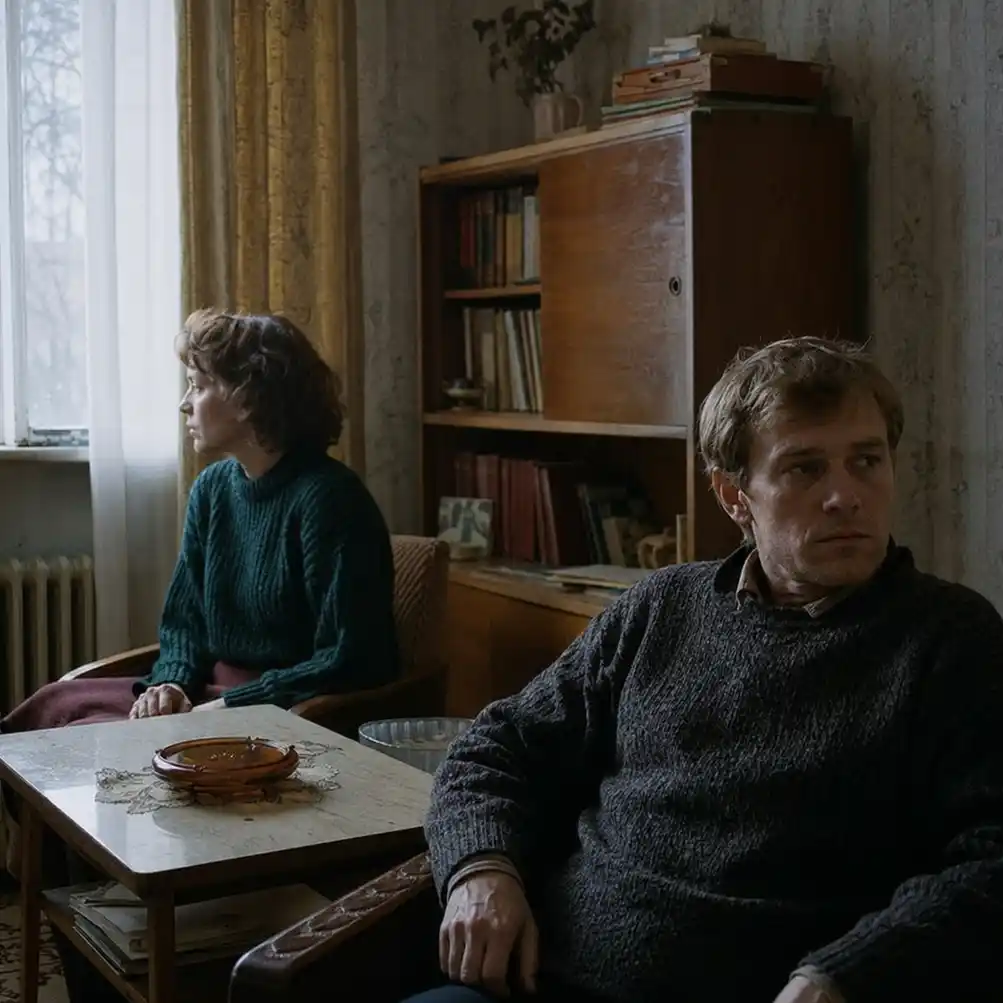
The relationship unfolds during the final years of the German Democratic Republic. Shortages, official language, workplaces, cultural institutions, political rituals, and ordinary routines give Kairos a concrete East Berlin. History is lived through rooms and schedules before it appears as a public rupture.
Hans chose the socialist East as a young man after growing up under National Socialism. His commitment contains idealism, guilt, ambition, and self-fashioning. He wants to belong to a system that promised a different Germany. Political faith becomes part of personal identity.
The novel invites comparison between the GDR and Hans’s authority, but it does not make them interchangeable. A state is not a lover, and Katharina is not a symbolic population. The parallel works through language, disillusionment, and unequal power rather than a simple allegorical code.
National identity under pressure takes a satirical form in 👉 Germany. A Winter’s Tale by Heinrich Heine. Heine crosses borders while exposing patriotic illusion. She remains close to the textures of a country disappearing from within, including what its citizens lose alongside what they escape.
That distinction prevents Kairos from becoming a triumphal story about liberation. The GDR restricted freedom and demanded loyalty, yet its end also erased jobs, institutions, assumptions, and biographies. A failed system can still be a lost home.
The writer is most persuasive when political change reaches people at an angle. The lovers are absorbed in their private crisis while public history accelerates. Neither scale cancels the other. Together they show how a life can continue inside an era whose meaning is being rewritten.
The Wall Falls Without Ending the Past
When the Berlin Wall opens in November 1989, familiar maps change almost overnight. Streets once blocked become accessible, Western goods enter view, and the political language surrounding daily life loses authority. The event is historic, but Kairos attends to disorientation as much as celebration. Consumer abundance also produces estrangement: objects acquire new names and prices, while familiar skills and histories suddenly seem devalued.
Katharina belongs to a generation young enough to adapt. Hans has invested more of himself in the state and its cultural promises. Their age difference now acquires historical force. The same opening means a future to one and an ending to another.
The collapse also changes the terms of judgment. East German lives are rapidly interpreted through Western categories of failure, compromise, surveillance, and backwardness. Some of those judgments identify real injustice. Others flatten entire biographies.
Kairos refuses nostalgia without accepting erasure. Hans’s personal conduct cannot be excused by the collapse of his country, and the country cannot be understood only through his controlling behavior. The novel keeps analogy under pressure rather than letting it become a verdict.
Katharina’s movement through the changed city gradually separates time from Hans’s voice. New possibilities do not heal her automatically, but they weaken the closed system in which he defined reality. Political space and emotional space reopen together.
This is why the fall of the Wall functions as more than background. It demonstrates that structures presented as permanent can vanish. The aftermath remains unequal and painful, yet permanence has been disproved. For Katharina, that fact becomes quietly transformative.

Quotes from Kairos
These five complete sentences come from Michael Hofmann’s authorized English translation excerpt. Their brevity preserves context without over-quoting the copyrighted novel. Together, these lines move from mourning through memory to encounter. Kairos makes time something preserved, commercialized, mirrored, and retrospectively rewritten.
- “Each piece comes with commercial interruptions.” Private mourning collides with consumer noise, making historical change audible inside Katharina’s hotel room.
- “Now they’re both speaking to time.” Hans’s boxes and Katharina’s suitcase become rival archives in which memory, deception, and omission survive together.
- “And that’s when she saw him.” The plain sentence gives chance encounter the force of destiny while hiding the unequal relationship that follows.
- “And he saw her.” The mirrored syntax creates reciprocity on the page, although shared attraction never removes the lovers’ age and power imbalance.
- “She nods.” Katharina learns that the same composers accompanied Hans’s actual funeral, quietly joining her private ritual to the ceremony she missed.
Context-Rich Trivia for Kairos
- A German novel crossed languages quickly: She published Kairos through Penguin in 2021. Michael Hofmann’s English translation followed through Granta and New Directions in 2023.
- Its title names decisive timing: The Greek kairos means an opportune or critical moment. Her prologue imagines the winged god with hair only at the front, so opportunity becomes graspable only before it passes.
- Boxes make memory material: After Hans’s death, Katharina receives papers dating from 1986 to 1992. Letters, diaries, photographs, omissions, and contradictions turn the archive into an unstable second relationship, recalling 👉 The Book of Disquiet by Fernando Pessoa.
- Music keeps private time: Mozart, Bach, and Chopin accompany Katharina’s remote mourning, but online advertisements interrupt every piece. Later, she learns that the same composers sounded at Hans’s funeral.
- Love and state share one trajectory: Erpenbeck describes the novel as both a great love’s decay and a political system’s dissolution. Language and silence expose shifting power, manipulation, and abuse in her 🌐 Booker Prize interview.
- Translation required repeated listening: Hofmann spent about a year on the translation and read the English text perhaps twenty times while revising it.
- The International Booker made history: Kairos won the 🌐 2024 prize, shared by author and translator. It became the first German-language winner, while Hofmann became the award’s first male winning translator.
Ruin Does Not Cancel What Was Real
Kairos takes its greatest risk by preserving the beauty of the affair alongside its brutality. A simpler novel would reveal that the early happiness was only manipulation. She shows instead how tenderness, vanity, dependency, education, desire, and cruelty can occupy the same history.
The prose supports this complexity. Long sentences gather sensations and thoughts, while abrupt fragments interrupt continuity. Perspectives approach each other without fully merging. Repeated images and music create patterns that change as the relationship decays. Form remembers what the characters revise.
The book’s archival structure also resists a clean ending. Letters and tapes preserve earlier selves, but they cannot command the later reader forever. Katharina’s final authority comes from sorting rather than destroying the evidence.
The 2024 International Booker Prize, shared with English translator Michael Hofmann, expanded the novel’s international readership. Its recognition is understandable because Kairos joins an intensely private story to a major European transformation without sacrificing the strangeness of either scale.
Loss is not the same as proof of worthlessness. This principle applies to the relationship and to the vanished state, though in different ways. Something can end because it became intolerable and still leave grief behind.
The title finally changes meaning. The decisive moment is not only the lovers’ fortunate meeting. It may also be the later instant when inherited material can be read without obedience. Kairos ends with no fantasy of an untouched self, only the harder freedom to decide what the past will mean now.
More Reviews of German Literature