Inkheart by Cornelia Funke: When Stories Come Alive
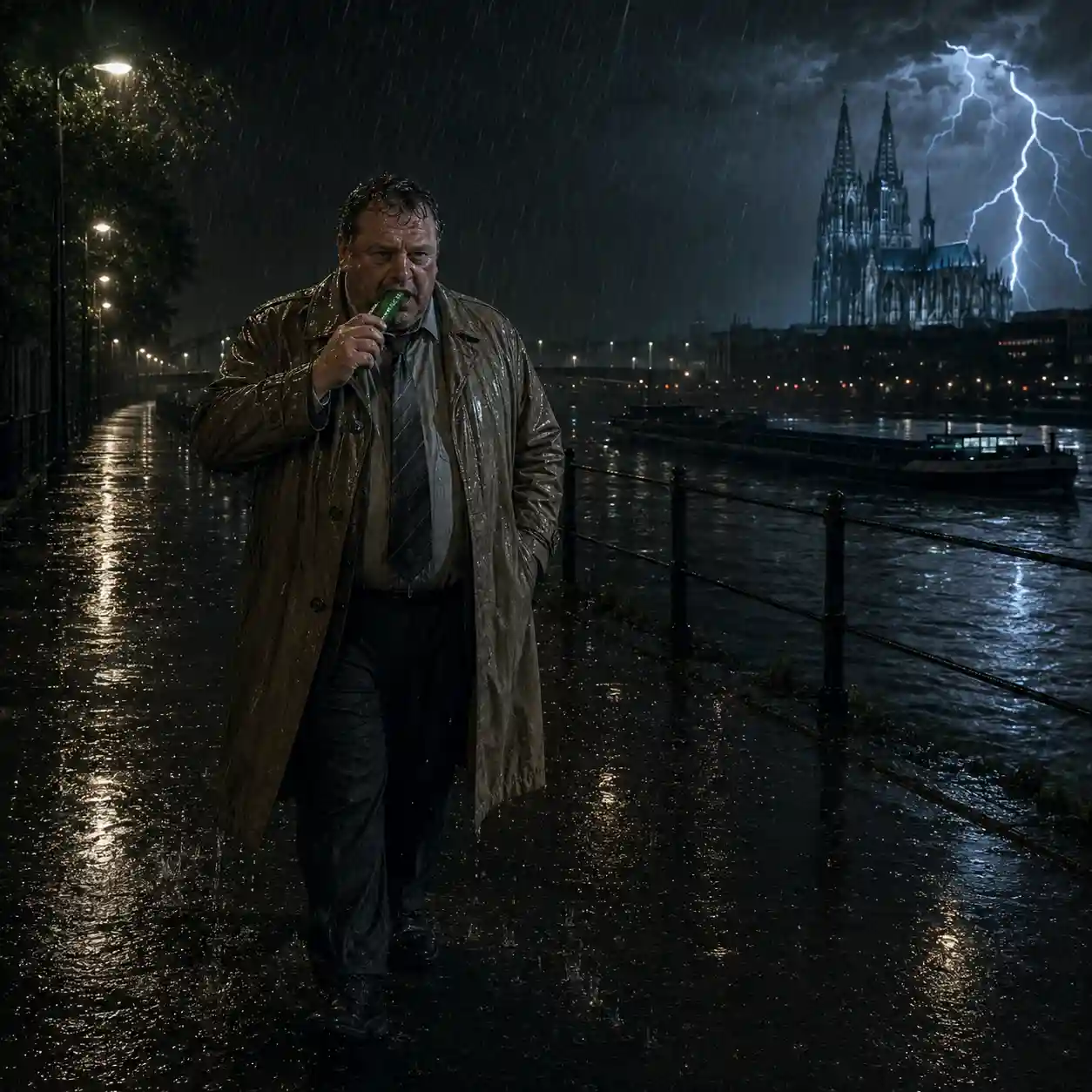
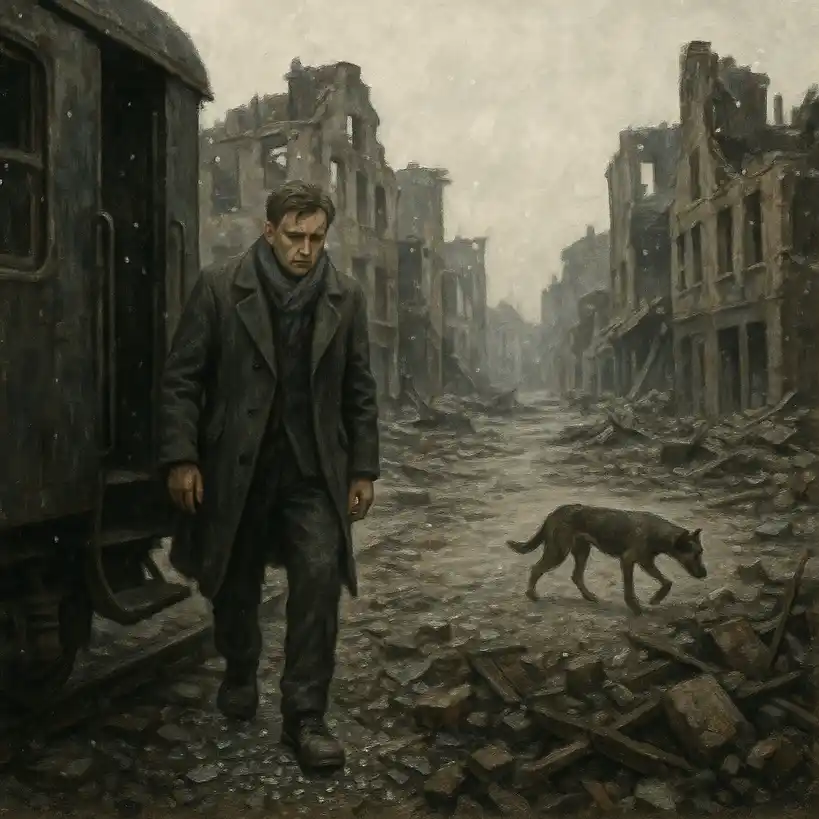
Inkheart opens with Meggie looking through a rain-streaked window at a stranger outside her home. Dustfinger’s arrival carries the unease of a story that has already begun elsewhere. He knows her father, calls him Silvertongue, and brings news of someone named Capricorn.
Cornelia Funke builds suspense from Meggie’s incomplete knowledge. Her father Mo repairs books and has taught her to love them, yet he refuses to read aloud. He also guards a battered volume that seems to frighten him. The family secret is hidden inside a book.
First published in German in 2003 as Tintenherz, Inkheart turns a familiar fantasy wish into a threat. What if beloved characters could leave their pages? The question sounds delightful until the wrong figures cross the boundary.
The young travelers in 👉 The Halloween Tree by Ray Bradbury also enter an adventure where storytelling, fear, and survival become inseparable. Bradbury moves through cultural memories of death, while the author begins inside a modern home. Both books understand that stories can become dangerous precisely because children take them seriously.
The opening works through atmosphere rather than explanation. Rain, darkness, whispered names, and Mo’s sudden decision to leave create motion before the rules are clear. Mystery grows from a parent’s protective silence. Meggie knows books have always shaped her home. She does not yet know that one particular book has shaped her family’s entire life.
Reading Aloud Changes Reality
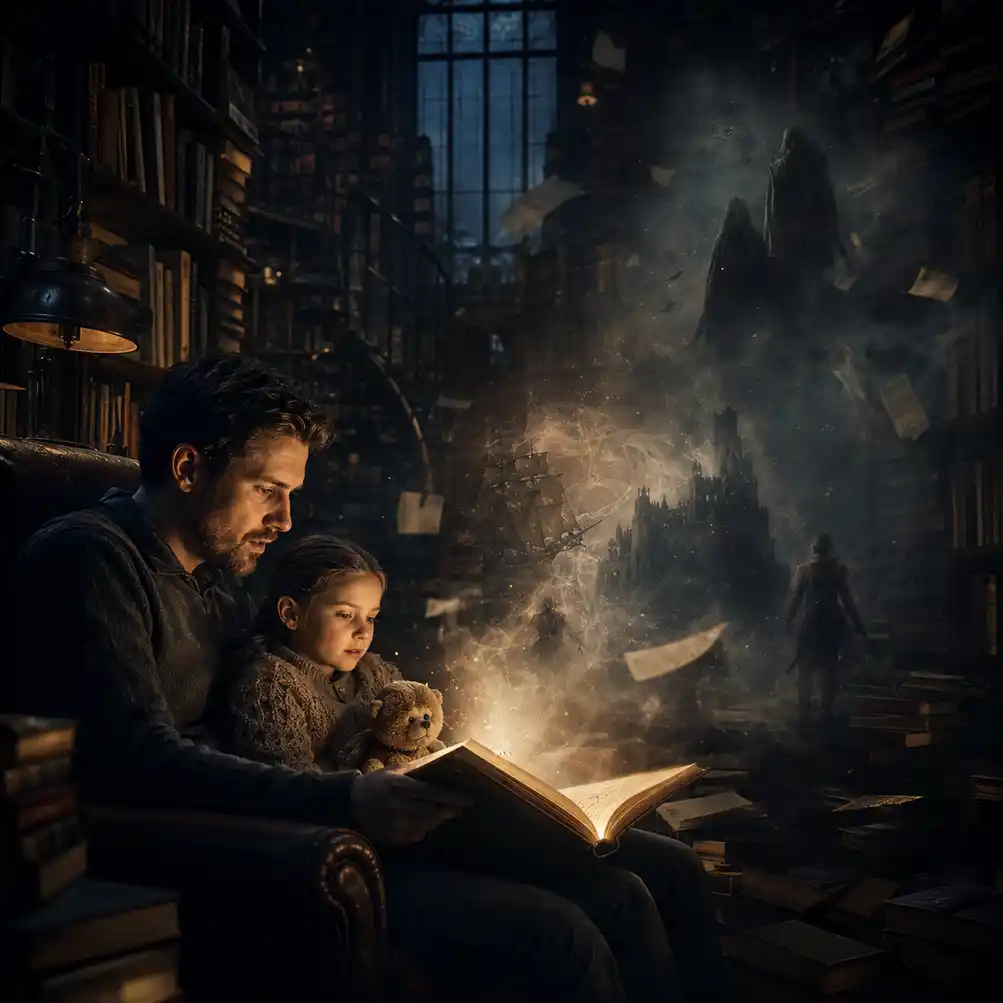
Mo possesses an extraordinary voice. When he reads aloud, characters and objects can emerge from the page into the physical world. The exchange carries a cost. Something from the reader’s world may disappear into the story in return.
Years earlier, Mo read from the book called Inkheart. Capricorn, Basta, and Dustfinger came out. Meggie’s mother Resa vanished into the fictional world. Mo’s silence therefore comes from grief and responsibility, not a lack of imagination.
Reading is an action with material consequences. Tone, rhythm, and emotional attention do more than interpret written words. They open a passage between realities. Funke gives oral performance a power that silent ownership cannot reproduce.
The creatures collected in 👉 The Book of Imaginary Beings by Jorge Luis Borges remain inside literary and mythological traditions. Inkheart asks what would happen if such beings acquired bodies, fear, appetite, and freedom beyond the descriptions that created them.
The magic never becomes a perfectly predictable system. Mo cannot simply choose every arrival or departure. This uncertainty protects the story from turning reading into a convenient machine. A beautiful voice may release wonder, but it cannot guarantee control.
Every act of creation also rearranges absence. Bringing someone out can send someone else away. That exchange gives the fantasy emotional weight. Meggie’s wish to recover her mother cannot be separated from the danger of moving lives across a boundary no one fully understands.
Books Have Bodies and Memories
Few fantasy novels care as much about the physical life of books as Inkheart. Mo does not merely read. He binds damaged volumes, replaces worn materials, removes stains, and respects the evidence left by earlier owners. His craft makes preservation a form of care.
Meggie carries books as companions. Elinor surrounds herself with a magnificent library and initially guards it more easily than she welcomes people. Dust jackets, paper, leather, illustrations, and printed type give the novel a richly tactile world. A book is both language and a vulnerable object.
That vulnerability matters when Capricorn burns books. Fire destroys more than expensive property. It attacks memory, possibility, and the routes by which alternative worlds might enter the present. His violence against libraries reveals a desire to control which stories remain available.
Inkheart also begins its chapters with passages from other works. These fragments place Meggie’s adventure inside a much larger library. Each borrowed voice creates anticipation, contrast, or recognition before the next scene begins.
The design celebrates literary inheritance without requiring young readers to recognize every reference. A familiar quotation offers pleasure, while an unfamiliar one becomes an invitation. Reading one story opens doors into others.
The novel’s affection for books can appear romantic, especially when readers increasingly encounter stories through screens and audio. Yet its deeper point survives any format. Stories need material carriers, skilled caretakers, and attentive audiences. Their survival is never automatic.
Dustfinger Cannot Return Home
Dustfinger is the most unsettled figure in Inkheart. He can play with fire, read danger quickly, and charm Meggie with glimpses of another world. He is also secretive, frightened, and willing to betray others when he believes it might help him return home.
Unlike Capricorn, Dustfinger never accepts the world outside the book as his natural place. Years have passed, yet he remains an exile. Memories of the Inkworld shape every decision. Homesickness weakens his moral judgment.
The explorers in 👉 The Lost World by Arthur Conan Doyle cross into an extraordinary realm and struggle to bring its evidence back. Dustfinger moves in the opposite emotional direction. He has escaped the marvelous world others would seek, but ordinary reality feels like captivity to him.
His bond with the horned marten Gwin preserves a piece of his former life. His mastery of fire also gives him an identity that Capricorn cannot fully own. Still, talent does not make him brave in every situation. He repeatedly balances loyalty against fear.
Funke allows readers to distrust Dustfinger without reducing him to a coward. His longing is understandable because his displacement was involuntary. He did not choose a new life, and he knows that the author has already written a fate for him.
He is both a character and a reader of his own danger. That double position gives Inkheart one of its strongest tensions. Dustfinger wants to return to the story that threatens him because even a dangerous home can feel more bearable than permanent exile.
Capricorn Wants to Own Every Story
Capricorn emerges from fiction and quickly learns to exploit reality. He establishes an isolated stronghold, surrounds himself with obedient men, and uses fear as social order. His authority depends less on magical ability than on controlling people who possess it.
He wants Mo to read treasure and finally a terrifying creature from Inkheart into existence. Books interest him only as instruments. Imagination becomes valuable when it can be commanded. Anything that resists his use can be burned.
The hunger for power in 👉 Faust by Johann Wolfgang von Goethe develops through knowledge, desire, and a supernatural bargain. Capricorn lacks Faust’s intellectual struggle, but both works expose the danger of treating reality as material that should obey private appetite.
Capricorn’s plain cruelty makes him accessible to younger readers, although he has less psychological depth than Dustfinger or Elinor. His function is structural. He turns the pleasure of storytelling into a conflict over ownership.
If a character can leave a book, does the author still control him? If a reader gives him a body, does that reader become responsible for his actions? Inkheart refuses easy answers. Capricorn uses his fictional origin as neither excuse nor limitation.
The true threat is not fantasy but domination. Mo and Meggie value stories because they enlarge sympathy. Capricorn values them because they can provide weapons. Their conflict concerns the ethics of imagination as much as magical survival.
Meggie Finds Her Own Voice – Stories Come Alive
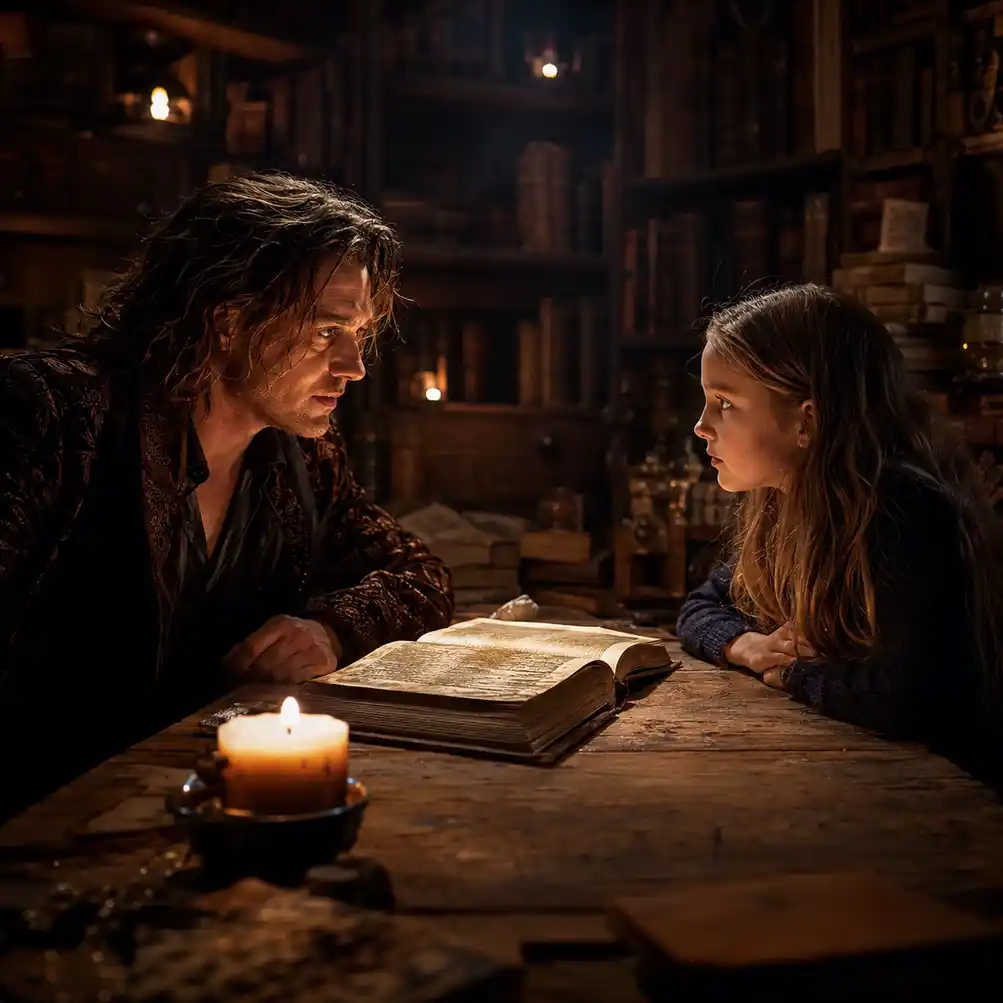
Meggie begins Inkheart as a reader protected by her father’s decisions. She observes adult fear without understanding its source. As the danger grows, she learns that inherited silence cannot keep her safe.
Her development does not require abandoning books for practical courage. Reading becomes the means through which courage takes form. She studies how words sound, tests her voice, and discovers that Mo’s gift has passed to her. Literary attention becomes active power.
The inheritance also complicates their relationship. Mo tried to protect his daughter by withholding the truth, but Meggie must understand the danger before she can act freely. Love based entirely on secrecy eventually becomes another kind of confinement.
Inkheart makes her ability feel earned through years of intense reading. Magic may be inherited, yet skill depends on concentration, breath, interpretation, and emotional steadiness. The scenes of reading aloud honor performance rather than presenting words as automatic spells.
Meggie’s fear never disappears. She acts while afraid, sometimes misjudges others, and needs help from adults whose own decisions remain imperfect. Her agency grows through collaboration, not isolation.
This balance keeps the novel from turning her into a chosen hero who simply replaces one form of authority with another. She becomes powerful by joining voice with written language and the work of other people. Her gift matters because she learns to use it for release rather than possession.
The Author Meets His Characters
Fenoglio, the fictional author of the book within Inkheart, introduces a sharper metafictional question. He knows how Capricorn, Basta, and Dustfinger were written. Meeting them in person reveals how little that knowledge guarantees.
Characters exceed their creator’s intentions once they acquire bodies and histories. Capricorn does not become obedient merely because Fenoglio invented him. Dustfinger’s fear of his written fate also forces the author to face the human cost of narrative design.
The novel-within-a-novel structure of 👉 The Counterfeiters by Andre Gide examines authorship through shifting perspectives, creative uncertainty, and a writer observing material for his own work. The writer uses fantasy rather than modernist experimentation, but both books question whether authors can master the lives they shape.
Writing becomes intervention rather than distant invention. Fenoglio can produce new words, Mo and Meggie can voice them, and living characters determine what happens when language enters the world. No participant controls the entire process.
This shared authorship gives the climax its energy. Victory does not come from physical strength alone. It requires writing, reading, courage, timing, and an audience willing to act. Inkheart turns literary creation into collective labor.
The arrangement also gently challenges the idea of an author as an all-powerful ruler. Fenoglio has authority, but he remains surprised by his creations. Stories change when other voices inhabit them. Readers, performers, and characters all contribute meanings the original writer cannot completely predict.
Quotes from Inkheart
- “No one else in the world had a voice like her father’s. Mo could paint pictures in the empty air with his voice alone.” These paired sentences establish voice as both personal signature and creative force. Before Meggie fully understands Silvertongue magic, she already experiences reading aloud as image-making. Moreover, “empty air” becomes a provisional page, suggesting that performance can give language a temporary body even before characters cross into reality.
- “Books have to be heavy because the whole world’s inside them.” Meggie offers this sentence as a playful defense of an overfilled book box, yet it also states the novel’s central premise. In Inkheart, physical weight and imaginative depth continually mirror each other. Consequently, books carry memories, dangers, people, and possible worlds rather than serving as neutral containers for print.
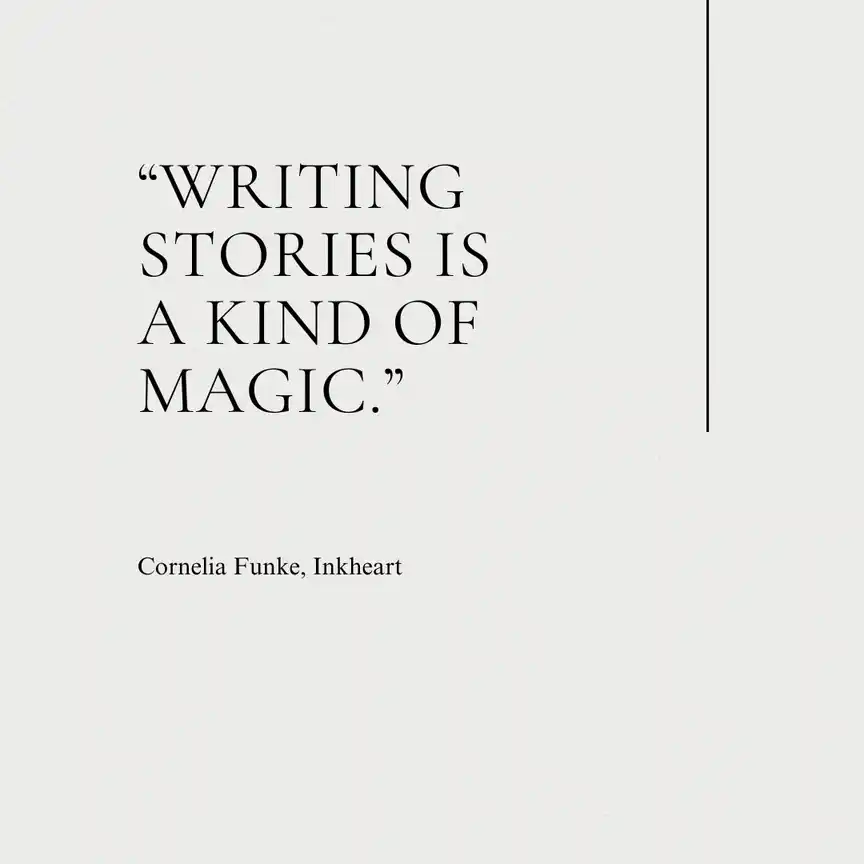
- “Writing stories is a kind of magic, too.” This conclusion shifts power from gifted readers toward anyone who creates with words. However, the modest “too” matters because it places writing beside oral performance rather than beneath it. Fenoglio’s revisions and Meggie’s choices demonstrate that authorship can redirect events, although no writer controls every consequence once language enters other minds.
Context-Rich Trivia for Inkheart
- The original title entered German bookstores first: Cornelia Funke launched Tintenherz through Cecilie Dressler Verlag on September 13, 2003.
- English translation followed unusually quickly: Anthea Bell translated Inkheart for Chicken House and Scholastic in 2003. Moreover, the 🌐 American Library Association named both translator and publisher when selecting the novel as a 2004 Notable Children’s Book.
- A bookbinder becomes the dangerous reader: Mo repairs volumes. Therefore, Inkheart joins supernatural storytelling to paper, glue, cloth, and craftsmanship, making books objects with bodies as well as portals.
- Book destruction has moral weight: Capricorn burns volumes to control what others can know and summon. Thus, the threat connects naturally with 👉 Fahrenheit 451 by Ray Bradbury.
- The novel grew beyond its original trilogy: Inkspell and Inkdeath continued the Inkworld story, while The Color of Revenge returned to it in 2024. 🌐 Scholastic’s series guide places the newer story five years after the trilogy.
- Meggie inherits more than a love of books: Her emerging Silvertongue ability changes her from endangered listener into active storyteller. Meanwhile, the plot asks whether inherited power also carries inherited responsibility.
- Reading aloud obeys an exchange rule: Mo’s voice can draw fictional beings into reality, but someone from the real world enters the book in return. Consequently, magic creates absence as well as wonder.
A Fantasy Built for Book Lovers
Inkheart combines chase narrative, family mystery, dark fantasy, and a sustained celebration of reading. Its greatest pleasure comes from seeing familiar literary experiences transformed into action. A compelling voice opens worlds. A damaged book carries history. A library becomes a refuge worth defending.
Funke’s descriptive style favors clear images, sensory detail, and suspenseful scene endings. The plot sometimes pauses to admire books or repeat the danger posed by Capricorn. Readers seeking rapid action may find the middle expansive. Those who enjoy atmosphere and character will value the slower accumulation.
The novel respects young readers without simplifying fear. Betrayal, separation, homesickness, violence, and grief remain real. At the same time, adults do not monopolize insight. Meggie’s attention often sees what authority overlooks.
The story also avoids claiming that every reader is automatically virtuous. Elinor can value books more easily than people. Dustfinger understands his written world but still betrays friends. Capricorn uses literature for extraction and control. Reading offers possibility, not moral innocence.
That distinction gives Inkheart lasting force. Books become powerful through the relationships formed around them. A story can be preserved, burned, performed, exploited, rewritten, or shared. The ethical choice belongs to the person holding it.
The novel leaves its boundary between worlds open enough for further adventures, yet its first journey feels complete. Meggie has learned that loving stories means accepting their danger, responsibility, and extraordinary capacity to make hidden lives real.
More Reviews of german literature